

According to Serbian Economist, the Serbian city of Kragujevac organized a summer camp for 19 children from Zaporizhzhia, aged 13–16, who stayed at a children’s health resort in the city of Kopanik from August 1 to 10.
A sports, recreational, and cultural program was prepared for the Ukrainian children. They took part in walks and group activities, learned about Serbian traditions, and studied elements of Serbian folk dances alongside choreographers from the “Abrasevic” Center for Traditional Culture in Kragujevac.
The trip was part of a humanitarian initiative to organize recreational stays in Serbia for children from Ukrainian regions affected by the war.
Kragujevac is located in central Serbia and is one of the country’s largest industrial and university centers. Thanks to its location in central Serbia, the city has convenient connections to Belgrade, Kopaonik, and other tourist and business centers in the country.
https://t.me/relocationrs/3464

The European Union plans to restrict children’s access to social media in all 27 member states, said European Commission President Ursula von der Leyen.
The European Commission is considering a multi-stage approach to children’s and teenagers’ access to digital platforms. According to expert recommendations, children under the age of 13 will be able to use social media only for a limited time and under the supervision of parents, guardians, or teachers. As teenagers get older, the restrictions should be gradually eased.
“It is clear that we need age-based restrictions for these platforms,” von der Leyen told reporters in Brussels. She noted that the question now is not whether children face risks online, but how to give them a safer start in the digital environment.
The European Commission is expected to present a concrete proposal after the summer. Reuters reports that von der Leyen may announce it during her annual State of the Union address in September.
The new rules could apply not only to traditional social media platforms but also to a wider range of services with “age-inappropriate” and addictive features. Von der Leyen referred to this as the “social media plus” category, which could include platforms with infinite scrolling, autoplay videos, personalized algorithms, and other mechanisms designed to capture users’ attention.
The main services affected could include TikTok, YouTube, Instagram, and Facebook. Reuters notes that similar restrictions, aimed primarily at the largest short-form video and social media platforms, are already in place or under discussion in various countries around the world.
The Associated Press reports that an EU expert group has recommended restricting access to social media for children under 13 until tech companies can prove that their platforms are safe for children. For teenagers over 13, the proposal calls for phased access only to those services that meet safety and age-appropriateness requirements.
The European Commission is also developing its own app to verify users’ ages online. Such a system should help platforms and EU member states enforce age restrictions, although officials in Brussels acknowledge that it is technically impossible to completely prevent users from circumventing these measures.

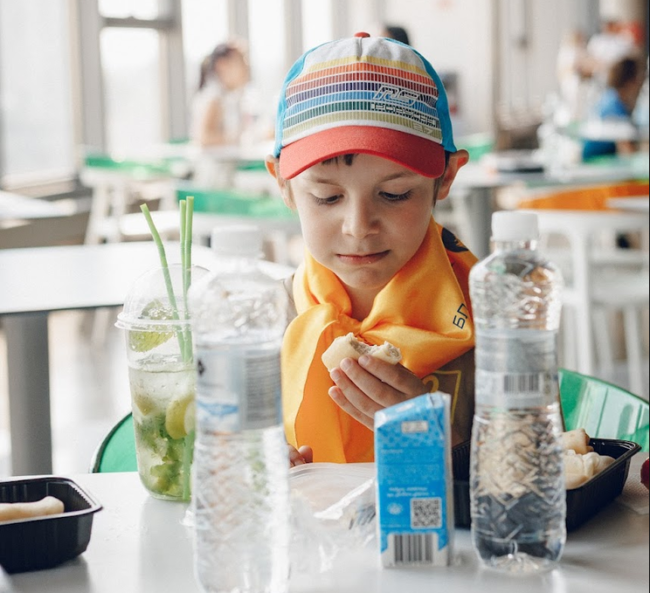
The Kids Team Fest charity festival took place at River Mall Park in Kyiv, bringing together more than 1,000 children and their families. The event was aimed at supporting children, developing corporate social initiatives, and creating a safe space for recreation and leisure.
The River Mall shopping and entertainment center served as the festival’s main partner, and River Mall Park served as the venue. Five hundred children, specially invited by the Darnytskyi District State Administration in Kyiv along with their families, participated in the event.

Among the guests were children from family-type orphanages, orphans, children deprived of parental care, children from families of internally displaced persons, children of Ukraine’s defenders, as well as children in foster care or living in families facing difficult life circumstances.
As part of the project’s charitable component, the River Mall team organized a lunch for 500 specially invited children. The “Yagotynske for Children” brand also joined the initiative, providing products for the festival’s young guests.
The entertainment program was prepared by the Kids Team children’s production center and the “Center of Goodness” Charitable Foundation. Participants enjoyed interactive games, performances by artists, festive activities, and a program tailored for children of all ages.
River Mall notes that participation in such initiatives is part of the shopping and entertainment center’s ongoing social activities. The mall regularly supports children’s projects and organizes spaces for leisure and creativity. In particular, free creative workshops are held every Saturday and Sunday at River Mall, attended by about 120 children.
The organizers of Kids Team Fest included River Mall, the Darnytskyi District State Administration in Kyiv, the “Yagotynske for Children” brand, the Kids Team production center, the “Center of Good” Charitable Foundation, artists, and volunteers.
River Mall is a shopping and entertainment center in Kyiv that uses its own infrastructure not only for commercial projects but also for social, charitable, and family events.

According to Relocation, it is important for Ukrainian families living in EU countries to be aware of local child protection regulations: social services may initiate an investigation into living conditions if they receive reports of a potential threat to a child, and in serious cases, may temporarily remove the child from the family until the circumstances are clarified or a court decision is made.
As reported by Ukrainian media, citing materials for families abroad, social services do not intervene automatically due to a single domestic conflict, a bruise from a fall, or being late for school. However, repeated reports, complaints from the school, or concerns raised by neighbors, doctors, or the police can serve as grounds for an investigation into the family.
In different countries, these services have different names: Jugendamt in Germany, Aide Sociale à l’Enfance in France, and child protection services in Poland, the Czech Republic, Italy, the Netherlands, and other countries. Their underlying logic is similar: the state is obligated to intervene if it believes a child may be in danger or that the child’s interests are being violated.
Reasons for an investigation may include suspicions of physical or psychological abuse, systematic neglect of the child’s needs, lack of medical care, leaving a young child unsupervised, inadequate living conditions, truancy, aggressive behavior by the child, family conflicts, or parental failure to fulfill their duties.
For Ukrainian families, differences in legal systems remain a particular risk. What might be perceived in Ukraine as a domestic conflict or a “parenting method” may be considered unacceptable behavior in EU countries. Physical punishment, shouting, threats, leaving children home alone, or lack of contact with the school can lead to intervention by social services.
According to the 2023 annual report of the Ukrainian Parliament Commissioner for Human Rights, as of December 31, 2023, the competent authorities of host countries had removed 255 Ukrainian children from their parents or legal guardians abroad. Of these, 64 were orphans or children deprived of parental care, and 191 were children with parents.
The highest number of such cases was recorded in Germany—71 children—followed by Poland—33, Italy—25, the Czech Republic—24, and Sweden—17. Cases were also recorded in the Netherlands, France, Norway, Denmark, Spain, Switzerland, Finland, Austria, Lithuania, Luxembourg, Greece, Portugal, Slovakia, and other countries.
Among the most common reasons for the removal of Ukrainian children abroad, the Ukrainian ombudsman cited the failure of local authorities to recognize Ukrainian documents issued to guardians and adoptive parents, inadequate fulfillment of parental responsibilities, low levels of material and living standards, truancy, aggressive behavior by children, as well as the consequences of psychological trauma suffered by parents and children due to the war.
European statistics show that intervention by social services is a widespread and systematic practice, but reporting methods vary by country. In Germany in 2024, youth welfare authorities temporarily took approximately 69,500 children and adolescents into protective custody. Of these, 44% of such measures were related to the arrival of unaccompanied minors from abroad, 42% to an immediate threat to the child’s well-being, and 13% to children seeking help on their own.
In Poland, as of the end of 2024, 77,300 children were in the foster care system, of whom 59,800 were in family-based care and 17,500 were in institutional care. In Italy, as of the end of 2023, 42,000 children were in alternative care: 15,992 in foster care and 26,010 in residential care. In Sweden, according to Socialstyrelsen, 3,486 children were placed in compulsory care under the LVU Act in 2020.
These figures cannot be directly compared with one another as “removed children” because countries use different categories: temporary removal, foster care, institutional care, emergency protection, voluntary placement, compulsory placement, and care for unaccompanied minors. Nevertheless, they demonstrate the scale of the work carried out by European child protection systems.
There are no separate pan-European statistics available in an open, comparable format on how many children are removed specifically from families based on the parents’ “ethnic origin.” Some countries publish data on citizenship, migration status, ethnicity, or unaccompanied children, but these indicators vary in methodology and often do not allow for distinguishing family cases from migration and guardianship cases.
For Ukrainians, the most specific publicly available statistics are data from the Ukrainian Ombudsman’s Office on 255 children removed abroad as of the end of 2023. More recent comparable data for all EU countries is currently limited in open access.
Lawyers and human rights advocates advise Ukrainian parents abroad to carefully study the rules of their country of residence, not to ignore requests from schools, doctors, and social services, keep documents regarding the child’s legal representation, have translations of custody or adoption decisions, contact the Ukrainian consulate in a timely manner, and not attempt to “resolve” the conflict with child protection authorities on their own without legal assistance.
If social services initiate an investigation, it is important to cooperate, provide explanations, submit documents, engage an interpreter, and document all communications in writing. In most countries, the goal of initial intervention is not the automatic removal of the child, but rather a risk assessment and the search for a solution that will be considered safe for the child.

Men who have children, on average, perform better on certain cognitive tests and have a lower estimated brain age compared to childless men, according to a study published in *Scientific Reports*.
The study authors analyzed data from 303,196 participants in the UK Biobank of European descent who had no brain or nervous system diseases. The researchers compared results from tests of reaction time and visual memory, and separately examined MRI data from 13,584 individuals to assess what is known as relative brain age.
According to the study, having children was associated with faster reaction times and fewer errors on visual memory tests in both women and men. The most pronounced difference was observed in participants with two or three children compared to those without children.
For men with two children, the estimated brain age was on average 0.6 years younger than that of childless men, and for men with three children, it was 0.7 years younger. For women with two children, the brain appeared on average 0.5 years younger, and for those with three children, 0.7 years younger.
The researchers emphasize that this is an association, not a proven cause-and-effect relationship. In their assessment, the results may be influenced not only by parenting responsibilities themselves but also by lifestyle factors associated with having children: social activity, daily cognitive load, emotional support, routine, reduced alcohol or tobacco use, and other variables.
The authors also note that the effect did not increase linearly with the number of children. In men, the relationship was U-shaped: the most pronounced differences were observed among fathers of two or three children, whereas with more children, the effect was less clear-cut.
Additional research in this area suggests that caring for others may be associated with a younger brain age. Specifically, a study published in 2025 in Social Cognitive and Affective Neuroscience showed a lower estimated brain age among grandmothers and caregivers of people with dementia compared to a control group.
Scientists see a possible explanation in the fact that caring for a child or another person requires constant shifting of attention, planning, memory, emotional control, and social interaction. Such a workload may serve as a kind of training for the brain, although further research is needed to confirm a causal effect.
Data from the Harvard Study of Adult Development also point to the importance of social connections for health and longevity.
The project’s researchers noted that people with warmer and more stable relationships live longer on average and maintain better health, while social isolation is associated with higher risks to physical and mental well-being.
Thus, parenthood may be one of the factors associated with a more active social and cognitive life. However, the researchers do not claim that having children in and of itself guarantees healthier brain aging. The study shows a statistical association that must be considered alongside lifestyle, health, stress levels, income, education, and the quality of social relationships.

The Ukrainian Red Cross (URC) has launched mine risk education sessions for children at summer camps.
“The first sessions have already taken place in the city of Samar in the Dnipropetrovsk region at a local high school, where Ukrainian Red Cross specialists, together with inspectors from the Educational Safety Service, held an interactive session for children at the summer camp,” the URC reported on Facebook on Monday.
During the session, participants learned how to identify potentially dangerous objects, studied safety protocols, practiced practical scenarios, and reinforced the golden rule: “Don’t approach, don’t touch, call 101 or 102.”
Throughout the summer, similar informational sessions will be held at summer camps and children’s centers across all regions of Ukraine.



