

In Ukraine, 50 of the 478 individuals registered as owners or beneficiaries of at least 50 companies have addresses in the temporarily occupied territories or in areas of active combat. These findings are contained in a study by the analytical service “OpenDataBot,” published on October 26, 2026, based on data from the Unified State Register.
According to the study, 42 mass owners of companies have registered addresses in the temporarily occupied territories of Ukraine. This represents nearly one in ten people on the overall list.
The largest number of such entries are in the Donetsk region—17—and the Luhansk region—16.
Another five mass owners are registered at addresses in Crimea, and four in the Kherson region.
The largest number of businesses among individuals with addresses in the temporarily occupied territories is linked to Ruslan Merzlyakov of Donetsk, who is listed as the owner or beneficiary of 2,221 companies.
He also ranks second in the overall Ukrainian ranking of mass owners of businesses.
Next in this group is David Stepanyan from Mariupol, who is linked to 205 companies.
Third is Yevgeny Gasyukov from the city of Khrustalny in the Luhansk region, under whose name 171 companies are registered.
Separately, analysts identified eight mass owners with registered addresses in areas of active hostilities.
Two such addresses were recorded in each of the Dnipropetrovsk, Donetsk, Zaporizhzhia, and Kherson regions.
The largest number of companies in this category is linked to Yuriy Terekhov from Kherson—275 enterprises.
He is followed by Sergey Khmelevsky from Nikopol in the Dnipropetrovsk region, with 255 companies, and Dmitry Zakhoda from Kherson, with 152 enterprises.
In total, the registered addresses of 50 major owners are linked to territories that are under Russian occupation or are located in zones of active hostilities.
At the same time, the authors of the study specifically note that an owner’s legal address does not necessarily correspond to the location where their enterprises actually conduct business.
Thus, the presence of a registered address in an occupied territory does not indicate that all enterprises associated with the individual in question continue to operate under occupation.
Furthermore, the registry data alone does not allow for determining the actual location of a specific owner or drawing conclusions about their activities in Russian-controlled territory.
As Miroslav Laba, a tax and regulatory policy specialist at the Economic Expert Platform, notes, a large number of companies linked to a single individual can create additional risks for management transparency and tax oversight.
According to him, the use of nominee owners is one of the risk factors that requires attention from regulatory authorities.
At the same time, the expert emphasizes that owning a large number of companies is not, in and of itself, a violation of the law.
As of October 2026, there were a total of 478 mass company owners in Ukraine. The leader of the national ranking is Kyiv resident Vitaliy Ilnitsky, who is linked to 5,889 legal entities.
Source: “OpenDataBot,” study “478 Mass Owners of Companies in Ukraine,” October 26, 2026.

Kyiv ranks first among Ukraine’s regions in terms of the number of individuals registered as owners or beneficiaries of at least 50 companies. As of October 2026, there were 131 such owners in the capital out of 478 nationwide, according to data from an OpenDataBot study published on October 26.
Thus, Kyiv accounts for more than a quarter of all so-called mass company owners listed in the Unified State Register.
Second place goes to the Kyiv region, where 34 individuals are registered, each linked to at least 50 companies.
In third place is the Dnipropetrovsk region with 27 such owners.
Next are the Donetsk region, where 24 mass company owners are recorded, and the Kharkiv region with 18 entries.
Combined, Kyiv and the Kyiv region have 165 mass owners, accounting for more than a third of the national total.
At the same time, the largest owners by number of affiliated companies are also predominantly based in the capital.
Vitaliy Ilnitsky of Kyiv ranks first in the Ukrainian ranking with 5,889 companies. Another Kyiv resident, Vladislav Melekhin, ranks third with 858 companies.
Kateryna Doroshenko of Kyiv ranks fifth with 674 registered companies.
The largest mass owner outside Kyiv is Ruslan Merzlyakov from Donetsk, who is listed as the owner or beneficial owner of 2,221 companies.
According to the study’s methodology, mass owners are defined as individuals with registration ties to at least 50 legal entities.
However, the owner’s address listed in the registry does not necessarily correspond to the location where the companies they own actually operate.
Therefore, the concentration of mass owners in Kyiv does not mean that a corresponding proportion of these companies conducts business directly in the capital.
The structure of ownership of a large number of legal entities deserves special attention. Miroslav Laba, an expert on tax and regulatory policy at the Economic Expert Platform, notes that the registration of hundreds of companies under a single individual may be a sign of nominal ownership.
At the same time, he emphasizes that the mere fact that a single individual owns or manages a large number of companies does not, in and of itself, violate the law.
According to the expert, to ensure transparency in business activities, it is important to identify the actual managers and individuals who make business decisions.
In total, according to “OpenDataBot,” as of October 2026, there were 478 individuals registered in Ukraine, each of whom is linked to 50 or more companies.
Source: “OpenDataBot,” study dated October 26, 2026.
As of October 2026, there are 478 individuals in Ukraine, each of whom is registered as the owner or beneficial owner of at least 50 companies. The maximum number of companies linked to a single individual reaches 5,889, according to data from the Unified State Register published by the analytical service “OpenDataBot” on October 26.
According to the study, Vitaliy Ilnitsky of Kyiv remains the individual with the largest number of registered companies, listed as the owner of 5,889 enterprises.
Second place goes to Ruslan Merzlyakov from Donetsk, who is linked to 2,221 companies. Thus, the number of companies registered to the leader of the ranking is more than double that of his closest competitor.
In third place is Vladislav Melekhin from Kyiv, who is listed as the owner or beneficiary of 858 companies.
Fourth place goes to Andriy Puya from Zenkiv in the Poltava region with 799 companies, and fifth place goes to Kateryna Doroshenko from Kyiv with 674 companies.
The top ten also includes Valeriy Ilienko (637 companies), Yuriy Pukhir (571), Andriy Sosonny (525), Tetyana Svyrydyuk (455), and Valeriy Malakhov (408).
Thus, even in tenth place on the ranking, the number of legal entities linked to a single person exceeds 400.
In the study, “mass owners” are defined as individuals who appear in government registries as owners or beneficiaries of at least 50 registered companies. However, the existence of such a record does not mean that the individual single-handedly manages all of the relevant companies.
As Miroslav Laba, a tax and regulatory policy specialist at the Economic Expert Platform, noted, a large number of companies owned or controlled by a single individual does not in itself constitute a violation of the law.
At the same time, the expert believes that the registration of hundreds or thousands of companies under a single individual may indicate the use of nominal directors or owners.
According to him, it is important for tax authorities to identify the actual officers who carry out business operations and are responsible for fulfilling tax obligations.
The use of nominal owners, in the expert’s assessment, is considered a tax risk factor, as it may be accompanied by an opaque management structure and potential tax evasion schemes.
At the same time, the mere fact that a person appears in the registry of a large number of companies does not constitute evidence of fictitious business operations, legal violations, or tax evasion.
The “OpenDataBot” study is based on registration data regarding company owners and ultimate beneficial owners. It does not draw conclusions about the actual financial condition, business activity, or tax compliance of the companies included in the list.
Source: “OpenDataBot,” study “478 Mass Owners of Companies in Ukraine,” October 26, 2026.
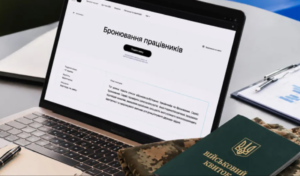
The Cabinet of Ministers of Ukraine, which established a Coordination Center for the Organization of Reservations at its meeting on October 23, initiated a review of sectoral and regional criteria for determining critical importance, taking into account new requirements, within 10 days, and updated the reservation limits for certain categories of enterprises, according to a Saturday announcement on the website of the Ministry of Economy and Environment of Ukraine.
“The government’s decision clarifies the definition of critical importance. In this regard, central executive authorities and regional military administrations must review sectoral and regional criticality criteria in light of this definition within 10 days of the changes taking effect. The updated criteria will be approved by the Coordination Center,” the ministry’s website states.
At the same time, it is noted that the review of the criteria does not entail an automatic review of the status of all enterprises, and enterprises previously recognized as critical based on criteria that will not be changed as a result of the review will retain their status as critically important. The statement asserts that such enterprises constitute the “overwhelming majority.”
It is also noted that the decision to designate enterprises as critically important remains within the purview of authorized state bodies, and the Coordination Center’s proposals are subject to review by central executive authorities and regional military administrations.
It is reported that the Coordination Center for Mobilization is a temporary consultative and advisory body of the Cabinet of Ministers, whose work will involve representatives of government agencies responsible for the economy, defense, security, humanitarian policy, and the operation of critical infrastructure; it will be co-chaired by the Deputy
Minister of Economy and Environment and the Deputy Minister of Defense. The center’s tasks include, in particular, reviewing requests from government agencies to designate enterprises as critically important, providing recommendations on revoking such status if law enforcement agencies provide grounds for doing so, and approving increases in procurement quotas exceeding 50%. The timeframe for reviewing requests from government agencies is limited to one month.
The Ministry of Economy confirmed that the government has reduced the maximum reservation limits for enterprises in the fuel and energy and defense-industrial sectors to 95% of employees subject to military service, and that citizens granted deferments for other reasons—such as parents of large families, guardians, and others—will be included in the quota when calculating the maximum percentage of reserved personnel. It was also stated that the reduction in the maximum limits should not apply to critically important personnel, who must be reserved in full, but the enterprise’s director will independently determine whom to reserve within the limit.
As previously reported, on Friday, Prime Minister Serhiy Koretskyi stated that the Cabinet of Ministers of Ukraine had finalized changes to the reservation system—an enterprise’s criticality will be separated from its economic indicators, sectoral and regional criteria for criticality will be updated, and enterprises will be audited for abuse.
The second change is that the maximum reservation rate—particularly for the energy sector and the defense industry—will no longer be 100%. “Unconditional full reservations are unfair to those who serve and open the door to abuse. There were companies created specifically for the reservation system, and it became a business,” the prime minister noted, adding that the government will not ease restrictions on those who manufacture weapons or maintain critical infrastructure, and if more reservations are needed to ensure uninterrupted operations, the company will be able to submit a substantiated request to the Coordination Center.
The third change is that the Ministry of Defense is tightening penalties for evading military service; the fourth is the development of a mechanism for 100% workforce reservation, contingent upon fulfilling mobilization obligations: a company will be able to fully reserve its employees if it regularly and voluntarily enlists some of them into military service.
COMPANY, defense industry, ENERGY SECTOR, mobilization, workforce reservation

The combined revenue of the ten largest companies that changed their region of legal address in 2026 totaled approximately 44.1 billion UAH over two quarters, according to Experts Club’s calculations based on data from OpenDataBot.
The largest among them was Parallel-M Ltd., which imports and sells fuel and operates the Parallel gas station chain. Its revenue for the first two quarters of 2026 totaled 9.18 billion UAH. The company changed its registered address from Zaporizhzhia Oblast to Poltava Oblast.
Second place went to the Pokrovske Mining Administration, with revenue of 6.31 billion hryvnias, which re-registered from the Donetsk region to the Zaporizhzhia region.
In third place is “Podorozhnik Kyiv” with revenue of 5.22 billion UAH. The company, affiliated with the “Podorozhnik” pharmacy chain, changed its region of registration from Lviv Oblast to Kharkiv Oblast.
The combined revenue of the three largest companies totaled 20.71 billion UAH, or about 47% of the total revenue of the top ten.
The top 10 also included “Galychyna-Tabak” with revenue of 4.26 billion UAH, “STV Center” with 4.12 billion UAH, “Interbusiness” with 3.92 billion UAH, “Arion Trade” with 3.83 billion UAH, “Mars Ukraine” with 2.84 billion UAH, “Sovtrading-L” with 2.28 billion UAH, and “SK Energy Group” with 2.13 billion UAH.
The latter company was the most active in terms of the number of changes to its legal address among large businesses: over the course of three quarters, it re-registered four times between Kyiv and the Kharkiv region.
Experts Club notes that the presence of companies with revenues in the billions in the statistics shows that changing one’s legal location remains relevant not only for small and medium-sized businesses but also for large enterprises in the fuel, mining, pharmaceutical, retail, and other sectors.
However, a change of region in the Unified State Register does not necessarily mean an actual relocation of the company’s main assets or production facilities.
Source: OpenDataBot
BUSINESS, COMPANY, EXPERTS CLUB, RANKING, RELOCATION, REVENUE, UKRAINE

Kyiv leads among Ukraine’s regions in the number of active companies that have reported zero revenue for at least two consecutive years or have not filled in the corresponding field in their financial statements.
According to Opendatabot, 15,078 such companies are registered in the capital, accounting for nearly 29% of the country’s total.
In total, there are 52,202 active commercial companies in Ukraine that have filed financial statements showing zero or blank revenue for at least the last two consecutive years.
The Dnipropetrovsk region ranks second—3,998 companies, or about 8% of the total. There are 3,663 such companies registered in the Kharkiv region and 3,471 in the Odesa region.
Thus, Kyiv and the three largest regions alone account for more than half of all companies in the country that have not reported any revenue in their financial statements for a long time.
One in four companies in the studied group has been in this state for three consecutive years, and 4,600 enterprises have not reported any revenue for five years.
The most common legal form among such enterprises remains the LLC—accounting for 42,383 companies, or 81% of the sample.
According to Opendatabot’s assessment, one of the reasons for the continued existence of legally active but effectively inactive enterprises is the complexity of the liquidation procedure. In addition, some companies may have suspended operations due to the war, the loss of production capacity, or the loss of sales markets.
Source: Opendatabot



