

Amid an industrial downturn and challenges in the automotive sector, Germany is indeed accelerating the reorientation of some of its production capacity toward defense products; however, this does not mean a complete abandonment of the automotive industry, but rather a significant strengthening of the defense-industrial sector. The Wall Street Journal reports on this, and other international media outlets have previously confirmed specific examples of this shift.
According to the WSJ, Berlin is attempting to utilize idle capacity, engineering expertise, and the workforce of traditional industries—primarily the automotive sector—to expand the production of defense-related goods. The newspaper links this shift to the industrial downturn, rising defense spending in Germany and Europe, as well as heightened security threats amid Russia’s war against Ukraine and Europe’s declining confidence in long-term U.S. guarantees.
Part of this trend has already been confirmed at the level of specific companies. For instance, Reuters previously reported that Rheinmetall intended to repurpose two of its automotive plants in Germany for primarily defense production, retaining only a portion of civilian output. Additionally, Volkswagen is exploring the possibility of using its site in Osnabrück to manufacture military equipment, though it emphasized that no final production decisions have been made yet.
Another example is the negotiations regarding the potential production of components for the Iron Dome air defense system at one of Volkswagen’s German plants. However, Reuters separately noted that the automaker itself ruled out the production of weapons per se and spoke only of exploring options for utilizing the facility and producing components.
At the same time, pressure on the German auto industry is mounting. Reuters reported in February that nearly half of the auto suppliers surveyed were cutting jobs in Germany, and the industry association VDA described the situation as a crisis. Against this backdrop, the defense sector is becoming one of the few growing markets with a long-term order horizon for some manufacturers.
An additional factor has been the sharp intensification of Germany’s own defense policy. Following changes to budget rules and an expansion of borrowing capacity, Berlin has gained the leeway to significantly increase military spending in the coming years. Reuters previously reported that Germany’s total defense spending could rise from €95.1 billion in the 2025 draft budget to €161.8 billion by 2029, while the total volume of potential borrowing for defense in 2025–2029 was estimated at €380 billion.
auto industry, CRISIS, DEFENSE SECTOR, GERMANY, MANUFACTURING, reorientation

The Romanian government has approved an emergency decree declaring a state of emergency in the oil and petroleum products market for the period from April 1 to June 30, 2026, and has introduced a package of measures to protect the economy and the population. The key measure involves price controls through restrictions on commercial markups. The maximum aggregate markup across the supply chain for gasoline, diesel, and certain raw materials used in their production is capped at 50%, and penalties ranging from 0.5% to 1% of a company’s annual turnover are imposed for exceeding these limits.
Romanian authorities explain that the emergency measures are being introduced amid rising global oil prices, increased insurance and logistics risks, and the country’s high dependence on imports.
As of March 27, fuel prices in Bucharest were:
gasoline: 9.19–9.23 lei per liter (about 1.85–1.86 euros);
diesel fuel: 10.26–10.36 lei per liter (about 2.06–2.08 euros).
Economist Adrian Negrescu warned that if external pressure persists, prices for premium diesel could rise to 12–13 lei per liter (about 2.4–2.6 euros).

According to the Interfax-Ukraine Culture project, at least six bookstores closed in Ukraine in March alone, including in Vinnytsia, Kropyvnytskyi, and Kyiv, as reported by Viktor Kruglov, publisher and CEO of the “Ranok” publishing house, on his Facebook page.
After analyzing the published information and the situation in the book market, journalists from the “Culture” department of the Interfax-Ukraine agency sought comment from Artem Bidenko, chairman of the board of the Ukrainian Publishers Association.
“The market situation is difficult: people are buying less and less, while book production is becoming more expensive. Bookstores, both small and large, have already begun to close. Books are becoming unprofitable for retailers because they take up space and don’t sell well,” said Artem Bidenko, chairman of the board of the Ukrainian Publishers Association, in a comment to Interfax-Ukraine.
According to Viktor Kruglov, bookstores in Vinnytsia and Kropyvnytskyi—which opened in 2023–2024 amid a wave of enthusiasm and expectations of state support—have closed permanently.
In addition, next week “Yakaboo” is closing its only brick-and-mortar location at the Main Post Office on Khreshchatyk, and the publishing house “ArtBooks” is liquidating its flagship bookstore on Velyka Vasylkivska Street due to unprofitability.
Earlier, “Knyholand” closed its bookstore in the underground shopping center on Maidan Nezalezhnosti, and the future of the bookstore in Rusanivka, Kyiv, remains uncertain.
Additionally, according to Kruglov, the owner of the bookstore “My Bookshelf” announced the closure of the business, while the “Ridit” and “Sens” chains reported losses in the millions for the year.
According to Bidenko, in January–March, the average receipt at bookstores fell by nearly half: whereas shoppers previously chose 3–5 books, they now select 1–2.
Against the backdrop of falling demand, publishers are forced to offer significant discounts in an attempt to recoup at least part of their investment, but this does not solve the systemic problem.
“For retailers, books are becoming economically unprofitable: they take up space, require specific storage conditions, yet sell significantly worse,” he explained.
According to the expert, the next stage could be a payment crisis in the industry, which will first affect publishers and later printing houses.
“These are signs of a systemic crisis in the market that cannot be overcome without government intervention,” Bidenko emphasized.
He also noted that one of the key reasons for the rising cost of books is the increase in production costs.
“Raw materials are imported, logistics are complicated, and there is a shortage of personnel in both transportation and printing houses. All of this increases costs and, consequently, the final price of books,” he said.
Piracy in the e-book and audiobook sector remains a separate factor putting pressure on the market.
“About 80% of digitized content is illegal. Because of this, it is impossible to objectively assess real demand: we don’t know whether people are reading more in digital format or simply buying fewer books and reading less in general,” noted Bidenko.
He added that certain segments, particularly children’s literature, have been in crisis since the start of the full-scale war.
Assessing government policy, Bidenko stated that the market currently sees no practical implementation of the declared support.
“So far, these are just statements. There are no real actions, although we expect the situation to change. If these tools start working, the market will be able to return to pre-war levels and resume development. Without state participation, the publishing industry, which is subsidized in most countries, will not be able to function stably,” he concluded.
Text: Olga Levkun
https://interfax.com.ua/news/culture/1154870.html

The Ganges River is experiencing its worst crisis in 1,300 years, which could have far-reaching socio-economic consequences and exacerbate relations between India and Pakistan over the issue of water resource distribution, Phys.org writes, citing a study published in the Proceedings of the National Academy of Sciences.
Scientists from the Indian Institute of Technology Gandhinagar and the University of Arizona have found that the current drying of the Ganges from 1991 to 2020 is 76% more severe than the previous worst drought in the 16th century. The river has become drier overall, with droughts occurring more frequently and lasting longer.
The main reason is anthropogenic impact, in particular the warming of the Indian Ocean and atmospheric pollution from industrial and transport aerosols, which weaken the summer monsoon.
To reconstruct the flow over 1,300 years (700–2012 AD), scientists used tree ring data from the Monsoon Asia Drought Atlas, combining it with modern observations and verifying it against documented droughts and famines.
The Ganges is a key source of drinking water, agriculture, and industry for more than 600 million people in India. The deepening water crisis could directly affect relations between India and Pakistan, as the countries already have long-standing disputes over the distribution of river flows under the 1960 Indus Water Treaty.
Pakistan has repeatedly warned about threats to its water supply due to Indian hydropower projects. The worsening shortage of the Ganges and related changes in other river basins could create new sources of tension between the countries.
The authors of the study call for
improved climate modeling to account for the regional impact of human activity,
the development of new adaptive water management strategies to avoid large-scale shortages.
The Ganges River has historically played not only an economic but also a cultural and religious role in South Asia. At the same time, access to water resources in the region is already the subject of geopolitical competition. Increased climate risks could make this issue another factor in the confrontation between India and Pakistan.
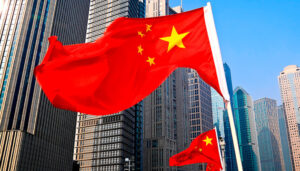
During a telephone conversation with Brazilian Special Assistant to the President for International Affairs Celso Amorim, Chinese Foreign Minister Wang Yi exchanged views on the “crisis in Ukraine,” with Wang noting that “the process of resolving the crisis is now at a decisive stage,” according to the Chinese Foreign Ministry.
“Russia and Ukraine have taken an important step forward by starting negotiations. The crisis settlement process is now at a decisive stage,” he said.
The head of the foreign ministry added that China and Pakistan can continue to maintain communication and make joint efforts to promote the “Friends of Peace” group with the aim of further bringing together the consensus of the global South on “ceasing fire, end the war, convince people of the need for peace, and promote negotiations to play their role in the political settlement of the crisis.”

The crisis in the U.S. banking industry has led to a bubble in the segment of money market funds, writes MarketWatch referring to the report of Bank of America Corp.
According to analysts at the bank, over the past four weeks, assets under management of money market funds have grown by $300 billion – more than $5.1 trillion.
In addition, the bank’s experts point to the largest weekly inflows in money market investments since March 2020, the largest six-week inflows in US Treasuries in history and the largest outflows from the investment grade bond market since October 2022.
There was a surge in assets under money market funds in 2008 and 2020. However, at that time, the U.S. Federal Reserve (Fed) was lowering interest rates, not raising them. On March 22, the U.S. regulator reportedly raised the federal funds rate by 25 basis points.
“The stock and bond markets want too much of a rate cut and not enough of a recession,” BofA analysts said.



