
In 2023-2024, the State Customs Service of Ukraine cleared 103.7 million shipments, of which 94.6 million were imports and only 9.1 million were exports, according to a joint report by the customs office and Ukrposhta.
Of the total number of shipments processed over two years, about 60 million were delivered by Ukrposhta, according to the Ukrposhta website on Thursday.
The largest volume of shipments (73.7 thousand tons) was imported from China. Poland was in second place (38.6 thousand tons), and the United States was in third place (16.1 thousand tons). In addition, 4 thousand tons of shipments were received from the UK, 2.3 thousand tons – from the Czech Republic, 2.1 thousand tons – from Israel, 1.6 thousand tons – from Canada, 1.4 thousand tons – from Germany, 1.3 thousand tons – from Estonia.
According to the report, the most popular export destinations were the United States, which accounted for 46.65% of shipments during the period, the United Kingdom – 8.19%, Germany – 6.61%, Canada – 5.59%, France – 3.07%, Australia – 2.66%, Poland – 2.32%, Israel – 2.1%, Switzerland – 1.67%, Italy – 1.36%.
According to Ukrposhta, the most frequently ordered items by Ukrainians abroad were jewelry (6.23%), phone cases (5.37%), women’s clothing (3.28%), makeup and manicure products (3.28%), lighting devices (2.29%), toys (2.03%), cables (1.62%), phone protectors (1.51%), socks (1.3%), and chargers (1.14%).
The predominant value of goods ordered by Ukrainians over the past two years (81.33%) did not exceed EUR10. In the range of EUR10-20, 10.6% of goods were ordered, EUR20-50 – 5.3%, EUR50-100 – 1.9%, EUR100-150 – 0.5%, and more than EUR150 – 0.3%.
In 2024, 71.5% of all shipments were processed in less than three hours, 28% were processed up to 24 hours after arrival, and only 0.5% took longer than a day, Ukrposhta reported, emphasizing that electronic declaration was a significant step towards speeding up delivery.
The company reminded that 100% of parcels in Ukraine go through customs procedures exclusively electronically (paperless format).

The situation at customs can be significantly improved in a year by implementing six key steps, including common bases with the EU and joint checkpoints, electronic queues, rotations, scanners and digitalization, Ukrainian Prime Minister Denis Shmygal said at a press conference in Kiev on Friday.
“I have a clear understanding of what the state needs to do now at customs, and we are actually on that path. I voiced it, there are five or six steps. The first one is to enter into a common database system with the EU,” said the prime minister.
He explained that it will allow to load a car in any point of Europe, to take a single customs declaration and to transit with it through any checkpoint in any city of Ukraine and to clear customs by this single declaration.
Shmygal noted that now Ukraine gets access to certain sections of this register, but the base of the customs value remains closed for the time being.
“Now we are working with the European Commission on a political decision to open full access to the joint registers of databases of Europe, to make 99% impossible as an element of abuse through customs mechanisms,” – said Prime Minister.
The second step he called increasing the number of checkpoints with joint control and with shared databases, as currently there is only one such checkpoint, built for “Euro 2012” in the Lviv region.
The third element of the reform, according to Shmygal, is the rotation of employees. “Why are there temptations at customs? Because when people work long in one place, there is an opportunity to see and negotiate. We have to overcome this temptation,” said the prime minister.
Shmygal stressed that scanners will be an important innovation, because they are necessary for the implementation of the fifth element – the risk-oriented system, which will reduce the proportion of goods subject to customs and border control to 7%. Reliable exporters and importers will only need to check the car on the scanner to confirm the absence of drugs or migrants, explained the head of the government.
The sixth element the prime minister indicated digitalization, namely the introduction of electronic queuing. According to him, the implemented experiment with the electronic queue at the Krakowiec point is a success, and now the state plans to extend it to all points.
“I would call all of these approaches the Six Elements of Customs Reform. They are all simple, but they will practically eliminate the possibility of corrupt influences at customs at all. We are working on this now, there is a team solution. It cannot be done in a day or a month, but it can be done in a year,” explained Shmygal.
Speaking about personnel decisions, he pointed out that formally State Customs Service is within the competence of the Ministry of Finance. “But I do not want to and I can’t put the responsibility on the Minister of Finance, because this is a joint responsibility of the government team,” said the prime minister.
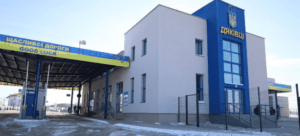
During the first day of the work of the checkpoint “Diakivtsi-Rakivets” 145 citizens were checked in and out, including 85 citizens of Ukraine, 56 citizens of Romania, 2 citizens of Italy and 2 citizens of Moldova.
As Ruslan Zaparanyuk, head of the Chernivtsi Regional Military Administration, reports in Telegram with reference to the data of the State Border Guard Service of Ukraine, also for a day 50 vehicles, including 47 cars and 3 minibuses crossed the new checkpoint.
“The checkpoint operates around the clock for pedestrian and vehicular traffic (including buses). By the decision of the Romanian side, the passage of trucks is temporarily not carried out,” the statement said.
As reported, February 10, Zaparanyuk announced the launch of a new international road border crossing point (IBCP) on the border with Romania “Dyakivtsi Rakovec. The reconstruction of the checkpoint began in 2015 as part of the project “Development of border infrastructure between Ukraine and Romania in the framework of the program “Ukraine-Romania-Moldova (2007-2013)”. Then the work was suspended and resumed in 2021.
The Convention on the Joint Transit Procedure (CCTP) or the so-called “customs visa-free” for Ukraine came into force on Saturday: goods are already flowing into and out of the country under such a procedure, the Ministry of Finance reported.
“Today, October 1, Ukraine entered into force and business opened up the possibility of international movement of goods with 35 other participating countries under one transit document,” the press release says.
The Ministry of Finance clarified that the first country from which the cargo was sent for delivery to Ukraine under the joint transit procedure was Germany: Ukrainian customs officers already see the T1 transit declaration in the NCTS electronic transit system and are waiting for the truck to arrive.
In Ukraine, the first transit declaration for leaving the country was also issued: according to it, the cargo now follows through Poland to Germany.
Currently, the system is also awaiting the arrival of goods at the customs office of departure and other declarations, according to which the goods will be placed under the joint transit procedure and delivered to the customs offices of destination on the territory of the countries participating in the Convention, the report says.
The Ministry of Finance recalled that in accordance with the “customs visa-free” for the delivery of goods from one country to another, a single transit document is submitted: from the customs office of departure to the customs office of destination. This speeds up the passage of customs formalities at the border and reduces the associated costs for businesses. According to the forecast of the Directorate General for Taxation and Customs Union of the European Commission (DG TAXUD), Ukraine can enter the top ten countries in terms of the number of transit declarations.
“Customs is responsible for controlling the goods. We in the EU are striving to spend less time for control at the border, and more inside the country. In Ukraine, so far, most goods travel without checking inside the country – all control work takes place directly at the border. Therefore, queues form at the border. NCTS solves most of this problem: it is possible to submit a declaration to the system in advance, after checking inside the country, to put the necessary seals that are recognized in the EU. Then at the border, you only need time to read the barcode number, as it is done in a supermarket,” summed up the international expert of the Program for Public Financial Management in Ukraine (EU4PFM) Vytenis Alishauskas.
Ališauskas, CUSTOMS, customs visa-free, MINISTRY OF FINANCE, TRANSIT
In the first 10 days after the abolition of benefits, Ukrainians cleared 4,600 cars through customs and paid UAH 464 million to the budget, the State Customs Service reported.
“For 10 days of customs clearance of vehicles, almost UAH 464 million was paid to the state budget. From July 1 to July 10, the State Customs Service issued 4,662 units of vehicles purchased abroad with customs payments,” the agency said on the Telegram channel on Tuesday.
As the customs reminded, benefits for the import of goods, including cars, have been canceled since July 1. Thus, at present, imported vehicles are again subject to import duties, and individual entrepreneurs of groups 1-3, who are not VAT payers, must again import goods with VAT.
A situation at the customs has somewhat improved, the volume of customs clearance of goods by businesses is increasing, Minister of Finance of Ukraine Serhiy Marchenko has said.
“Compared to March, customs added a little: in March, the drawdown of customs revenues was 80%, now it is about 75%. There are some improvements. Taking into account the current benefits for customs clearance of imports, we can say that the situation has improved somewhat and business is increasing the volume of goods cleared,” the minister said in an interview with Interfax-Ukraine, adding that the data require a deeper analysis.
According to him, customs revenues to the budget amounted to UAH 8.3 billion in April, while tax revenues almost reached UAH 45 billion, and another UAH 22 billion went to the budget as grant assistance.



