

Labor shortages, high construction costs, and the slow implementation of reforms and permitting procedures are the main challenges facing developers and architects in Ukraine during the war, according to representatives of the construction industry who spoke at the roundtable discussion “Building the Future: Development in Wartime.”
“There is a very severe shortage of construction workers. We all felt this problem this past spring. As a company owner, I am looking for people to finish building our projects,” said Oleksiy Baranov, founder and CEO of A Development, at the roundtable hosted by the Interfax-Ukraine news agency.
In addition to purely construction-related specialties, there is also a shortage of architects on the market, said Yulia Polyukhovich, chief architect of the A Development project.
“There are many other challenges during the war. For example, there is a very severe shortage of personnel—there are very few architects right now. This is a very serious challenge, because whereas previously three or four architects would work on a project, now there may be only one,” she explained.
At the same time, architects must quickly adapt projects to reflect changes in building codes and standards, particularly regarding safety, the expert noted.
As Vitaliy Borul, CEO of CREDO Development, noted, the construction of underground shelters with emergency exits is a significant expense for developers, and therefore the government should compensate for the cost of building them.
“It looks cool, it’s safe, but it’s very expensive. I believe the government should compensate for the cost of underground shelters. The government is responsible for people’s safety, so we need to reach some kind of agreement with the government, and it should cover these costs,” the expert said.
Developers have also seen a significant increase in construction costs. Furthermore, the market reacts to every enemy attack on the city—after “strikes,” housing sales drop. Insurance against construction risks is also very expensive, Baranov noted.
“Before the war, the calculation was simple: the cost of materials (concrete or brickwork) was equal to the cost of labor. Today, the cost of labor exceeds the cost of materials by 2–3 times,” said the founder of A Development.
According to Baranov, significant obstacles are also created by unresolved procedures regarding the adoption of subordinate legislation by the government and ministries, particularly in the area of cultural heritage protection. At the same time, Kyiv’s local authorities have not considered land allocation requests for 1.5 years.
“For example, amendments were made to the law on cultural heritage, but the Ministry of Culture has not yet approved the relevant regulations. In May 2022, amendments came into effect under which it is impossible to carry out any work in the central historic area without designated zones and regulations. Yet the procedure was only approved in May of this year—meaning four years have passed. And yet, for example, there is still no procedure regarding heritage sites,” he noted.
Baranov emphasized that construction in Kyiv’s historic center must be well-thought-out and transparent, but at the same time controlled by the city.
“Kyiv must set an example. Construction is very expensive, and you can’t just erase a building with an eraser. We need to adopt an approach that ensures everything happens transparently and quickly, while still building structures that will remain relevant for years to come,” the expert said.
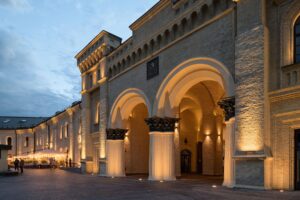
SEPTEMBER FEST 2026, Ukraine’s largest urban festival dedicated to urban development, contemporary architecture, real estate development, design, culture, and the quality of urban life, will take place on September 18 in Kyiv at the A-STATION venue.
According to the event organizers, the festival will run from 11:00 a.m. to 9:00 p.m. Entry to the A-STATION grounds will be via the Mykilski Gates near the “Arsenalska” metro station.
SEPTEMBER FEST 2026 is expected to attract about 3,000 visitors and over 150 speakers. Invited participants include mayors of Ukrainian cities, chief architects, representatives of real estate development companies and investment funds, architectural firms, designers, government officials, international experts, and specialized media outlets.
The festival’s main themes will include the development of Ukrainian cities, modern approaches to architecture and urban planning, real estate development, investments in real estate and urban infrastructure, the design of public spaces, culture, and the creation of a comfortable urban environment.
The organizers position SEPTEMBER FEST as a professional platform for dialogue among representatives of government, business, and the architectural and real estate development communities, as well as for discussing the future of Ukrainian cities and projects for their revitalization and development.
Basic admission to the festival is free upon prior registration.
SEPTEMBER FEST 2026 is organized by DMNTR, with A Development serving as the general partner.
Open4business is the official media partner of SEPTEMBER FEST 2026.
ARCHITECTURE, DEVELOPMENT, DMNTR, FESTIVAL, KYIV, SEPTEMBER FEST 2026, urban planning

The September Fest 2026 urban festival, dedicated to urban development, contemporary architecture, real estate development, design, culture, and the quality of urban life, will take place on September 18–19 in Kyiv at the A-STATION complex near the “Arsenalska” metro station.
The festival will last two days—from 11:00 a.m. to 9:00 p.m. The main entrance to the event grounds will be through the Mykilski Gates.
According to the organizers, approximately 10,000 people are expected to attend September Fest over the two days, and the professional program features more than 150 speakers.
Invited participants include representatives of central and local authorities, mayors of Ukrainian cities, chief architects, developers, investment funds, architectural firms, designers, international experts, and representatives of specialized media.
One of the festival’s key themes will be discussions on the reconstruction of Ukrainian cities and infrastructure, the development of the modern urban environment, attracting investment in real estate and infrastructure projects, as well as new approaches to architecture and urban planning.
A separate component of September Fest will be the VIP program, designed for representatives of state and municipal authorities, mayors, heads of development companies, CEOs, investors, and other professionals in the industry.
Tickets to the VIP area cost EUR250 for one day and EUR500 for two days.
Free registration is available for general admission to the festival. Tickets can be obtained on the September Fest website: www.ubc-ua.info/september-fest.
September Fest 2026 is organized by DMNTR, with A Development serving as the general partner.
Date: September 18–19, 2026
Time: 11:00 a.m.–9:00 p.m.
Location: A-STATION, Kyiv, “Arsenalska” metro station, main entrance—Mykils’ki Voryta
Expected attendance: approximately 10,000 visitors
Speakers: over 150
Standard admission: free registration
VIP ticket: EUR 250 – one day, EUR 500 – two days
Additional information:
Tel. 044 461 91 28, 077 777 25 47
Organizer – DMNTR.
General Partner – A Development.
Open4business – Media Partner
ARCHITECTURE, DEVELOPMENT, DMNTR, KYIV, September Fest, urbanism

The first Odesa Investment Congress, dedicated to urban development, investment, and Ukraine’s recovery, took place on July 10 at the SPATIUM Hotel in Odesa and brought together over 300 developers, investors, architects, experts, and government officials.
According to the event organizers, the congress ran throughout the day simultaneously in two thematic halls—“Urban Development” and “Urban Design.”
Participants discussed the investment appeal of the Odesa region, prospects for new development projects, housing policy for reconstruction, the digitalization of the construction industry, the development of medical and rehabilitation facilities, the preservation of Odesa’s historical heritage, and the energy independence of real estate properties.
Among the keynote speakers and panelists were Natalia Kozlovska, Deputy Minister of Community and Territorial Development of Ukraine; Ihor Reva, Deputy Minister of Community and Territorial Development of Ukraine for Digital Development, Digital Transformation, and Digitalization; Oleksandr Novitsky, Head of the State Inspectorate of Architecture and Urban
Planning of Ukraine; and Yevhen Metzger, Chairman of the Board of PJSC “Ukrfinzhytlo.”
Also participating in the congress were Serhiy Lysak, Head of the Odesa City Military Administration, First Deputy Mayor of Odesa Oleksandr Filatov, Deputy Head of the Kyiv Regional State Administration Nataliia Melnychuk, Chief Architect of Odesa Nadiia Novikova, CEO and Owner of SPATIUM Group Oleksandr Seleznyov, as well as representatives of development, architectural, investment, and hotel companies.
Representatives from SPATIUM Group, ZEZMAN Holding, KADORR, “Gefest,” “Two Academicians,” Akvareli, Ribas Hotels, RIEL, UDP, SAGA, Creator-Bud, Avalon, SIGMA+, and CREDO joined the discussions.
According to Alexander Seleznyov, CEO of SPATIUM Group, Odessa’s real estate development market is gradually recovering.
“We are already nearly back to pre-war levels. Old projects have been completed, and we are starting to build new ones,” he said during the congress.
Serhiy Lysak, Head of the Odesa City Military Administration, stated that the city is ready to collaborate with businesses and investors.
“Odesa is open to partnerships, constructive dialogue, and the implementation of joint projects aimed at developing our city,” Lysak emphasized.
Odessa’s Chief Architect, Nadiya Novikova, commenting on the city’s development in light of its status on the UNESCO World Heritage List, noted that changes must occur harmoniously.
“Our goal is for our city to develop—and to do so harmoniously. I don’t think this is anything to be afraid of. We will get to work,” Novikova said.
A separate segment of the program was dedicated to medical development, wellness infrastructure, and rehabilitation and inclusive spaces. The congress also featured a presentation by the Superhumans team in Odesa.
In the Urban Design hall, chief architects of Ukrainian cities and representatives of the professional community discussed modern approaches to urban planning, accessibility, the preservation of architectural heritage, and the development of public spaces.
The congress was held at the SPATIUM Hotel in Arcadia. According to the organizers, this is Odessa’s first five-star medical & wellness aparthotel that operates year-round.
The Odesa Investment Congress concluded with a gala evening, a concert program, and the presentation ceremony for the special Wassily Kandinsky Award.
The event was organized by the DMNTR media group, with SPATIUM Group serving as the general partner.
The Interfax-Ukraine news agency served as the official media partner of the Odesa Investment Congress.
DEVELOPMENT, DMNTR, INVESTMENT, ODESA, Odesa Investment Congress, RECONSTRUCTION, SPATIUM Group

The Odesa Investment Congress has updated the program for the forum, which will take place on July 10, 2026, in Odesa at the SPATIUM Hotel and will run from 8:00 a.m. to 9:00 p.m.
The final program for the congress includes two conference halls operating throughout the day—from the first panel discussion to the gala evening and concert program. The organizers note that there are only a few days left before the event begins, and seating is limited.
The program for July 10 includes a press conference on accessibility as a new urban philosophy, featuring government officials, as well as panel discussions on Odessa’s investment appeal, new investments in the regions, wellness as a new urban economy, and the development of medical, rehabilitation, and inclusive spaces.
Representatives from SPATIUM, ZEZMAN Holding, KADORR, “Gefest,” “Two Academicians,” Akvareli, Ribas Hotels, and other companies will join the discussion on Odessa’s investment appeal. A separate panel will be dedicated to new investments in the regions, featuring RIEL, UDP, SAGA, Creator-Bud, Avalon, SIGMA+, and CREDO.
One of the central segments will be a presentation by the SUPERHUMANS team in Odesa and a discussion on the development of medical, rehabilitation, and inclusive spaces. The program also includes a discussion on the topic “Odesa and UNESCO: Heritage Preservation vs. Modern Development.”
The URBAN DESIGN hall will host discussions featuring the chief architects of Kyiv, Lviv, Mykolaiv, Zhytomyr, Vinnytsia, and Rivne; a panel titled “Women Shaping Ukrainian Space”; workshops by the BOARD business community featuring Netpeak and Profiles; and an Evening Talk on premium-level sales.
The day will conclude with a gala evening, a concert program, and the presentation of the Vasyl Kandinsky Special Award.
A special program is also planned for congress guests on July 9 and 11, which will include private site visits, presentations, and a dinner.
Tickets for the Odesa Investment Congress are available on the website: ubc-ua.info/oic. VIP guests, speakers, and partners can contact us at: 077 777 25 47.
The Odesa Investment Congress is organized by the DMNTR media group. The general partner is SPATIUM Group.
The Interfax-Ukraine news agency is the information partner of the Odesa Investment Congress.
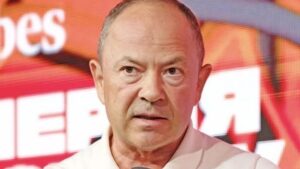
The TAS Group has begun actively investing in real estate development and is carrying out major construction projects in Kyiv, according to the group’s founder, Serhiy Tihipko.
He said the group has begun construction of 220,000 square meters in Obolon and has purchased an additional 5 hectares for this project.
“In 2027, we will begin construction of 350,000 square meters on the Left Bank. This is a fairly large investment,” said Tigipko.
Thus, real estate development is becoming one of the group’s key investment areas, alongside the financial sector and agribusiness.
Such projects are important for Kyiv’s real estate market, as they can increase the supply of residential and commercial space in major districts of the capital. At the same time, real estate development remains a capital-intensive sector that is sensitive to demand, construction costs, the availability of financing, and changes in the population’s purchasing power.
The TAS Group was previously known primarily as a financial and industrial group; however, its active construction of large-scale projects demonstrates an expansion of its interests into real estate and urban development.



