
According to Interfax-Ukraine, Ukrainian Prime Minister Serhiy Koretskyi held his first meeting with the Supervisory Board of NAEK “Energoatom,” emphasized the need to overhaul the company’s management as soon as possible, and promised all necessary support.
“I held my first meeting with the Supervisory Board of Energoatom. The government expects the Supervisory Board to carry out a thorough overhaul of the company’s management. This is a top priority. The government will provide all necessary support,” he wrote on his Telegram channel following Wednesday’s meeting.
The prime minister emphasized that “the new top management must be formed as soon as possible following a transparent competition.”
According to him, he also discussed the state-owned company’s financial condition and preparations for the fall-winter period with members of the Supervisory Board.
“Such meetings will take place regularly,” he said.
As previously reported, according to a forecast by First Deputy Prime Minister for Energy Denis Shmyhal, NAEK “Energoatom” will have a new chairman of the board and a new executive body no later than October, based on the results of a competition for which the deadline for submitting applications was July 31, 2026.
As for NJSC “Naftogaz of Ukraine,” for which President Volodymyr Zelenskyy has proposed appointing former Ukrainian Prime Minister Yulia Svyrydenko as chair, Oleksandr Vizir, coordinator of the “Energy and Climate” sector at the Ukraine Facility Platform and corporate governance expert Oleksandr Vizir noted in a comment to “EnergoReform” a week ago that negotiations are most likely still ongoing with the independent members of the company’s Supervisory Board (SB), which has the authority to appoint the chairman of the board or the person acting in that capacity.
For her part, Olga Babiy, a former member of the National Commission for State Regulation of Energy and Public Utilities (NKREKU), noted in a comment to “EnergoReform” that Yulia Svyrydenko is “the ideal solution for Naftogaz” and does not know why she has not yet been appointed.
During Question Time for the government in the Verkhovna Rada on August 21, Prime Minister Koretskyi noted that he considers it ideal if another person were appointed as the new chair of the board of NJSC “Naftogaz of Ukraine” after the 2026/27 fall-winter period (FWP).
COMPETITION, ENERGOATOM, ENERGY SECTOR, GOVERNMENT, MANAGEMENT
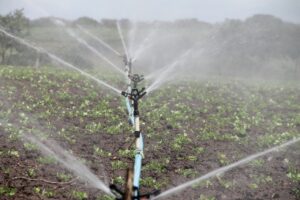
The Program of Activities of the Cabinet of Ministers of Ukraine calls for increasing the area under actual irrigation in Ukraine to 200,000 hectares by 2027, according to the program.
To this end, in 2027, the government plans to introduce long-term planning for the development of hydraulic land reclamation and to establish operators for state-owned irrigation and drainage systems.
The program also calls for the integration of data from the State Water Cadastre and other natural resource cadastres into the State Land Cadastre based on up-to-date geospatial data from the national geospatial data infrastructure in 2027.
A specific objective for 2026 is to ensure the continuity of agricultural production harvesting and transportation under martial law to preserve the harvest and minimize losses.
In addition, the government plans to provide open access to the Public Cadastral Map in 2027, taking into account the security situation, and to introduce long-term planning for Ukraine’s rural development.
According to the Accounting Chamber, there are 253 state-owned irrigation systems in the territory controlled by Ukraine, with a total designed area of 791,800 hectares; however, in 2024–2025, actual irrigation covered less than 15% of this area. At the same time, according to the State Agency for Land Reclamation, Fisheries, and Food Programs, as of early August 2026, water supply contracts had been signed for the irrigation of nearly 76,600 hectares of farmland, and more than 66,000 hectares had already been irrigated.
As previously reported, on August 17, the Cabinet of Ministers of Ukraine approved the Government Action Program. Verkhovna Rada Chairman Ruslan Stefanchuk stated that parliament will review the Program in the near future in accordance with established procedures.
agricultural sector, GOVERNMENT, irrigation, land reclamation, land registry
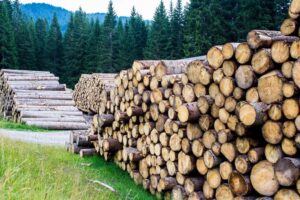
The program of the Cabinet of Ministers of Ukraine calls for increasing timber harvesting to 15.5 million cubic meters in 2027, boosting production in the woodworking and furniture industries by 5%, and raising the share of high-value-added products in exports by 10%.
According to the program, in 2026 the government plans to adopt the Strategy for the Development of Ukraine’s Woodworking and Furniture Industries through 2030 and approve an operational plan of measures for its implementation in 2026–2028.
In 2027, the government plans to introduce uniform rules governing the timber market for all permanent forest users and forest owners, regardless of ownership status.
In addition, in 2026–2027, the government plans to implement the European Union Regulation on the Trade in Goods Related to Deforestation and/or Forest Degradation (EUDR), as well as a system for due diligence and geospatial traceability of timber origin based on state information systems.
Furthermore, the corporatization of the state-owned enterprise “Forests of Ukraine” is scheduled to be completed in 2027, along with the introduction of a permanent moratorium on the sale of state-owned shares.
According to the Ministry of Economy, Environment, and Agriculture, the total volume of timber harvested in Ukraine in 2025 amounted to 11.7 million cubic meters.
As previously reported, on August 17, the Cabinet of Ministers of Ukraine approved the Government Action Program. Verkhovna Rada Chairman Ruslan Stefanchuk stated that parliament will consider the Program in the near future in accordance with established procedure.
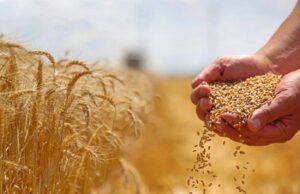
The Ukrainian Cabinet of Ministers’ action plan calls for increasing the share of processed goods in Ukraine’s agricultural export mix to 63% by 2027 and raising the volume of agricultural exports by at least $4 billion.
To achieve this goal, the government plans to expand the use of state support mechanisms for Ukrainian agricultural producers of goods with a significant share of imports and to open new markets for at least 10 new commodity lines by 2027.
It is also planned to introduce the position of agricultural attaché in 2027, along with a new instrument to guarantee loans for processing through the Partial Agricultural Loan Guarantee Fund.
A separate priority is to increase the level of processing of agricultural waste and raw materials—particularly from crop and livestock production—into biofuels.
The Ministry of Agrarian Policy’s programmatic goal is to transform the agricultural sector into a highly productive, technologically advanced, innovative, and investment-attractive industry with high added value and a significant share of processing.
As reported, on August 17, the Cabinet of Ministers of Ukraine approved the Government Action Program. Verkhovna Rada Chairman Ruslan Stefanchuk stated that parliament will review the Program in the near future in accordance with established procedure.
According to the Ministry of Economy, Environment, and Agriculture, by the end of 2025, processed products accounted for 47.8% of Ukraine’s agricultural exports, while raw materials accounted for 52.2%. In 2024, this ratio stood at 40% and 60%, respectively.
Agricultural exports, agricultural sector, EXPORTS, GOVERNMENT, PROCESSING
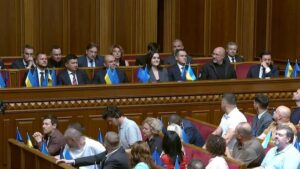
The Verkhovna Rada, upon the recommendation of newly appointed Prime Minister Serhiy Koretsky, approved the new composition of the Cabinet of Ministers of Ukraine.
During Thursday’s parliamentary session, 264 members of parliament voted in favor of this decision.
The votes in support of the new Cabinet were distributed as follows: the “Servant of the People” faction – 193, “European Solidarity” – 0, “Batkivshchyna” – 1, “Holos” – 2, the ‘Dovira’ deputy group – 17, “For the Future” – 14, “Platform for Life and Peace” – 16, “Reconstruction of Ukraine”—14, and non-affiliated deputies—7.
At Thursday’s plenary session, which was held as a package vote (with the exception of the Minister of Defense and the Minister of Foreign Affairs, whose nominations are submitted by the president), 264 members of parliament voted in favor of the resignation of the previous Cabinet and the appointment of the new government.
Specifically, the following were reappointed to the new Cabinet: First Deputy Prime Minister and Minister of Energy Denys Shmyhal; Deputy Prime Minister for Humanitarian Policy and Minister of Culture of Ukraine Tetyana Berezhna; Minister of Finance Serhiy Marchenko; Minister of Health Viktor Lyashko, Minister of Youth and Sports Matvey Bidny, and Minister of
Social Policy, Family, and Unity Denis Ulyutin.
At the same time, Vsevolod Chentsov, who previously served as Ukraine’s representative to the European Union, was appointed Deputy Prime Minister for European and Euro-Atlantic Integration of Ukraine.
Andriy Butenko, head of the National Agency for Quality Assurance in Higher Education (NAOKVO), has been appointed Minister of Education and Science.
Vitaliy Kim, head of the Mykolaiv Regional Military Administration, has become the new Minister for Veterans’ Affairs.
Additionally, Oleksandr Kravchenko, head of the Ukrainian office of McKinsey & Company, has been appointed to lead the restructured Ministry of Economy and Environment, while Taras Vysotsky, the current Deputy Minister of Economy, has been appointed to lead the Ministry of Agrarian Policy and Food.
Thus, the Ministry of Economy, Environment, and Agriculture will be divided into two separate agencies.
Meanwhile, the Ministry of Communities, Territories, and Internally Displaced Persons is now headed by MP Vitaliy Bezgin (Servant of the People faction), and the Ministry of Recovery, Infrastructure, and Transport is headed by Mykola Kalashnyk, head of the Kyiv Regional State Administration.
Consequently, the position of Deputy Prime Minister for the Reconstruction of Ukraine—Minister of Community and Territorial Development—no longer exists in the government and has been replaced by two specialized ministers.
In addition, Denys Maslov (Servant of the People faction), head of the Verkhovna Rada Committee on Legal Policy, has been appointed Minister of Justice, while Oksana Ferchuk, Ukraine’s Deputy Minister of Defense for Digital Development, Digital Transformation, and Digitalization, has been appointed Minister of Digital Transformation.
Ivan Vygivsky, head of the National Police, has also been appointed as the new Minister of Internal Affairs.
Furthermore, under the president’s quota, Andriy Sibiga is to be reappointed as Minister of Foreign Affairs, and a Minister of Defense is to be appointed; no candidates have been proposed for these positions yet.
Thus, the following individuals did not receive positions in the new government: Taras Kachka, Oleksiy Kuleba, Oleksiy Sobolev, Natalya Kalmykova, Oksen Lisovyi, Mykhailo Fedorov, and Ihor Klymenko (who may be nominated for the position of Minister of Defense).
As reported, on July 16, the Verkhovna Rada appointed Serhiy Koretsky, chairman of the board of Naftogaz of Ukraine, as Prime Minister of Ukraine.
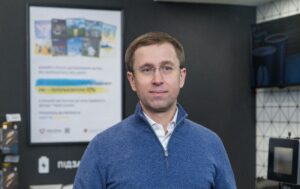
The Verkhovna Rada has appointed Serhiy Koretsky, chairman of the board of NAK “Naftogaz of Ukraine,” as Prime Minister of Ukraine.
His nomination, put forward by President Volodymyr Zelenskyy, was approved by 289 members of parliament during a session on Thursday.
As prime minister, Koretskyi replaced the former head of the Ukrainian government, Yulia Svyrydenko, who had held the position for exactly one year, beginning on July 17, 2025.
Koretsky was born on March 14, 1978, in Lutsk. He received his higher education at Lutsk Technical University, majoring in “Mechanical Engineering” and “Business Economics,” as well as at the Ivano-Frankivsk National Technical University of Oil and Gas, where he majored in “Oil and Gas Production.”
He rose through the ranks from junior analyst at the Continuum Group of Companies (since 1999) to CEO of Continuum (since 2007).
From 2013 through the end of 2018, he developed the WOG gas station chain as CEO.
He then began working on his own projects. He was a co-founder and chairman of the board of the energy trader Centurion Group SA (Switzerland).
From November 9, 2022, he served as director of PJSC “Ukrnafta” and PJSC “Ukrtatnafta.” Since May 14, 2025, he has been chairman of the board of NJSC “Naftogaz of Ukraine.”
According to the “Chesno” movement, from 2002 to 2006 and from 2012 to 2014, he served as a volunteer assistant to Ihor Yeremeyev, a member of the Verkhovna Rada of the 4th and 7th convocations.
In 2006, he ran for the Volyn Regional Council of the 5th convocation as a candidate for the Lytvyn People’s Bloc, and also for the Verkhovna Rada of the 5th convocation as a candidate for the same bloc.
From 2007 to 2012, he served as a volunteer assistant to Kateryna Vashchuk, a member of the Verkhovna Rada of the 6th convocation elected from the Lytvyn Bloc.
Koretsky declared 32.3 million hryvnias in income for 2025, land plots with a total area of 261,600 square meters in the Donetsk Oblast, and six watches from the brands Rolex, Patek Philippe, Breguet, OPUS, and Ulysse Nardin, among others.
GOVERNMENT, Koretsky, NAFTOGAZ, PRIME MINISTER, VERKHOVNA RADA



