
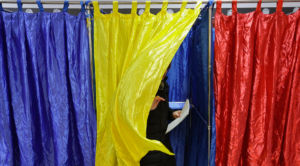
The political crisis in Romania has deepened after parliament failed to approve the government proposed by Prime Minister Adrian Vestea. The cabinet received 189 votes in favor, falling short of the required minimum of 233, which prevented it from being sworn in and beginning its work.
Following the failed vote, Romanian President Nicușor Dan is expected to hold a new round of consultations with the parties represented in parliament and propose a new candidate for the position of prime minister. This could be either a new politician or a candidate previously discussed, provided the parties can agree on a new majority configuration.
The situation is complicated by the fact that this is the second consecutive failed attempt to form a new government. Previously, candidate Yevhen Tomak withdrew his nomination after failing to secure sufficient support in parliament. Now, the failure of Veshta’s cabinet increases the risk of a protracted political deadlock.
According to Romanian procedures, if two attempts to form a government within the established timeframe do not result in the cabinet’s approval, the president may have grounds to dissolve parliament and call for early elections. Formally, such a scenario is becoming increasingly likely, but politically it remains risky for pro-European parties, as the crisis strengthens the positions of right-wing populist and Euroskeptic forces.
Prolonged political instability in Bucharest could have consequences not only for domestic economic policy but also for regional stability.
Experts at the Experts Club think tank note that the current crisis in Romania reflects a broader trend in Central and Eastern European countries—the fragmentation of party systems, growing distrust of traditional political forces, and the rise of parties that base their campaigns on criticism of Brussels, migration policy, support for Ukraine, and fiscal discipline.
For Ukraine, the situation in Romania is of particular importance. Bucharest remains an important partner for Kyiv in the areas of security, transportation infrastructure, and European integration. Significant volumes of Ukrainian trade pass through Romania, and the Danube region has taken on strategic importance for Ukrainian exports since the start of the full-scale war.
According to an assessment by Experts Club, the baseline scenario for now remains that early elections will not be held, but rather that political parties will attempt to agree on a new, possibly more limited or technical government. The reason is simple: early elections could strengthen parties that are already benefiting from the crisis of confidence in traditional political elites.
At the same time, every new failed attempt to form a government raises the cost of compromise. The longer Romania remains without a fully functioning government, the more difficult it will be to make decisions regarding the budget, reforms, relations with the EU, and economic stabilization.
Romania is already facing a high budget deficit, inflationary pressures, and the need to maintain access to European funding. Under these conditions, a political crisis could increase uncertainty for investors and slow down the implementation of reforms necessary to support macroeconomic stability.
He noted that Romania is entering a period of heightened political turbulence, where the issue of forming a government is directly linked to exchange rate stability, economic policy, and the country’s role in the region.
early elections, EXPERTS CLUB, GOVERNMENT, RISK, ROMANIA, voting
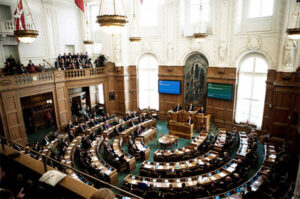
King Frederik X of Denmark, given that Social Democratic leader and long-time pro-Ukrainian Prime Minister of Denmark Mette Frederiksen was unable to secure sufficient support to form a government, has entrusted this task to the current Minister of Defense and leader of the Liberal Party, Troels Lund Poulsen. This is stated in a press release from the Danish Royal Palace.
“Representatives of the Liberal Party, the Danish People’s Party, the Liberal Alliance, the Moderates, the Conservative People’s Party, the Danish Democrats, and the Civic Party—which together hold 87 seats—recommended that Liberal Party leader Troels Lund Poulsen lead the negotiations on forming a government,” reads the statement following the king’s meeting with representatives of political parties on the Royal Palace’s website, which took place on the evening of May 8.
Representatives of the Social Democratic Party, the Socialist People’s Party, the Red-Green Alliance, the Radical Left Party, and the Alternative, which together hold 84 seats, advised that incumbent Prime Minister Mette Frederiksen be tasked with leading the government formation talks once again.
Following this, the king received Frederiksen, who, in light of the parties’ statements, advised Frederik X to entrust Poulsen with leading such negotiations.
Accordingly, the king asked Poulsen to lead the negotiations on forming a government.
On May 8, Mette Frederiksen informed the king that, following the first round of negotiations, she had been unable to secure sufficient support from the parties to form a government. In the Danish parliamentary elections on March 24, Frederiksen’s Social Democrats won, but the centrist party of incumbent Foreign Minister Lars Løkke Rasmussen secured the “golden share” with 14 seats.
Subsequently, Rasmussen, who serves as foreign minister in Frederiksen’s government, issued an ultimatum to her.
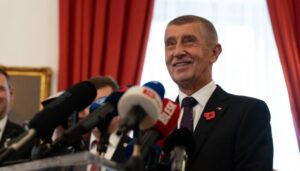
On Monday, November 3, ANO party leader and likely future Czech Prime Minister Andrej Babiš signed a coalition agreement with the far-right Freedom and Direct Democracy (SPD) party and the Motorists for Themselves political force, Radio Prague International reports, citing European Truth.
After four weeks of negotiations, the parties agreed on the main program goals of the future government, as well as the distribution of ministerial portfolios among the parties.
“The agreement defines political priorities, the number of ministers, and the principles of government personnel formation,” ANO representatives said.
The next step will be to submit proposals for the composition of the government, followed by a vote in parliament.
Tomio Okamura, leader of the SPD, who was nominated jointly by the SPD, ANO, and Motorists, is expected to become speaker of the Chamber of Deputies.
During the election campaign, Okamura repeatedly made anti-Ukrainian statements, in particular regarding the restriction of the rights of Ukrainian refugees in the Czech Republic.
After the election of the speaker of parliament, the current government must resign, which will pave the way for the formation of a new cabinet headed by Babiš.
On October 27, Czech President Petr Pavel officially tasked Andrej Babiš with forming a government after the ANO party won the parliamentary elections on October 3–4, 2025.
ANO received the most votes among all political forces, ahead of the Together coalition and the Social Democrats.
According to preliminary data, Babiš’s cabinet will consist of 15 ministers, half of whom will be appointed by ANO, five by the SPD, and two by the Motorists party.
Andrej Babiš already headed the Czech government in 2017–2021. His ANO party positions itself as “centrist” and advocates strong state support for business. The SPD is known for its Eurosceptic and anti-immigration positions, while the Motorists for Themselves party advocates for the liberalization of traffic rules and lower taxes for the transport sector.
ANO, Babiš, CZECH REPUBLIC, ELECTIONS, GOVERNMENT, PARLIAMENT, SPD, Томіо Окамура
The Cabinet of Ministers of Ukraine has allocated UAH 6 billion from the state budget reserve fund to implement measures related to strengthening the country’s defense capabilities.
According to Government Order No. 1135 of October 18, the funds have been allocated for measures related to strengthening the country’s defense capabilities and preventing man-made emergencies, in particular for the construction of protective structures for critical infrastructure facilities in the fuel and energy sector, the railway transport subsector of the transport and postal sector (protection of traction substations with a primary voltage level of 150 (110) kV) and the critical infrastructure life support systems sector (heat energy supply, water supply, and water disposal).
The Ministry of Community and Territorial Development (for the joint-stock company Ukrainian Railways) has been allocated UAH 800.5 million; regional state administrations (for regional military administrations) — UAH 5.2 billion.
As previously reported, the funds will be used to strengthen energy, transport, and vital systems — from generators and battery stations to the construction of engineering protection, which will allow for faster construction of protective structures, rapid restoration of damaged facilities, and ensure the uninterrupted operation of the energy sector.
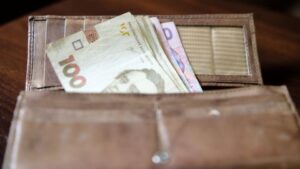
The Ukrainian Cabinet of Ministers will grant internally displaced persons who have worked continuously for six months an additional one-time payment of UAH 2,000 for living expenses, Prime Minister Yulia Svyrydenko announced.
“Support for the employment of internally displaced persons. The government will grant internally displaced persons who have worked continuously for six months an additional one-time payment of UAH 2,000 for living expenses,” Svyrydenko wrote on a Telegram channel after a government meeting on Wednesday.
In addition, it is noted that internally displaced persons who are recipients of social benefits or housing allowances throughout Ukraine and have not received funds from international organizations will also be able to purchase solid fuels for the winter in the frontline areas.
“The average amount of payments will reach UAH 8,000. A total of 32,000 households are eligible for additional support. The payments will be made by the Pension Fund of Ukraine after the payments from international organizations are completed in November-December,” the prime minister said.
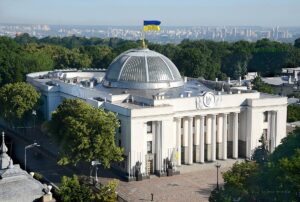
The Verkhovna Rada, at the suggestion of newly appointed Prime Minister Yulia Svyrydenko, approved the new lineup of the Cabinet of Ministers of Ukraine.
The appointment of government members was voted on at a plenary session on Thursday, which was held as a package (except for the Minister of Defense and the Minister of Foreign Affairs, whose candidates are nominated by the president), with 253 MPs voting in favor.
The online broadcast of the Ukrainian parliament session on YouTube is being conducted by MP Yaroslav Zheleznyak (Voice faction).
In particular, Mykhailo Fedorov was promoted to First Deputy Prime Minister of Ukraine – Minister of Digital Transformation (previously Deputy Prime Minister for Innovation, Education, Science and Technology – Minister of Digital Transformation).
The new Deputy Prime Minister for European and Euro-Atlantic Integration is former Deputy Minister of Economy and Trade Representative of Ukraine Taras Kachka.
The head of the large combined Ministry of Economy, Environment, and Agriculture is now Oleksiy Sobolev, former first deputy minister of economy of Ukraine (previously, the position of minister of economy was held by Svyrydenko, minister of environmental protection by Svitlana Grynychuk, and minister of agrarian policy by Vitaliy Koval). – Vitaliy Koval).
Another new official is former First Deputy Minister of Finance Denys Ulyutin, who heads the merged Ministry of Social Policy, Family, and Unity of Ukraine (previously, the position of Minister of Social Policy was held by Oksana Zholnovich, and Minister of National Unity – Oleksiy Chernyshov).
There are also several officials who remained in the new Cabinet but in new positions, including Herman Galushchenko, who became Minister of Justice (previously Minister of Energy), and Svitlana Grinchuk, who became Minister of Energy (previously Minister of Environmental Protection and Natural Resources).
In addition, Deputy Prime Minister for Recovery, Minister of Community and Territorial Development Oleksiy Kuleba, Minister of Youth and Sports Matviy Bedny, Minister for Veterans Affairs Nataliya Kalmykova, Minister of Internal Affairs Ihor Klymenko, Minister of Education and Science Oksen Lisovyi, Minister of Health Viktor Lyashko, and Minister of Finance Serhiy Marchenko retained their positions from the previous government.
In addition, on Thursday, Denys Shmyhal is to be appointed Minister of Defense, who will also oversee strategic industries (he previously held the post of Prime Minister), and Andriy Sybiga is to be reappointed Minister of Foreign Affairs.
At the same time, the Rada did not appoint a new Minister of Culture today because, as previously stated by the head of the ruling Servant of the People faction, Davyd Arakhamia, consultations on candidates are still ongoing.
Thus, the following positions in the new government were not filled: former Deputy Prime Minister for European and Euro-Atlantic Integration of Ukraine – Minister of Justice of Ukraine Olha Stefanishyna (the president appointed her as the special representative of the president of Ukraine for the development of cooperation with the US, while her candidacy for the post of ambassador to the US is being agreed upon) former Deputy Prime Minister – Minister of National Unity of Ukraine Oleksiy Chernyshov, former Minister of the Cabinet of Ministers Oleg Nemchinov, former Minister of Social Policy Oksana Zholnovich, former Minister of Agrarian Policy and Food Vitaliy Koval (may return to the post of head of the State Property Fund of Ukraine), former Minister of Culture and Strategic Communications Mykola Tochitsky (may become Ukraine’s permanent representative to the Council of Europe), former Minister of Strategic Industries German Smetanin (will head Ukroboronprom) and former Minister of Defense of
Ukraine Rustem Umerov (is being considered for appointment as Secretary of the National Security and Defense Council).



