
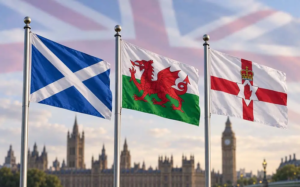
According to Experts.news, the leaders of the ruling nationalist parties in Scotland, Wales, and Northern Ireland signed a memorandum of cooperation in Cardiff on September 14, which affirms the right of their peoples to determine their own constitutional future and calls on the UK government to prepare for possible constitutional changes.
The document was signed by John Swinney, leader of the Scottish National Party (SNP) and First Minister of Scotland; Rhun ap Iorwerth, leader of Plaid Cymru and First Minister of Wales; and Michelle O’Neill, vice president of Sinn Féin and First Minister of Northern Ireland. Sinn Féin President Mary Lou McDonald also participated in the meeting.
However, the participants acted as leaders of their respective parties, not on behalf of the governments of Scotland, Wales, and Northern Ireland. This is particularly important in the case of Northern Ireland, where power is shared between Sinn Féin and the Democratic Unionist Party (DUP). Deputy First Minister Emma Little-Pengelly of the DUP stated that O’Neill does not have the authority to sign such documents on behalf of the Northern Ireland government.
The memorandum’s main political call was for the British government to “prepare for, plan, and facilitate constitutional changes in Wales, Scotland, and Northern Ireland.” The parties also reaffirmed the right of each of the three nations to determine their own future through democratic means.
However, the wording of the memorandum, as published by British media, does not contain the expected tougher demand for immediate referendums on secession from the United Kingdom. The focus is primarily on recognizing the principle of self-determination, establishing mechanisms for future constitutional changes, and ensuring that London does not block the democratic choice if sufficient support emerges within the regions themselves.
Sweeney stated that the United Kingdom is at a “turning point in constitutional change” and that the residents of each of the three territories must have the opportunity to determine their own future. Earlier, on September 10, he appealed to British Prime Minister Andy Bernam with a proposal to create a legal mechanism that would allow for a new referendum on Scottish independence if there were a sufficient public mandate.
On August 28, the Scottish government published a draft of a new referendum bill featuring the same question used in 2014: “Should Scotland be an independent country?” The bill is scheduled to be introduced in Parliament after receiving the necessary authorization from Westminster.
In Northern Ireland, the legal situation is different. The possibility of holding a vote on unification with Ireland is already provided for in the 1998 Belfast Agreement. The decision to call such a referendum is made by the British Secretary of State for Northern Ireland if he or she considers it likely that a majority of residents would support unification.
In Wales, there is no permanent legal mechanism for holding a referendum on independence. At the same time, the current Plaid Cymru government considers independence to be the ultimate goal, although Rhyn ap Iorwerth emphasizes that there is no specific timeline for such a vote yet and that the decision must depend on the position of the Welsh people themselves.
In addition to constitutional issues, the meeting participants agreed to expand cooperation in the economy, energy, relations with the European Union, and international politics. Nationalist parties believe that following Brexit and shifts in the political balance within the United Kingdom, Scotland, Wales, and Northern Ireland now share more common interests in their relations with London.
The summit was the first event of its kind since the 2026 elections, when nationalist and pro-self-determination parties simultaneously took the helm of the governments in Scotland, Wales, and Northern Ireland. However, the signed document does not yet have legal force and does not automatically trigger any referendum.
GREAT BRITAIN, NORTHERN IRELAND, REFERENDUM, SCOTLAND, WALES
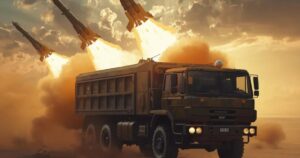
The UK intends to transfer advanced weapons to Ukraine in the form of powerful Nightfall long-range ballistic missiles capable of hitting Russian targets at a distance of over 300 miles, according to the Daily Mail.
“Nightfall missiles are equipped with warheads weighing about 200 kg, can be launched in series, and have a range that allows them to reach Moscow, among other targets. The UK Ministry of Defense is currently looking for British companies to develop, build, and supply the first three test missiles as part of a £9 million contract,” the report says.
The announcement of the Nightfall project coincided with the defense minister’s announcement of the UK’s plans to spend GBP 200 million.
As reported, The Independent, citing British Defense Minister John Gilli, said that the United Kingdom of Great Britain and Northern Ireland would spend GBP 200 million to prepare British troops for deployment in Ukraine in the event of a ceasefire with Russia.
PJSC Ukrainian Graphite (Ukrgraphite, Zaporizhia) intends to conclude an agreement to supply graphite products to the UK by the end of the year worth up to EUR50 million.
According to the company, the board of directors of Ukrgraphite has decided to “conclude a foreign economic contract for the supply of graphite products with CARBON CONSTRUCTION & TRADING LIMITED, Edinburgh, UK, valid until December 31, 2025, unless a longer term is agreed with the counterparty, for an amount not exceeding €50 million.” Edinburgh, United Kingdom, valid until December 31, 2025, unless a longer term is agreed with the counterparty, for an amount not exceeding EUR 50 million or its equivalent in the national currency of Ukraine or US dollars.”
It is specified that such plans were approved based on the decision of the general meeting of shareholders to give preliminary consent to the company’s board of directors to perform significant transactions regarding the conclusion of agreements, deals, and contracts with the relevant counterparty.
In accordance with the law, the market value of the property or services that are the subject of the transaction is UAH 2 billion 427.510 million.
The value of the issuer’s assets, according to the latest annual financial statements, is UAH 4 billion 384.136 million.
Eight of the nine elected members participated in the board of directors meeting and voted unanimously.
Ukrgrafit is a leading Ukrainian manufacturer of graphite electrodes for electric steel melting, ore-thermal, and other types of electric furnaces, commercial carbon masses for Soderberg electrodes, and carbon-based refractory materials for metallurgical, machine-building, chemical, and other industrial complexes.
According to the National Depository of Ukraine (NDU) for the first quarter of 2025, Intergraphite Holdings Company Limited (Malta) owns 23.9841% of the private joint-stock company, and C6 Safe Group Limited (Cyprus) owns 72.0394%.
The authorized capital of the private joint-stock company is UAH 233.959 million, and the nominal value of a share is UAH 3.35.
According to the results of a survey conducted by Active Group in collaboration with Experts Club in August 2025, Ukrainians identified priority areas for the development of foreign economic relations.
The majority of respondents – 81.3% – believe that Ukraine should first and foremost develop economic cooperation with the countries of the European Union. The United Kingdom also received a high level of support – 66.5%, while the United States came in third with 62.7%.
Citizens also pay significant attention to Asian countries: 36.2% of respondents support expanding relations with Southeast Asian countries (Japan, South Korea, etc.), and 31.7% with China. At the same time, 29.5% pointed to the importance of deepening cooperation with countries in the Arab and Muslim world.
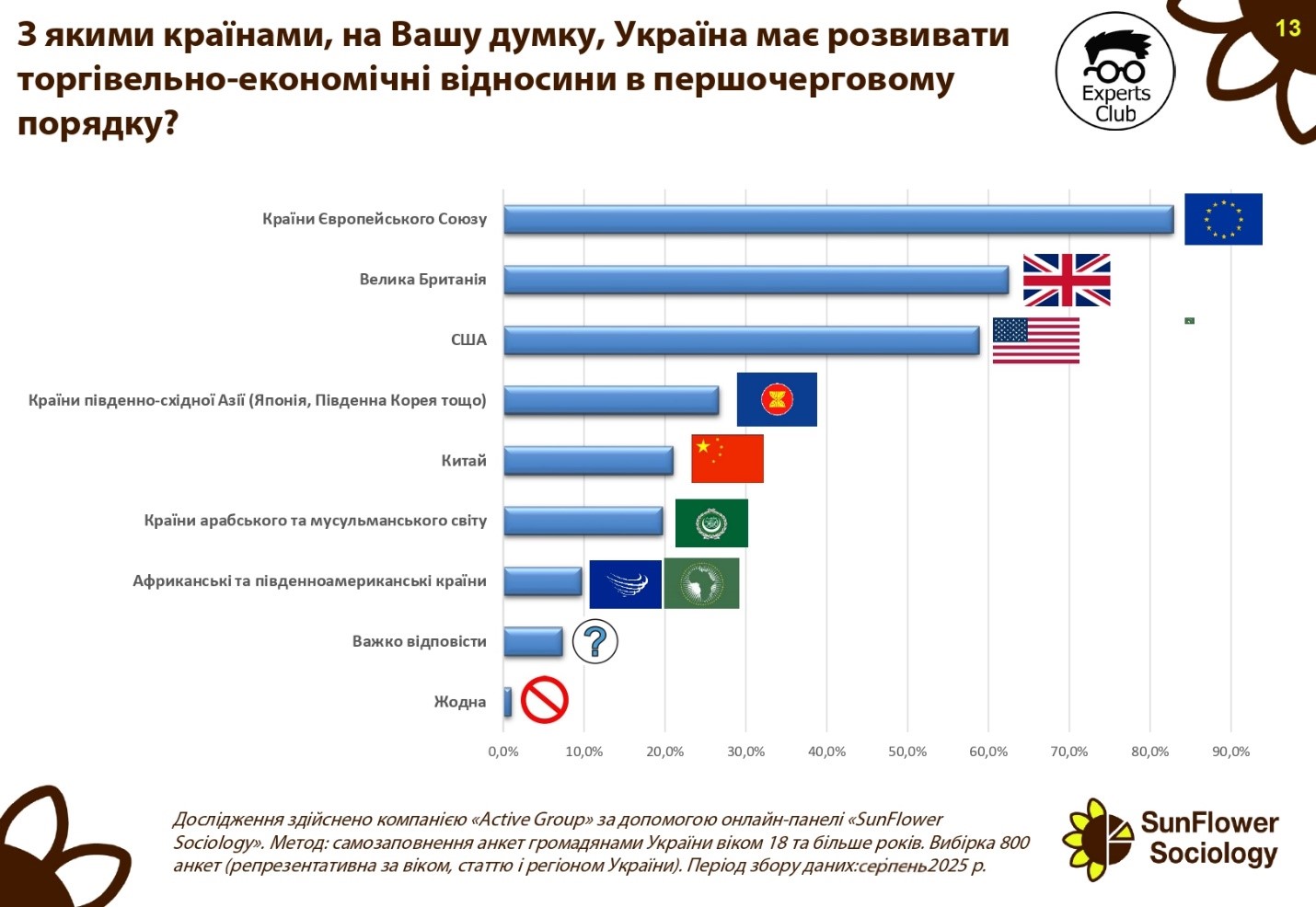
To a lesser extent, respondents are focused on partnerships with African and South American countries — this direction was supported by 14.8% of Ukrainians. Another 8.3% of respondents were undecided, and 1.0% believe that Ukraine does not need any new economic partnerships.
“These data clearly demonstrate the European and transatlantic orientation of Ukrainians in terms of economic priorities. The EU, the UK, and the US form the basis of foreign economic trust, while Asia and the Arab world are perceived as promising but secondary partners,” commented Active Group Director Oleksandr Pozniy.
According to Experts Club co-founder Maksim Urakin, the survey results confirm the real economic structure of Ukraine’s trade.
“The EU is already Ukraine’s main trading partner, accounting for over 40% of trade turnover, but if we analyze individual countries, China remains the leader. The high levels of support for cooperation with the UK and the US reflect society’s trust in Ukraine’s political and economic partners during this difficult period. At the same time, interest in Asia and the Arab world indicates the need to diversify markets and seek new opportunities in the future,” he stressed.
The survey was conducted using self-completed questionnaires among 800 Ukrainian citizens aged 18 and older. The sample is representative in terms of age, gender, and region.
ACTIVE GROUP, Arab countries, CHINA, EU, EXPERTS CLUB, GREAT BRITAIN, JAPAN, Pozniy, SOCIOLOGY, SOUTH KOREA, TRADE, UKRAINIAN ECONOMY, URAKIN, USA
Drop from £1,690 driven by fall in wholesale gas prices but household bills still substantially higher than three years ago.
The energy price cap in Great Britain will fall 7% to the equivalent of £1,568 a year this summer after a drop in wholesale gas prices.
Set by the energy regulator, Ofgem, the cap reflects the average annual dual-fuel bill for 29m households and takes effect from July until the end of September.
The cap, which is set quarterly, will fall by £122 in July from its current level of £1,690, easing the pressure on household finances.
Although that represents a fillip for hard-pressed consumers, it still leaves bills far above the £1,154 cap in the summer of 2021, before the energy crisis. Wholesale gas prices began to rise sharply in 2021 and escalated after Russia’s full-scale invasion of Ukraine in early 2022.
Bills have since eased from their peak in 2023 – when the cap reached £4,279 but the government subsidised bills to keep them at £2,500 – but remain above pre-crisis levels, meaning millions of households are expected to remain in fuel poverty.
Jess Ralston, an energy analyst at the Energy and Climate Intelligence Unit, said: “Households are still struggling with bills that are hundreds of pounds higher than pre-crisis levels, and estimates suggest bills may rise again as we head into winter.
“Whatever colour the next government is, we’ll be heading into a winter still heavily dependent on volatile gas markets, going backwards on our energy independence. The cost of living, driven in part by energy bills, and the UK’s energy security may well be key election issues – so how the parties choose to tackle them will likely be in the spotlight.”
The price cap is expected to rise slightly in October before falling again in January 2025, according to analysis by the consultancy Cornwall Insight. It had forecast July’s cap would be £1,574 a year.

The coronation ceremony of King Charles III of Great Britain will take place on May 6 next year, Buckingham Palace announced on Tuesday.
“Buckingham Palace is delighted to announce that the coronation of His Majesty the King will take place on Saturday 6 May 2023,” the royal residence said in a statement.
The ceremony at Westminster Abbey will be officiated by the Archbishop of Canterbury.
In addition, Queen Consort Camilla is crowned along with Charles III.
Queen Elizabeth II died on September 8 at Balmoral Castle in Scotland at the age of 96. On September 10, the Council of Succession proclaimed her son as the new monarch of the United Kingdom of Great Britain and Northern Ireland, Charles III.



