
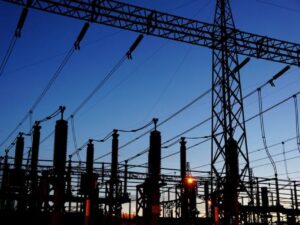
More than 16 billion hryvnias have already been spent on improving the capital’s resilience since the beginning of 2026, compared to 2 billion hryvnias last year, and another 4.5–5 billion hryvnias are planned to be spent by the end of this year, said Oleksandr Kharchenko, director of the Center for Energy Research.
“This is effectively a tenfold increase in investment, and these investments are specifically in security measures. This includes protecting high-voltage substations, providing backup power for essential sewer systems, and providing backup power for heating systems,” he said during a discussion titled “Ukraine on the Threshold of Winter: Energy, Defense, and the New Diplomatic Reality” at the Interfax-Ukraine news agency on Friday.
At the same time, according to the expert, the city needs an additional approximately EUR1.5 billion to carry out the necessary work to improve resilience.
As he noted, this year’s preparations for the heating season in Kyiv were funded primarily by the local budget, while the central budget’s share amounted to only about 10%.
“The national budget is not in very good shape right now, and payments in treasury accounts were frozen for over a month, which dealt a severe blow to all local authorities and to winter preparations as well,” explained the director of the Center for Economic Development.
As a result, some of the equipment that the city had planned to install by November or December will have to be put into operation later due to the four-week delay.
As Kharchenko recalled, in January 2026, all of Kyiv’s local power generation capacity was destroyed. In other words, Kyiv—with consumption of approximately 2 GW at a temperature of -10°C, and consumption of 1.2 GW under the current weather conditions in Ukraine—had 1.3 GW of domestic generating capacity until January 2026.
“In January 2026, these facilities were physically destroyed. What does this lead to? It leads precisely to the effects that are currently causing great distress among Kyiv residents,” explained Kharchenko.
In the absence of power generation in the city, the metro shuts down and switches to backup power, and the water utility’s pumping stations also shut down and switch to backup power—which, under such operating conditions, cannot provide full service.
However, according to the expert, despite this, the city has currently secured its key systems against man-made accidents and strategic technological issues.
“But it’s one thing to maintain water pressure in the water mains—which allows water to circulate through the pipes, fill reservoirs, and support basic infrastructure—and quite another to deliver pressure, say, to Pechersk or certain other districts located on hills,” he added.
This cannot be achieved without the operation of the main power supply lines at the water utility’s facilities.
“Therefore, certain inconveniences this winter are almost inevitable,” the expert concluded.
According to Kharchenko, in most cities it is impossible—due to engineering and regulatory factors—to implement technical projects aimed at improving energy resilience in a single season lasting seven to eight months; this would take two to three years.
“First, you spend seven to eight months on paperwork—even if you have the money—and then you start building something. This applies to everything: installing backup power supplies, backup generators, decentralized cogeneration plants—absolutely everything,” he explained.
According to the director of the Center for Energy Efficiency (CEE), Kyiv, in particular, needs approximately another EUR1.5 billion to do everything necessary to ensure the city’s resilience. Nationwide, the need could amount to 250–300 billion UAH per year for at least the next two years.
energy resilience, HEATING SEASON, INVESTMENTS, Kharchenko, KYIV, POWER GENERATION

Azerbaijan has sent Ukraine another shipment of humanitarian aid in the form of energy equipment needed to restore and maintain the power grid during the heating season, according to the Embassy of Ukraine in the Republic of Azerbaijan.
The shipment includes high-capacity transformers, 186 km of electrical cables, and other equipment for restoring the energy infrastructure.
In total, the cargo will be delivered to Ukraine by ten heavy-duty trucks.
Yuriy Gusev, Ukraine’s Ambassador to Azerbaijan, thanked Azerbaijani President Ilham Aliyev, the country’s government, and the Azerbaijani people for their support of Ukraine.
“This aid is a practical demonstration of solidarity and the Ukrainian-Azerbaijani strategic partnership, as well as a significant contribution to strengthening the resilience of our power grid amid ongoing full-scale Russian aggression,” Gusev stated.
According to him, the equipment is particularly important for Ukraine in the run-up to and during the heating season.
Azerbaijan has previously sent humanitarian aid to Ukraine on multiple occasions, including equipment to restore energy infrastructure damaged as a result of hostilities.
AZERBAIJAN, ENERGY, HEATING SEASON, HUMANITARIAN AID, UKRAINE

The Cabinet of Ministers of Ukraine has set the heating season from November 1 to March 31, instead of the previous period from October 15 to April 15.
The government formalized its decision by Resolution No. 1267 of October 8, 2025, “On amendments to the Resolution of the Cabinet of Ministers of Ukraine of July 19, 2022, No. 812 ‘On approval of the Regulation on the imposition of special obligations on natural gas market entities to ensure public interests in the process of functioning of the natural gas market regarding the peculiarities of natural gas supply to heat producers and budgetary institutions.’”
Source: https://interfax.com.ua/
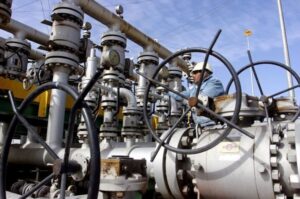
NJSC Naftogaz of Ukraine plans to import 2-3 bcm of gas, according to the published memorandum on economic and financial policy for the 5th review of the EFF program with the IMF.
“For the upcoming heating season 2024/25. Ukraine plans to import additional gas for domestic consumption in the amount of up to 2-3 billion cubic meters, while additional gas may be stored by non-residents for the needs of the EU countries in accordance with the baseline scenario,” the document says.
At the same time, it is noted that restrained domestic consumption and growing domestic production limited the need for gas imports in the last heating season.
Regarding import plans for this year’s heating season, it is noted that Naftogaz has secured additional financing for gas imports from the EBRD and bilateral donors.
If Naftogaz faces a liquidity shortage, the government is ready to assess the amount of compensation for the company’s special obligations in 2025 based on its actual documented costs, verified by the State Audit Service and other stakeholders. The relevant calculations will be finalized by the end of August 2025.
“The potential pressure on costs related to gas imports and PSO compensation will be taken into account by adjusting the fiscal balance targets to take into account the above assessment, the results of the audit of the debt of district heating companies (DHCs), available funding, and limited to UAH 60 billion (about 0.8% of GDP),” the document says.
It also notes that the energy sector reform agenda, “as soon as conditions allow,” includes additional gradual increases in gas and electricity tariffs with parallel support for vulnerable consumers, and after the war ends, it will require restoring and strengthening competition in the wholesale and retail gas markets.
It is noted that the government will adopt a roadmap for the gradual liberalization of gas and electricity markets with an implementation plan indicating the timeline for the period after martial law.
As reported, Naftogaz Group CEO Oleksiy Chernyshov said in early October in a commentary to Energoreforma that as of November 1, the company’s purchases of gas in the customs warehouse (CW) mode, which is carried out as a reserve at the expense of the EBRD loan, will be “within 500-600 million cubic meters.”
At the end of 2022, Naftogaz attracted an EBRD loan for EUR 300 million under state guarantees, which created a reserve stock of natural gas in the amount of 748 million cubic meters in the customs warehouse (CU) mode.
A new agreement on the EBRD loan to Naftogaz for EUR 200 million under state guarantees was signed in November 2023. At the time, it was emphasized that it would come into force after the state guarantees were issued. Norway and the Netherlands shared the credit risk with the bank.
The CU regime allows natural gas to be stored in Ukraine’s underground gas storage facilities for three years without paying taxes and customs duties during its further transportation from the country.

Kyiv does not plan to make changes to the schedule for the start of the heating season, Mayor Vitaliy Klitschko said.
“Today, we do not plan any changes in the schedule. So far, heating is connected only at the request of the heads of social institutions. As for all others (household consumers), we will definitely take into account the weather conditions and will inform the people of Kiev about the connection to the central heating” , – Klitschko said on the air of the national telethon on Tuesday.
At the same time, Klitschko recommended that the people of Kiev prepare for the heating season, in particular, insulate windows in houses and porches, as well as purchase warm clothes.
“It’s better to play it safe and get ready. Warm clothes will not be superfluous this winter. We must calculate different developments, because Russian barbarians are trying to destroy the critical infrastructure of Ukrainian cities and towns,” Klitschko summed up.

To date, the state of readiness for the heating season is already more than 80%, Prime Minister of Ukraine Denys Shmyhal said.
“The heating season will begin in Ukraine soon. The most difficult in history. Preparations for it went on in the summer, and continue now. The state of readiness is already more than 80%. Significant coal resources have been accumulated, gas is being pumped into storage facilities,” he said at a government meeting in Friday.
According to Shmyhal, the authorities are forming agreements with partners on additional gas supplies. UAH 1.4 billion was allocated to prepare for emergency situations, almost 1.5 thousand mobile generators and dozens of backup boilers were purchased.
“An operational headquarters has been formed that will quickly resolve any crisis issues. First of all, the issue of eliminating the consequences of Russian attacks on our critical infrastructure. We have been preparing and are preparing for all scenarios. And we will do our best to ensure that this winter Ukrainians are warm, light and water,” Shmygal summed up.



