
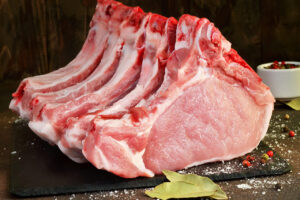
Ukraine and Singapore have intensified negotiations on opening the market to Ukrainian pork and finalizing the procedures for beginning its export, according to the State Service of Ukraine for Food Safety and Consumer Protection (SSFSCP).
According to the report, during a visit to Singapore, a delegation from the agency, led by its head Serhiy Tkachuk, discussed with the leadership of the Singapore Food Agency the accreditation of Ukrainian enterprises in accordance with previously submitted applications.
“Ukraine already has experience cooperating with Singapore. To date, five forms of veterinary certificates for export have been agreed upon: heat-treated and canned meat products, poultry meat, table eggs, egg products, and pet food,” Tkachuk emphasized.
The trip also included a meeting with representatives of the Meat Traders Association (Singapore). Singaporean companies expressed interest in sourcing Ukrainian pork to diversify imports and strengthen food security.
For their part, representatives of the Meat Industry Association and Ukrainian exporters presented their production capacities and quality standards. The host side familiarized the Ukrainian delegation with the technologies used to prepare meat for sale in Singapore’s retail chains.
Following the meetings, agreements were reached on further cooperation to facilitate Ukrainian businesses’ entry into this market.
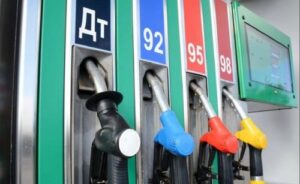
Ukrnafta JSC became one of the largest importers of diesel fuel in January 2026 and ranked among the top two in terms of volume, the company reported on Monday.
“The state-owned company imported 68,000 tons of Arctic and winter diesel fuel into Ukraine, which is almost 15% of the total volume of imports during this period,” Ukrnafta said.
Most of the fuel was purchased from the Polish state-owned concern Orlen, with purchases also made from Romania’s OMV Petrom and Lithuania.
“The company is working to provide customers with high-quality Euro-5 fuel, so in January it focused on purchasing Arctic diesel, which is recommended for use in extremely low temperatures,” said Ukrnafta CEO Bohdan Kukura.
According to the consulting group A-95, a total of 455,600 tons of fuel were imported into Ukraine in January 2026, which is 44% more than in the same period last year.
As reported, according to the top 10 A-95’s top 10 largest importers of light petroleum products in 2025, Ukrnafta ranked seventh with an annual volume of 424,000 tons, increasing its imports by 288% (109,200 tons) compared to 2024.
JSC Ukrnafta is Ukraine’s largest oil production company and operates the largest national network of gas stations, UKRNAFTA. The company has 1,807 oil and 164 gas production wells on its balance sheet.
In 2024, the company entered into asset management with Glusco. In 2025, it completed an agreement with Shell Overseas Investments BV to purchase the Shell network in Ukraine. In total, it operates 663 gas stations.
The company is implementing a comprehensive program to restore operations and update the format of its network of gas stations. Since February 2023, it has been issuing its own fuel vouchers and NAFTA cards, which are sold to legal entities and individuals through Ukrnafta-Postach LLC.
The largest shareholder of Ukrnafta is Naftogaz of Ukraine with a 50%+1 share. In November 2022, the Supreme Commander-in-Chief of the Armed Forces of Ukraine decided to transfer the company’s corporate rights, which were previously owned by private owners, to the state, and they are now managed by the Ministry of Defense.
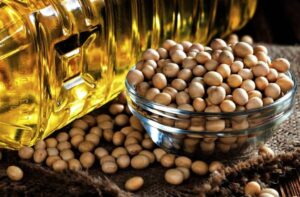
Soybean oil exports in the 2024-2025 marketing year (MY) increased by 52.5% in physical terms to 521.3 thousand tons, and by 98% in monetary terms to $521.7 million compared to the previous year, according to the industry association Ukroliyaprom.
The association noted that exports of soybean meal in 2024/2025 MY increased by more than 95% to 1,336,800 tons, and in monetary terms by 54.4% to $461.1 million.
“This indicates the demand for soybean oil and meal in many countries around the world, in particular the EU, and the unique opportunities for increasing domestic processing of raw materials and growing production and exports of high value-added products,” Ukroliyaprom noted.
The industry association specified that Ukrainian processors exported 85% of soybean oil to EU countries and the remaining 15% to other countries around the world. The leaders in the purchase of Ukrainian soybean oil in the 2024/2025 marketing year were Poland (345,300 tons worth $344.5 million), Germany (22,000 tons worth $22 million), Bulgaria (17,900 tons worth $16.3 million), as well as India (36.7 thousand tons worth $35.3 million), Saudi Arabia (11 thousand tons worth $11 million), and the UAE (7.2 thousand tons worth $8.2 million).
The situation with soybean meal exports in 2024/2025 MY was similar: 81.3% was supplied to EU markets, 18.7% to other countries. Poland (475 thousand tons worth $180.9 million), Hungary (256,200 tons worth $86.6 million), Romania (107,000 tons worth $35.2 million), and Turkey (78,700 tons worth $22.3 million).
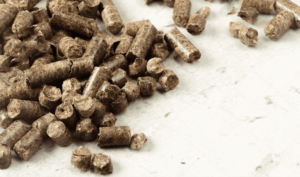
According to the results of the 2024-2025 marketing year (September 2024 – August 2025), Ukraine exported 158,000 tons of granulated beet pulp worth a total of $23.2 million, the National Association of Sugar Producers “Ukrtsukor” reported on Facebook.
The industry association noted that the largest importers of Ukrainian beet pulp were Germany with 22% of the total volume of its exports from Ukraine, Spain and Poland with 21% each, followed by Italy with 12% and the Netherlands with 9%.
According to the business association, the leaders in beet pulp exports were Radekhivsky Sugar, Almeida Group, and Ukrprominvest-Agro, which together exported 83% of the total volume.
“The production and export of granulated pulp is not only an effective use of a by-product of sugar production, which increases the profitability of the beet sugar industry as a whole, but also provides additional export revenue, which the country so badly needs today,” Ukrtsukor concluded.
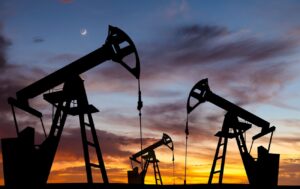
According to The Guardian, Taiwan ranks first among global importers of Russian oil, a light petroleum product that is particularly in demand in the semiconductor and chemical industries, The Guardian reports, citing a study by the Centre for Research on Energy and Clean Air.
In the first half of 2025, Taiwan imported Russian oil worth about $1.3 billion, which is 44% more than in the same period in 2024. Average monthly imports were almost six times higher than in 2022.
The increase in imports has been observed since the start of the war in Ukraine: from February 2022 to June 2025, Taiwan imported 6.8 million tons of Russian oil worth a total of $4.9 billion, which is approximately 20% of all Russian exports of this product.
Although Taipei has formally joined the sanctions against Russia and supports Ukraine, no restrictions on imports of fossil fuels from Russia have been imposed. Experts note that the increase in purchases by Taiwan could undermine the trust of its democratic allies and intensify criticism from the international community.
Naphtha is a light liquid fraction of petroleum or a petroleum product obtained from the refining of crude oil.
It is used as a feedstock in petrochemicals, especially in the production of olefins and polymers. It can be mixed with gasoline or used in reforming processes to improve the octane rating of fuel. It is also used as a solvent in the chemical industry, for diluting heavy oils, and in the production of paints and varnishes.
Oil is particularly important for Taiwan, as the island’s economy depends on the semiconductor industry, which requires high-purity chemical components. Stable access to petroleum products ensures supply chains in electronics and microelectronics.
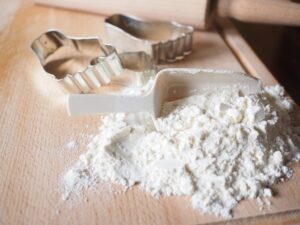
Ukrainian producers exported 66,700 tons of wheat flour during the 2024-2025 marketing year (July-June), which is 27.9% less than in the previous season, when this figure was 92,500 tons, according to the Ukrainian Flour Millers Association.
The industry association noted that about 46% of exports in the 2024/2025 season went to EU countries. The top five importers of Ukrainian flour were Moldova (20,300 tons), the Czech Republic (15,300 tons), Palestine (10,800 tons), France (3,000 tons), and Spain (2,900 tons).
Exports of other types of flour in the 2024/2025 season amounted to 4.6 thousand tons (in 2023/24 MY – 5.4 thousand tons). The share of EU countries in terms of export volumes was 14% (27% in 2023/2024 MY). The five countries to which other types of flour were supplied in 2024/25 MY were Moldova (3.2 thousand tons), Israel (0.5 thousand tons), Croatia (0.2 thousand tons), Bulgaria, and Spain (0.1 thousand tons each).
CZECH REPUBLIC, FLOUR, FRANCE, IMPORTER, MOLDOVA, PALESTINE, SPAIN



