
According to Experts.news, in August 2026, the OKKO Group became the largest importer of diesel fuel into Ukraine, supplying nearly 89,000 metric tons—a 47% increase compared to August of last year, as reported by the A-95 Consulting Group.
Ukrnafta took second place with a volume of nearly 77,000 metric tons. Over the past year, the company increased its imports by 2.4 times.
“Energo Trade JSC” became the third-largest importer, with 55,600 metric tons, although its shipments fell by 44%.
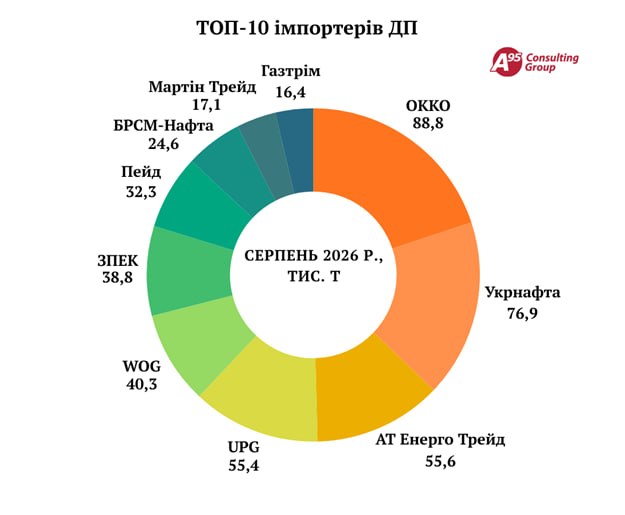
UPG imported 55,400 metric tons, a 3% increase, while WOG imported 40,300 metric tons, a 46% increase compared to last year.
The Western Fuel and Energy Company (ZPEK) also showed significant growth, increasing its imports by a factor of 2.2 to 39,000 metric tons.
According to the “A-95” chart on the third page of the press release, the rest of the top 10 importers for August included “Paid” with 32,300 metric tons, “BRSM-Nafta” with 24,600 metric tons, “Martin Trade” with 17,100 metric tons, and “Gaztrim” with 16,400 metric tons.
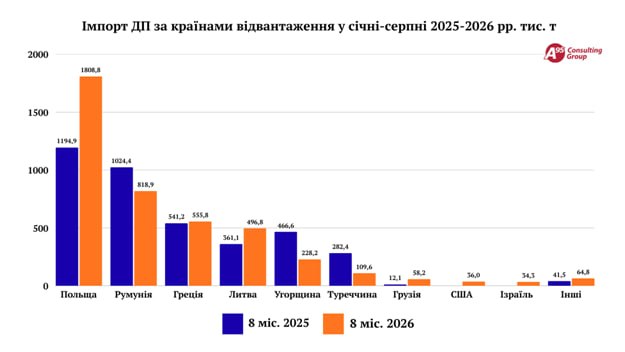
According to Experts.news, Ukraine imported 4.2 million metric tons of diesel fuel in January–August 2026, which is 7% more than during the same period in 2025, the A-95 Consulting Group reported.
However, in August alone, shipments fell by 10% year-over-year to 588,000 metric tons.
The main feature of the market in August was a significant restructuring of logistics. While a year earlier, approximately 50% of imported diesel fuel came via the southern route, in August 2026 that share fell to 33%. At the same time, the share of shipments via the western border rose from 50% to 67%.
According to Serhiy Kuyun, director of “A-95,” the change in routes is linked both to the price situation on the European market amid the war in Iran and to the increase in military risks, freight costs, and secondary logistics along the southern route.
A-95 expects that the fall will remain a challenging period for the fuel market due to intensified Russian attacks and market turbulence linked to the war in Iran.
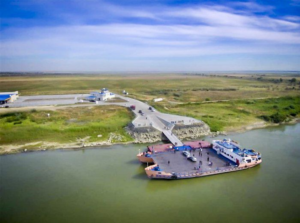
The geography of diesel fuel imports into Ukraine changed significantly in July 2026: despite record supplies from Romania, imports from Greece, Türkiye and Israel declined sharply, while the main burden is increasingly shifting to the western border.
According to the A-95 Consulting Group, Ukraine imported a total of 562,000 tonnes of diesel fuel in July, 5% more than in the same period last year.
On the southern route, Romania was the only major source to increase supplies significantly.
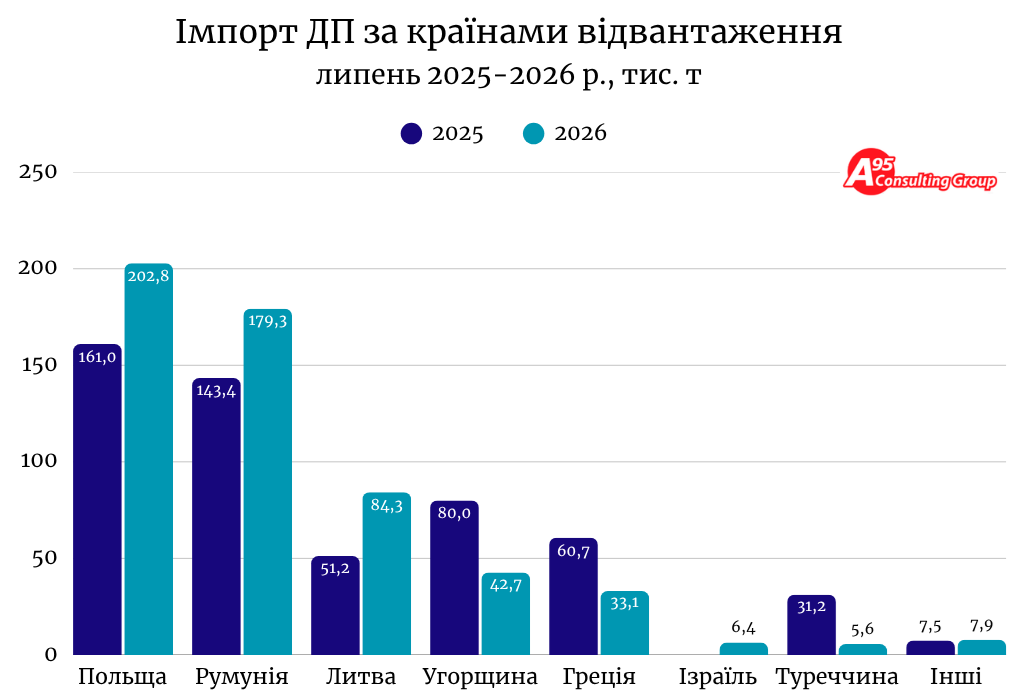
Imports of Romanian diesel fuel rose by 25%, from 143,400 tonnes in July 2025 to 179,300 tonnes in July this year. This was the highest figure since the beginning of 2025.
A completely different trend was observed among other suppliers along the southern and Mediterranean routes.
Imports from Greece decreased by 45%, from 60,700 tonnes to 33,100 tonnes. According to the A-95 infographic, supplies from Türkiye fell from approximately 31,000 tonnes to several thousand tonnes, while imports from Israel declined to isolated shipments.
At the same time, supplies through Poland and Lithuania increased sharply.
Poland increased its diesel fuel exports to Ukraine by 26%, to 202,800 tonnes, while Lithuania increased them by as much as 65%, to 84,300 tonnes.
According to A-95 Director Serhii Kuiun, one of the main reasons for the redistribution of supply flows was the record shallowing of the Danube, which created additional logistical difficulties, as well as continuing security risks.
As a result, Poland became the largest diesel fuel supply channel for Ukraine, while Poland, Romania and Lithuania jointly accounted for 83% of all imports in July.
The changes demonstrate how quickly the Ukrainian market is being forced to restructure its supply routes depending on the state of river logistics, security in the Black Sea region and the availability of European petroleum products.
At the same time, even the increase in total imports did not allow Ukraine to completely avoid a fuel shortage in July. A-95 attributes this to a combination of increased demand, a price-driven buying rush and higher diesel consumption by the transport sector.
Analysts expect supply to increase and the market to stabilise in August.
Source: A-95 Consulting Group, Experts Club

In July 2026, the state-owned company Ukrnafta increased its diesel fuel imports by 2.4 times compared to July of last year—to nearly 60,000 metric tons—ranking second among the country’s largest importers.
These figures were reported by the “A-95 Consulting Group.” A total of 134 companies imported diesel fuel in July.
The OKKO Group retained first place, importing more than 73,000 metric tons of diesel fuel. Its imports rose by 32% compared to July 2025.
Ukrnafta accounted for about 59,800 metric tons, or approximately 10.6% of the country’s total diesel fuel imports in July.
UPG took third place with 53,200 metric tons. Next came Energo Trade JSC with 50,700 metric tons and WOG with 42,900 metric tons.
Thus, the five largest importers together imported about 280,000 metric tons of diesel fuel—nearly half of the total volume of supplies to Ukraine in July.
Among the major market players, the Western Fuel and Energy Company (ZPEK) demonstrated the highest growth rate, increasing its imports by a factor of 5.3—to approximately 32,000 metric tons.
The sharp increase in Ukrnafta’s purchases comes amid its growing role in the Ukrainian petroleum products market following the expansion of its own network of gas stations and trading operations.
Overall, Ukraine imported 562,000 metric tons of diesel fuel in July—5% more than a year earlier.
However, despite the rise in imports, A-95 reported a fuel shortage in the market. Analysts cite several reasons for this, including increased demand following a rise in global prices, higher purchases by industrial and private consumers, and increased consumption due to the shift in agricultural exports toward road and rail transport.
In August, analysts expect the situation to gradually normalize thanks to a decline in global prices and an increase in fuel supply.
Polish company ORLEN S.A. supplied Ukraine with a total of 137,000 tonnes of diesel fuel from its refineries in Poland and Lithuania in July 2026, retaining its status as the largest corporate supplier of the resource to the Ukrainian market.
The company’s supply volume increased by 25% compared with July 2025 and by 61% compared with July 2024, according to data from the A-95 Consulting Group.
In total, Ukraine imported 562,000 tonnes of diesel fuel in July. Thus, ORLEN accounted for about 24.4% of total monthly imports, or virtually every fourth tonne of diesel imported into the country.
The growth in ORLEN’s supplies is taking place alongside the increasing role of the Polish and Lithuanian routes in Ukraine’s fuel logistics.
In July, 202,800 tonnes of diesel fuel were imported from Poland, compared with 161,000 tonnes a year earlier, representing growth of about 26%. Supplies from Lithuania increased even faster—by 65%, from 51,200 tonnes to 84,300 tonnes.
A-95 Director Serhii Kuiun attributes the increased pressure on the Polish route primarily to the record shallowing of the Danube and security risks that complicated traditional logistics via the southern route.
At the same time, despite a 5% year-on-year increase in total imports, the Ukrainian market faced a diesel fuel shortage in July. Among the reasons, A-95 cites rising global prices following a renewed escalation in the Middle East, increased demand from industrial and private buyers, and higher fuel consumption due to the rerouting of part of agricultural exports to road and rail transport.
In August, analysts expect the situation to normalise thanks to lower global prices for petroleum products and increased supplies.
Source: A-95 Consulting Group, Experts Club
Ukrnafta JSC became one of the largest importers of diesel fuel in January 2026 and ranked among the top two in terms of volume, the company reported on Monday.
“The state-owned company imported 68,000 tons of Arctic and winter diesel fuel into Ukraine, which is almost 15% of the total volume of imports during this period,” Ukrnafta said.
Most of the fuel was purchased from the Polish state-owned concern Orlen, with purchases also made from Romania’s OMV Petrom and Lithuania.
“The company is working to provide customers with high-quality Euro-5 fuel, so in January it focused on purchasing Arctic diesel, which is recommended for use in extremely low temperatures,” said Ukrnafta CEO Bohdan Kukura.
According to the consulting group A-95, a total of 455,600 tons of fuel were imported into Ukraine in January 2026, which is 44% more than in the same period last year.
As reported, according to the top 10 A-95’s top 10 largest importers of light petroleum products in 2025, Ukrnafta ranked seventh with an annual volume of 424,000 tons, increasing its imports by 288% (109,200 tons) compared to 2024.
JSC Ukrnafta is Ukraine’s largest oil production company and operates the largest national network of gas stations, UKRNAFTA. The company has 1,807 oil and 164 gas production wells on its balance sheet.
In 2024, the company entered into asset management with Glusco. In 2025, it completed an agreement with Shell Overseas Investments BV to purchase the Shell network in Ukraine. In total, it operates 663 gas stations.
The company is implementing a comprehensive program to restore operations and update the format of its network of gas stations. Since February 2023, it has been issuing its own fuel vouchers and NAFTA cards, which are sold to legal entities and individuals through Ukrnafta-Postach LLC.
The largest shareholder of Ukrnafta is Naftogaz of Ukraine with a 50%+1 share. In November 2022, the Supreme Commander-in-Chief of the Armed Forces of Ukraine decided to transfer the company’s corporate rights, which were previously owned by private owners, to the state, and they are now managed by the Ministry of Defense.



