
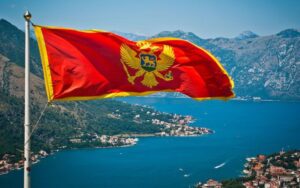
According to “Serbian Economist”, Montenegro expects to join the European Union as a full and equal member and does not agree to a model under which new member states would be granted limited rights, Minister of European Affairs Maida Gorčević stated on September 9.
According to her, Podgorica is prepared to adopt additional safeguards against a potential democratic backslide following EU accession, but does not want to become a “second-class member” with limited voting rights or other temporary restrictions.
Various models for future enlargement are currently being discussed within the European Union, including the possibility of temporarily restricting certain rights of new members regarding the budget, foreign policy, or the exercise of the veto. Gorčević emphasized that Montenegro is prepared to accept the strictest mechanisms for monitoring the rule of law, but considers the equality of members to be a fundamental condition.
At the same time, Podgorica is trying to dispel Brussels’ concerns about possible vetoes in advance. Gorčević stated that Montenegro has no intention of using the veto as a tool for exerting pressure and sees itself rather as part of a group of small and predictable EU members, such as Slovenia, Malta, or the Baltic states.
Montenegro remains the most advanced candidate for EU accession in the Western Balkans. Negotiations have been ongoing since 2012, and all 33 negotiation chapters have been opened. Following the closure in July of the chapters on competition and the customs union, the number of provisionally closed chapters reached 18.
The government expects to close the remaining chapters by the end of 2026 and is aiming for EU accession in 2028. Back in the spring, Gorčević stated that the country’s goal is full membership, rather than an interim or simplified form of integration.
For Ukraine, Podgorica’s position is also of interest as a potential precedent. If Brussels does indeed decide to impose transitional restrictions on new EU members regarding the right of veto or other powers, such a model could potentially be applied to other Western Balkan countries that join later. This model could also be applied to other EU candidate countries.
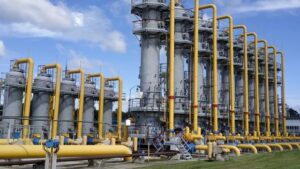
On Monday, July 6, 2026, the first annual auctions for the allocation of combined capacity at cross-border interconnection points with Hungary, Romania, and Moldova will take place, according to a statement by the Ukrainian Gas Transmission System Operator (OGTSU) on its website.
“Information regarding the conduct of combined auctions at cross-border interconnection points with Poland and Slovakia will be announced separately,” the company noted.
GTS Operator of Ukraine explained that combined capacity products allow for the booking of capacity on both sides of a cross-border interconnection point within a single auction and a single capacity product.
“The introduction of the combined capacity mechanism is the result of close coordination between OGTSU, operators of adjacent gas transmission systems, national regulators, and European institutions,” said Natalia Boiko, the company’s acting CEO.
The company asserts that the introduction of combined capacity products will contribute to the further integration of the Ukrainian natural gas market into the EU internal market, improve the efficiency of cross-border infrastructure use, develop cross-border natural gas trade, and strengthen the region’s energy security.
The application period for the allocation of annual capacity at domestic entry and exit points runs from June 29, 2026, through July 13, 2026, inclusive.
As previously reported, the National Commission for State Regulation of Energy and Public Utilities (NKREKP) adopted decisions at its June 23 meeting aimed at further integrating Ukraine’s gas market into the EU’s single natural gas market.
“The changes provide for the introduction of European rules for capacity allocation and tariff setting at cross-border interconnections of the gas transmission system,” the regulator stated.
In particular, the regulator has completed the regulatory steps to introduce joint auctions for capacity allocation at cross-border interconnections.
“This mechanism provides for the simultaneous allocation of capacity in the gas transmission systems of Ukraine and neighboring countries, which is in line with European practices for the functioning of the natural gas market,” the commission explained.
The new rules for allocating capacity at cross-border interconnections took effect in July 2026 and will apply to capacity used starting at the beginning of the new gas year—October 1, 2026.
To participate in auctions, customers of transportation services must enter into contracts not only with OGTSU but also with the operators of adjacent gas transmission systems in EU member states and the Republic of Moldova. A customer to whom combined capacity is allocated will have the right to transfer to another customer the right to submit nominations and renominations for such capacity.
AUCTION, ENERGY, GAS, INTEGRATION, ОГТСУ

Strengthening cloud infrastructure and cybersecurity is one of the key areas for strengthening Ukraine’s “digital shield” in the context of the ongoing war, according to participants in the panel discussion “Rebuilding Smarter: Cloud Infrastructure and Cyber Security for a Strong Ukraine’s Digital Shield” at the “Rebuilding Ukraine: Security, Opportunities, Investments” forum in Bucharest.
The panel was moderated by Daniel Ionita, senior associate expert at the New Strategy Center (Romania). The discussion was joined by Oleg Haiduk, advisor on AI and innovation at the PARKOVY data center and former Deputy Minister of Defense of Ukraine for Digital Development; Volodymyr Luchenko, technical director at Kyivstar; Dragos Dima, senior cybersecurity advisor at the EU Mission for Civilian Security Sector Reform in Ukraine (EUAM Ukraine) and Olga Belyakova, co-head of technology, media, and communications practice at CMS Cameron McKenna LLC in Central and Eastern Europe.
According to the speakers, immediately after the start of the full-scale Russian invasion in February 2022, Ukraine transferred critical data arrays to data centers in the EU. By 2023, the strategy had been transformed towards the creation of sovereign national data centers with support for cross-border backup solutions. This transition was made possible by accelerated legislative changes, which by the end of the year provided a functional regulatory framework for the provision of cloud services.
In the field of cybersecurity, the key measures, according to the panel participants, are the widespread use of VPN solutions, the introduction of centralized access management (PAM), the use of multi-factor authentication, and the integration of WAF-class solutions to protect web resources. “This is not just about technical means, but about building a comprehensive architecture of trust – from the user to state registries and critical infrastructure,” said Haiduk.
The experts emphasized that Ukraine’s cyber resilience must be built in a cross-border format—through the integration of critical digital infrastructure into NATO and EU security systems, joint incident response protocols, and the exchange of threat data. “The more closely Ukraine’s digital infrastructure is integrated into the Euro-Atlantic security ecosystem, the more difficult it will be to isolate or paralyze it as a result of cyberattacks,” Belyakova emphasized.
Following the discussion, participants concluded that the development of national data centers, the expansion of cloud services, and the synchronization of cyber defense standards with NATO and the EU are necessary conditions not only for the security of the public sector, but also for the stable functioning of business and the implementation of reconstruction projects.
The forum “Rebuilding Ukraine: Security, Opportunities, Investments” is being held on December 11-12 in Bucharest under the auspices of the Romanian Ministry of Foreign Affairs and the Ukrainian Ministry of Foreign Affairs and is organized by the New Strategy Center. According to the organizers, more than 30 panel discussions and parallel sessions are planned over two days with the participation of representatives of governments, international organizations, the private sector, financial institutions, and experts from Europe, North America, and Asia. The topics of the panels cover security and defense, infrastructure, financing and investment, green energy, digitalization, human capital, and cross-border cooperation.
Bucharest, cloud infrastructure, digital shield, EU, INTEGRATION, NATO
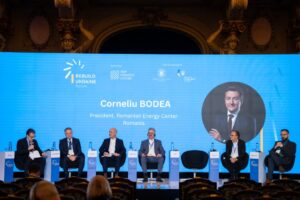
Participants in the Green Reconstruction and Green Energy panel at the Rebuilding Ukraine: Security, Opportunities, Investments forum in the Romanian capital concluded that the modernization and decarbonization of Ukraine’s energy infrastructure must go hand in hand with digitalization, the development of smart cities, and deeper integration into the EU energy space.
The panel was moderated by Corneliu Bodea, president of the Romanian Energy Center, who outlined the need for profound transformations of energy systems to transition to a low-carbon model. The key speaker was Bogdan-Gruia Ivan, Romania’s Minister of Energy, who set the strategic guidelines for the discussion. The discussion was also joined by George Agafitei, Head of Sustainable Development and Institutional Relations at PPC Group; Vitaly Radchenko, Head of Energy and Climate Change Practice at CMS Ukraine; Nicolas Richard, CEO of Engie Romania; Gheorghe Chubotar, President of Electroalfa International; and Eduard Dumitrascu, President of the Romanian Smart City Association.
The speakers noted that urban digitalization and energy modernization projects, in particular smart city initiatives, have become important catalysts for the renewal of local energy systems and municipal infrastructure. They emphasized that Ukraine should not be underestimated in terms of technological solutions: businesses and government agencies are highly receptive to the implementation of digital tools, from artificial intelligence to network infrastructure optimization. “Ukraine has already demonstrated its ability to quickly transition to new digital platforms. This makes it possible to build a modern energy sector rather than a ‘patched-up’ one,” Radchenko noted.
Participants emphasized that Ukraine is undergoing an intensive phase of legislative reforms and convergence with European standards in the fields of energy, ecology, and market regulation. This creates conditions for more effective coordination between central authorities and local levels, as well as for the implementation of joint projects with EU countries, with an emphasis on inter-state interconnectors, network balancing, and strengthening regional energy security. “Aligning rules with European ones is not only a requirement for integration, but also a prerequisite for attracting investors to long-term ‘green’ projects,” Ivan emphasized.
A separate part of the discussion was devoted to rethinking the architecture of energy networks in the direction of decentralization, flexibility, and increasing opportunities for electricity flows between countries. Participants recalled that Ukraine is already working in sync with the European energy system and is increasing the volume of electricity and gas exchanges with EU countries. In their opinion, Ukraine’s “green” transformation requires not only the physical reconstruction of generation and network assets, but also the formation of a new culture of innovation capable of attracting strategic investments and the most advanced technologies.
In this context, cooperation between European and Ukrainian energy and technology ecosystems was described as a fundamental element of regional energy sustainability. Participants called green reconstruction a historic opportunity to form a more sustainable, digitized, and EU-integrated Ukrainian economy. The panel concluded that, despite the challenges, close cooperation and coordinated investment by the state, business, and international partners is the only realistic path to an effective, future-oriented reconstruction of the energy sector.
The forum “Rebuilding Ukraine: Security, Opportunities, Investments” is being held on December 11-12 in Bucharest under the auspices of the Romanian Ministry of Foreign Affairs and the Ukrainian Ministry of Foreign Affairs and is organized by the New Strategy Center. According to the organizers, more than 30 panel discussions and parallel sessions are planned over two days with the participation of representatives of governments, international organizations, the private sector, financial institutions, and experts from Europe, North America, and Asia. The topics of the panels cover security and defense, infrastructure, financing and investment, green energy, digitalization, human capital, and cross-border cooperation.
DIGITALIZATION, energy market, EU, INTEGRATION, RECONSTRUCTION
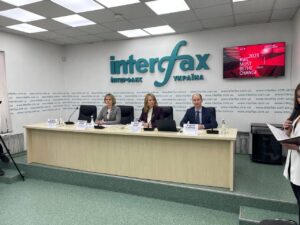
Integration of European standards, in particular the provisions of EU Regulation 305/2011 on the quality of construction products and new environmental standards, is one of the important criteria for attracting investments in the reconstruction of Ukraine, the growth of the local construction market and increasing the competitiveness of domestic producers of construction materials, believes the executive director of the association “Ukrcement” Lyudmyla Krypka.
“European integration is one of the criteria for investing in Ukraine. The key factors that will contribute to the growth of construction in Ukraine and the development of the construction sector are government programs for infrastructure rehabilitation, intensification of construction works, localization of production, introduction of modern technologies and focus on environmental standards. It is those Ukrainian producers who will focus on these areas that will be able to consolidate competitive positions, stimulate the development of the industry and provide the market with quality building materials,” she said at the press conference ‘State Partnership and Investments in Rehabilitation of Territories’ at the Interfax-Ukraine agency on Friday.
According to her, cement industry enterprises were among the first to implement the provisions of the 305th regulation in their activities and are now working on the implementation of environmental standards, which are also included in the new EU directive.
Kripka noted that the implementation of Euro standards not only increases the competitiveness of Ukrainian producers in international markets, but also opens the way to development and innovation.
One of the important tasks for the cement industry is to reduce CO2 emissions.
“The industry is working to reduce emissions. Enterprises introduce the best available technologies and management methods, take part in monitoring, reporting and verification of greenhouse gas emissions. Ukraine can become an example of simple methods to reduce CO2 emissions by using biomass in clinker firing,” the expert said.
Cement industry companies themselves invest in their own production, Kripka noted. Companies also invest in the construction of additional technological lines, clinker storage silos, terminals, kiln modernization and transition to alternative fuels. Further capacity expansion of cement plants will start during the active recovery phase, when cement consumption will increase to 10-10.5 million tons. Over the past two years, this figure is about 6.3 million tons, she explained.
The Ukrcement Association was established in January 2004 by reorganizing the Ukrainian Concern of Cement Industry Enterprises and Organizations Ukrcement. The association comprises five groups of companies, including nine cement enterprises.
CONSTRUCTION, European standards, INTEGRATION, investments in Ukraine
The Ministry of Digital Transformation of Ukraine is working on the integration of Polish electronic documents into the Ukrainian system, Deputy Prime Minister – Minister of Digital Transformation of Ukraine Mikhail Fedorov said.
“We will now work to ensure that Polish electronic documents can be received and read in Ukraine,” he said at a briefing in Kyiv on Monday.
He noted that Ukraine and Poland are now gaining unique experience not only within their states, but also in the interstate data exchange.
“This is the first case when two states create such an interesting exchange of a new format with the sharing of documents from one mobile application to another. And this opens up great opportunities for us in the European Union, because now the direction of electronic documents in the EU is being studied, and we are involved in working groups that deal with these issues,” the minister said.
In turn, the Secretary of State for Digitalization, the Government Commissioner for Cyber Security of Poland, Janusz Cieszynski, noted that he believes in the digitality of the future, and said that the Ukrainian and Polish sides are considering the possibility of expanding cooperation.
Fedorov also thanked Tseshinskiy for his help with the free receipt of Starlink terminals by Ukraine, saying that Ukraine had already received 13,000 units. and another 5 thousand will be transferred in the near future. According to the minister, the Polish side also assumed obligations to support the operation of these terminals.
At the same time, the head of the Ministry of Digital Development noted that Ukraine needs at least another “half of the existing number” of Starlink terminals to ensure stable communications in wartime conditions.



