
On October 22–23, Kyiv will host the 24th Ukrainian CFO Forum—the premier professional event for CFOs, CEOs, business owners, investors, and heads of key business functions.
Interfax readers can take advantage of a special offer: 15% off registration using the promo code BraveInterfax
This year’s program focuses on the decisions Ukrainian companies must make today as they develop their financial models and strategies for 2027 amid the war and high uncertainty. The Forum’s two-day program will feature 16 hours of professional content: 10 sessions in the form of panel discussions, interviews, and practical case studies featuring over 50 speakers from market-leading companies.
Ukrainian businesses are entering the 2027 planning cycle without a single baseline scenario. Destruction and loss of assets, attacks on energy and logistics infrastructure, high cost of capital, labor shortages, regulatory changes, and the acceleration of digital transformation are shortening the planning horizon and constantly changing the conditions under which businesses must make decisions.
For CFOs, this means simultaneously ensuring liquidity and business continuity, revising financial models, managing capital and risks, and not postponing investment and transformation decisions on which the company’s future depends.
The program of the Ukrainian CFO Forum 2026 is dedicated to these very issues—from the 2027 financial model and capital management to decisions following asset losses, adaptive planning, digital transformation, and the interaction between the CFO, CEO, and owner.
The 24th Ukrainian CFO Forum will bring together over 700 participants—CFOs of leading companies in the Ukrainian market, CEOs, business owners, international business executives, and representatives of banks, investment funds, technology companies, and government institutions.
▪️ The 2027 Financial Model: What to Include in the Budget When There Is No Base Case Scenario. Scenarios, triggers for revising the financial model, the cost of money, access to capital, and foreign exchange regulations. The forum will open with a strategic dialogue between Serhiy Nikolaychuk, First Deputy Governor of the NBU, and Andriy Dligach, founder and chairman of Advanter Group.
▪️ Business After Asset Loss: Rebuild or Restructure the Model. Replacement CAPEX, relocation, asset decentralization, recovery financing, insurance, and compensation for war risks. Practical experience will be shared by Rozetka-EVO, Nova Poshta, VARUS, Biosphere Corporation, Starlight Media, and Philip Morris Ukraine.
▪️ Strategy in the Face of Uncertainty: Decisions a CEO Must Still Make for Years to Come. Investments, scaling, production, team, and logistics amid a constantly shifting planning horizon. Panelists: Odgers Ukraine, Imperial Brands Ukraine, YASNO, and BGV Group Management.
▪️ Adaptive Planning: How to Manage a Business When the Annual Budget Is No Longer a Reliable Guide. Scenario planning, rolling forecasts, CAPEX, OPEX, liquidity, and working capital. Practical approaches will be presented by KSE, Danone, British American Tobacco Ukraine, FOKSTROT, and Metinvest Group.
▪️ Digital transformation with measurable business results. ERP, AI in finance, SAF-T UA, and data quality through the lens of deadlines, budget, and financial impact. The program features case studies from Farmak / Business Evolution, MTI, “Avtomagistral-Pivden” / SMART business, British American Tobacco Ukraine / Innoware, ALVIVA GROUP / ABM Cloud, D.TRADING / IT-Enterprise, and EBS.
Specific practical sessions at the Forum will focus on capital and liquidity management, identifying “hidden EBITDA” without new CAPEX, human capital, financial monitoring, and the CFO’s interaction with the CEO and owner.
“For CFOs, 2027 begins right now. Businesses cannot wait for certainty to emerge: decisions must be made today on whether to restore an asset or restructure the business model, invest in CAPEX or preserve liquidity, where to raise capital, and what scenarios to factor into the budget. That is why this year we are structuring the forum’s program around concrete solutions and case studies from companies that are already navigating these dilemmas,” — Ihor Solovykh, CEO of FAService and organizer of the Ukrainian CFO Forum.
The Ukrainian CFO Forum 2026 program features CFOs and CEOs of market-leading companies, representatives of the National Bank of Ukraine (NBU), and leading experts from major Ukrainian and international companies. Participants will receive up to 16 ACCA CPD units for attending the Forum.
Event partners: Pivdenny Bank, Odgers Ukraine, PUMB, Innoware, Done, SMART business, EBS, Business Evolution, Payoneer, IT-Enterprise, Advance Finance Alliance, Vchasno, ABM Cloud, ACCA, Silpo Voyage Pro, Bayadera Group, CFO Club, CEO Club, Board.
Main media partner: Starlight Media.
Ukrainian CFO Forum 2026 | October 22–23 | Kyiv + online
A special offer is available for Interfax readers through October 9: 15% off registration with the promo code BraveInterfax
Details and registration: cfo.ua/cfoforum
The Ukrainian CFO Forum is organized by FAService.
https://cfo.ua/cfoforum/?utm_source=Interfax&utm_medium=website&utm_campaign=cfoforum2026
Open4Business is the forum’s information partner.
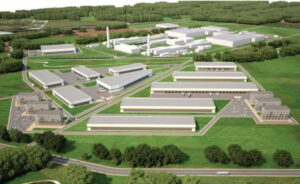
In 2026, the Ministry of Economy and Environment of Ukraine decided to provide state funding for infrastructure development to nine industrial parks totaling 557 million UAH, and will soon review applications from the “Uzhhorod” and “Khust” industrial parks for 120 million hryvnias, according to Dmytro Kysilevsky, deputy chairman of the parliamentary committee on economic development.
“In 2026, decisions have already been made regarding nine industrial parks totaling 557 million hryvnias. Among them are the Transcarpathian industrial parks ‘Tyachiv’ and ‘Friendly Wind Technology.’ Applications from the “Uzhhorod” and “Khust” industrial parks, totaling 120 million hryvnias, will also be reviewed in the near future,” he wrote on Facebook following a meeting held on Wednesday with the initiators and management companies of Transcarpathia’s industrial parks.
Kysilevsky noted that the state provides funding for the development of industrial infrastructure in industrial parks on a 50:50 co-financing basis; recipients are also required to build at least 5,000 square meters of industrial space and attract at least two tenants.
He noted that prior to the full-scale invasion, there was only one industrial park in the Zakarpattia region, but now there are already 12, and three more are preparing to apply for registration by the end of 2026.
“The security factor has become the main draw for industrial investment in the region. In terms of the number of industrial parks, the region is already among the top three, behind Kyiv and Lviv regions, and has well-founded ambitions to become a leader. There are 13 factories that have been built or are under construction in Transcarpathian industrial parks. They already provide jobs for about 2,000 workers,” the MP emphasized.
Kysilevsky also announced the start of construction on new production facilities in the industrial parks of Uzhhorod, Khust, and Svalyava.
As previously reported, as of September of this year, 125 industrial parks had been registered in Ukraine across nearly all regions. By the end of 2025, 37 industrial enterprises had been built or were under construction in these industrial parks. The total amount of investment attracted to the industrial parks exceeds 45 billion hryvnias.
government support, INDUSTRIAL PARK, INDUSTRY, INVESTMENT, UKRAINE

The Arab Council of Ukraine and the Khmelnytskyi Regional Council have agreed to develop the region’s cooperation with the countries of the Arab world, particularly in the economic, investment and humanitarian spheres.
According to Mohammad Farajallah, Secretary-General of the Arab Council in Ukraine, Violeta Labazuk, Chair of the Khmelnytskyi Regional Council, met with Khusam Raad, Chair of the Committee on Foreign and Diplomatic Relations of the Arab Council in Ukraine, advisor to the Honorary Consul General of Ukraine in Syria, and representative of the Muslim community in the Khmelnytskyi region.
The parties discussed opportunities to expand the international ties of the Khmelnytskyi region and establish contacts with representatives of businesses and public organizations from Arab states.
Particular attention was paid to the prospects of attracting investment, implementing joint projects, developing trade and economic cooperation, and humanitarian initiatives.
During the meeting, the parties also discussed opportunities to present the economic and investment potential of the Khmelnytskyi region to potential partners from Arab countries.
The Arab Council of Ukraine stated its readiness to facilitate the establishment of direct contacts between representatives of the region and business circles of Arab states, as well as to support initiatives aimed at developing interregional and international cooperation.
The parties agreed to continue their interaction and work out specific areas of possible cooperation.
The Arab Council of Ukraine is a public organization whose activities are aimed at developing relations between Ukraine and Arab countries and strengthening business, public, cultural and humanitarian ties.
ARAB COUNCIL OF UKRAINE, Arab countries, COOPERATION, INVESTMENT, Khmelnytskyi region, LABAZIUK, UKRAINE, АБУ АЛРУБ

According to Relocation, Sierra Leone has expanded its citizenship program for foreign investors by adding two new options: expedited citizenship for $1 million and naturalization through residency in the country with investments starting at $90,000.
According to information from the Go-FOR-GOLD Sierra Leone program, the first new option provides for expedited citizenship upon payment of $1 million.
This option is aimed at high-net-worth applicants who need the fastest possible citizenship process. The program requires verification of the source of funds and the applicant’s good character.
The second route is significantly cheaper but requires the investor to have a genuine connection to the country. To participate, applicants must invest at least $90,000 in an approved business or enterprise in Sierra Leone.
Afterward, the applicant must reside in the country for at least 90 days per year for five years. Once these conditions are met, the applicant becomes eligible to apply for citizenship through naturalization.
Thus, the minimum physical presence requirement over five years is 450 days.
These new options complement Sierra Leone’s existing investment citizenship program, launched under the Go-FOR-GOLD brand.
The basic investment track requires a non-refundable contribution of $140,000 for the principal applicant. An additional fee is required to include a spouse in the application, and separate fees apply for other dependents.
One of the program’s unique features is the ability for participants in the main investment track to obtain citizenship without having to reside permanently in Sierra Leone.
The country’s government positions Go-FOR-GOLD not only as a mechanism for attracting foreign investors but also as a tool for financing environmental and economic projects.
Sierra Leone has become one of the new entrants to the rapidly growing market for citizenship-by-investment programs. Such programs are most common in the Caribbean, where they are in place in Antigua and Barbuda, Dominica, Grenada, St. Kitts and Nevis, and St. Lucia.
Official source: Go-FOR-GOLD Sierra Leone — the official citizenship program.
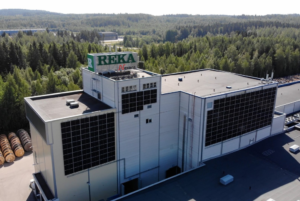
Finnish industrial company REKA Group is beginning the implementation of the REKA NOVO investment project in Novoselytsia, Chernivtsi region, with a total investment volume of €5 million, the Chernivtsi Regional Military Administration reported.
The new enterprise will specialize in the production of silicone hoses for European manufacturers of trucks, special-purpose vehicles, and companies in the shipbuilding industry.
Thus, this is an export-oriented production facility being created by a foreign investor directly in Ukraine and integrated into European industrial chains.
REKA Group representatives Markku Rentto and Mika Kärkkäinen announced the start of the project during a meeting with the leadership of the Chernivtsi region and the Novoselytsia community.
According to the published data, the project has been named REKA NOVO. The total volume of capital investment will amount to €5 million. The first stage of the enterprise is expected to be launched in early 2027.
The products of the new plant will be oriented primarily toward the European market. This makes it possible to view the project not only as a direct foreign investment in Ukrainian industry, but also as a further integration of Ukrainian production sites into the supply chains of European mechanical engineering.
According to specialized investment resources, international manufacturers of heavy machinery, including Volvo and John Deere, are named among the potential consumers of the products. However, the official statement of the Chernivtsi Regional Military Administration does not identify specific customers, so the conclusion of direct contracts with these companies has not yet been publicly confirmed.
For the Chernivtsi region, the project is of particular interest against the background of the comparatively small accumulated volume of foreign direct investment. According to the Regional Military Administration, more than 400 enterprises with foreign capital operate in the region, while the total volume of attracted foreign direct investment amounts to about $19 million.
Against this background, REKA Group’s €5 million investment is a notable new industrial project for the region.
The location of the production facility in Novoselytsia also gives the investor a logistical advantage: the city is located not far from the border with Romania, which facilitates the integration of the enterprise into European production and transport chains.
The project is also indicative of a broader trend toward relocating individual production operations closer to the EU market. Ukraine’s western regions, thanks to their geographical proximity to the European Union, relatively developed industrial base, and access to the Ukrainian workforce, are gradually becoming one of the main locations for new export-oriented production facilities.
Official source: Chernivtsi Regional Military Administration — REKA NOVO investment project.
The Czech oil and gas company MND is considering investing at least $60 million in hydrocarbon production projects in Ukraine as part of a partnership with the Naftogaz Group.
Naftogaz and MND signed a memorandum of understanding on potential cooperation regarding three existing production-sharing agreements between Ukrgazvydobuvannya and the Ukrainian government. The document was signed during the Carpathian Eight Summit, the group reported.
If the agreements are implemented, MND will be able to participate in the development of Ukrainian fields and contribute its own capital, technology, and operational expertise to the projects.
The initial investment under the three agreements could total $60 million. However, the Czech company’s participation has not yet been finalized—it will depend on the results of the relevant competitive selection process.
Naftogaz views attracting international oil and gas companies as one of the tools for increasing its own gas production amid regular Russian attacks on Ukraine’s energy infrastructure.
Serhiy Fedorenko, acting head of Naftogaz, noted that the group is interested in international partners capable of bringing investment, modern technologies, and practical experience.
In turn, Yana Gamrshmidova, CEO of the energy division at MND Group, stated that the company is already contributing to Ukraine’s energy resilience and intends to introduce new technologies and create jobs.
MND is of particular interest as a strategic investor because it is not a financial institution but an active European energy company with its own expertise in hydrocarbon exploration and production.
For Ukraine, attracting such a partner could mean not only an inflow of foreign capital but also access to field development technologies and management expertise from the European oil and gas industry.
The memorandum is not yet a final investment agreement. The parties must still agree on the terms of cooperation, and MND’s potential participation in production-sharing agreements must go through the procedures required by law.
However, the announced initial investment of $60 million makes the initiative one of the most significant new projects involving private European capital in Ukraine’s extractive industry.



