

Ukraine’s European integration is entering a new practical stage, at which dialogue between the state and business is becoming one of the key tools for preparing the country for future EU membership.
This is stated in a column by Viktoriia Lobun, adviser to the Deputy Prime Minister for European and Euro-Atlantic Integration of Ukraine, published by the Interfax-Ukraine agency.
According to her, a historic step was the opening on June 15, during the Second Intergovernmental Conference between Ukraine and the EU in Luxembourg, of Cluster 1 “Fundamentals of the EU accession process.” This cluster is fundamental for the entire negotiation process, opens it and will remain open until the completion of the negotiations.
“Today Ukraine faces an ambitious task — to ensure the high-quality preparation of the state for future membership and to implement the changes that will allow it to function fully within the European Union,” Lobun noted.
She emphasized that European integration is not limited to the adoption of legislation or the fulfillment of formal negotiation conditions. It is about how changes will affect the economy, individual sectors, communities, citizens, state institutions, local self-government and business.
Some Ukrainian companies are already effectively operating in a single economic space with the EU: entering European markets, looking for partners, adapting to common rules and changing their own business processes. At the same time, the perception of Ukraine by European business is also changing: Ukrainian partners are increasingly viewed not only as an opportunity, but as a factor of competitive advantage in restructuring supply chains, developing new production facilities and strengthening Europe’s economic resilience.
The EU remains Ukraine’s largest trading partner — accounting for more than 63% of foreign trade in goods. The next step, according to Lobun, should be the transition from perceiving Ukraine as an external partner to perceiving it as part of the common market.
Platforms for discussing Ukraine’s economic integration with the EU play a separate role in this process. In particular, these issues were raised at the EU-Ukraine Business Summit in Brussels and will be discussed during the Ukraine Recovery Conference in Gdańsk. As part of the conference, a workshop is planned on how to combine Ukraine’s recovery with preparation for EU membership.
One of the practical tools for preparing for European integration has been a series of regional dialogues with business. In the first half of the year, such dialogues have already taken place for the agricultural sector, the metallurgical industry and the pharmaceutical industry. They were joined by representatives of business, sectoral associations, authorities, parliament and the expert community from different regions of Ukraine.
In fact, this is about creating a permanent mechanism of interaction between the state and business on issues of European integration.
One of the main questions of such dialogues is what Ukraine’s integration into the EU internal market will look like in practice. The transition from the model of external partnership to the model of the common market requires a new balance between competition and integration.
In some areas, this process already has practical examples — in particular in the energy market and roaming. At the same time, there are more complex areas where Ukraine is a strong player, in particular the agricultural sector and metallurgy. It is precisely here that it is important to ensure integration into the EU internal market without losing the competitive advantages of Ukrainian producers.
Lobun notes that dialogue with business makes it possible to better understand the expectations and concerns of companies regarding individual areas of integration. Meetings in the regions where business operates under conditions of constant risks are especially important. This makes it possible to shape policy focused not only on compliance with European requirements, but also on the real capabilities of the Ukrainian economy.
Ahead, Ukraine is expected to fulfill the conditions and benchmarks of the “Fundamentals” Cluster, as well as to work on opening the next negotiation clusters. They cover a significant part of the economic component of future membership — the internal market, competition policy, freedom of movement of goods and services, and other areas important for Ukrainian business.
Thus, dialogue between the state and business is becoming not only a communication tool, but one of the mechanisms for Ukraine’s practical preparation for membership in the European Union.
The success of the negotiation process, as Lobun emphasizes, will be determined not only by the number of opened or closed clusters. Its real result should be the creation of a modern, competitive and resilient state, ready to function fully as part of the European community.
Source: Interfax-Ukraine, Viktoriia Lobun’s column “European integration is moving into the practical dimension: why dialogue with business is becoming critically important.”

On January 1, 2026, a number of changes came into force in Ukraine that affect companies’ expenses, tax burdens, and foreign trade operations—from new state budget parameters and individual tax innovations to updates to energy tariffs and export licensing rules, according to the Experts Club information and analytical center.
The 2026 state budget has set new social standards that directly affect the wage fund, social security contributions, and the calculation of fines and mandatory payments linked to the minimum wage and subsistence minimum.
In terms of taxation, businesses should take into account the updated indicators for the simplified system and military tax. The tax service’s explanations for 2026 separately note the amounts of payments for individual entrepreneurs in groups 1-2, as well as the introduction/application of the military levy for single tax payers (in particular, a fixed payment for groups 1-2 and a percentage of income for group 3), plus a number of related administrative changes.
A separate section is devoted to labor regulation. Starting in 2026, the requirements for employers regarding the employment of people with disabilities will be updated (a change in the approach to meeting the quota and financial responsibility for non-compliance). This affects personnel policy, budgeting, and internal HR procedures, especially in companies with a large number of employees.
In foreign trade for 2026, the government has maintained zero quotas (a ban through quotas) on exports of natural gas of Ukrainian origin and a number of other items, while canceling quotas on exports of table salt and coking coal, and maintaining the licensing regime for certain agricultural items for export to a number of EU countries.
In the energy sector, the NEURC set the tariff for Ukrenergo’s electricity transmission services for 2026: for January-March – UAH 713.68/MWh (excluding VAT) for most system users and UAH 373.93/MWh (excluding VAT) for green electrometallurgy enterprises; for April-December – UAH 742.91/MWh and UAH 378.49/MWh, respectively (excluding VAT).
Changes in excise and financial matters are also important for certain industries. In particular, the schedule for increasing excise duty on motor fuel, previously introduced by amendments to the Tax Code, continues to apply, and an increased income tax rate has been set for banks for 2026.

Ukraine needs to update its legislation on critical minerals in order to exploit its existing resource potential and strengthen its competitiveness in the global market, participants in a thematic panel at the Ukraine Recovery Forum said. They stressed that without transparent rules of the game, specialized international partnerships, and a stable security environment, the implementation of large projects in the mining sector remains limited.
The panel was moderated by Vitaliy Radchenko, managing partner of CMS Ukraine and head of the energy and climate change practice. The discussion was joined by Volodymyr Tsabal, Secretary of the Verkhovna Rada Committee on Budget, Paul Coyier, Professor at the Institute of World Politics (USA), Ksenia Orynchak, Founder and Executive Director of the National Association of Extractive Industries of Ukraine, and Greg Swenson, Chairman of Republicans Overseas UK.
According to the speakers, Ukraine has significant reserves of critical raw materials, but the existing regulatory framework does not fully meet the requirements of international investors and specialized financial institutions. They emphasized the need for clear procedures for access to deposits, understandable risk-sharing mechanisms, and investment protection guarantees. “If Ukraine wants to occupy a prominent place in global supply chains for critical minerals, it needs modernized rules that are understandable to transnational companies and export credit agencies,” Tsabal said.
Separately, participants drew attention to China’s dominant role in the mineral processing segment, which poses significant risks to Western economies. In this context, the strategic partnership between Ukraine and the US, in their opinion, could become a tool for diversifying supply sources, as well as a channel for attracting capital and technology. “Cooperation with Ukraine makes it possible to reduce dependence on a limited number of suppliers and at the same time support the reconstruction of a country that is on the front line of the conflict,” Swenson emphasized.
At the same time, experts reminded that the implementation of projects in the extractive sector directly depends on the security situation. They noted that some of the territories rich in minerals are currently under Russian occupation, which complicates the planning and launch of new investment initiatives. According to the participants in the discussion, achieving lasting peace and creating a predictable security environment is a necessary condition for transforming Ukraine’s resource potential into real economic results.
The forum “Rebuilding Ukraine: Security, Opportunities, Investments” is being held on December 11-12 in Bucharest under the auspices of the Romanian Ministry of Foreign Affairs and the Ukrainian Ministry of Foreign Affairs and is organized by the New Strategy Center. According to the organizers, more than 30 panel discussions and parallel sessions are planned over two days with the participation of representatives of governments, international organizations, the private sector, financial institutions, and experts from Europe, North America, and Asia. The topics of the panels cover security and defense, infrastructure, financing and investment, green energy, digitalization, human capital, and cross-border cooperation.
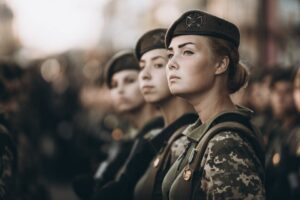
The law allows women with medical and pharmaceutical education to be registered for military service without their personal presence, but there are no mechanisms for the forced conscription of such women from abroad, lawyers interviewed by the Interfax-Ukraine news agency explained.
“The obligation to register for military service does indeed exist. If a person is physically outside Ukraine, they must notify the territorial recruitment center at their place of registration, in particular by email, that they are temporarily abroad. However, there is no mechanism that would allow the state to forcibly return a citizen to fulfill this obligation. This also applies to those who are abroad under the temporary protection mechanism,” said Zoryana Skaletska, partner at Ario Law Firm and Minister of Health in 2019-2020.
She noted that in the context of military registration of women with medical or pharmaceutical education, “it is important to distinguish between the concepts of ‘compulsory’ and ‘automatic’ registration.”
“Compulsory always means restriction of freedom, and we do not have such mechanisms. However, automatic registration is indeed provided for. The Cabinet of Ministers’ resolution of July 30, 2025, allows such women to be registered for military service without their personal presence,” she said.
Skaletskaya explained that there are currently three mechanisms through which women with medical or pharmaceutical education can be entered into the Unified State Register of Conscripts, Military Service Obligators, and Reservists: through an educational institution, through a personal message, and through an employer.
“Thus, ‘automatic registration’ actually takes place through official notification of the educational institution or employer, but does not imply coercion or physical control by the state,” Skaletskaya noted.
She also emphasized that the law does not provide for separate liability specifically for women with medical or pharmaceutical education who have not registered for military service, since there are now general rules on violations of the law on military duty and military service, which provide for a fine of 850 to 1,700 hryvnia.
“Theoretically, this article can also be applied to women who have the relevant education but have not applied to the TCC and SP, especially if they are not employed and received their diploma many years ago. However, in practice, the application of this norm is still limited,” she noted.
Skaletskaya pointed out that the TCC and SP will only be able to automatically identify such persons when the Unified State Register of Conscripts, Military Service Obligators, and Reservists has technical access to the Ministry of Education’s diploma database.
“Currently, such interaction between the registers has not been introduced, so we do not see active prosecution of female medical professionals who have not registered,” she said.
Skaletskaya pointed out that “the practice of submitting information about female graduates of medical institutions to military registration and enlistment offices existed even before the current changes, but now we have another problem: the data in the registers is often not updated.”
“If we talk about the practical meaning of this control, its purpose is not punishment, but the ability to quickly recruit medical specialists if necessary for the defense sector. But it is important to understand that even in this case, a woman can only be recruited after passing a military medical commission (VVC), and not all of them are recognized as fit for service based on its results,” the lawyer emphasized.
She also noted that military registration control applies to all enterprises regardless of ownership, including private clinics.
For her part, Galina Chernyakina, a lawyer at Barristers, noted that the registration of women with medical or pharmaceutical education is exclusively a registration measure and is not equivalent to mobilization, i.e., it does not in itself mean compulsory conscription or military service without a corresponding decision by the state.
At the same time, she noted that “restrictions on traveling abroad during martial law apply exclusively to male citizens of Ukraine between the ages of 18 and 60 who are subject to military registration and mobilization, while women who have medical or pharmaceutical education and are subject to military service are not restricted in their right to travel abroad, even during a period of general mobilization.”
“Accordingly, women who are abroad under a temporary protection program or on other grounds cannot be forcibly returned to Ukraine for military registration, mobilization, or military service,” she said.
Chernyakina noted that the main type of liability for violating military registration rules is administrative, which provides for fines, and criminal liability can only arise in the case of actual evasion of mobilization after receiving a summons.
“However, so far, the practice of bringing women who are subject to military registration in accordance with the law to administrative or criminal responsibility is rare,” she said.
Source: https://ru.interfax.com.ua/news/general/1114670.html
Barristers, LAWYER, LEGISLATION, military registration, pharmaceutical education, WOMEN, Чернякіна
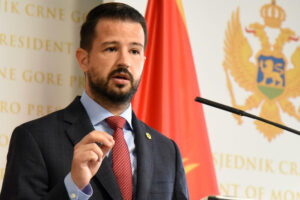
According to the Serbian Economist, Montenegrin President Jakov Milatovic said that the country’s migration policy should be revised, emphasizing that the influx of foreigners has made housing and rent unaffordable for Montenegrin citizens. According to him, the real estate market is overloaded, and young Montenegrins are deprived of the opportunity to rent housing and combine study with work, Adria TV reported.
“Because of the large number of foreigners, a square meter of housing has become a luxury, rent has increased many times, and young people who could work, including while studying, have been left without the opportunity to earn for themselves and their families. It’s time to change the approach: first jobs and apartments for our citizens, and then open doors for foreigners,” said Milatovic.
He emphasized that migration policy should be “responsible and fair”, and the priority is to provide housing and jobs for locals and create conditions for the return of those who have gone abroad.
After 2022, Montenegro faced a marked increase in the number of foreigners, which sharply increased housing and rental prices. This was especially felt in Podgorica, Budva and seaside regions.
In the case of stricter rules of stay and rent, foreigners living in Montenegro are likely to look for alternatives in neighboring countries:
– Serbia is the most likely destination. The country is distinguished by its lenient migration legislation, proximity, common language space and developed infrastructure for foreigners. Belgrade, Novi Sad and Nis have already become centers of attraction for migrants, especially from Russia, Ukraine and CIS countries.
– Bosnia and Herzegovina is also attractive for migrants because of low housing prices, although it is much less developed in terms of infrastructure and labor market.
– Croatia – as an EU country remains an option, but high real estate prices and visa restrictions make it less accessible.
Thus, the most real “beneficiary” of a possible tightening of migration policy in Montenegro will be Serbia, where large migrant communities have already formed and where the authorities are interested in attracting foreigners to stimulate the economy.
According to the results of the 2023 census, there were 122,744 immigrants in Montenegro, i.e. people who lived outside the country for at least a year and later returned or resettled.
Of these, 35.3% were citizens of foreign countries (≈ 43,268 people).
Among the countries of origin of immigrants:
– Serbia – 45,000 persons;
– Russia – 15,000 persons;
– Germany – 7,000 persons;
– Ukraine – 3,000 persons.
In the municipality of Budva in 2023 among the inhabitants were 14 % of Russians and 4 % of Ukrainians.
https://t.me/relocationrs/1469

The adoption of the law with amendments to the Criminal Procedure Code (CPC) No. 4555-IX (in the Rada it was under No. 12414) significantly weakens the independence of anti-corruption bodies, jeopardizes Ukraine’s European integration aspirations, and violates the principles of the rule of law and legality, in particular, due to the violation of procedures provided for by the regulations of the Verkhovna Rada, the Ukrainian Bar Association (UBA) made a public statement on Wednesday.
Among the norms criticized by the UBA are the abolition of the exclusive jurisdiction of the NABU and the SAP for corruption crimes, the deprivation of the SAP prosecutors of the authority to refer to the competence of the NABU other proceedings not expressly provided for by the CPC, and the consolidation of the right of the Prosecutor General to request the materials of any proceedings and the possibility of assigning the analysis of such materials for compliance with the requirements of the law to any other prosecutor.
The statement also notes the consolidation of the exclusive competence of the Prosecutor General to report suspicion of top officials and authorizing him to close criminal proceedings against top officials.
“The possibility of appointing a prosecutor without a competition – on the basis of a personal application and based on the results of a special inspection. Such a norm levels the selection standards, contradicts the principle of independence of the prosecutor’s office and creates risks for the legitimacy of personnel decisions”, – commented in the UBA another of the norms of the adopted law.
In its opinion, the fixing of such grounds for suspension of an investigator/detective as non-compliance with the prosecutor’s instructions can be used as a tool to influence the procedural independence.
The Association also pointed out that the grounds for conducting an “urgent” search without a court decision have been expanded to include the seizure or preservation of evidence, whereas previously it was possible only to ensure the life of persons, the safety of property or in the case of prosecution of persons.
The UBA notes that the independence of anti-corruption bodies is a key requirement of international partners and a condition for financial support to Ukraine. Its provision was envisaged, in particular, in the framework of visa liberalization with the EU and programs with the IMF.
“Moreover, such a law may create obstacles for Ukraine’s accession to the EU, because it violates the principles of the rule of law, which is a fundamental component of the European integration process. Given the above, the Ukrainian Bar Association calls on the Verkhovna Rada to initiate an immediate review of the provisions of the law, which undermine the institutional independence of the NABU and SAP,” the statement reads.
The Association also calls on international partners to continue monitoring and promoting compliance with the principles of independence of Ukraine’s anti-corruption system, and on the professional legal community and the public to work out changes that will comply with international standards of the rule of law.



