
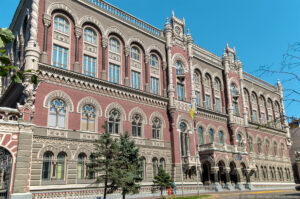
The National Bank of Ukraine revoked LLC “FC ”Growway”’s license to operate as a financial company and simultaneously fined it 216,180 UAH.
According to the NBU, the fine was imposed for violations of the laws governing the activities of financial companies, as well as requirements related to corporate governance and internal control.
In a separate decision, the regulator revoked the company’s license due to its failure to comply with the NBU’s requirement dated July 6, 2026. The company was required to rectify a violation related to its failure to submit, within the established deadline, a report providing assurance regarding the annual financial statements for 2025.
The company must pay a fine of 216,180 UAH within one month after the decision takes effect.
“Growway” had previously been subject to enforcement measures by the NBU. In 2024, the regulator reported that the company had failed to submit, within the prescribed time limit, a similar assurance report regarding the annual financial statements for 2023.
In addition, the NBU included Financial Company “Growway” in its inspection plan for non-bank financial institutions for the third quarter of 2026.

The National Bank of Ukraine took enforcement measures against FC “Atlana” LLC, imposing a fine of 198,880 UAH on the financial company and issuing it a written warning.
As the NBU reported on August 20, the regulator identified violations of legislation governing the provision of financial services, as well as shortcomings related to the timely and complete submission of information, explanations, and documents to the National Bank.
The company must pay the fine within one month after the decision takes effect. Atlana must rectify the identified violations and deficiencies by September 8, 2026.
The decision was adopted by the NBU’s Committee on Supervision and Regulation of Non-Bank Financial Services Markets on August 17, 2026.
This is not the first enforcement action taken by the NBU against the company. In November 2025, the regulator fined FC “Atlana” 595,000 UAH for a series of violations of anti-money laundering legislation, specifically for deficiencies in risk assessment and customer due diligence.
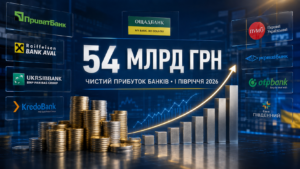
Ukrainian banks earned UAH 54.07 billion in net profit in the first half of 2026, while their pre-tax profit reached UAH 108.57 billion, the Experts Club information and analytical center reports, based on Opendatabot calculations and data from the National Bank of Ukraine. The material was published on August 19, 2026.
Banks’ income tax expenses amounted to UAH 54.5 billion, thereby exceeding half of the financial result earned before taxation. During the same period last year, banks accrued UAH 21.99 billion in tax.
In its review of the results of solvent banks, the National Bank also reported that the sector’s net profit in the first half of the year amounted to about UAH 54 billion and was 32% lower year-on-year. One of the main reasons was the application of an increased 50% corporate income tax rate for banks in 2026.
At the same time, the banking sector’s operating profitability remains high. According to the NBU, the pre-tax profit of solvent banks in the first half of the year increased by 6.5% compared with the corresponding period of 2025.
In 2025, banks paid corporate income tax at the standard sector rate of 25%, but in 2026 the rate was raised again to 50%. The NBU has repeatedly warned that increased taxation reduces banks’ ability to build up capital and expand lending to the economy.
The primary sources are NBU data and the Opendatabot study dated August 19, 2026.

Insurance Company “Veles” (Odesa) plans to change its name to PJSC “Veles” and update its business activities, according to information submitted by the insurer to the disclosure system of the National Securities and Stock Market Commission (NSSMC).
According to the information, the company’s shareholders plan to consider this matter at a meeting on September 15, 2026.
The company plans to remove the following from the list of economic activities it is authorized to conduct: insurance, risk assessment, and other auxiliary activities in the field of insurance and pension provision. And to include, in particular, consulting on commercial activities and management; brokerage services in the trade of timber, construction materials, and plumbing
fixtures; brokerage services in the trade of furniture, household goods, iron and other metal products; the leasing and operation of owned or leased real estate; legal services; the activities of head offices; and consulting on commercial activities and management.
As previously reported, the National Bank of Ukraine, by a decision dated July 29, 2026, revoked the company’s license to conduct insurance activities and removed it from the State Register of Financial Institutions based on a submitted application.
Insurance Company “Veles” holds a 0.01% market share in terms of insurance premiums and technical reserves.
It was previously reported that on May 14, 2026, the general meeting of shareholders of PJSC Insurance Company “Veles” approved a resolution on the company’s exit from the market and an exit plan.
According to the company’s financial statements, for the first three months of 2026, insurance premiums totaled 1.790 million UAH, technical reserves amounted to 4.501 million UAH, and no insurance claims were paid.
Insurance Company “Veles” has been operating in the market since 1998. It is a member of the “Insurance Business” association. Its authorized capital was 39 million UAH.
The volume of cash inflows to banks’ teller windows in the first half of 2026 increased by 8.9% compared to the same period in 2025—to 1 trillion 554.8 billion UAH, while the volume of cash disbursements rose by 8.7% to 1 trillion 602.4 billion hryvnias, according to statistics from the National Bank of Ukraine (NBU).
“The increase in cash inflows to bank teller windows was driven by a revival in economic activity starting in the second quarter of this year and sustained consumer demand amid rising household incomes, particularly wages and pensions,” the National Bank noted on its Telegram channel on Monday.
The regulator attributes the rise in hryvnia cash withdrawals from bank teller windows to heightened security risks caused by airstrikes and the destruction of industrial, energy, and residential infrastructure, which sustained public demand for cash.
In the first half of 2026, the largest share of cash withdrawals from bank teller windows, as before, came from customer transactions using payment cards—85.5%, or 1 trillion 369.7 billion hryvnias.
Banks’ purchases of foreign currency from customers accounted for 4.9%, or 78.9 billion UAH; cash replenishments for postal operators accounted for 3.4%, or 54.9 billion UAH; and payments of salaries and scholarships accounted for 2.2%, or 34.6 billion UAH.
The main sources of cash inflows to bank teller windows remained retail sales proceeds—31.4%, or 488 billion UAH—and customer transactions using payment cards—28.0%, or 435.7 billion UAH.
Foreign currency sales accounted for another 15.3%, or 238.1 billion UAH, while revenue from all types of services accounted for 12.2%, or 188.9 billion UAH.

The National Bank of Ukraine’s (NBU) increase of the monthly limit on non-cash foreign currency purchases by individuals from 50,000 UAH to 200,000 UAH may lead to a short-term rise in demand, but will not have a significant impact on the foreign exchange market, according to bankers surveyed by Interfax-Ukraine.
“In our opinion, there may be a certain surge in demand for non-cash foreign currency purchases in the first few days after the changes take effect,” said Emal Bakhtari, director of the financial instruments sales department at Raiffeisen Bank.
According to him, the proportion of customers who previously found the monthly limit of 50,000 UAH insufficient is relatively small. He suggested that the National Bank would, if necessary, smooth out short-term spikes in demand through currency interventions.
Serhiy Mamedov, Chairman of the Board of Globus Bank, also does not expect a proportional increase in demand following the fourfold increase in the limit. According to him, the limit determines only the maximum possible transaction amount, whereas the public’s purchase of cash foreign currency was not previously restricted by a similar monthly limit.
Currency liberalization in and of itself is unlikely to pose a threat to exchange rate stability at this point, Mamedov believes. Substantial international reserves give the regulator the ability to smooth out excessive exchange rate fluctuations, and the high discount rate should maintain the attractiveness of hryvnia-denominated instruments; however, this model depends to a large extent on the regularity of international financial assistance.
Anton Kurinny, a dealer in OTP Bank’s Global Markets Department, also forecasts an increase in demand for foreign currency but does not expect this to have a significant impact on the interbank market, where importers’ needs and the shortfall in export proceeds remain the more significant factors.
According to Kurinnyi, additional demand may also arise in the cash market following the increase in the daily limit for currency withdrawals from 100,000 UAH to 200,000 UAH, since the cash exchange rate hovers close to interbank quotes and is sometimes even lower than them.
Mamedov identified the worsening balance between goods imports and exports as a separate risk. According to the data he cited, in January–July 2026, goods imports totaled $58.1 billion, while exports amounted to $24.1 billion, resulting in a trade deficit of approximately $34 billion.
According to the banker, a further increase in the trade imbalance and problems with maritime logistics could intensify structural demand for foreign currency and the need for NBU interventions, while the dynamics of reserves will also depend on the volume of international financing.
Oleksandr Pecheritsyn, director of the analytical research department at Raiffeisen Bank, assesses the risk of a significant outflow of household savings from hryvnia deposits and domestic government bonds (OVGZ) into foreign currency as limited.
In his view, hryvnia-denominated deposits and domestic government bonds remain more attractive than holding savings in foreign currency cash, and the growth in household investments in domestic government bonds was primarily driven by their higher returns relative to the expected devaluation of the hryvnia.
At the same time, Pecheritsyn suggests that raising the limit on non-cash foreign currency purchases could reduce the volume of so-called “technical” foreign currency deposits, which households opened for three months to subsequently obtain foreign currency.
“If the volume of such deposits declines and banks need foreign currency resources to conduct active operations—particularly lending—interest rates on foreign currency deposits may rise slightly. At the same time, this will not necessarily become a general trend across the entire banking sector,” he noted.
Raising the daily limit on cash foreign currency withdrawals could theoretically also boost public interest in foreign currency deposits; however, according to Pecheritsyn’s assessment, given the population’s average incomes and savings, this effect will not be widespread and will not lead to a significant increase in such deposits.
As previously reported, effective August 11, the NBU increased the monthly limit on the public’s purchase of non-cash foreign currency from 50,000 hryvnias to 200,000 hryvnias and extended it to include the purchase of non-cash bank metals and securities issued by foreign entities.
The regulator also raised the daily limit on cash withdrawals by individuals from foreign currency accounts in Ukraine and abroad from 100,000 hryvnias to 200,000 hryvnias and eased a number of other foreign exchange restrictions for individuals and legal entities.
The National Bank stated that the new package of easing measures will not pose risks to the stability of the foreign exchange market and has already been factored into the updated macroeconomic forecast, which projects an increase in international reserves to nearly $70 billion by 2026.



