
Ukraine’s real gross domestic product (GDP) will grow by 2.1% in the third quarter, 4.2% in the fourth quarter, and 5.2% in the first quarter of next year, according to an updated quarterly forecast published by the National Bank in its April “Inflation Report” on its website.
“The easing of fiscal policy and a significant economic boost resulting from the allocation of part of external financing to the localization of arms production, as well as larger harvests than last year, crops will contribute to a revival of economic activity in the second half of the year,” noted the NBU, which overall revised its economic growth forecast for this year upward to 1.8% from 1.3% in its April “Inflation Report.”
At that time, the National Bank expected GDP to grow by 1.9% in the third quarter of this year, by 1.7% in the fourth quarter, and by 4.7% in the first quarter of next year.
The NBU now expects the consolidated budget deficit (excluding grants in revenue) to rise to 35.2% of GDP by the end of 2026, compared with 24.7% of GDP last year, whereas as recently as April it had forecast a decrease in this figure to 19.2% of GDP.
According to the report, in the second quarter of this year, budget expenditures rose by 32.7% compared to the second quarter of last year—an increase of 0.45 trillion UAH, to 1.81 trillion UAH—while in the first quarter, they remained at last year’s level of 1.25 trillion UAH.
The National Bank emphasized that the fiscal stimulus offsets the negative impact of shelling, which the National Bank estimates at 0.9 percentage points.
According to a preliminary estimate by the State Statistics Service, following a 0.6% decline in the first quarter of this year, GDP increased by 0.6% in the second quarter of 2026, whereas the National Bank had expected growth of 1.7% in its April forecast.
The NBU explained that more substantial economic growth is being hampered by the consequences of Russia’s intensified attacks on logistics infrastructure—particularly the blockage of ports—as well as on the energy sector and business facilities. The decline also deepened significantly in the construction sector (to 7.5% in the second quarter) against the backdrop of a high base of comparison from last year, a shortage of skilled workers, and shifts in the structure of demand amid war and energy shocks: activity shifted away from large residential projects toward private housing and infrastructure restoration.
The National Bank also confirmed its growth forecast for 2027 at 2.8%, but revised its expectations for quarterly growth: while in April it had projected a 2.5% increase in GDP for the second quarter of next year, 2.0% in the third quarter, and 2.5% in the fourth, these figures now stand at 4.3%, 2.4%, and 0.2%, respectively.
The NBU attributes the acceleration of the recovery in the coming years to increased investment in the expansion of production capacity—particularly in the defense industry—further increases in crop yields, gradual stabilization in the energy sector, and sustained consumer demand.
“Accommodative fiscal policy will lead to a positive GDP gap in 2026–2027,” the Inflation Report also notes.
The forecast for the consolidated budget deficit for next year has been raised from 17.7% of GDP to 25.6% of GDP, and for 2028—from 10.9% of GDP to 14.6% of GDP.
According to the report, the downward revision of the GDP growth forecast for 2028 from 3.7% to 3.0% is due to more substantial fiscal consolidation.
As previously reported, according to the State Statistics Service, Ukraine’s GDP growth slowed to 1.8% in 2025 from 2.9% in 2024 and 5.5% in 2023, following a 28.8% decline in 2022—the first year of full-scale Russian aggression.
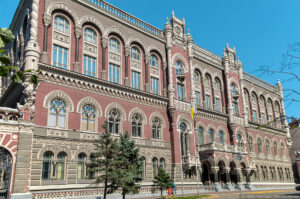
The National Bank of Ukraine fined “Financial Company Krediplus” LLC 595,000 UAH for violations of financial monitoring regulations.
The regulator identified deficiencies in the company’s internal documents designed to manage the risks of money laundering and terrorist financing, as well as violations of customer due diligence requirements.
In addition, according to the NBU, the financial company did not fully provide the regulator with accurate information and documents in response to its requests, and also violated procedures for preparing statistical reports on financial monitoring.
“FC Krediplus” LLC was registered in May 2016 and is engaged in lending. The company operates in the market under the FinX brand, among others. Its authorized capital amounts to approximately 11.86 million UAH. According to the NBU’s ownership structure data as of January 1, 2026, 100% of the company is owned by Bereg-Group LLC. According to the Unified State Register, the ultimate beneficial owner is Rodion Butko, and the director is Alexander Makedonsky.
In July 2026, the National Bank of Ukraine imposed a fine of 16.1 million UAH on Raiffeisen Bank JSC for a series of violations of anti-money laundering and counter-terrorism financing laws.
Among the violations identified by the regulator were inadequate customer due diligence and failure to apply a risk-based approach, as well as deficiencies in risk management during the implementation and use of information products and technologies, particularly when conducting transactions without direct contact with the customer.
The NBU also identified instances of untimely reporting of threshold financial transactions to the authorized state body and shortcomings in providing information and documents in response to the regulator’s requests.
In addition to the fine, Raiffeisen Bank received a written warning. It pertains, in particular, to the verification of customers and ultimate beneficial owners falling under the PEP category, internal documents regarding financial monitoring, updating information in customer questionnaires, and the transmission of information about payers.
Raiffeisen Bank has been operating in Ukraine since 1992, initially under the name Bank Aval. Since 2005, the bank has been part of the Austrian Raiffeisen Group. According to the ownership structure as of January 1, 2026, Raiffeisen Bank International AG holds 68.21% of the Ukrainian bank’s shares, while the European Bank for Reconstruction and Development holds 30%. Natalia Gurina is the chair of the bank’s board of directors.
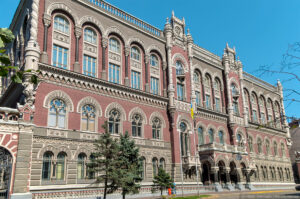
The National Bank of Ukraine fined “FC Royal Finance 1” LLC 391,000 UAH for a series of violations of financial monitoring laws.
According to the NBU, the violations involved the untimely updating of the company’s internal documents, the performance of the employee responsible for financial monitoring, and the improper application of a risk-based approach.
The regulator also pointed out violations in the preparation of statistical reports, the incomplete provision of requested information and documents, as well as shortcomings in providing an up-to-date list of clients with their assigned risk levels.
LLC “FC ‘Royal Finance 1’” was registered in Kyiv in July 2019. The company received financial institution status in November of that same year. In January 2025, at the company’s request, the NBU excluded financial leasing from its license, after which it retained the right to provide loans and factoring services. The company’s director is Vitaliy Lysenko, and “Finance Royal Invest” LLC is listed as the holder of a significant stake.
In July 2026, the National Bank of Ukraine fined FC “Groovey” LLC 799,000 UAH for violations of financial monitoring legislation. According to the NBU, the company failed to properly update its internal documents on the prevention of money laundering and terrorist financing and had shortcomings in its customer verification procedures.
The regulator also identified violations of requirements for storing documents and information on customers and financial transactions—which must be retained for at least five years—as well as the incomplete provision of information requested by the NBU. Certain violations concerned data on the classification of customers by risk level and statistical reporting on financial monitoring.
The fine imposed on “Growway” was the largest among the sanctions imposed by the NBU in July on non-bank financial institutions.
FC “Growway” LLC was registered in August 2018 in Kyiv. The company specializes, among other things, in financing enterprises in the pharmaceutical and medical industries, as well as suppliers of medical equipment, medications, and services. Kira Gorbik serves as the company’s director. Its main activities involve the provision of financial services and lending.

In July 2026, the National Bank of Ukraine (NBU) imposed a fine totaling 42.545 million UAH on JSC “Ukrainian Capital Bank” for violating financial monitoring and foreign exchange supervision regulations.
The regulator imposed the main fine of 40.545 million UAH for the improper organization and conduct of initial financial monitoring. Specifically, the NBU identified shortcomings in the bank’s application of a risk-based approach, its assessment of customer risks, and its internal documents regarding financial monitoring and customer due diligence. The bank also did not always provide information and documents in a timely and complete manner in response to requests from the inspection team.
An additional fine of 2 million UAH was imposed for violations of foreign exchange legislation. According to the NBU, the bank improperly carried out foreign exchange supervision, failed to ensure a comprehensive analysis of documents related to certain foreign exchange transactions, and did not identify the indicators of such transactions as required by regulations.
In addition, “Ukrainian Capital” received two written warnings. One relates to additional due diligence on customers who are politically exposed persons (PEPs), the automation of certain procedures, and the completion of customer questionnaires. The second concerns the late submission of and errors in statistical reports on foreign exchange transactions.
The NBU announced the imposition of these enforcement measures on August 7, 2026. In total, in July, the regulator imposed sanctions for violations in the areas of financial monitoring and foreign exchange legislation on two banks and 19 non-bank financial institutions.
Ukrainian Capital Bank has been operating in the Ukrainian market since 1992 and was originally registered as Zakarpattia Bank; it has used its current name since 1996. The NBU classifies it as a privately owned bank. According to the regulator, as of February 1, 2026, the bank’s assets totaled 3.079 billion UAH, liabilities amounted to 2.874 billion UAH, and capital stood at 204.7 million UAH. The NBU lists Serhiy Belashov, Liliana Belashova, Daria Zlidar, and Nataliia Kiva as major shareholders. Yevhen Chechyl serves as chairman of the board.
BANK, financial monitoring, FINE, foreign exchange supervision, NBU



