
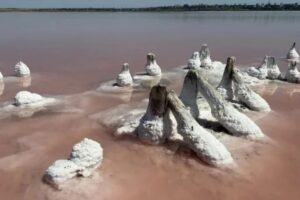
Kuyalnik Salt Works LLC plans to invest over $20 million in a project to extract excess salt from the Kuyalnik Estuary and process it into table salt, according to the publication SEEDS.
The Odesa Regional Military Administration and the company signed a memorandum of cooperation on the implementation of investment and environmental projects in the Kuyalnik Estuary area. The Odesa Regional Military Administration officially confirmed the investor’s intention to invest over $20 million in the project.
According to SEEDS, Kuyalnik Salt Works LLC was established in 2026. The company plans to extract excess salt from the estuary and process it into food products. The estimated production capacity is approximately 300,000 metric tons of salt per year.
This volume accounts for about three-quarters of Ukraine’s salt imports in 2025. According to the State Customs Service, last year Ukraine imported about 415,000 metric tons of salt worth $49.6 million.
Thus, the implementation of this project could significantly reduce Ukraine’s dependence on imported table salt, and once production reaches full capacity, it could lay the groundwork for resuming salt exports.
The need to develop new salt sources increased sharply after the Artemsil plant in Soledar shut down in 2022. Prior to the full-scale invasion, Ukraine was a major producer and exporter of salt; however, after losing access to its key production facilities, it became heavily dependent on supplies from abroad.
The project on the Kuyalnik Estuary also has an environmental component. According to the Odesa Regional State Administration, the memorandum provides for the development of environmental protection infrastructure, the implementation of modern environmental solutions, and the execution of “green” projects. The issue of utilizing the estuary’s salt resources has been under consideration for over a year, with the participation of the Cabinet of Ministers, scientists, and relevant experts.
Before commencing industrial extraction, the company must still complete the procedures required by law, including an environmental impact assessment and obtaining the necessary permits for the use of natural resources. The Kuyalnik Estuary has special environmental protection and resort status.
Original source of the article: SEEDS – “Investor Plans to Invest Over $20 Million in Processing Salt from the Kuyalnik Estuary for Food Use”.
this)
INVESTMENT, Kuyalnik Estuary, ODESA REGION, PROCESSING, SALT
Ekipazh, a window manufacturer that currently ranks among the top three largest producers of PVC and aluminum windows and doors in Ukraine, plans to build a fourth plant in Odesa and increase its market share from 9–10% to 16% as part of its 2026–2031 development strategy, the company’s CEO and co-owner, Sergey Teplitsky, told the “Interfax-Ukraine” news agency.
“We have set ourselves an ambitious goal: to become the No. 1 manufacturer in Ukraine and confidently enter the European Union markets. We plan to achieve this through annual investments of 150 million UAH in production development and innovation—including our own tempering furnace and the production of tempered and triplex insulated glass units, seamless welding of laminated profiles, sliding systems, and new aluminum profile systems,” Teplitsky noted.
Currently, the company owns three plants: one in Zlatopol (Kharkiv Oblast) with an area of 21,000 square meters, one in Khmelnytskyi with an area of 42,000 square meters, and one in Brovary with an area of 9,000 square meters, as well as a separate facility for manufacturing double-pane windows. The total area of production facilities is 72,000 square meters. The main products are metal-plastic windows and doors, all-glass structures (tempered glass, triplex for interior partitioning and large facade glazing), as well as aluminum structures. Across its 21 production lines, the company is capable of manufacturing up to 4,000 units per day. By the end of 2025, 365,000 units had been manufactured, which is 4.3% more than in 2024.
Capital investments from 2013 to 2026 in low-value non-current tangible assets totaled approximately 27 million UAH, while investments in fixed assets amounted to 874 million UAH.
According to Teplitsky, all of the company’s profits are reinvested in development; given the security situation, a smaller portion of the funds is directed to the Kharkiv facilities, while the majority goes to Brovary and Khmelnytskyi. This involves not only new equipment but also, for example, energy independence. Specifically, solar power systems with a total capacity of about 1 MW have been installed on the roofs of the buildings, and the company plans to install an equal amount. The company also considered the possibility of installing a cogeneration plant—they prepared technical specifications, selected a plot of land, and assessed the conditions together with gas suppliers.
“If we decide to go ahead, we can install it in two to three months. The estimated investment is over $1 million, with a payback period of about six years,” Teplitsky said.
The strategy through 2031 calls for the construction of a fourth plant in the south of the country; the company is currently in the process of selecting a site. According to Teplitsky, the company is looking for sites in the Odesa region with an area of at least 5 hectares and a capacity of at least 1 MW of electricity; the future plant will be able to produce about 25,000 windows per month, with the potential for expansion. The estimated investment ranges from 600 to 700 million UAH, funded through a combination of the company’s own resources and loans. The company has had positive experience participating in the government’s “5-7-9” program and is basing its plans in part on that experience.
In recent years, overall window sales in Ukraine have declined significantly (from 5.2 million windows in 2021 to approximately 3.5 million last year), which is attributed to a decrease in the number of active real estate development projects. Despite this trend, the company reported a 28% increase in sales in 2026. This was achieved through investments in new technologies, a shift toward more affluent customers (middle-class and above), and the expansion of exports—measures that will help diversify risks and ensure stability and sustainability during wartime.
The company began its export operations in 2023, and by 2025, export revenue had reached approximately EUR2 million across more than 20 countries. Weekly shipments have already been established to four countries (Italy, Spain, the U.S., and Lithuania), and exports are also being made to Moldova, Poland, the Czech Republic, Slovakia, Hungary, Romania, Latvia, Estonia, Germany, the Netherlands, Austria, Switzerland, France, Slovenia, Croatia, and the UAE. The focus of export development over the next five years will be on EU countries. The company’s future plans include increasing the share of exports so that it exceeds domestic sales, developing its own brand, expanding production of tempered and laminated insulated glass units and sliding systems, and developing its aluminum division with new Procural profile systems and its own EKIPAZH AluLight line.
According to YouControl, Ekipazh PE was founded in 2000, with a registered capital of 101,251,145 UAH. At the end of the first quarter of 2026, net revenue from product sales amounted to 405,732,000 UAH, which is 3% more than during the same period last year, while net profit was 3,847,000 UAH (up 2%).
The ultimate beneficiaries are Sergey and Mikhail Teplitsky.
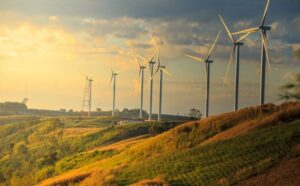
The International Finance Corporation (IFC), a member of the World Bank Group, has decided to provide a EUR 70 million loan for the construction of a 120 MW wind farm in the Odesa region with a total cost of EUR 231 million.
“IFC is supporting the project during the pre-investment phase to enhance its financial attractiveness, particularly with regard to electricity market analysis and power purchase agreements,” the corporation stated on its website.
The project is expected to receive support from partners of the Action Program for Enhancing Ukraine’s Economic Resilience (“ERA Program”), including the Norwegian Agency for Development Cooperation (NORAD), the Government of the French Republic, and the European Commission under the Ukraine Investment Facility (EC-UIF), as noted in the “Blended Finance” section
According to the corporation, the project is being implemented by a specialized company registered in Ukraine.
At the same time, according to the IFC, the project is majority-owned by the German company Notus Energy GmbH, which operates more than 1.6 GW of wind power capacity worldwide. The project’s shareholder structure also includes minority shareholders in the form of Horizon Capital, a private investment firm operating in Ukraine and Moldova, through its recently established Catalyst Fund and Green for Growth Fund.
As explained by the IFC, the additional benefits of the corporation’s participation in this project are both financial and non-financial in nature. In particular, the financial value stems from the financing structure, as the IFC is providing a loan with a maturity of up to 17 years. The IFC will also help attract additional financing for the project.
“The non-financial value lies in reducing non-commercial risks, as the IFC’s presence is expected to boost investor confidence in a challenging market,” the corporation noted.
IFC is also providing technical support to help the project enhance its financial attractiveness, particularly in terms of market analysis and power purchase agreements.
Horizon Capital manages six private equity funds (with over 40 institutional investors) totaling $1.6 billion in assets, including WNISEF ($150 million), the Emerging Europe Growth Fund (EEGF, $132 million), EEGF II ($370 million), EEGF III ($200 million), HCGF II ($258.3 million), and HCGF IV ($350 million). The funds have invested in 191 companies, which employ over 80,000 people in Ukraine and Moldova.
As previously reported, on June 17, the European Bank for Reconstruction and Development (EBRD) also approved a decision to provide a loan of up to EUR 65 million for the construction of the aforementioned 120 MW wind farm in the Odesa region.
IFC, Notus Energy, ODESA REGION, RENEWABLE ENERGY, WIND FARM

Farmers in the Odesa region were the first in Ukraine to begin the harvest; specifically, the harvest of winter barley and peas has begun, according to Oleg Kipper, head of the Odesa Regional Military Administration.
“The initial results of the harvest indicate good yields. This allows us to view the prospects for this year’s harvest campaign with optimism,” Kipper noted.
According to his data, farmers in the Odesa region are expected to harvest grains and legumes from nearly 770 thousand hectares this year. As is traditional, winter and spring wheat account for the largest share of the crops—over 522,000 hectares. Barley covers nearly 176,000 hectares, peas—about 74,400 hectares, and rapeseed—over 175,000 hectares.
As previously reported, a total of about 11.3 million hectares were sown with winter and spring grains and legumes in Ukraine this year, while total oilseed crops covered more than 20 million hectares.

The Tekom Agro Group agricultural association (Odesa region) has started its 2026 spring sowing campaign with the sowing of red lentils, according to a post on its Facebook page on Tuesday.
It is noted that the first to start work were two farms of the association: Chornomorets LLC and Pivdenna Agricultural Company. In total, more than 1,000 hectares have been allocated for red lentils in four farms of the group.
“The temperature of +15°C allows us to start this year’s spring sowing. There is still enough moisture in the soil. In the Odessa region, in particular, where Chornomorets LLC operates, we are sowing lentils for the first time, and about 300 hectares are planned for this crop,” said Sergey Shtyrbulov, deputy head of production at Tekom Agro Group, whose words are quoted in the report.
According to the company, the Canadian variety Maxim (predecessor — winter wheat) was selected for sowing. The work is being carried out using John Deere sowing complexes with simultaneous fertilizer application.
Tekom Agro Group is a management company of an agricultural association in the Odesa region that operates according to a vertically integrated model. The holding’s land bank is over 26,000 hectares, on which the agricultural companies Yasni Zori, Pivdenna, Chornomorets, and Lyman operate. It specializes in growing winter wheat, barley, and rapeseed, as well as sunflowers and lentils.
The storage infrastructure consists of two elevators in the Podilskyi district — Podilskyi Grain Processing Enterprise and Chubivskyi Bread Products Plant — with a total one-time storage capacity of 100,000 tons. The enterprises are equipped with grain dryers and have their own certified laboratories. Chubivsky KHP has a seed line that provides the group’s farms with planting material.
According to YouControl, the founders of Tekom Agro Group are Yuriy Rodin and Mark Becker.
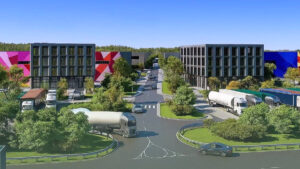
The Cabinet of Ministers of Ukraine has included the 21.61-hectare NEXUS Odessa project in the Nerubayskaya territorial community of the Odessa region in the Register of Industrial Parks, according to the Ministry of Economy. The initiators of the project are Ecosstandard Service LLC, owned by businessman Lev Partskhaladze and Georgiy Tsagareishvili.
The park will focus on the production of food and beverages, machinery and equipment, metal structures and products for construction, building materials, and projects in the field of alternative energy. It is planned to create about 1,000 jobs.
The project involves attracting more than UAH 747.7 million from various sources: own investments, funds from the management company, state incentives, private financing, and contributions from future participants. The initiator has allocated about UAH 60 million of its own funds for the initial stage in 2025–2028.
Ekostandart Service LLC was registered in December 2014 with a statutory capital of UAH 12.66 million. Its main activities are the collection, processing, disposal, and recovery of safe waste. The ultimate beneficiaries are Lev Partskhaladze and Georgiy Tsagareishvili.
The term of the park’s creation is 30 years. The decision was made on November 13. Taking into account new projects, there are 109 objects in the Register of Industrial Parks.



