

Construction has begun on a plant for processing basalt and manufacturing finished basalt products by BF “Zavod” within the “BF Terminal” industrial park in Zakarpattia.
“As part of the ”BF Terminal” industrial park, a plant with an area of over 37,000 square meters will be built, equipped with modern machinery and utilizing innovative technologies, which will provide over 120 guaranteed jobs with high salaries. This investment of over 30 million euros will ensure a stable annual inflow of up to 10 million hryvnias into the local budget and strengthen the community’s capacity for sustainable development. At the same time, the state will receive a strategic product for domestic use and export,” Deputy Head of the Presidential Office Viktor Mykyta reported on Telegram.
According to Vitaliy Kindrativ, Deputy Minister of Economy, Environment, and Agriculture of Ukraine, the development of “BF Terminal” in Zakarpattia is an example of how the development of industrial parks is shaping a new economic reality, in which state incentives help launch modern production facilities. “Thanks to government incentives, the Berehove district is gradually transforming into a powerful industrial hub working toward the recovery of Ukraine’s economy,” he emphasized.
He noted that government funds are being directed toward key infrastructure, primarily the construction of a new railway access track at the Batyevo station. “This is essentially a transport artery that will connect the industrial facilities of the park to the Ukrzaliznytsia network and open direct access to European markets. Additionally, major repairs are being carried out on the exit ramp from the highway,” he said.
In addition, state funding covers the full cycle of energy supply, specifically the construction of a new 110 kV high-voltage power line, the construction of a modern “BF Terminal” substation, and the reconstruction of the existing outdoor switchgear. “This creates a reserve of energy stability not only for the industrial park but also for the entire regional power grid,” says Kindrativ.
According to Mikita, railway tracks and electrical infrastructure have already been built at a total cost of 316.6 million UAH. Approximately 148 million UAH of this amount was financed from the state budget.
As reported, at the end of 2025, “BF Terminal” in Zakarpattia Oblast, among others, received state funding for infrastructure development, specifically 11.908 million UAH for the major repair of the exit ramp from the highway.
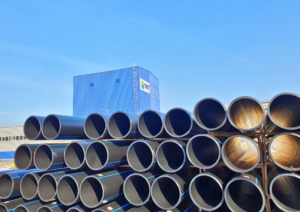
Planeta Plastik has launched a new plant in Irpin that will manufacture polyethylene pipes using solar energy.
The plant has a capacity of over 17,000 kilometers of pipes per year for water supply, gas networks, as well as technical and protective systems.
All products will be manufactured using the latest equipment, which allows the production of polymer pipes with diameters ranging from 16 to 800 mm.
Compliance with standards
The plant operates under the ISO 9001:2015 quality management system, using high-quality raw materials from world leaders. Polyethylene pipes have already been tested, received quality certificates, and are manufactured in accordance with current standards:
DSTU EN 12201 – for water supply systems
DSTU EN 1555 – for gas distribution networks
Economic effect and community support.
Thanks to the opening of the new production facility, the company has created new jobs. The plant’s products will be supplied both to the domestic market and for export. Thanks to its location in Irpin, the company will be able to quickly meet the needs of customers in all regions of Ukraine.
To support educators and medical professionals, as well as educational and medical institutions in Ukraine, the plant will supply polymer pipes at special prices.
A symbol of resilience
“Irpin. In 2022, the enemy destroyed everything here. We did not give up. We are building something new. That is why, continuing this mission, we built a new pipe plant in less than a year, which will work for the benefit and future of Ukraine,” says Kostyantyn Vashchenko, co-founder and visionary of Planeta Plastik.
About Planeta Plastik
Planeta Plastik LLC is a Ukrainian manufacturer of polyethylene products. The company specializes in the production of films for agriculture and industry, Harwell™ polymer sleeves for grain and feed storage, as well as polyethylene pipes for water supply, gas, and technical needs. Founded in 2003 and completely destroyed in the spring of 2022, the company is actively building new production facilities, developing exports, and remaining a reliable partner for customers in Ukraine and abroad. The new plant in Irpin is not only about restoring production, but also about taking a step into the future, where Ukrainian industry combines innovation, energy independence, and sustainability.
IRPIN, Planeta Plastik, PLANT, polyethylene pipe, PRODUCTION, Solar energy

The manufacturer of agricultural machinery and special-purpose vehicles, JSC “Fregat Plant” (Pervomaisk, Mykolaiv region), increased its losses by 34.4% in 2025 compared to 2024, to UAH 81.2 million.
According to the company’s financial report, published in the information disclosure system of the National Securities and Stock Market Commission (NSSMC), the company’s net sales revenue fell almost fourfold to UAH 47.57 million.
In 2025, the company received UAH 14.8 million in gross profit (UAH 71.1 million in 2024), and the loss from operating activities amounted to UAH 43.2 million, compared to a profit of UAH 12.6 million a year ago.
“During the reporting period, the company focused its efforts on maintaining its customer base, supporting long-term partnerships with counterparties, and ensuring the economical and rational use of funds,” the report says.
According to the plant, the main activity of the enterprise is currently the production of machinery and equipment for agricultural and forestry engineering. In particular, in the fourth quarter, the production of agricultural machinery for crop production accounted for 54.6% of the total output, equipment for the processing industries of the agro-industrial complex – 0.3%, and other types of products accounted for 45.1%.
The average number of employees at the plant last year was 121, at the Eastern branch – 84, and at the Dnipro branch – 6 (both branches are located in Mykolaiv). The average salary of an employee was UAH 10,190.
As reported, in 2024, the plant increased its losses by 58% compared to 2023, to UAH 60.4 million, while its net income increased by 34.6%, to UAH 188.6 million.
According to the National Securities and Stock Market Commission (NSSMC) for the fourth quarter of 2025, Fregat Engineering Limited (Cyprus) owns more than 96.25% of the authorized capital of JSC “Fregat Plant,” and the ultimate beneficiary, according to YouControl, is Olga Dementienko from Dnipro.
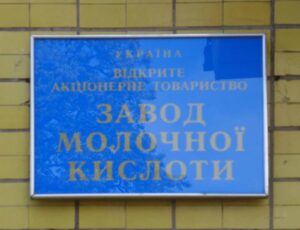
According to Fixygen, PJSC “Lactic Acid Plant” (Kyiv) will hold its annual general meeting of shareholders remotely on April 3, 2026, at which it plans to approve the results of its financial and economic activities for 2025 and the procedure for covering losses, the company reported in the NSSMC’s information disclosure system.
“To approve the results of financial and economic activities for 2025 and to approve the procedure for covering the company’s losses. Namely, given the company’s lack of profit, to cover losses at the expense of future periods,” the draft resolution of the meeting states.
The agenda also includes consideration of the reports of the supervisory board and the executive body for the past year, the adoption of new versions of the regulations on management bodies, as well as the preliminary approval of significant transactions, the value of which may exceed 25% and 50% of the value of the company’s assets.
PJSC “Lactic Acid Plant” (Kyiv) was founded in October 1996. The company specializes in the production of spices and seasonings, as well as other food products, ready-made animal feed, and agrochemical products.
According to Opendatabot, in 2024, the company increased its net loss by 11.8% compared to 2023, to UAH 2.145 million. At the same time, its revenue grew by 5.22%, to UAH 4.493 million. The plant’s assets decreased by 10.2% over the year to UAH 22.091 million, while its liabilities decreased by 0.5% to UAH 33.227 million. According to the resource’s forecast, the company’s expected revenue for 2025 is projected at UAH 5.122 million. The authorized capital of the private joint-stock company is UAH 220,353 thousand.
The beneficiaries of the enterprise are Grigory and Leonid Kostyuk, each of whom owns 45.8615% of the enterprise’s shares.
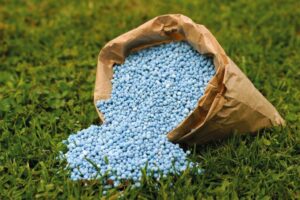
According to the results of 2025, the plants of the Ostchem nitrogen holding produced 1.571 million tons of mineral fertilizers, which is 12.7% less than in 2024, when the reduction compared to 2023 was 13%, according to the holding’s press release.
According to the press release, Cherkasy Azot produced 1.017 million tons of mineral fertilizers in 2025, Rivneazot produced 554,300 tons, while a year earlier, they produced 1.4 million tons and 407,000 tons, respectively.
The key products manufactured by Ostchem plants in 2025 were ammonium nitrate – 672,400 tons (42.8% of the total volume), UAN – 539.17 thousand tons (34.3%), urea – 232.03 thousand tons (14.8%), and ammonia – 61.47 thousand tons (3.9%).
Compared to 2024, the production of ammonium nitrate decreased by 11.6%, urea by 42.3%, and ammonia by 18.0%. At the same time, UAN production increased by 6.4%.
“In 2025, the Ukrainian chemical industry operated under stressful conditions. Rising costs, unstable energy supplies, and pressure from cheap imports directly raise the question of the industry’s survival. To be frank, in such an environment, it is no longer a question of marginality, but of preserving the country’s production base,” said Serhiy Pavlyuchuk, director of production at Ostchem’s nitrogen business, in a press release.
According to him, the main factors that continued to hold back production in 2025 were the high cost of energy resources, unstable electricity supply, military risks, a decline in effective demand from farmers, and continued pressure from imports.
Pavlychuk emphasized that in 2025, the plants operated exclusively on confirmed demand and focused on products that were in demand in the current market conditions.
According to Ostchem, in 2025, the total volume of mineral fertilizer imports to Ukraine amounted to 2.94 million tons, of which 1.77 million tons were nitrogen fertilizers, while in 2024, these figures were 2.49 million tons and 1.4 million tons, respectively.
The largest volumes of imports in 2025 were urea (650,400 tons) and ammonium nitrate (446,500 tons).
The main suppliers of urea were Azerbaijan (392,700 tons) and Turkmenistan (158,200 tons), while for ammonium nitrate, they were Poland (214,200 tons), Bulgaria (119,500 tons), Kazakhstan (45,100 tons), and Uzbekistan (29,400 tons).
Ostchem, citing Eurostat data, added that in 2025, imports of Russian fertilizers to EU countries, in particular to Poland, increased by almost 1.5 times. This import structure increases price pressure on the domestic Ukrainian market and directly affects the utilization of Ukrainian production capacities, the holding noted.
Ostchem is a nitrogen holding company of Group DF, which unites the largest producers of mineral fertilizers in Ukraine. It includes Rivneazot, Cherkasy Azot, as well as Severodonetsk Azot and Stirol, which are located in the occupied territories and are not operating.
Group DF consolidates the assets of businessman Dmitry Firtash in the chemical, titanium, and port industries, as well as in infrastructure, logistics, agriculture, and media.
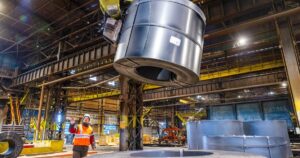
Zaporizhstal Iron and Steel Works has begun supplying rolled steel to Metinvest’s pipe plant in Romania, Metinvest Tubular Iasi, which became part of the group at the end of 2025.
According to a press release on Thursday, since the beginning of 2026, the company has shipped 22,000 tons of hot-rolled structural steel certified to the European standard EN 10025. In total, up to 180,000 tons of rolled steel are planned to be supplied to the pipe plant this year.
“Zaporizhstal’s rolled products are in demand among European and Ukrainian pipe manufacturers: every year, up to 80% of our metal products are shipped for the manufacture of straight-seam pipes and profiles. We are pleased to welcome Romanian pipe manufacturers to the Metinvest Group and to establish a new format of cooperation to strengthen the economic partnership between Ukraine and Europe,” said Taras Shevchenko, acting CEO of Zaporizhstal, whose words are quoted in the report.
It is specified that hot-rolled products made of mild structural steels are in high demand in the pipe industry due to their mechanical properties, which ensure the reliability and strength of finished products. Such products can withstand significant loads, including impact loads, operate under pressure, weld well, and maintain stable performance characteristics.
“Zaporizhstal’s rolled products are used to manufacture round, profile, and rectangular welded pipes that comply with European standards EN 10219 and EN 10217 and are used in geothermal engineering, energy, construction, and fire extinguishing systems, among others. Zaporizhstal steel pipes have proven to fully meet high requirements during testing, so we are establishing long-term mutually beneficial cooperation with Zaporizhstal metallurgists,” said Cosmin Toma, CEO of Metinvest Tubular Iasi, as quoted by the company’s press service.
The largest consumers of pipes produced by Metinvest Tubular Yassy are the domestic market of Romania, as well as companies from Hungary, the Czech Republic, Poland, Slovakia, and other European countries.
As reported, Zaporizhstal produced 3.5 million tons of pig iron, 3.2 million tons of steel, and 2.8 million tons of rolled products in 2025.
Zaporizhstal is a joint venture of the Metinvest Group, whose main shareholders are System Capital Management (71.24%) and Smart Steel Limited (23.76%). Metinvest Holding LLC is the managing company of the Metinvest Group.
METINVEST, PLANT, ROLLED PRODUCTS, ROMANIA, SUPPLY, ZAPORIZHSTAL



