

Kyivstar, Ukraine’s largest mobile operator, will gradually update certain tariffs from December 18 this year and throughout early 2026 to compensate for the rising cost of key resources.
“Starting December 18, 2025, and throughout early 2026, the terms of some subscription rates will be gradually updated, and starting January 1, 2026, and over the course of several months, some contract and business rates will also be updated,” the company said.
It is noted that these conditions are being introduced due to the rise in the cost of key resources, in particular, electricity for businesses, which has risen by 60% during evening peak hours.
The technical community of the telecommunications market “Mobile Communications of Ukraine” reported on Telegram that the new tariffs will affect, among other things, the LOVE UA line. Specifically, LOVE UA Base will increase from 150 UAH to 200 UAH/4 weeks, LOVE UA Bezlim 2024 from 225 UAH to 300 UAH, LOVE UA Pesnya 2024 from 250 UAH to 300 UAH, LOVE UA Svet 2024 from 200 UAH to 260 UAH, LOVE UA Light 2024 (with the superpower Economy) will increase from 150 UAH to 200 UAH, and the LOVE UA Freedom 2024 tariff will increase from 125 UAH to 190 UAH.
Among other changes, the operator announced the expansion of the “Roaming as at home” service from 28 to 32 countries, including Iceland, Norway, Liechtenstein, and Cyprus, starting December 18.
For subscribers abroad, roaming limits of UAH 2,000 and UAH 4,000 will be introduced from January 1, which will help avoid unexpected Internet costs.
As reported, Kyivstar received EBITDA of UAH 7.1 billion in the third quarter of 2025, which is 21.5% more than in the third quarter of 2024, and in dollars, the growth was 20.4% to $171 million.
Kyivstar served 22.5 million mobile subscribers in the third quarter of 2025, which is 3.6% less than a year earlier, but the number of 4G customers grew by 2.4% to 15 million.

Associations of mining and metallurgical, other industrial and extractive enterprises, manufacturers of building materials and cement have spoken out against increases in freight and electricity tariffs due to the risk of enterprises shutting down or a significant drop in production.
They made this statement at a press conference at the Interfax-Ukraine agency on Tuesday on the topic of “The tariff policy of state monopolies – JSC Ukrzaliznytsia and NEC Ukrenergo, their negative impact on industry and the economy of Ukraine.”
Alexander Kalenkov, president of the Ukrmetallurgprom association of enterprises, noted that the consumers of the services of so-called natural monopolies are mining and metallurgical companies, cement producers, building materials manufacturers, and the like.
“These are the main customers of companies such as Ukrzaliznytsia and Ukrenergo. Before the war, the mining and metallurgical complex, together with ferroalloy plants, consumed about 60% of all electricity supplied to industry and transported more than 40% of the traffic provided by Ukrzaliznytsia. Therefore, we are dependent on the activities of these companies, just as they are dependent on us,” Kalenkov stated, expressing hope that in the future these markets will become more competitive and monopolies will be broken up. But until then, the state must ensure that these monopolies do not abuse their position, he believes.

The head of Ukrmetallurgprom emphasized that Ukraine has the highest electricity tariffs in Europe. “In practice, this means that we are losing the competitive struggle to all entrepreneurs from the EU. I am not even talking about companies located in countries that still consume Russian energy resources—there, prices are several times lower than ours, both for gas and electricity. And that is why we are losing our traditional markets,” Kalenkov stressed.
As for railway tariffs, he said that they are currently cheaper in Poland and Slovenia than in Ukraine. “We already transport cargo by Ukrzaliznytsia at a cost that is 15-20% higher than in Europe, and there are plans to increase tariffs by another 37%. This is not only economically unreasonable and unjustified, it is a dead end,” Kalenkov said.
In his opinion, the tariff policy of Ukrzaliznytsia and Ukrenergo requires attention at the level of the Cabinet of Ministers and the Verkhovna Rada. Ideally, an independent body on transport tariffs, similar to the National Energy and Utilities Regulatory Commission, should be created. To subsidize passenger transportation, UAH 26 billion should be allocated in the budget for 2026 so as not to increase freight tariffs. Otherwise, due to the increase in tariffs, our enterprises will begin to reduce production or exit the market.
Executive Director of the Ukrainian Cement Manufacturers Association (Ukrcement) Lyudmila Kripka emphasized that two-thirds of the cement produced in Ukraine, as well as the raw materials for it, are delivered by rail. Therefore, the industry is very sensitive to unjustified increases in freight tariffs.
“We have already gone down this road, such actions have already had negative consequences in the past, and this time there will be no miracles either. This will lead to negative consequences. Manufacturers will be forced to pass on the increase in tariffs to their products, that is, to the end consumer. This will reduce consumption of products and, consequently, reduce their production and transportation,” Kripka stressed.
At the same time, she pointed out the need to develop state support instruments for energy-intensive export-oriented industries as a temporary anti-crisis measure. According to her, technical and economic criteria should be introduced specifically for enterprises in priority industries. At the same time, the funds saved from the reduction in tariffs for electricity transmission and dispatching could be directed towards investment in our own renewable energy sources.

“In this way, we would fulfill the decarbonization targets set for us by the European Union,” Kripka stated.
She cited data from the state-owned company Ukrpromvneshexpertiza, according to which a 30% increase in freight tariffs would lead to a reduction in GDP of almost UAH 100 billion, a loss of foreign exchange earnings of UAH 98 billion, annual budget losses of more than UAH 36 billion, and the elimination of at least 76,000 jobs.
Sergey Kudryavtsev, executive director of the Ukrainian Association of Ferroalloy Producers (UkrFA), noted that the majority of ferroalloy enterprises are located along the shore of the Kakhovka Reservoir, i.e., in an area close to the combat zone, where working conditions are extremely difficult. In particular, manganese plants have been idle for two years.
“We cannot transport raw materials to ferroalloy plants because the railway lines have been destroyed. And we cannot pay to transport the raw materials needed for ferroalloy production by detours. Ferroalloy plants are currently operating at 15-20% of their capacity. This situation will lead to the end of ferroalloy production in Ukraine. Imported alloys will be brought to us, and the workers will be left without jobs,” Kudryavtsev said.
According to him, this frontline zone is currently being held together thanks to the Nikopol Ferroalloy Plant (NFP), Nikopol pipe and metallurgical enterprises, but it could become “gray” if people leave.
“Today, we have problems with production, logistics, staff shortages, and electricity. This is a region that used to produce electricity, but today we get it from western Ukraine. The tariff is unaffordable for us. Therefore, we are in a situation where we may have to shut down, and it will not be possible to recover. Enterprises are currently operating at 15% capacity, maintaining a continuous process. Because if you stop a ferroalloy furnace, it will take six months to start it up again,” added the executive director of UkrFA.
Source: https://www.youtube.com/live/ATmga3Sdn3g
ELECTRICITY, FREIGHT TRANSPORTATION, KUDRYAVTSEV, TARIFF, КАЛЕНКОВ, КРИПКА
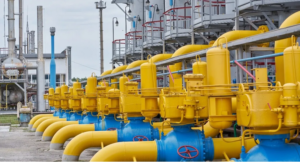
The National Energy Regulatory Agency (ANRE) of Moldova has approved the extension and updated conditions of the joint regional project for the transportation of natural gas along the so-called “Route 1” through the Trans-Balkan pipeline, which provides for a 50% tariff reduction for Moldova and Romania for gas supplies to Ukraine.
According to the agency, the decision was taken at the ANRE Council meeting on October 24, 2025 at the initiative of operators of gas transportation systems from Greece, Bulgaria, Romania, Moldova and Ukraine. The project is aimed at strengthening regional energy security and ensuring stable gas supplies to Ukraine.
“The Council approved the extension of the Route 1 product for six months – from November 2025 to April 2026 – as well as a 50 percent reduction in gas transportation tariffs for Vestmoldtransgaz (Moldova) and Transgaz SA (Romania) on key interconnectors,” the regulator said in its decision.
The Route 1 project envisages the use of the existing infrastructure of the Trans-Balkan gas pipeline, which connects Greece-Bulgaria-Romania-Moldova-Ukraine.
Through this route Ukraine can receive gas coming from the southern direction – from LNG terminals in Greece (Revitusa, Alexandroupolis) and from Turkish storage facilities.
The reduction of the Romanian and Moldovan tariff makes supplies through this line economically more favorable and increases the flexibility of gas purchases from alternative sources.
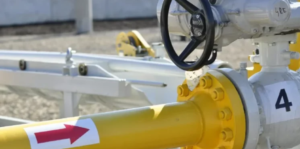
On October 24, the National Energy Regulatory Agency of Moldova (ANRE) held an open meeting of the Board of Directors, during which it approved a 50% reduction in tariffs for gas transportation to Ukraine.
“During the meeting, the Board approved amendments to Decision No. 272/2025 on the optimization of the ”Route 1″ capacity product on the Trans-Balkan pipeline, following a joint initiative submitted by natural gas transmission system operators from Greece, Bulgaria, Romania, the Republic of Moldova, and Ukraine. The initiative aims to strengthen regional energy security and ensure natural gas supplies to Ukraine,“ according to a statement on the ANRE official website.
”The approved changes provide for the extension of the application of the “Route 1” product for 6 months (November 2025 – April 2026), the application of a 50% reduction in transportation tariffs for SRL “Vestmoldtransgaz” at the Kaushen and Grebeniki interconnection points, as well as the extension of the application of the capacity product to all relevant interconnection points along the route. The application of a 50% reduction in transportation tariffs is also provided for by the Romanian transmission system operator SA “Transgaz,” ANRE explained.
“With this decision, the Republic of Moldova is strengthening its role as a regional transit corridor, facilitating the transport of natural gas from Greece to Ukraine and contributing to the diversification of routes and sources of supply. In the long term, transportation volumes are expected to increase and, as a result, the associated tariffs will decrease for users of the transport system operated by SRL Vestmoldtransgaz,” the statement emphasized.

The national postal operator Ukrposhta has announced that from October 1, it will reduce rates for sending small PRIME parcels (up to 2 kg) to the US by $1.5-2, and they will cost from 260 UAH, which is less than before, according to the company’s CEO Ihor Smelyansky.
“To support Ukrainian exporters during the busiest pre-holiday sales season in the US, which accounts for more than 25% of annual sales, Ukrposhta… Starting October 1, rates for small PRIME packages will start at 260 hryvnia, which is $1.5-2 less than before,” the company’s CEO Ihor Smelyansky wrote on Facebook on Tuesday.
He specified that this refers to delivery within seven days to more than 15,000 branches throughout the United States.
According to him, in partnership with DHL, Nordi, and Lufthansa, a logistics chain has been built, including parcel processing in Ukraine within 24 hours, delivery to London or Frankfurt within 34-40 hours, then the parcel goes to recipients in the US: New York, Miami, Chicago, Los Angeles.
According to Smiliansky, the introduction of US customs duties on postal items worth up to $800, with a 10% duty for Ukraine compared to 15% for the EU, 25% for Moldova, and 45% for Switzerland, gives Ukrainian small businesses the opportunity to maintain their positions and even increase their volumes, especially given that many countries have not yet resumed deliveries to the US.
Smiliansky added that Ukrposhta has a share of over 50% in the international delivery market.
According to information on the company’s website, the current cost of sending a small PRIME package (no side exceeding 60 cm, and the sum of all measurements not exceeding 90 cm) weighing 100 g to the US is UAH 321.64, and 2 kg – UAH 1,135.6.

The Federal Appeals Court ruled that most of Donald Trump’s tariffs exceed his powers as president.
The so-called reciprocal tariffs imposed on almost all countries that trade with the US are illegal, the US Appeals Court ruled on Friday.
The ruling upholds a May decision by the International Trade Court, which also rejected Trump’s argument that his global tariffs were permitted under the International Emergency Economic Powers Act.
The court did not strike down the tariffs, but said they would remain in effect until mid-October, setting the stage for further legal action in the US Supreme Court.
Much remains unknown, but here is what we understand at this point about the court’s decision and what it could mean for the US president’s flagship policy.
In its 7-4 decision, the appeals court upheld the lower court’s conclusion that President Trump did not have the authority to impose global tariffs.
This was mainly because of the law Trump used to justify his policy, the International Emergency Economic Powers Act (IEEPA), which, according to the judges, does not give “the power to impose tariffs, duties, etc., or the power to levy taxes.”
The US Court of Appeals rejected Trump’s argument that the tariffs were permitted under his emergency economic powers, calling the levies “invalid because they violate the law.”
Trump immediately rejected the ruling, writing on Truth Social hours after it was handed down that the appeals court was “very biased” and that the ruling was a ‘disaster’ for the country.
“If this ruling stands, it will literally destroy the United States of America,” he wrote.
This law, passed decades ago and repeatedly invoked by Trump during both of his terms in office, gives the US president significant powers to respond to emergencies within the country or serious threats from abroad.
The 1977 law states that the president may use a range of economic levers “to counter any unusual and extraordinary threat that originates wholly or in substantial part outside the United States and is directed against the national security, foreign policy, or economy.”
It was used by both President Barack Obama and Joe Biden, who invoked the law to impose sanctions against Russia after its illegal annexation of Crimea in 2014, and then again after its full-scale invasion of Ukraine eight years later.
However, the appeals court said in its ruling that the emergency law “does not grant the president broad authority to impose tariffs.”
The IEEPA “does not mention tariffs (or any synonyms thereof) and does not contain procedural safeguards that would clearly limit the president’s authority to impose tariffs,” they said.
Trump, in announcing the imposition of global tariffs, argued that trade imbalances were damaging US national security and therefore constituted a national emergency.
However, the court ruled that imposing tariffs is not within the president’s authority and that “the power to dispose of public funds (including the power to levy taxes) belongs to Congress.”
In addition to being a significant blow to the central point of President Trump’s agenda — tariffs — the federal appeals court’s decision could have a direct impact on the US economy and cause a chain reaction in global markets.
“Businesses will be subject to uncertainty,” said Dr. Linda Yue, an economist at Oxford University and London Business School, on BBC Today.
While countries wait to see if the Supreme Court will take up the case, which seems likely, they may decide to suspend business with the US.
If that happens, Dr. Yue said, it could “weaken economic activity.”
There are also significant implications that could play out in the political arena.
For example, if the Supreme Court overturns the federal appeals court’s decision and sides with the Trump administration, it could set a precedent that encourages the president to use the IEEPA more aggressively than he has done so far.
The case will likely be referred to the highest court in the US, as Trump announced on Truth Social.
“Our indifferent and short-sighted politicians have allowed tariffs to be used against us,” Trump wrote. “Now, with the help of the US Supreme Court, we will use them for the benefit of our nation and make America rich, strong, and powerful again!”
The conservative majority in the US Supreme Court could potentially increase the likelihood that it will support the president’s position.
Six of the nine justices were appointed by Republican presidents, including three by Trump during his first term in the White House.
However, the court is also more critical of presidents when it believes they exceed their authority on issues not approved by Congress.
For example, during Joe Biden’s presidency, the court expanded what it called the “major question doctrine” to invalidate Democrats’ attempts to use existing laws to limit greenhouse gas emissions from power plants and forgive the student loan debt of millions of Americans.
The federal appeals court split 7-4 in its ruling that nearly all of Trump’s tariffs are illegal. It has now given the US administration until mid-October to appeal to the US Supreme Court in a case that has implications for both the US economy and its trade relations with the rest of the world.
If the Supreme Court upholds the ruling, it could cause uncertainty in financial markets.
Questions will arise about whether the US will have to return the billions of dollars it has collected in import duties on products from countries that have paid them over the past few months.
It could also call into question whether major economies, including the UK, Japan, and South Korea, will be bound by the individual trade deals they have negotiated with the US before the August deadline. Other trade deals currently under negotiation could also be thrown into chaos.
If the appeals court ruling is upheld, it will also deal a huge blow to Trump’s political authority and his reputation as a negotiator. But if it is overturned by the Supreme Court, it will have the opposite effect.
This decision concerns Trump’s “reciprocal tariffs,” which include a set of different rates for most countries in the world, including other taxes imposed on China, Mexico, and Canada.
These import duties on almost all goods from almost all countries with which the US trades will remain in effect until mid-October.
After October 14, they will no longer be in effect, the appeals court said.
Separately, tariffs on steel, aluminum, and copper, which were imposed under other presidential powers, will remain in effect and will not be affected by the court’s decision.



