
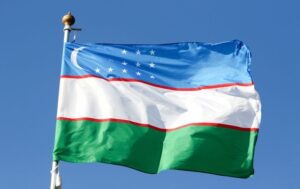
Uzbekistan has eliminated customs duties on imports of 82 types of raw materials and semi-finished products until January 1, 2027.
Zero rates for these types of products were first introduced in October 2021 and were valid until January 1, 2024.
The list includes, in particular: castor oil, asbestos, sodium hydroxide (caustic soda), dyes, artificial fur, artificial wax, ready-made adhesives, photo emulsion for textile printing, paper and cardboard, cotton fabrics, linen fabrics, fabrics made of artificial and synthetic fibers, glass fiber, glass fiber fabrics, loudspeakers, and others.
Measures to reduce customs duties were applied in order to support domestic manufacturing enterprises and increase exports of value-added products.
As a reminder, Uzbekistan previously extended zero customs duties for a number of food products and children’s clothing until January 1, 2027.
In addition, until January 1, 2031, special equipment, spare parts and components, raw materials and materials that are not produced in the country and are used in the technological processes of enterprises for the disposal of household, construction and medical waste, as well as the production of biodegradable polymer materials, are also exempt from customs duties.

Uzbekistan has approved a special legal procedure regulating the activities of investment platforms in the form of a “regulatory sandbox.”
This legal regime creates conditions for the launch and development of investment platforms that allow funds to be raised directly from investors, primarily for start-ups, as well as small and medium-sized businesses for which entering the stock market is difficult or premature.
The regulation establishes permissible formats for investing through electronic platforms, including investments in shares, participation in partnerships, venture and joint projects, as well as other project models. Unlike the traditional stock market, such investments do not involve the issuance and circulation of securities, listing, or the mandatory participation of investment intermediaries.
The document establishes the procedure for registering participants in the special legal regime, the conditions for their inclusion in the register of investment platform operators, and the grounds for exclusion from the list of participants.
Only legal entities that are residents of Uzbekistan and operate as investment platform operators can participate in the special legal regime.
An investment platform must be a comprehensive software, technical, and organizational mechanism that ensures:
The introduction and further expansion of investment platforms will help build a legal framework for boosting investment activity, which will give an extra boost to:

Uzbekistan has launched its first national census since independence.
Preliminary results are scheduled for July 1, 2026, and the final results will be made public on July 1, 2027.
The process will take place in several stages. From January 15 to January 31, citizens can fill out an electronic questionnaire through a special portal census.stat.uz.
From February 4 to February 28, census workers will start the traditional door-to-door rounds to register those who did not have time to use the online service.
Data collection will cover all regions and settlements of the country.
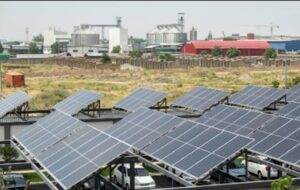
Electricity production in Uzbekistan in 2025 amounted to 86.7 billion kWh, which is 6% more than a year earlier: in 2024, the country produced 81.5 billion kWh of electricity.
Of the total production, 16.8 billion kWh came from renewable energy sources — solar, wind, and hydroelectric power plants. This figure increased by 29% compared to 2024.
At the same time, electricity production by solar and wind power plants alone amounted to 10.5 billion kWh, an increase of 2.1 times. The development of renewable energy has saved 3.2 billion cubic meters of natural gas and prevented the emission of 4.7 million tons of harmful substances.
There are 148 power plants operating in the country with a total capacity of 25,797 MW, including thermal power plants and CHPs (17,551 MW), HPPs (2,441 MW), solar power plants (3,930 MW), wind power plants (1,652 MW), and block stations (223 MW). During the year, 42 new generation projects with a capacity of 4,647 MW were commissioned, including solar, wind, battery, thermal, hydro, and cogeneration facilities. At the same time, 11 substations with a capacity of 1,614 MVA and 420 km of power grids were commissioned, and construction began on 21 more projects with a total capacity of 3,508 MW.
New industrial facilities were launched: a plant producing 155 hydroelectric units per year in the Bostanlyk district, an enterprise producing 15,000 transformers per year in Angren, and the first national hydroelectric power plant with a capacity of 38 MW in the Namangan region, assembled entirely from local components.
Electricity supply reached 77.1 billion kWh (+14%), with the number of consumers exceeding 8.7 million. The installed capacity of small solar panels increased to 2 GW, and the volume of solar collectors to almost 5 million liters. Households and businesses were provided with subsidies for the installation of solar systems in the amount of 322.9 billion soums.
Thanks to the modernization of the networks, the electricity supply to more than 800,000 households in 954 mahallas has been improved, and energy-saving measures have saved 2.7 billion kWh of electricity and 2 billion cubic meters of gas. According to the Ministry of Energy of the Republic of Uzbekistan, the introduction of new capacities has enabled the country to transition to net electricity exports: 2.6 billion kWh are planned to be sent to neighboring countries, which will help reduce energy risks in the region.
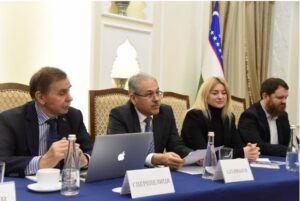
The Embassy of the Republic of Uzbekistan in Ukraine, together with the Institute for Foreign Policy Studies, held a round table on “The Updated Foreign Policy of the Republic of Uzbekistan.” The event was attended by diplomats, experts, and analysts. Participants discussed the transformation of Uzbekistan’s foreign policy against the backdrop of global turbulence, growing interstate conflicts, and the restructuring of the international relations system.
It was noted that under the presidency of Shavkat Mirziyoyev, Tashkent is stepping up its international activity and consistently forming new areas of cooperation, paying attention to strengthening good neighborliness and trust in Central Asia, developing multi-vector political and economic ties, and diversifying trade and investment.
Other priorities included expanding cooperation in the areas of transport and logistics, green energy, water management, and the climate agenda. The participants emphasized the practical effectiveness of economic diplomacy and the growth of Uzbekistan’s interaction with international organizations, noting the holding of major international events in the country under the auspices of the Inter-Parliamentary Union and UNESCO.
A separate section of the discussion was devoted to Uzbekistan’s cooperation with the European Union. Experts pointed to the convergence of interests between the parties on issues of energy security, sustainable transport corridors, the green economy, water management, as well as educational and humanitarian programs, emphasizing Uzbekistan’s role as one of the EU’s key partners in Central Asia.
The cultural and humanitarian component of foreign policy was also discussed, including the development of cultural diplomacy and tourism as tools for strengthening the country’s positive international image and “soft power.”
At the end of the round table, participants described Uzbekistan’s foreign policy as open, pragmatic, and predictable, based on internal modernization and a reform agenda.
Ukraine continues to be one of the largest suppliers of cheese to the Uzbekistan market, ranking among the top 10 exporters of this product. Dairy products traditionally occupy an important place in the diet of the Uzbekistan population, where fermented drinks such as kefir, ayran, and bifidok are particularly popular. At the same time, the most dynamically growing segments are ready-made baby food, drinkable yogurts, and butter, which indicates a gradual expansion of consumer preferences and demand for products with higher added value.
As Olga Gvozdeva, advisor to the director of the Office for Entrepreneurship and Export Development, noted, demographic and infrastructure factors are important for market development. “The average age of the population is 29, and the level of urbanization is only 51%, which creates certain logistical difficulties, especially for products that require a cold chain,” she said.
The growing demand for dairy products in a country that is home to 38% of Central Asia’s population makes Uzbekistan the largest potential consumer market for dairy products in the region.
There is a free trade agreement between Ukraine and Uzbekistan, which provides for a zero customs duty rate for products with a Ukrainian CT-1 certificate. Currently, 16 Ukrainian companies have official permission to export dairy products to Uzbekistan. Among them are:
Agroprosperis LLC
Molochny Aliance LLC
Yuriya-Plus LLC
Lvivmolprodukt LLC
Kyivmolprodukt LLC
Rogan Dairy Factory LLC
Prostokvashino LLC
Podillya LLC
Zarechnoye LLC
Starokostiantynivsky Milk Plant LLC
Shostka LLC
Volynmoloko LLC
Ivano-Frankivsk Milk Plant LLC
Bukovina LLC
Milko Dnipro LLC
Ternopil Milk Plant LLC
Uzbekistan is actively updating its regulatory system. In particular, in 2023, outdated technical regulations were abolished, and new sanitary standards and product safety assessment mechanisms were introduced. Particular attention is paid to compliance with Halal standards, in particular, the national certification system has been in operation since May 2023. The “Foydalilik belgysi” (Usefulness Mark) label was also introduced, which classifies products according to their nutritional value.
Thus, Ukraine has significant prospects for increasing exports of dairy products to Uzbekistan, which, given the growing demand and regulatory changes, is a lucrative opportunity for Ukrainian producers.



