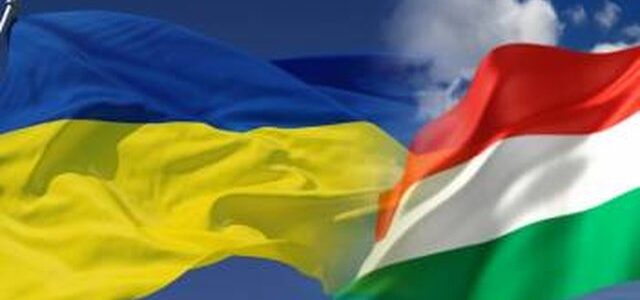
Ukrainians’ attitudes toward Hungary in March 2026 retain a clearly negative character, although the dynamics of recent months indicate a slight improvement in certain indicators. According to the results of a study conducted in March 2026 by the research company Active Group in cooperation with the information and analytical center Experts Club, the share of positive assessments increased to 18.6%, compared to 16.0% in August 2025, while the level of negative attitudes slightly decreased—from 55.7% to 52.2%.
Despite this dynamic, the overall structure of responses demonstrates the dominance of negative evaluations. The largest share consists of respondents who assess their attitude toward Hungary as “mostly negative” — 34.3%, while another 17.9% chose “completely negative.” Thus, the total level of negative perception exceeds half of all responses.
Positive assessments remain significantly lower: only 4.9% of respondents chose the option “completely positive,” and 13.8% selected “mostly positive.” At the same time, 27.3% of Ukrainians hold a neutral position, indicating the presence of an audience segment that does not have a formed or clearly expressed attitude toward this country. Another 1.9% of respondents were unable to provide an answer.
A comparison with August 2025 shows that the changes are evolutionary rather than radical in nature. The increase in positive assessments and the decrease in negative ones are relatively minor, indicating the persistence of a formed negative image of Hungary in Ukrainian society. At the same time, the trend toward improvement may indicate a gradual softening of perceptions or the influence of certain factors that are changing the information background.
An important feature is that even with some growth in positive sentiment, Hungary remains one of the few countries where negative assessments significantly outweigh positive ones. This distinguishes it from most other states in the region, where the balance is either positive or at least close to neutral.
At the same time, the presence of a significant share of neutral responses—more than a quarter of respondents—indicates potential for a shift in public opinion. A portion of Ukrainians does not have a clearly formed attitude, which creates opportunities for improving the country’s image through more active communication, economic cooperation, and public diplomacy.

“We conducted the survey at the beginning of March, and it is already evident that the political context surrounding certain countries can quickly influence evaluations. In the case of Hungary, this factor remains decisive in shaping negative perception. At the same time, even a slight increase in positive sentiment shows that these assessments are not entirely static,” said Oleksandr Pozniy, Director of the research company Active Group.
Thus, the results of the study demonstrate that Hungary is currently perceived by Ukrainians as a country with a predominantly negative image that has a systemic nature. Despite minor positive shifts, the balance of evaluations remains significantly tilted toward critical perception, which defines the specifics of public opinion regarding this state.
According to a study conducted by the Experts Club information and analytical center based on data from the State Customs Service, Hungary ranks ninth in terms of total trade in goods with Ukraine, with a figure of $3.30 billion. Imports of Hungarian goods exceed Ukrainian exports, creating a negative balance for Ukraine.
The study was presented at the Interfax-Ukraine press center; the video can be viewed on the agency’s YouTube channel. The full version of the study can be found via a link on the Experts Club analytical center’s website.
ACTIVE GROUP, EXPERTS CLUB, HUNGARY, Pozniy, SOCIOLOGY, SURVEY, UKRAINE, URAKIN