

As Serbian Economist reports, the short-term tourist rental market in Croatia from June 2026 will operate under new EU rules, which provide for the complete removal of “gray” rentals from the shadows and strict control over tax revenues.
According to the published explanations, each object rented to tourists (apartments, houses, apartments) will be assigned a unique registration number. It will become a mandatory identifier when placing advertisements on online rental platforms. Placing objects without such a number on services like Airbnb and Booking.com will be prohibited – the absence of the code will automatically mean that the object operates outside the legal framework.
The procedure for obtaining a registration number for owners will be free of charge and, according to the authorities, should simplify control over compliance with the law, as well as reduce the share of unregistered objects rented without paying taxes.
Additionally, part of the control powers will be transferred to the local level: community tourist boards will directly monitor the payment of compulsory tourist tax and will be able to promptly respond to violations by landlords operating illegally or understating real income.
It is expected that the tightening of rules will make the rental market in Croatia more transparent and predictable for tourists, as well as equalize the conditions of competition for legal landlords, while increasing tax revenues to budgets at different levels.
As a consequence, experts predict an increase in the price of vacation in Croatia by 10-12%.
https://t.me/relocationrs/1950
Business activity in the euro area at the end of 2025 grew weaker than expected amid a deepening recession in manufacturing and slower growth in the dominant services sector, according to preliminary data from the business activity index (PMI) prepared by HCOB and S&P Global.
According to the assessment, the HCOB Flash Eurozone Composite PMI declined to 51.9 points in December from 52.8 points in November, falling to its lowest level in three months and below the forecast of analysts polled by Reuters. The value above 50 points still indicates an increase in business activity.
The situation in industry continues to drag the index down: the eurozone manufacturing PMI in December fell to 49.2 points, the lowest since April, reflecting the continued decline in output and a steeper new orders slump, the largest since February. Deepening weakness in German industry was cited as the main factor, while France showed cautious signs
In the services sector, business activity is still picking up but the pace is slowing, with the services PMI down to 52.6 points from 53.6 points in November. Meanwhile, companies continue to increase employment, but business optimism fell to its lowest level since May, indicating that businesses are cautious about the outlook for 2026.
According to a Reuters poll of analysts, rising cost pressures and output prices at the end of the year do not change the overall picture: inflation in the eurozone has moved closer to the 2% target on average, and the market in the baseline scenario expects the European Central Bank’s key rates to remain unchanged until at least 2027.

The National Bank of Ukraine has applied to PJSC “European Insurance Alliance” (Kiev) a measure of influence in the form of a fine of UAH 100 thousand for submitting reports to the regulator with violation of deadlines. Such decision was taken by the Committee for Supervision and Regulation of Non-banking Financial Services Markets on December 15, 2025, based on the results of the on-site supervision of the non-banking financial services market.
The company is obliged to pay the fine within one month from the date of entry into force of this decision.
PJSC “European Insurance Alliance” was founded on September 22, 1994. The Company is a member of the Motor (Transport) Insurance Bureau of Ukraine, the League of Insurance Organizations of Ukraine and the Nuclear Insurance Pool of Ukraine.
The company has a license of the NBU dated April 25, 2024 to carry out insurance activities in 16 classes, in particular property insurance, car insurance, liability insurance, health insurance and the like.
The authorized capital amounts to UAH 55 mln.

According to the Serbian Economist, the investment company of Jared Kushner, son-in-law of US President Donald Trump, Affinity Partners, has withdrawn from the project to build a hotel and business complex on the site of the former building of the General Staff of the Yugoslav Army in the center of Belgrade.
According to Radio Liberty (Balkan service), the company has withdrawn its application for the project, which envisioned the construction of a luxury complex on the site of the General Staff buildings destroyed during NATO bombing raids in 1999.
According to a spokesman for Affinity Partners, the decision was made “out of respect for the citizens of Serbia and Belgrade,” as large projects “should unite, not divide” society.
The announcement of the company’s withdrawal from the project came against the background of the fact that on the same day, the Serbian Prosecutor’s Office for Combating Organized Crime filed an indictment against Culture Minister Nikola Selakovic and a number of officials. They are accused of abuse of power and falsification of documentation when the General Staff complex was stripped of its status of protected cultural heritage, which opened the way for commercial development of the site.
Kushner’s project during the year caused mass protests of the opposition, student and urban protection initiatives, which insisted on the preservation and restoration of the complex as an important monument of modernist architecture and a memorial site associated with the victims of the 1999 bombings. Activists called the investor’s rejection an “important victory,” but warned that the General Staff remains at risk of status changes and possible demolition in favor of other development projects.
The Serbian government and presidential administration had not commented on the information about Affinity Partners’ withdrawal from the project at the time of publication of the Radio Liberty piece.
Affinity Partners is a private investment company of Jared Kushner, created after his departure from Donald Trump’s administration and working with the capital of Middle Eastern and other institutional investors. In Serbia, the redevelopment project of the General Staff complex was realized through affiliated structures (including Atlantic Incubation Partners / Affinity Global Development) and envisioned an investment of about $500 million, a 99-year lease on the site and a profit share for the state of Serbia of about 22%, the New York Times and other media reported earlier.
https://t.me/relocationrs/1947

The November collapse of bitcoin from levels above $120 thousand to the zone of about $80 thousand was a cold shower for retail investors – primarily young investors, for whom crypto has long become not an exotic, but the main “investment” instrument. But the current correction has not destroyed the interest, but only exposed what professionals have been saying for a long time: in the eyes of some young people, the crypto market looks more and more like high-risk betting rather than classic investments.
A fresh survey by YouGov and Young Men Research Project, published by MarketWatch, shows a generational gap in financial behavior. Among U.S. men ages 18-29:
28% own crypto assets (cryptocurrency and/or cryptocurrency ETFs),
while only 21% are saving for retirement through 401(k) and other classic retirement plans.
Bitcoin remains the “anchor” of the portfolio, followed by Ether and Solana; the share of meme-coin investments is noticeably smaller, but these are the ones that reinforce the impression of a “casino approach” to money management. What’s also important is who exactly we see in these statistics. The research shows:
the higher the income and education level, the more likely a young person is to have both a crypto and a classic retirement account;
among freelancers and those in non-standard forms of employment, crypto is often the only “long term” asset – they simply don’t have access to retirement plans.
So this is not just a story about “irresponsible players” – in many ways it is a reaction to the new conditions of the labor market, where stability and a social package have become a luxury.
For some young people, crypto fulfills several roles at once:
Financial elevator. Against the backdrop of low housing affordability, expensive education and de facto stagnant wages, the temptation to “jump the ladder” through a successful entry into BTC or altcoin is very high. Stories of early holders with X10-X50 fuel expectations.
Part of the online culture. Crypto is embedded in the ecosystem of YouTube, Reddit, X, Discord. There’s also betting, trading, sports betting. For many, it’s a unified medium of pastime and risk. Researchers directly record the intersection of the audiences of cryptoinvestors and online gambling fans.
Distrust of the “old” system. Pensions and traditional funds are associated with bureaucracy, slow returns and lack of control. Crypto, on the contrary, seems to be an instrument of “personal freedom” – even if the real control is limited to knowing a couple of apps and passwords.
All of this makes the crypto market susceptible to waves of FOMO and panic. The November dip after historic highs showed how painful such swings can be for those who went in “on the shoulder of hope” rather than as part of a well-thought-out strategy.
1. The risk of a “lost decade” for personal finances.
If a significant portion of a generation is betting almost exclusively on crypto rather than a diversified portfolio and retirement savings, every major market drawdown sets their financial goals back years. It’s not just about balance sheet decline – it’s about psychological “burnout” from investing itself.
2. Increased market volatility.
The greater the share of participants with a short horizon, high risk tolerance and “game” orientation, the more the market resembles a derivative casino. This amplifies the amplitude of movements and increases the likelihood of sharp drops when macro backdrop or regulatory news deteriorates.
3. Field for regulators.
Crypto’s growing share of youth savings is almost guaranteed to increase regulatory attention, from the US to the EU to emerging markets. Already, restrictions on the marketing of high-risk products, requirements for exchanges to protect unqualified investors, and tighter KYC/AML controls are being discussed.
For countries like Ukraine, where the share of cryptoactive youth is also high, these trends mean an inevitable dialog: how to develop an innovative market without turning it into a mass trap for personal finance.
Outlook: three scenarios beyond November
If we look at the end of the year and 2026 through the lens of retail investors, we can roughly distinguish three scenarios:
“Nervous Stabilization” (baseline).
Bitcoin and large altcoins trade in a wide corridor, some retailers record losses and go into stablecoins or cache, but a core of young holders remain in the market. Crypto is gradually being integrated into more conservative products (ETP, funds), and the growth of interest compensates for the partial outflow of the disappointed.
New wave of euphoria.
Against the backdrop of falling rates, inflows of institutional capital or “Bitcoin in retirement plans” style news, we see a rally again. Young people see the November drawdown as “one more chance to get in” and the market structure becomes even more fragile due to increased shoulder demand.
Regulatory shock.
A major scandal, the collapse of another exchange or a tough package of restrictions in one of the jurisdictions may provoke not only a price spill, but also a mass exit of a part of retail. Against this background, interest in classic instruments (ETFs on indices, bonds, pension plans) temporarily increases.
Which scenario will be realized depends largely on macroeconomics, central bank policy and the depth of future regulatory reforms.
The November collapse showed the main fork for a young investor: to stay in the logic of rates or to switch to the logic of strategy. The answer to this question will determine not only the future bitcoin exchange rate, but also the financial health of an entire generation.
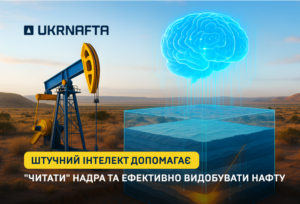
“Ukrnafta continues its digital transformation. Today, artificial intelligence is becoming one of the key tools that helps the company to work more accurately with subsoil, make more informed technological decisions and increase production efficiency.
Ukrnafta’s Research and Design Institute has created five neural network-based tools that are already changing the approach to geology and field development planning.
1. Automatic processing of large amounts of geological and industrial data.
Specialists perform data mining, recognize text and document structure in images, and automatically translate documents into Ukrainian. By July 2026, it is planned to complete the full processing of 1.8 million scanned paper carriers and create a full-fledged digital archive of geological and industrial documentation.
2. Recognizing and classifying geophysical measurement curves in images.
Neural networks significantly accelerate and improve the quality of the digitization process of scanned well logs. As a result, specialists receive the critical data they need to analyze and determine the location of productive formations and their characteristics faster. Additionally, a module has been created to automatically link a set of geophysical survey curves by depth using neural networks.
3. Automatic interpretation of lithological and petrophysical characteristics
A powerful tool for analyzing geophysical surveys that reproduces the logic of an experienced interpreter, automatically generating a preliminary forecast of important characteristics over the entire depth of the section. This allows you to clarify reservoir boundaries, find potentially productive intervals, and make field development strategies faster and more accurate.
4. Data preparation for digital 3D field models
The full cycle of preparing input data for digital field models has been automated. In fact, we are forming the basis for digital fields – digital twins that help manage the field in real time.
5. A recommendation system for selecting candidate wells for stimulation activities.
Neural networks are used to analyze the accumulated experience of technological operations and forecast possible flow rates for each well after stimulation. This approach allows us to quickly identify for further analysis exactly those facilities where workovers can provide the greatest increase in production right now.
The company carries out systematic work to effectively use the array of data accumulated over decades, combine it with the results of modern research and create a new level of accuracy in both planning and field operations.
In 2026, Ukrnafta will continue to use new technologies:
▪️ increasing the scale of digital transformation;
▪️ optimization of production processes;
▪️ prompt and most accurate production forecasting;
▪️ automation of seismic interpretation;
▪️ intelligent forecasting of equipment operation.
“Ukrnafta is moving to ensure that hydrocarbon production in Ukraine is based on accurate data, digital models and modern technological solutions, which will help to ensure the country’s energy sustainability more efficiently.
JSC Ukrnafta is the largest oil producer in Ukraine and the operator of the largest national network of filling stations – UKRNAFTA. In 2024, the company started managing the assets of Glusco. In 2025, the company finalized a deal with Shell Overseas Investments BV to buy the Shell network in Ukraine. In total, it operates 663 filling stations.
The company is implementing a comprehensive program to restore operations and update the format of its filling stations. Since February 2023, the company has been issuing its own fuel coupons and NAFTAKarta cards, which are sold to legal entities and individuals through Ukrnafta-Postach LLC.
Ukrnafta’s largest shareholder is Naftogaz of Ukraine with a 50%+1 share.
In November 2022, the Supreme Commander-in-Chief of the Armed Forces of Ukraine decided to transfer to the state a share of corporate rights of the company owned by private owners, which is now managed by the Ministry of Defense.



