

The National Bank of Ukraine (NBU) revoked the license of LLC “FC ”Artificial Finance Intelligence“” to operate as a financial company providing financial services such as lending funds and precious metals.
According to the NBU’s website, the reason for this decision was the company’s refusal to provide documents and information requested by the inspection team, which made it impossible to conduct the unscheduled inspection that began on June 30, 2026.
The Committee on Supervision and Regulation of Non-Bank Financial Services Markets adopted the corresponding decision on September 28, 2026.
Artificial Finance Intelligence LLC (Dnipro) was registered on February 3, 2020. Its authorized capital amounts to 21 million UAH.

Ferrexpo, a mining company with its main assets in Ukraine, reduced its capital expenditures (additions to property, plant, and equipment) by a factor of 2.1 in January–June of this year compared to the same period last year—to $13.892 million from $29.457 million.
According to Ferrexpo’s semi-annual report, additions to property, plant, and equipment totaled $63,755 million as of the end of 2025.
It is also noted that during the six-month period ended June 30, 2026, the net book value of disposals of property, plant, and equipment was $5,509 million (as of December 31, 2025 – $181,000; as of June 30, 2025 – $1,218 million). The total amount of depreciation accrued for this period was $12.951 million (as of December 31, 2025—$65.802 million; as of June 30, 2025—$34.418 million).
Assets under construction include capital projects in progress totaling $196.039 million (December 31, 2025 – $197.838 million; June 30, 2025 – $188.150 million) and capitalized costs for surface development work performed prior to the start of production, amounting to $29,280 million (December 31, 2025 – $31,223 million; June 30, 2025 – $31,712 million), relating to portions of ore bodies expected to be brought into operation only in future periods.
In addition, it is clarified that once ore production begins, capitalized stripping costs are reclassified as mining assets, and depreciation begins to accrue.
The carrying value of property, plant, and equipment includes capitalized borrowing costs related to qualifying assets totaling $18.349 million (as of December 31, 2025 – $21.4 million; as of June 30, 2025 – $23.826 million). During the period ended June 30, 2026, or the comparative periods, no borrowing costs were capitalized.
The report explains that the Group’s impairment testing of assets is based on cash flow projections for the remaining estimated useful lives of the Horishneplavnynske-Lavrykivske and Yeristivske fields, which, according to current approved mining plans, are scheduled to end in 2058 and 2048, respectively.
According to the report, the group’s long-term financial model is continuously updated. This process takes into account current operating conditions, which depend to a significant extent on the stability of the power supply, energy prices, the availability of logistics networks, as well as other potential negative factors caused by the war. Due to current restrictions, the production capacity used to forecast cash flows under the base-case scenario is expected to amount to approximately 32% of the pre-war level in fiscal year 2026, rising to about 63% in 2027 and returning to pre-war levels in the second half of 2028.
Regarding key assumptions, the cash flow forecast for the next five years is based on an average index price for iron ore (65% iron content) of $115 per metric ton on a CFR (Northern China) basis. In assessing the expected long-term sales price, the Group takes into account the results of external and internal analyses of supply and demand dynamics in the international market for iron ore pellets and concentrate in the short and long term, as well as specific local supply and demand indicators affecting the Group’s major customers. Due to growing demand for high-quality concentrate and the expected margin calculated based on projected market conditions, the share of concentrate production in the current long-term model has increased significantly.
At the same time, the Group is expected to adjust the mix of iron ore products in its production plan in accordance with future market conditions and taking into account the operational situation in Ukraine at that time. The Group’s main cost items, in particular production and transportation costs, are determined taking into account local inflationary pressures, the dynamics of the hryvnia-to-U.S. dollar exchange rate, short- and long-term trends in energy supply and demand, as well as expected changes in the prices of raw materials related to steel production, which could significantly affect the cost of certain production materials. Regarding the logistics route through Ukraine’s
Black Sea ports, which is currently inaccessible, given the importance of this route both for the parties to the conflict and for global grain shipments, management believes that the situation will improve in 2027, and therefore expects that Ukraine’s Black Sea ports will once again become accessible to the Group for the purpose of selling to certain markets.
Given the increase in the share of concentrate production in the current long-term model, management analyzed whether this might indicate that the assets used to produce pellets and concentrate constitute two separate cash-generating units (CGUs). After a thorough analysis, management concluded that it remains appropriate to test the
Group’s non-current operating assets as a single CGU, given the high level of vertical integration of production at the Group’s main subsidiary—Poltava Mining and Processing Plant—and the absence of largely independent cash flows.
It is also reported that the Group conducts transactions on market terms with entities under the common control of Kostyantyn Zhevago and his related parties. Such transactions are considered part of the Group’s ordinary course of business. During 2025, the group posted a bond in the amount of 5 million UAH (or approximately $120,000) on behalf of a senior executive of one of the group’s subsidiaries in Ukraine. The bail payment was related to court and other legal proceedings initiated by certain government agencies against the Group’s subsidiaries and senior management representatives in Ukraine. In March 2026, the court overturned the bail order, after which the funds were returned to the subsidiary. No such payments were made during the first six months of 2026.
The Group has virtually no debt obligations: as of June 30, 2026, it had a net cash position of $21 million (compared to $47 million as of December 31, 2025). Excluding lease obligations totaling $10 million (December 31, 2025: $11 million), the Group had no outstanding interest-bearing loans or credits as of June 30, 2026, and December 31, 2025.
As of June 30, 2026, Ferrexpo’s long-term corporate credit rating and debt rating, as assigned by Moody’s, was Caa3 with a “negative” outlook. At the Group’s request, Fitch and S&P no longer provide ratings.
As previously reported, Ferrexpo ended the first half of 2026 with a net loss of $14.9 million, which is 13.2 times less than the figure for the first half of 2025; revenue fell 2.3 times to $196 million. The company reduced capital expenditures (CapEx) to $10 million from $28 million in January–June 2025, allocating 88% of these expenditures to projects necessary to maintain operations and only 12% to development projects.
Ferrexpo owns a 100% stake in Yeristivskyi Mining and Processing Plant LLC, 99.9% of Bilanivskyi Mining and Processing Plant LLC, and 100% of the shares in Poltava Mining and Processing Plant PJSC.
FERREXPO, INVESTMENT, IRON ORE, MINING AND PROCESSING PLANT, UKRAINE

The number of job openings in the second quarter of this year rose by 13% compared to the first quarter, while the number of resumes increased by 75% compared to the same period in 2025, according to the first analytical report from the interactive quarterly analytics tool of the job search platform robota.ua.
According to this data, the Kyiv region had the most job openings in Q2 2026 (136,700, or 40.6% of the total). There is also active demand for workers in Lviv (26,800, or 8%), Dnipropetrovsk (25,800, or 7.6%), Odesa (19,300, or 5.7%), and Kharkiv regions (17,600, or 5.2%).
Since the beginning of the year, the number of job openings has been gradually increasing after a decline in November–December 2025 to 92,400. Specifically, in January 2026 there were 101,200 job openings, in February—105,800, in March—110,500, in April—113,200; in May, the trend slowed, and the market saw nearly as many job openings as the previous month—113,300.
Salary expectations are slightly lower than employers’ offers: in May, the salaries offered by employers amounted to 28,000 UAH, compared to the 25,000 UAH that job seekers were hoping for.
As noted in the platform’s report, the tool’s large-scale sample covers over 337,000 published job openings, 656,000 active job seekers, nearly 1,900 settlements, and over 110 million page views.
In addition to market indicators, the platform’s quarterly report highlights key labor market trends. Salary transparency, in particular, is becoming a key factor: 33% of job seekers do not apply at all to job postings that do not specify a salary, and against the backdrop of the European Pay Transparency Directive, a petition has emerged in Ukraine calling for a mandatory salary field on recruitment platforms.
It is noted that, amid a labor shortage, job reservations in the defense industry have become an important HR benefit offered by 74% of companies (according to a study by the Council of Arms Manufacturers and Core Team). Additionally, according to a study by the Ukrainian Center for Social Reforms, employers are more actively recruiting older candidates: about 65% of companies are willing to consider employees aged 50+, and over 60% are willing to consider employees aged 60+.

Starting October 1, 2026, a new electronic toll system called TollRo will go into effect in Romania for freight vehicles with a maximum authorized mass exceeding 3.5 metric tons, according to the National Company for Road Infrastructure Administration of Romania (CNAIR).
The new system will apply to vehicles designed for the transport of goods with a maximum authorized mass exceeding 3.5 metric tons. For the purposes of TollRo, mixed-use vehicles will be treated as commercial vehicles.
Unlike the traditional vignette system, the fee for heavy freight vehicles will be based on actual use of the road infrastructure.
The fee amount will depend, in particular, on the distance traveled, the vehicle category, and its environmental characteristics. Thus, for international carriers that regularly transit through Romania, the cost of using the road network will increasingly depend on the specific route and the truck’s characteristics.
To administer the payments, Romania has established the STRR electronic toll collection system, which will operate through the national SETRE platform.
The introduction of TollRo is also significant for Ukrainian international trucking companies, as Romania is one of the key road routes for Ukrainian exports and imports to the EU, as well as for the transit of goods to Central and Southeastern Europe.
Accordingly, transportation companies using trucks weighing more than 3.5 metric tons in Romania must take the new road toll model into account when calculating transportation costs after October 1.
CNAIR clarifies that August 31, 2026, was the deadline for establishing the necessary STRR and TollRo infrastructure, while the actual collection of the new tolls, in accordance with the law, begins on October 1.
The next step will be the integration of the Romanian system with similar systems in other European Union countries. According to Romanian law, interoperability via the European Electronic Toll Service (EETS) is scheduled to begin on January 15, 2027.
The transition to distance-based tolling is in line with a general trend in the EU, where road tolls for heavy commercial vehicles are increasingly linked to actual infrastructure use and the environmental performance of vehicles.
Official information about the system’s launch and its operating rules is available on the SETRE National Electronic Registry platform.
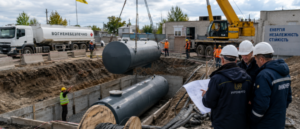
It makes more sense for Ukraine to invest in creating its own network of underground fuel storage facilities than to invest in the construction of facilities for storing strategic reserves in other countries. This opinion was expressed by Serhiy Kuyun, director of the A-95 Consulting Group, according to Enkorr.
Ukrainian legislation allows for up to 50% of the minimum reserves of oil and petroleum products to be stored in countries neighboring Ukraine and up to an additional 25% in countries bordering those neighbors. This practice is common in Europe; however, finding available storage capacity in neighboring countries is complicated by the fact that EU member states themselves are required to maintain significant strategic reserves.
According to Kuyun, as a result, Ukraine may be offered the option to invest not in leasing existing facilities, but in the construction of new storage tanks abroad. Such projects will require lengthy construction periods, local permits and licenses, as well as the outflow of significant foreign currency investments from Ukraine. If a foreign partner finances the project, it may also be necessary to guarantee that the storage facilities remain filled for many years.
The expert cites another problem: the physical ability to quickly deliver strategic reserves to Ukraine in the event of a large-scale fuel crisis.
“Even if we build up reserves abroad, how would we then transport them in an emergency? The border is already strained even under normal conditions—where would we possibly fit in tens or even hundreds of thousands of additional metric tons?” Kuyun noted.
The relevance of this discussion has intensified following agreements between Naftogaz and the Hungarian company MOL. On September 20, the companies signed a memorandum to explore the possibility of storing petroleum products in Hungary near the Ukrainian border to meet the needs of the Ukrainian market. The project is still in its initial stages, and the parties must assess its technical, financial, environmental, and regulatory parameters.
According to Kuyun, a more reliable solution would be to build secure underground storage facilities directly in Ukraine. This would allow for simultaneous investment in Ukrainian infrastructure, increase the security of reserves against Russian attacks, and ensure the ability to bring fuel to market more quickly in a crisis situation.
The first government incentives for such investments have already been established. In September, the government expanded its financial support program for the fuel sector. Loan funds can be used, in particular, to bury or install underground storage tanks, pumping stations, process pipelines, and other fuel infrastructure equipment.
The maximum amount of state-backed lending is 1 billion UAH per company, including affiliated counterparties; the minimum is 100 million UAH; and for projects in combat zones, it is 30 million UAH. The state will subsidize 5.5 percentage points per annum off the bank’s base rate.
According to Kuyun, the next step should be to streamline the approval process for project documentation related to underground fuel storage facilities, as this process can currently take over a year. He noted that several private companies have already begun implementing such projects while simultaneously completing the necessary approval procedures.
“Build our own, invest in Ukraine’s infrastructure! But we need to build underground storage facilities—with a neighbor like this, we’ll always need them,” emphasized the director of “A-95.”
FUEL, INVESTMENT, petroleum product, storage facility, UKRAINE
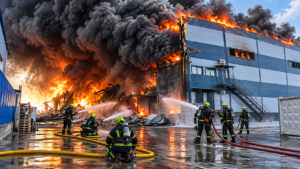
The intensification of Russian attacks on Ukraine’s production, logistics, retail and digital facilities is increasingly affecting not only individual companies, but also the growth potential of the economy as a whole. The destruction of enterprises and critical business infrastructure leads to downtime, disruptions in supply chains, higher logistics costs and the need to direct investment resources toward recovery instead of development, reports the Experts Club information and analytical center.
According to the UN Human Rights Monitoring Mission in Ukraine, in August 2026 alone, at least 32 attacks on facilities belonging to Fozzy Group, Epicentr, Nova Poshta, Rozetka, Aurora and Varus were recorded, compared with 11 in July. This figure concerns only the specified group of companies and does not reflect the total number of attacks on Ukrainian businesses.
Warehousing and transport logistics remain among the most vulnerable segments. In August, large distribution and logistics complexes belonging to Rozetka, NOVUS, MTI Group and EVA were destroyed or seriously damaged as a result of attacks. On August 31, a strike on a Nova Poshta terminal in Odesa destroyed a key sorting line. In September, production, warehouse and digital facilities of a number of companies were also damaged.
Experts Club founder and Candidate of Economic Sciences Maksym Urakin notes that the economic effect of such attacks significantly exceeds the book value of the destroyed property.
“When a distribution center, factory or data center is destroyed, economic losses cannot be calculated solely on the basis of the value of the facility itself. Along with it, part of production output temporarily disappears, supplies to dozens or hundreds of other companies are disrupted, inventories are lost, logistics and insurance costs increase, and businesses are forced to create backup capacity,” Urakin noted.
According to the joint RDNA5 assessment by the Government of Ukraine, the World Bank, the European Commission and the UN, as of the end of 2025, direct damage to Ukraine from the war amounted to $195.1 billion, while recovery needs over the next decade were estimated at $587.7 billion. Direct damage to trade and industry amounted to $19.2 billion, about 85% of which was attributable to industry. At the same time, these estimates do not yet take into account the new destruction of 2026.
The deterioration of the situation has already affected macroeconomic forecasts. In September, the European Bank for Reconstruction and Development lowered its forecast for Ukraine’s real GDP growth in 2026 from 2.2% to 1.5%. Among the factors, the EBRD cited intensified attacks on enterprises, energy infrastructure and Black Sea ports, as well as labor shortages, weak business confidence and logistical constraints. The IMF had previously forecast growth of the Ukrainian economy in 2026 at 1–1.6%.
Experts Club emphasizes that the downgrade of forecasts cannot be explained solely by the physical destruction of enterprises. GDP is affected by the duration of downtime, the volume of lost production, the possibility of relocating production to other sites, the state of the energy sector and the speed of restoring logistics links.
Of particular concern is the displacement of investment in development by recovery expenditures. Enterprises have to simultaneously finance repairs, generators and electricity storage systems, backup warehouses, servers and the relocation of production facilities. This supports business continuity but limits the ability to invest in modernization, capacity expansion and the creation of new jobs.



