
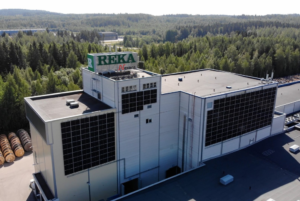
Finnish industrial company REKA Group is beginning the implementation of the REKA NOVO investment project in Novoselytsia, Chernivtsi region, with a total investment volume of €5 million, the Chernivtsi Regional Military Administration reported.
The new enterprise will specialize in the production of silicone hoses for European manufacturers of trucks, special-purpose vehicles, and companies in the shipbuilding industry.
Thus, this is an export-oriented production facility being created by a foreign investor directly in Ukraine and integrated into European industrial chains.
REKA Group representatives Markku Rentto and Mika Kärkkäinen announced the start of the project during a meeting with the leadership of the Chernivtsi region and the Novoselytsia community.
According to the published data, the project has been named REKA NOVO. The total volume of capital investment will amount to €5 million. The first stage of the enterprise is expected to be launched in early 2027.
The products of the new plant will be oriented primarily toward the European market. This makes it possible to view the project not only as a direct foreign investment in Ukrainian industry, but also as a further integration of Ukrainian production sites into the supply chains of European mechanical engineering.
According to specialized investment resources, international manufacturers of heavy machinery, including Volvo and John Deere, are named among the potential consumers of the products. However, the official statement of the Chernivtsi Regional Military Administration does not identify specific customers, so the conclusion of direct contracts with these companies has not yet been publicly confirmed.
For the Chernivtsi region, the project is of particular interest against the background of the comparatively small accumulated volume of foreign direct investment. According to the Regional Military Administration, more than 400 enterprises with foreign capital operate in the region, while the total volume of attracted foreign direct investment amounts to about $19 million.
Against this background, REKA Group’s €5 million investment is a notable new industrial project for the region.
The location of the production facility in Novoselytsia also gives the investor a logistical advantage: the city is located not far from the border with Romania, which facilitates the integration of the enterprise into European production and transport chains.
The project is also indicative of a broader trend toward relocating individual production operations closer to the EU market. Ukraine’s western regions, thanks to their geographical proximity to the European Union, relatively developed industrial base, and access to the Ukrainian workforce, are gradually becoming one of the main locations for new export-oriented production facilities.
Official source: Chernivtsi Regional Military Administration — REKA NOVO investment project.
According to Experts Club, electric vehicles in Ukraine will remain more cost-effective than internal combustion engine vehicles even after full taxation on their import is restored, says Serhiy Kuyun, director of the “A-95” Consulting Group.
According to Enkorr, a 20% VAT is set to be reinstated on electric vehicle imports into Ukraine starting January 1, 2027. Meanwhile, the preferential regime in effect until the end of 2026 exempts electric vehicles from VAT and import duties.
According to Kuyun’s assessment, the elimination of this exemption will make electric vehicles more expensive to purchase, but it will not deprive them of their main advantage—significantly lower operating costs.
“Even with all taxes included, an electric vehicle remains cost-effective. The electricity needed to charge it is significantly cheaper than fuel for a vehicle with an internal combustion engine,” the expert notes.
The savings on operating costs are particularly noticeable with high annual mileage. If an electric vehicle consumes about 15–20 kWh of electricity per 100 km, then when charged at home, the cost of such a trip remains several times lower than the cost of gasoline or diesel fuel for a vehicle of a similar class.
An additional advantage of electric vehicles is the simpler design of their powertrain. They lack a number of components and consumables typical of vehicles with internal combustion engines, which potentially reduces the cost of regular maintenance.
According to Kuyun, the Ukrainian market has already reached a stage of development where tax incentives are no longer the main driver of demand for electric vehicles. In recent years, the model lineup has expanded significantly, the used-car market has grown, and the charging station infrastructure is developing.
At the same time, the reinstatement of the VAT could have a noticeable impact on the market immediately before the end of the tax incentive period. Buyers planning to purchase an electric vehicle may try to import and register it by the end of 2026 to take advantage of the current tax incentives.
As a result, electric vehicle imports may accelerate further in the final months of 2026, after which the market may undergo a correction period in early 2027.
For comparison: with a customs value of 20,000 euros for an electric vehicle, the 20% VAT refund alone potentially increases the tax component by approximately 4,000 euros, without taking into account the specifics of determining the tax base and other payments. However, for an owner with high annual mileage, part of this difference is gradually offset by lower energy and maintenance costs.
Analysts at Experts Club note that the future dynamics of the Ukrainian electric vehicle market will no longer depend solely on tax incentives. The cost of electricity and automotive fuel, the development of charging infrastructure, prices for new and used electric vehicles, the condition of batteries, and the residual value of vehicles on the secondary market will become increasingly important.
Therefore, the reinstatement of full taxation may alter the structure of imports and slow the market’s growth rate; however, it does not, in and of itself, eliminate the economic advantages of electric vehicles for a significant portion of drivers.
Original source: Enkorr – “Electric Vehicles Will Remain Cost-Effective Even With All Taxes — Expert”.

The Czech oil and gas company MND is considering investing at least $60 million in hydrocarbon production projects in Ukraine as part of a partnership with the Naftogaz Group.
Naftogaz and MND signed a memorandum of understanding on potential cooperation regarding three existing production-sharing agreements between Ukrgazvydobuvannya and the Ukrainian government. The document was signed during the Carpathian Eight Summit, the group reported.
If the agreements are implemented, MND will be able to participate in the development of Ukrainian fields and contribute its own capital, technology, and operational expertise to the projects.
The initial investment under the three agreements could total $60 million. However, the Czech company’s participation has not yet been finalized—it will depend on the results of the relevant competitive selection process.
Naftogaz views attracting international oil and gas companies as one of the tools for increasing its own gas production amid regular Russian attacks on Ukraine’s energy infrastructure.
Serhiy Fedorenko, acting head of Naftogaz, noted that the group is interested in international partners capable of bringing investment, modern technologies, and practical experience.
In turn, Yana Gamrshmidova, CEO of the energy division at MND Group, stated that the company is already contributing to Ukraine’s energy resilience and intends to introduce new technologies and create jobs.
MND is of particular interest as a strategic investor because it is not a financial institution but an active European energy company with its own expertise in hydrocarbon exploration and production.
For Ukraine, attracting such a partner could mean not only an inflow of foreign capital but also access to field development technologies and management expertise from the European oil and gas industry.
The memorandum is not yet a final investment agreement. The parties must still agree on the terms of cooperation, and MND’s potential participation in production-sharing agreements must go through the procedures required by law.
However, the announced initial investment of $60 million makes the initiative one of the most significant new projects involving private European capital in Ukraine’s extractive industry.
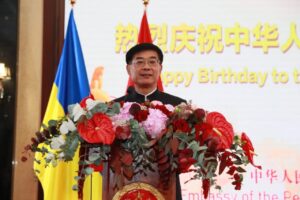
China is ready to remain a reliable partner of Ukraine and to expand mutually beneficial cooperation between the two countries, said Ma Shenkun, Ambassador of the People’s Republic of China to Ukraine.
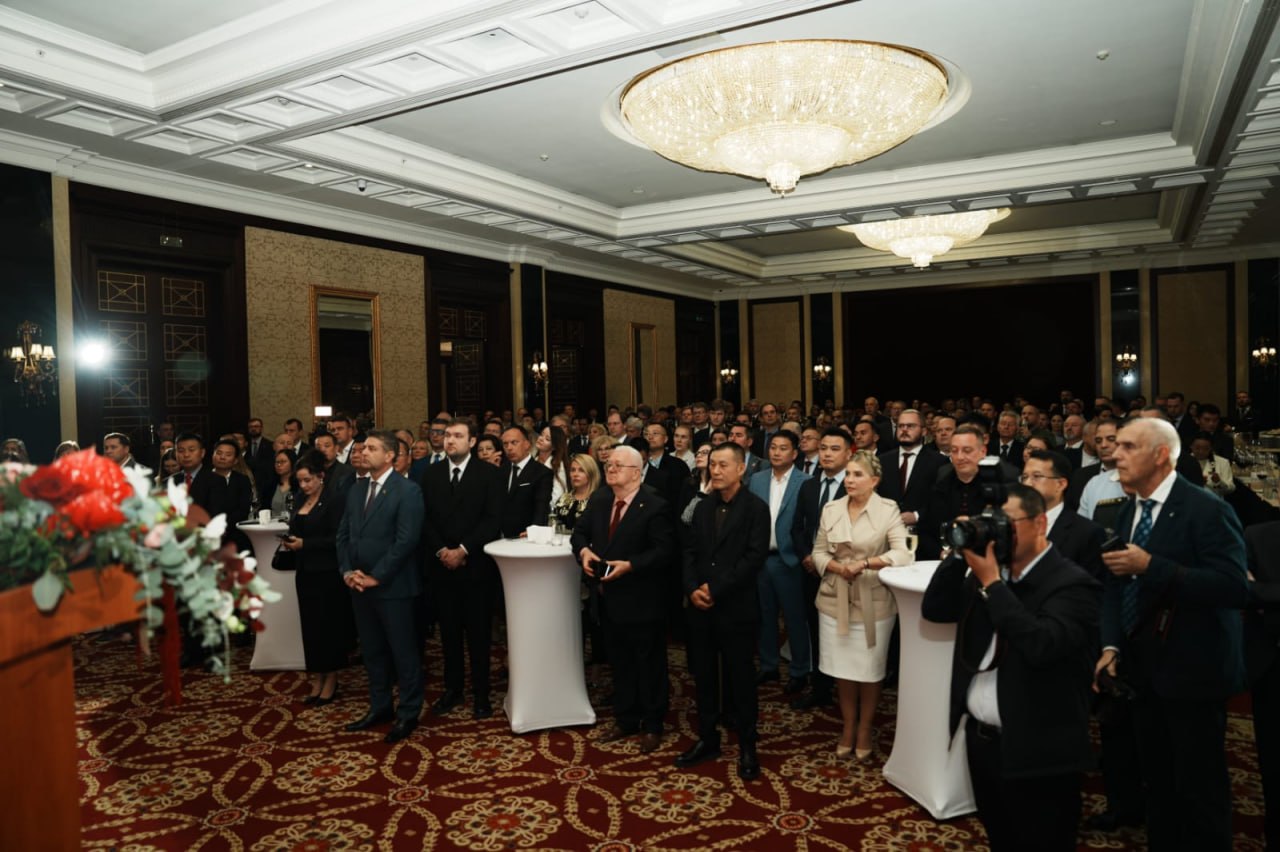
“The economies of China and Ukraine are highly complementary, so cooperation between the two countries has broad prospects. China is ready to be a reliable partner of Ukraine. We are committed to further expanding mutually beneficial cooperation, bringing greater benefits to the peoples of both countries, and jointly opening up new prospects for the development of China-Ukraine relations,” the ambassador said during a reception in Kyiv marking the 77th anniversary of the founding of the People’s Republic of China.
The event was attended by Ukraine’s Deputy Minister of Foreign Affairs Yevhen Perebyinis, as well as representatives of the diplomatic corps, Ukrainian government and civil society organizations, the business community, and the Chinese community.
Ma Shengkun noted that 2026 will mark the 15th anniversary of the establishment of the China-Ukraine strategic partnership, and in 2027, the two countries will celebrate the 35th anniversary of the establishment of diplomatic relations.
According to him, China has remained Ukraine’s largest trading partner for many years and is one of the main sources of Ukrainian imports.
The ambassador highlighted the development of bilateral trade in agricultural products. Specifically, in 2025, Ukraine and China signed protocols opening opportunities for the export of Ukrainian peas and wild-caught aquatic biological resources, and in 2026, they signed a protocol regarding the export of Ukrainian wheat flour to China.
“This creates a solid foundation for the further expansion of Ukrainian agricultural exports,” noted Ma Shenkun.
Speaking about the state of the Chinese economy, the diplomat reported that China’s GDP in the first half of 2026 reached 69.6 trillion yuan, an increase of 4.7% compared to the same period last year.
According to him, China intends to continue developing high-tech manufacturing, new energy, artificial intelligence, robotics, and innovative pharmaceuticals, while simultaneously opening its economy further to the outside world.
Ma Shengkun also addressed Beijing’s position on the war in Ukraine. He stated that China advocates for a political settlement and the continuation of diplomatic efforts.
“China will continue to stand firmly on the side of peace and support all efforts that promote peace. In turn, China will continue to play a constructive role in facilitating the swiftest possible ceasefire and cessation of hostilities and, ultimately, the achievement of a peace agreement,” the ambassador stated.
He noted that nearly two years of work in Ukraine have convinced him that the Ukrainian economy has significant potential for further development and cooperation with China.
A significant portion of the ambassador’s speech was devoted to the achievements of the PRC’s 77-year development. Ma Shengkun noted that China has become the world’s second-largest economy, a global leader in the volume of merchandise trade, and one of the main trading partners of more than 160 countries and regions.
The diplomat also stated Beijing’s intention to continue international cooperation within the framework of the “Belt and Road” initiative, which, he said, has been joined by over 150 countries and more than 30 international organizations, with the number of infrastructure and industrial projects currently underway exceeding 4,000.
According to a study by the Experts Club think tank, China ranked first among Ukraine’s largest trading partners in the first half of 2026. Trade between the countries totaled approximately $14.68 billion, including imports of Chinese goods to Ukraine of about $13.9 billion and Ukrainian exports to China of about $778 million. China accounted for about 21.9% of Ukraine’s total trade with its 50 largest trading partners and 29.4% of imports from this group of countries. At the same time, Ukraine’s trade deficit with China amounted to approximately $13.12 billion. Experts Club study on Ukraine’s largest trading partners in the first half of 2026
According to data from the State Customs Service, this trend continued in January–August 2026: China remained the largest supplier of goods to Ukraine, with imports totaling over $19.6 billion.
The People’s Republic of China recognized Ukraine’s independence on December 27, 1991, and diplomatic relations between the two countries were established on January 4, 1992. The Embassy of the People’s Republic of China in Kyiv began operations in 1992. That same year, the Embassy of Ukraine in Beijing began operations. In 2011, Ukraine and China established a strategic partnership.

Andriy Butenko, Ukraine’s Minister of Education and Science, discussed with Seymur Mardaliyev, the Ambassador of the Republic of Azerbaijan to Ukraine, the recognition of higher education documents, the expansion of cooperation between universities, and the preparation of bilateral events in the field of education and science.
“As of early 2026, more than 5,400 Azerbaijani citizens were studying in Ukraine—about one-third of all international students. The Ukrainian side reaffirmed its interest in maintaining this cooperation and creating appropriate conditions for pursuing an education,” according to a statement from the Ministry of Education.
It is noted that special attention was given to the recognition of diplomas from Ukrainian higher education institutions in Azerbaijan.
In particular, the Ukrainian side proposed to thoroughly examine the relevant issues within the framework of a specialized working group.
The meeting also addressed the issue of documentation required for the admission and arrival of Azerbaijani students coming to study in Ukraine.
In addition, the meeting participants discussed preparations for a visit to Azerbaijan by a delegation from the Ministry of Education led by Deputy Minister Mykola Trofimenko.
“The proposed program includes a working group meeting on the recognition of educational documents, as well as meetings with the leadership of the relevant ministry and university rectors. The visit is intended to facilitate the development of joint decisions and the establishment of direct partnerships between higher education institutions in both countries. The possibility of organizing a meeting between the education ministers of Ukraine and Azerbaijan by the end of this year was also discussed,” the statement reads.
The parties also discussed preparations for the 14th meeting of the Joint Intergovernmental Commission on Economic Cooperation and the signing of an intergovernmental agreement on scientific and technical cooperation.
On September 24, PJSC “Ukrnafta” (Kyiv) announced its intention to enter into an insurance contract with Guardian Insurance Company to cover the liability of holders of special permits for the use of oil and gas-bearing subsoil resources during the development of such resources, in cases provided for by the Law “On Oil and Gas.”
According to the Prozorro electronic public procurement system, the company’s bid amounted to 527,000 UAH, compared to the expected cost of 952,000 UAH for the services.
Insurance Company “Ultra Alliance” also participated in the tender with a bid of 850,000 UAH.
As previously reported, Guardian Insurance Company was the winner of a similar tender a year ago.



