

According to Relocation, Sierra Leone has expanded its citizenship program for foreign investors by adding two new options: expedited citizenship for $1 million and naturalization through residency in the country with investments starting at $90,000.
According to information from the Go-FOR-GOLD Sierra Leone program, the first new option provides for expedited citizenship upon payment of $1 million.
This option is aimed at high-net-worth applicants who need the fastest possible citizenship process. The program requires verification of the source of funds and the applicant’s good character.
The second route is significantly cheaper but requires the investor to have a genuine connection to the country. To participate, applicants must invest at least $90,000 in an approved business or enterprise in Sierra Leone.
Afterward, the applicant must reside in the country for at least 90 days per year for five years. Once these conditions are met, the applicant becomes eligible to apply for citizenship through naturalization.
Thus, the minimum physical presence requirement over five years is 450 days.
These new options complement Sierra Leone’s existing investment citizenship program, launched under the Go-FOR-GOLD brand.
The basic investment track requires a non-refundable contribution of $140,000 for the principal applicant. An additional fee is required to include a spouse in the application, and separate fees apply for other dependents.
One of the program’s unique features is the ability for participants in the main investment track to obtain citizenship without having to reside permanently in Sierra Leone.
The country’s government positions Go-FOR-GOLD not only as a mechanism for attracting foreign investors but also as a tool for financing environmental and economic projects.
Sierra Leone has become one of the new entrants to the rapidly growing market for citizenship-by-investment programs. Such programs are most common in the Caribbean, where they are in place in Antigua and Barbuda, Dominica, Grenada, St. Kitts and Nevis, and St. Lucia.
Official source: Go-FOR-GOLD Sierra Leone — the official citizenship program.
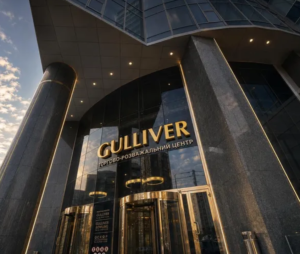
The auction for the sale of the Gulliver shopping and office complex in Kyiv did not take place due to a lack of bids, Oschadbank reported Wednesday evening on its Telegram channel.
“In light of this, the supervisory boards of Oschadbank and Ukreximbank will determine the further strategy for selling the asset, taking into account market conditions, the readiness of potential investors, and security risks,” the statement noted.
As previously reported, the state-owned Oschadbank and Ukreximbank put the Gulliver TOK up for public auction via the “Prozorro.Sales” system in late August with a starting price of 9.2355 billion UAH (excluding VAT) ($207 million).
The lot included a retail and office complex with a parking lot totaling 151,805 thousand square meters on Sportivna Square, 1-A in Kyiv, and two land plots with a combined area of 1.2512 hectares. Oschadbank holds an 80% stake in the property, while Ukreximbank holds 20%.
The sale was intended to be the final stage in the foreclosure of collateral for one of the largest non-performing corporate loans in the banking system.
A consortium of state-owned banks began financing the construction of the complex in 2006, and it was commissioned in 2014. Following several restructurings, Tri O LLC, which owned Gulliver, began reducing its loan payments in June 2024 and subsequently ceased servicing the debt entirely.
On July 26, 2025, a decision was made to register the ownership rights to the complex in the name of a consortium comprising Oschadbank and Ukreximbank as a result of foreclosure on the mortgaged property due to “Tri O” LLC’s failure to fulfill its obligations under the loan agreement.
In late October 2025, Oschadbank’s Emergency Commission deemed the situation dangerous to people and the complex’s operation, particularly due to the refusal of “Tri O” LLC employees to transfer control of critical engineering systems to the bank. In December, the bank began gradually reopening the complex after addressing some of the causes of the emergency.

In August 2026, Express Insurance settled 252 claims under mandatory civil liability insurance for vehicle owners (OSAGO), including direct settlements, totaling over 16.4 million UAH.
According to the insurer’s website, compared to August of last year, the volume of insurance compensation doubled (+100.6%), while the number of settled claims increased by 57.5%.
According to the company, compared to August of last year, the volume of payments for property damage more than doubled (+108.4%), and the number of related insurance claims increased by 78.5%. At the same time, the number of claims involving injury or death decreased by a factor of 5.5.
The breakdown of how insurance claims were processed also changed. Compared to August 2025, the share of traffic accidents processed with police involvement decreased, while the share of Europrotocol claims rose from 41.9% to 57.1%. At the same time, the volume of payouts for insurance claims processed with police involvement increased by 69.3%, while payouts for claims processed via the Europrotocol procedure rose by 124.6%.
“The August results show an increase in the volume of MTPL settlements compared to the same period last year. The rise in the share of Europrotocol claims confirms growing driver awareness of the simplified mechanism for reporting traffic accidents,” the statement notes.
Express Insurance was founded in 2008 with the participation of Ukravto Group, a leader in the Ukrainian automotive market. It specializes in auto insurance. The company has more than 300 insurance agents throughout Ukraine and is actively expanding its network of partner auto service centers.
Compulsory Auto Liability Insurance (OSAGO), EXPRESS INSURANCE
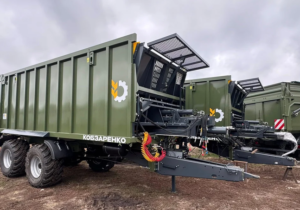
The Ukrainian Kobzarenko Group, a manufacturer of trailed agricultural equipment, has launched a new production facility in Kovel, Volyn Oblast, and plans to increase its capacity to approximately 350 machines per year by 2028.
The facility will produce equipment for handling liquid fertilizers and other liquids, including precision fertilizer applicators, mixing and filling stations, and tanks for transporting water and liquid fertilizers. The first units of equipment at the new facility have already been manufactured.
The company intends to invest approximately 40 million UAH annually in production development. As the facility reaches its planned capacity, it is expected to create about 100 new jobs.
The launch of the plant is also significant from the perspective of the geographical expansion of the Ukrainian machine-building industry. The group’s main production facilities have historically been located in the Sumy region. The company also has sites in Lipova Dolyna and Romny, and outside Ukraine, its Polish plant, Kobzarenko Sp. z o.o., manufactures equipment and simultaneously serves as a service center for the European market.
At the same time, the company continues to expand its presence in the EU. In 2026, Kobzarenko participated in industry trade shows in Romania, the Czech Republic, Slovenia, and Poland. Following the AGRA 2026 exhibition in Slovenia, the manufacturer announced negotiations to expand its dealer network in Austria and the search for a new partner in Slovenia.
Thus, the company is simultaneously developing its European sales network and increasing its production capacity in Ukraine.
The Kobzarenko Group has been operating since 1993 and specializes in the manufacture of agricultural machinery, specifically tractor trailers, grain transfer devices, tankers, fertilizer application equipment, and other machinery.
Source: Kobzarenko’s official website.
AGRICULTURAL MACHINERY, INVESTMENTS, MANUFACTURING, mechanical engineering, Кобзаренко
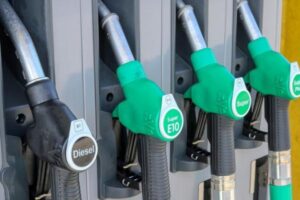
Ukrainian gas station chains are not yet fully passing on the increased costs resulting from Russian attacks to consumers, instead offsetting them by reducing their own profitability; however, the ability to keep prices in check in this way is limited, according to Serhiy Kuyun, director of the A-95 Consulting Group.
As the expert reported on his Facebook page, “A-95” specialists compared retail prices for gasoline and diesel fuel with their customs value over the past three years.
The resulting difference includes gas stations’ logistics and operating costs, as well as operators’ profits. According to “A-95” calculations, in 2026 this markup did not increase but actually decreased slightly compared to the previous year, despite a significant rise in fuel companies’ expenses.
Among the additional costs, Kuyun cites the restoration of damaged gas stations and the strengthening of their security. According to him, installing an anti-drone protective structure over a single gas station can cost about €100,000, while building a temporary shelter can cost 1–1.2 million UAH.
At the same time, personnel costs are rising. According to data from the State Tax Service cited by the expert, the official salaries of employees at the 40 largest gas station chains have increased by 20% over the past year. Additional expenses arise from the need to organize work schedules and staff rotations in frontline regions.
“In other words, the stability of the markup was achieved by reducing profits,” Kuyun noted.
According to his assessment, the most difficult economic situation has developed in the left-bank region of Ukraine. The cost of delivering fuel there is higher than in the western and southern border regions, while there is virtually no significant regional variation in retail prices.
National chains can partially offset the low profitability of such gas stations through more efficient stations in other regions. For small local operators in the east of the country, this option is often unavailable.
According to Kuyun, some local gas stations are currently operating with zero or negative profitability. The expert attributes this to why some gas stations damaged by Russian drones are not being rebuilt: investments in repairs may not pay off given the current economic situation.
A further negative factor is the decline in fuel sales. Kuyun attributes this both to the impact of attacks on Ukrainian industry and the resulting drop in consumption, as well as to the high cost of petroleum products on the global market.
According to the expert, for now, fuel retailers are effectively absorbing part of the rising costs using their own revenues, rather than passing them on entirely to the final price of gasoline and diesel fuel.
However, this situation cannot last indefinitely.
“It’s hard to say how much longer fuel retailers will be able to absorb these price increases using their own revenues. I think it won’t be long,” Kuyun noted.
Thus, future price trends at Ukrainian gas stations will depend not only on global oil and petroleum product prices and the exchange rate, but also on operators’ ability to offset rising costs related to logistics, security, infrastructure restoration, and personnel.
Source: Serhiy Kuyun — Facebook post.
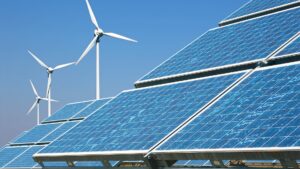
The European Bank for Reconstruction and Development may provide EUR600 million to restore the electricity balancing market, said Ukraine’s First Deputy Prime Minister for Energy Denys Shmyhal after a meeting with EBRD President Odile Renaud-Basso.
“Ukrainian energy companies need EUR600 million in financing to revitalize the balancing market. We greatly appreciate the EBRD’s participation in this process and count on the bank’s support for this reform,” he wrote on his Telegram channel.
According to the First Deputy Prime Minister, the parties also discussed priorities for further cooperation across all areas. Currently, Ukraine, in partnership with the EBRD, is implementing 13 energy projects that cover virtually the entire energy chain—from gas production and supply to electricity generation and transmission—as well as projects in hydropower and renewable energy. The total value of the portfolio exceeds EUR3 billion.
In addition, Shmyhal and Reno-Basso coordinated further cooperation to attract new contributions for the reconstruction of the New Safe Confinement at the Chernobyl Nuclear Power Plant during the Donors’ Conference, which is scheduled to take place in Paris in November.



