
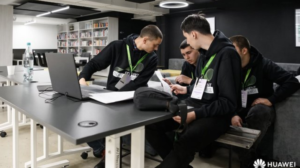
Huawei Ukraine has announced that it is accepting applications from students at Ukrainian higher education institutions to participate in the annual Student Tech Challenge-2026 team competition, which is held with the support of the Ministry of Education and Science of Ukraine.
According to the company’s press release, participants will develop technological solutions for challenges in the fields of telecommunications, computer networks, and digital energy. Winners will receive prizes and the opportunity to join an internship program at Huawei Ukraine.
The competition will be held in three main categories: Radio Access Network Planning, Datacom Engineering, and Digital Energy. Teams will develop their projects with the assistance of the company’s faculty coaches and mentors.
The first stage of the Student Tech Challenge will run from October 6 to 26 and will include online meetings, solution development, and presentation preparation. The semifinals are scheduled for October 26–27, after which the finalist teams will continue working with mentors. Project pitches will take place on November 4–5, either online or in person in Kyiv, and the finals and awards ceremony will be held on November 6.
Teams of two to five students from Ukrainian higher education institutions are invited to participate. Eligible participants include undergraduate students in their third year or higher and first-year master’s students majoring in engineering, technical, and related polytechnic fields. Knowledge of English at a minimum B1 level is required, as project presentations will be conducted in English.
Detailed contest rules are available on the official Student Tech Challenge website.
Huawei Ukraine has been operating in the Ukrainian market since 2000, and Huawei Ukraine LLC was registered in Kyiv in May 2005. The company is engaged in the supply, commissioning, maintenance, and technical support of Huawei telecommunications equipment and software.
One of the company’s areas of activity in Ukraine is the training of specialists in the field of information and communication technologies. In particular, since 2016, the international educational program “Huawei Seeds for the Future” has been implemented in Ukraine, and the Huawei ICT Academy network has been expanding in partnership with Ukrainian universities.
Source: Huawei Ukraine press release on the “Interfax-Ukraine” website.
EDUCATION, Huawei Ukraine, Student Tech Challenge, TECHNOLOGY, СТУДЕНТ

Vasyl Khmelnytskyy, founder of the “Bila Tserkva” Industrial Park, announced the suspension of plans to build three plants within the industrial park due to high risks.
“I know that fortune often favors the bold. But today I went to Bila Tserkva and made a decision: for now, not to begin new construction of three factories. We’ll finish what we’ve already started, but put the large-scale plans on hold. Right now, the risks are too great—both for the business and for the people. I’m ready to take responsibility for the business. Although, to be honest, I’m already at my limit. But I’m not ready to expose people to a risk I can’t control,” he said on social media.
According to him, such decisions are difficult to make, but an entrepreneur’s responsibility also includes knowing when to stop.
“I don’t like the phrase ‘until better times.’ So I’ll be more specific: we’ll return to these plans when the risks are lower. Right now, our task is to finish what we’ve started, keep the team together, and maintain the ability to move forward,” the entrepreneur emphasized.
The projects of entrepreneur Vasyl Khmelnytskyi’s holding company, UFuture—FOP “Bila Tserkva” and “Bila Tserkva 2”—were included in the Register of Industrial Parks in 2018. The parks are home to more than two dozen tenants (including foreign companies).
The total area of the parks is 70.3 hectares, of which 45 hectares have already been developed. More than 85,000 square meters of industrial and warehouse real estate have been commissioned.
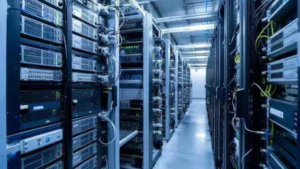
According to Interfax-Ukraine, the “Parkovy” data center facility in Kyiv sustained critical damage as a result of a series of strikes by the Russian Federation and has completely ceased operations, the data center’s press service reported on Thursday in a post published on Facebook.
“As a result of a series of strikes by the Russian Federation, as of October 1, 2026, the ‘Parkovy’ data center facility in Kyiv sustained critical damage and has completely ceased operations. It is impossible to restore services at this facility,” the statement reads.
The press office noted that data center employees were unharmed and that customer data has been migrated to backup sites in the EU. “The most important thing is that our employees are safe, and our customers’ data has been migrated to backup sites in the EU,” the data center stated.
As previously reported, the “Parkovy” convention and exhibition center building in central Kyiv sustained damage as a result of a Russian drone attack on Wednesday, September 23.
Earlier, DC|COSMONOVA also reported that the data center had ceased operations due to extensive damage.
An overwhelming majority (72%) of Ukrainians support peace talks with Russia, however, about half of citizens are open to territorial compromises to end the war, while an absolute majority considers any reduction or limitation of the Armed Forces of Ukraine’s strength unacceptable, according to the results of a public opinion poll conducted by the Future Research Foundation and presented during a press conference at the “Interfax-Ukraine” news agency on Thursday.
“The dynamics of public sentiment demonstrate a strong desire to find diplomatic avenues for a ceasefire. Specifically, 72.2% of respondents tend to support peace talks with Russia. Opposition to this stands at 20.8% of those surveyed,” said Svitlana Kushnir, project manager at the Foundation for Future Studies, during the presentation of the survey results.
Among the possible ways to end the war, 48.5% favor compromises and ceasefire negotiations, even if they involve territorial or political concessions; 24.6% support a temporary “freeze” of the front lines without officially acknowledging the loss of territory, while 18.6% of respondents favor continuing the war to restore the 1991 borders without compromise.
At the same time, 51.7% of citizens are open to territorial compromises to end the war (29.4% – “yes, if it leads to the end of the war,” 22.3% – “probably yes”), while 41.3% of respondents oppose territorial compromises. (20.4% – “no, under no circumstances,” 20.9% – “rather no”).
“This negotiation track is closely linked to security red lines, which society considers unacceptable to cross. In particular, 76.3% of respondents consider reducing or limiting the size of the Armed Forces of Ukraine at the request of the other side to be unacceptable even if it ensures security (for 55.2% of respondents, this is categorically unacceptable),” Kushnir reported.
According to her, 58.7% of respondents believe that the situation in Ukraine is moving in the wrong direction (30.9%—definitely, 27.8%—somewhat). At the same time, 32.5% of respondents assess the direction of development as correct (8.6%—definitely, 23.9%—somewhat), while 8.8% were unable to answer.
At the same time, a number of acute socioeconomic problems are dampening the willingness to compromise, particularly bribery and corruption within government structures (51%) and rising food prices (39.6%). In addition, there is a certain level of concern regarding the winter season: 56.1% of households are fully or partially prepared for possible prolonged power and heating outages, while 43.2% rate their preparedness as insufficient.
According to the survey results, 84.5% of respondents consider the current mobilization process to be unfair, with 59.6% deeming it absolutely unfair.
Ihor Zhdanov, a political expert, former Minister of Youth and Sports of Ukraine (2014–2019), and head of the “Information Defense” project at the Open Policy Foundation, notes that these survey results indicate that Ukraine and its politicians are ready for negotiations, but “they want negotiations with substantive content, not just negotiations about surrender.”
“It is clear that there can be no question of any kind of surrender in Ukrainian society. The point is to hold negotiations, find some kind of compromise, and this society is ready for a compromise. So why isn’t peace being achieved? Why aren’t substantive peace consultations and negotiations already taking place, and why hasn’t some kind of ceasefire been declared for this purpose? And the Russian dictator Putin isn’t ready to hold peace negotiations; he doesn’t want to. Because there, in Russia, the circumstances haven’t yet arisen that would force him or push him toward peace,” he noted during a press conference.
Commenting on the fact that 76% of Ukrainian citizens consider reducing the size of the Armed Forces of Ukraine unacceptable, the expert noted that this indicates that Ukrainian society relies solely on itself and its own Armed Forces. “We rely on ourselves and on our Armed Forces; we also need to develop our own defense-industrial complex so that the situation remains predictable and so that there are level playing fields for Ukrainian and foreign companies,” Zhdanov said.
He also pointed out that more than half of Ukrainians consider corruption in government to be a particularly pressing problem—even more serious than rising prices and low wages.
“Bribery and corruption in government are not just a matter of public opinion but also a problem related to receiving funds from the European Union. We were told in no uncertain terms: you must carry out judicial reform; there is the Kachka-Kosa plan related to anti-corruption efforts, such as adopting an anti-corruption strategy, competitive selection of prosecutors, and implementing judicial reform. Unfortunately, of the 10 points, none have been implemented. All of these bills will benefit the country. None of them are controversial, unlike bills in the socioeconomic sphere. They need to be adopted, but for some reason they aren’t being adopted, and this simply means that we aren’t receiving the corresponding funds from the EU,” Zhdanov noted.
The survey was conducted from September 19 to 22 using the Computer-Assisted Telephone Interviewing (CATI) method with a random sample of mobile phone numbers among 1,203 respondents aged 18 and older in all government-controlled territories of Ukraine. The maximum theoretical margin of error does not exceed 2.9% with a 95% confidence level.
Armed Forces of Ukraine, mobilization, NEGOTIATIONS, POLL, UKRAINE
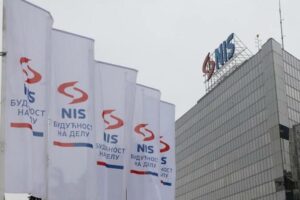
According to Serbian Economist, the Office of Foreign Assets Control (OFAC) of the U.S. Department of the Treasury has extended the operating license of the Serbian oil company NIS until October 30, 2026, allowing the company to continue its current operations after the previous permit expires on September 30.
The license extension means that NIS will be able to continue its operations, including the purchase and refining of crude oil, the production of petroleum products, and their supply to the Serbian market.
NIS has been subject to U.S. sanctions due to the company’s ownership structure and the involvement of Russian capital. Gazprom and Gazprom Neft entities remain the key Russian shareholders, while the Serbian government holds a large minority stake.
For Serbia, the issue of NIS’s operations is of strategic importance. The company operates the country’s only oil refinery in Pančevo and the largest network of gas stations, and it also holds key positions in the supply of petroleum products to the domestic market.
Serbian President Aleksandar Vučić has previously stated on multiple occasions that Belgrade is negotiating with the U.S. side in an effort to ensure the uninterrupted operation of NIS while simultaneously finding a long-term solution to the issue of Russian ownership.
The one-month extension of the operating license eliminates the immediate risk of the company ceasing operations in early October, but it does not definitively resolve the issue of sanctions. In effect, Belgrade and NIS shareholders have been granted additional time to find a model for changing the ownership structure that is acceptable to OFAC.
Separately, negotiations are ongoing regarding the possible sale of the Russian stake. Throughout 2026, potential participants in the future deal included Hungary’s MOL and the UAE’s ADNOC, but the final structure of a possible deal has not yet been agreed upon.
https://t.me/relocationrs/3776
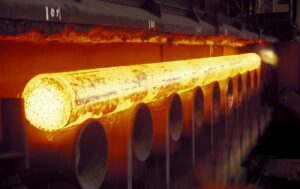
In the first quarter following the EU’s introduction of quotas on metal product shipments, Ukrainian metal exporters used 100% of their quarterly guaranteed quota for duty-free shipments to the EU of cold-rolled flat products made of unalloyed and alloyed steel, hollow sections, and other seamless pipes, according to a statement on the website of the “Ukrmetallurgprom” association.
According to the statement, as of September 30, 2026, the quotas in the following categories under the global (final) quotas in which Ukraine participates have been exhausted: metal-coated sheets (MFN subgroup—“Most-Favored-Nation treatment”), metal-coated sheets (FTA subgroup—“countries with a free trade agreement with the EU”), unalloyed and other alloyed steel bars and light sections (MFN subgroup—“most-favored-nation treatment”), stainless steel bars, billets, and small-section products (MFN subgroup – “most-favored-nation treatment”) and stainless steel bars, billets, and small-section products (FTA subgroup – “countries with a free trade agreement with the EU”).
Among competing countries, the guaranteed quota as of September 30 has been exhausted for the following categories: rebar – Turkey; wire rod of non-alloy and alloy steel – Turkey; hollow sections – Turkey and Macedonia; seamless stainless steel pipes—India; cold-rolled bars and rods of unalloyed and alloyed steel—Switzerland; and unalloyed wire—Turkey.
As of September 29, 2026, the competitive quota has been exhausted for the following categories: hot-rolled flat products of unalloyed and alloyed steel, rebar, wire rod of unalloyed and alloyed steel, hollow sections, seamless stainless steel pipes, other seamless pipes, and non-alloy wire.
As previously reported, once the guaranteed and competitive quotas are exhausted, further shipments to the EU are subject to a 50% tariff. “Ukrmetallurgprom” criticized the EU’s decision to restrict shipments of Ukrainian steel products, which had been supplied to Europe duty-free for the first three years following Russia’s full-scale aggression. The association believes that Ukraine currently poses no threat to European producers, as the war initially caused the country’s steel production to plummet from 40 million metric tons to 7.5 million metric tons, and currently, nearly all steel plants are shut down due to shelling.
EU, EXPORTS, METALLURGY, QUOTA, UKRAINE



