

The Ministry of Veterans Affairs of Ukraine reports that the October phase of the “Veterans’ Sports” program will not take place, and the ministry is working to resume it in 2027.
“Ukraine continues to live under conditions of full-scale war and a difficult economic situation. National defense remains the top priority for government spending. Under these circumstances, the state budget’s capacity to fund other areas is limited. At the same time, demand for the ‘Veterans’ Sports’ program has turned out to be significantly higher than expected,” the ministry’s statement reads.
It is noted that in 2026, 600 million hryvnias were initially allocated for the program—based on an estimate of 100,000 recipients per quarter. Accordingly, approximately 300,000 applications were expected over three quarters; however, the program was utilized more than 800,000 times.
Due to this demand, additional funds were allocated to the program throughout the year, and in total, payments exceeding 1.2 billion hryvnias were made in 2026—more than double the initial projection.
“Thus, the program has already covered as many participants as this year’s budget allows. All allocated funds were used for payments, including those returned from previous periods. Since the available financial resources have been exhausted, additional funding is required to carry out the October phase. However, at this time, there is no possibility of allocating funds for this from the state budget. Therefore, unfortunately, a new application phase will not open in the “Diya” app in October, and payments of 1,500 hryvnias will not be made as part of this phase,” the ministry stated.
At the same time, the Ministry of Veterans Affairs states that it is working to transition the program from a pilot format to a permanent one by 2027.
As previously reported, on January 3, 2025, the Cabinet of Ministers approved a pilot project to introduce quarterly assistance in the amount of 1,500 UAH for sports activities for combatants and individuals with war-related disabilities. Combatants could apply for these funds quarterly through the “Diya” app.
FUNDING, Ministry of Veterans Affairs, SPORTS, UKRAINE, ветеран
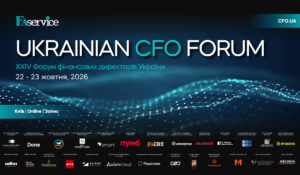
On October 22–23, Kyiv will host the 24th Ukrainian CFO Forum—the premier professional event for CFOs, CEOs, business owners, investors, and heads of key business functions.
Interfax readers can take advantage of a special offer: 15% off registration using the promo code BraveInterfax
This year’s program focuses on the decisions Ukrainian companies must make today as they develop their financial models and strategies for 2027 amid the war and high uncertainty. The Forum’s two-day program will feature 16 hours of professional content: 10 sessions in the form of panel discussions, interviews, and practical case studies featuring over 50 speakers from market-leading companies.
Ukrainian businesses are entering the 2027 planning cycle without a single baseline scenario. Destruction and loss of assets, attacks on energy and logistics infrastructure, high cost of capital, labor shortages, regulatory changes, and the acceleration of digital transformation are shortening the planning horizon and constantly changing the conditions under which businesses must make decisions.
For CFOs, this means simultaneously ensuring liquidity and business continuity, revising financial models, managing capital and risks, and not postponing investment and transformation decisions on which the company’s future depends.
The program of the Ukrainian CFO Forum 2026 is dedicated to these very issues—from the 2027 financial model and capital management to decisions following asset losses, adaptive planning, digital transformation, and the interaction between the CFO, CEO, and owner.
The 24th Ukrainian CFO Forum will bring together over 700 participants—CFOs of leading companies in the Ukrainian market, CEOs, business owners, international business executives, and representatives of banks, investment funds, technology companies, and government institutions.
▪️ The 2027 Financial Model: What to Include in the Budget When There Is No Base Case Scenario. Scenarios, triggers for revising the financial model, the cost of money, access to capital, and foreign exchange regulations. The forum will open with a strategic dialogue between Serhiy Nikolaychuk, First Deputy Governor of the NBU, and Andriy Dligach, founder and chairman of Advanter Group.
▪️ Business After Asset Loss: Rebuild or Restructure the Model. Replacement CAPEX, relocation, asset decentralization, recovery financing, insurance, and compensation for war risks. Practical experience will be shared by Rozetka-EVO, Nova Poshta, VARUS, Biosphere Corporation, Starlight Media, and Philip Morris Ukraine.
▪️ Strategy in the Face of Uncertainty: Decisions a CEO Must Still Make for Years to Come. Investments, scaling, production, team, and logistics amid a constantly shifting planning horizon. Panelists: Odgers Ukraine, Imperial Brands Ukraine, YASNO, and BGV Group Management.
▪️ Adaptive Planning: How to Manage a Business When the Annual Budget Is No Longer a Reliable Guide. Scenario planning, rolling forecasts, CAPEX, OPEX, liquidity, and working capital. Practical approaches will be presented by KSE, Danone, British American Tobacco Ukraine, FOKSTROT, and Metinvest Group.
▪️ Digital transformation with measurable business results. ERP, AI in finance, SAF-T UA, and data quality through the lens of deadlines, budget, and financial impact. The program features case studies from Farmak / Business Evolution, MTI, “Avtomagistral-Pivden” / SMART business, British American Tobacco Ukraine / Innoware, ALVIVA GROUP / ABM Cloud, D.TRADING / IT-Enterprise, and EBS.
Specific practical sessions at the Forum will focus on capital and liquidity management, identifying “hidden EBITDA” without new CAPEX, human capital, financial monitoring, and the CFO’s interaction with the CEO and owner.
“For CFOs, 2027 begins right now. Businesses cannot wait for certainty to emerge: decisions must be made today on whether to restore an asset or restructure the business model, invest in CAPEX or preserve liquidity, where to raise capital, and what scenarios to factor into the budget. That is why this year we are structuring the forum’s program around concrete solutions and case studies from companies that are already navigating these dilemmas,” — Ihor Solovykh, CEO of FAService and organizer of the Ukrainian CFO Forum.
The Ukrainian CFO Forum 2026 program features CFOs and CEOs of market-leading companies, representatives of the National Bank of Ukraine (NBU), and leading experts from major Ukrainian and international companies. Participants will receive up to 16 ACCA CPD units for attending the Forum.
Event partners: Pivdenny Bank, Odgers Ukraine, PUMB, Innoware, Done, SMART business, EBS, Business Evolution, Payoneer, IT-Enterprise, Advance Finance Alliance, Vchasno, ABM Cloud, ACCA, Silpo Voyage Pro, Bayadera Group, CFO Club, CEO Club, Board.
Main media partner: Starlight Media.
Ukrainian CFO Forum 2026 | October 22–23 | Kyiv + online
A special offer is available for Interfax readers through October 9: 15% off registration with the promo code BraveInterfax
Details and registration: cfo.ua/cfoforum
The Ukrainian CFO Forum is organized by FAService.
https://cfo.ua/cfoforum/?utm_source=Interfax&utm_medium=website&utm_campaign=cfoforum2026
Open4Business is the forum’s information partner.

In 2026, the Ministry of Economy and Environment of Ukraine decided to provide state funding for infrastructure development to nine industrial parks totaling 557 million UAH, and will soon review applications from the “Uzhhorod” and “Khust” industrial parks for 120 million hryvnias, according to Dmytro Kysilevsky, deputy chairman of the parliamentary committee on economic development.
“In 2026, decisions have already been made regarding nine industrial parks totaling 557 million hryvnias. Among them are the Transcarpathian industrial parks ‘Tyachiv’ and ‘Friendly Wind Technology.’ Applications from the “Uzhhorod” and “Khust” industrial parks, totaling 120 million hryvnias, will also be reviewed in the near future,” he wrote on Facebook following a meeting held on Wednesday with the initiators and management companies of Transcarpathia’s industrial parks.
Kysilevsky noted that the state provides funding for the development of industrial infrastructure in industrial parks on a 50:50 co-financing basis; recipients are also required to build at least 5,000 square meters of industrial space and attract at least two tenants.
He noted that prior to the full-scale invasion, there was only one industrial park in the Zakarpattia region, but now there are already 12, and three more are preparing to apply for registration by the end of 2026.
“The security factor has become the main draw for industrial investment in the region. In terms of the number of industrial parks, the region is already among the top three, behind Kyiv and Lviv regions, and has well-founded ambitions to become a leader. There are 13 factories that have been built or are under construction in Transcarpathian industrial parks. They already provide jobs for about 2,000 workers,” the MP emphasized.
Kysilevsky also announced the start of construction on new production facilities in the industrial parks of Uzhhorod, Khust, and Svalyava.
As previously reported, as of September of this year, 125 industrial parks had been registered in Ukraine across nearly all regions. By the end of 2025, 37 industrial enterprises had been built or were under construction in these industrial parks. The total amount of investment attracted to the industrial parks exceeds 45 billion hryvnias.
government support, INDUSTRIAL PARK, INDUSTRY, INVESTMENT, UKRAINE

The European Bank for Reconstruction and Development (EBRD) is providing the city of Kyiv with a loan of 150 million euros to purchase new energy-efficient subway cars, spare parts, and maintenance and diagnostic equipment for the Kyiv Metro municipal enterprise, the bank’s press office announced on Wednesday.
The loan is backed by a partial guarantee from Spain and supplemented by grant funding from the bank’s internal resources.
“The new subway cars are expected to be up to 25% more energy-efficient than the outdated cars they will replace, ensuring a more environmentally friendly, safer, and more reliable subway service,” the statement said.
In addition to the purchase of rolling stock, the EBRD will fund an audit of the metro’s accessibility to develop an action plan for inclusive transportation throughout Kyiv, tailored to the needs of people with disabilities, veterans, elderly passengers, and parents with children. The bank will also support a three-year training program for female electric train drivers in partnership with UN Women’s “She Drives” initiative to address the labor shortage.
In total, since the start of Russia’s full-scale invasion in February 2022, the EBRD has allocated nearly 11 billion euros to support Ukraine’s real economy.
EBRD, KYIV, LOAN, METRO, TRANSPORTATION

People who regularly consume more coffee may have a lower proportion of total and visceral fat and, at the same time, greater muscle mass, according to the results of a new Finnish study. In men, higher coffee consumption was also found to be associated with characteristics of testosterone levels and more favorable indicators of glucose and insulin metabolism.
The study was published in the scientific journal European Journal of Nutrition. The researchers used data from the large-scale Northern Finland Birth Cohort 1966 project, whose participants have been followed since birth. The analysis included 2,264 people aged 46.
The participants were divided according to their habitual coffee consumption. Seventy people practically did not consume coffee, 296 drank one to two cups a day, 822 drank three to four cups, and another 1,076 participants drank five or more cups daily.
The researchers found an interesting pattern: body mass index did not differ significantly between the groups, but body composition did.
Participants who consumed more coffee had, on average, a lower percentage of body fat, lower total fat mass and a smaller area of visceral fat. At the same time, they had greater skeletal muscle mass. Differences in body composition were observed in both men and women.
“This study is interesting primarily because it demonstrates the limitations of the familiar BMI indicator. Two people may have practically the same body mass index but a completely different ratio of fat to muscle tissue. In the Finnish sample, it was body composition, rather than BMI, that was associated with the level of coffee consumption,” notes Sviatoslav Morozov-Leonov, Doctor of Biological Sciences and head of a division at the Experts Club analytical center.
The researchers separately studied hormonal indicators. In men, each additional cup of coffee per day was statistically associated with an increase in total testosterone of approximately 0.29 nmol/L and in bioavailable testosterone of approximately 0.08 nmol/L. The level of sex hormone-binding globulin — SHBG — also increased. These associations persisted after statistical adjustment for BMI, education, smoking, physical activity and alcohol consumption.
However, the hormonal results turned out to be considerably more complex than the phrase “coffee increases testosterone” might suggest.
Along with higher total and bioavailable testosterone, greater coffee consumption in men was associated with lower free testosterone and a lower free androgen index. In women, the researchers found no statistically significant association between the amount of coffee consumed and total or bioavailable testosterone. At the same time, women also had higher SHBG and lower free androgen indicators.
“Therefore, it would be incorrect to conclude from the study that five cups of coffee a day increase testosterone in men. The hormonal picture is much more complex: total testosterone increased, but free testosterone decreased at the same time. The authors themselves speak of a specific hormonal profile rather than a proven stimulating effect of coffee,” Morozov-Leonov emphasized.
Another interesting result is related to metabolism.
In men with higher coffee consumption, the researchers identified a more favorable profile of glucose and insulin indicators. In representatives of both sexes, coffee consumption was also inversely correlated with blood concentrations of branched-chain amino acids — BCAAs.
Elevated BCAA concentrations have been associated in a number of previous studies with insulin resistance and an increased risk of metabolic disorders. The authors of the Finnish study believe that the detected changes may help to better understand the association between coffee consumption and metabolic health observed in other studies.
At the same time, the scientists specifically warn that the results do not prove a cause-and-effect relationship.
The study was cross-sectional: coffee consumption, body composition, hormones and metabolic indicators were assessed essentially during the same period of time. Therefore, it is impossible to determine whether coffee led to the observed differences or whether people with a particular lifestyle and metabolic profile simply consumed coffee more often.
In addition, the participants self-reported the amount of coffee they consumed, while the group of people who did not consume coffee at all was small — only 70 people out of 2,264. The Finnish population is also relatively homogeneous, so the results cannot automatically be extrapolated to the populations of other countries.
“This is a good example of how nutrition studies should be read. An association between a product and a particular health indicator does not yet mean that the product is the cause of that effect. Practical recommendations require prospective studies and, most importantly, randomized controlled trials,” says Experts Club representative Morozov-Leonov.
The authors also do not recommend increasing coffee consumption on the basis of the results obtained. They point to the need for further research, including intervention studies in humans, which would make it possible to establish whether a causal relationship exists and which specific biologically active components of coffee may be responsible for the observed associations.
Coffee contains more than a thousand different compounds, so the potential mechanism of action remains uncertain. The researchers consider hormonal and metabolic changes to be one of the possible directions for further study of coffee’s effects on health.
“The most interesting result of the work is not the assertion that ‘the more coffee, the better.’ The study shows a much more complex relationship between habitual diet, body composition, hormones and metabolism. Testing these mechanisms in long-term and controlled studies should be the next stage,” Sviatoslav Morozov-Leonov summarized.
The study Associations of habitual coffee intake with testosterone and cardiometabolic markers: the Northern Finland Birth Cohort 1966 study. The analysis included 2,264 participants from the Northern Finland Birth Cohort 1966. The authors declared no conflict of interest.

The Arab Council of Ukraine and the Khmelnytskyi Regional Council have agreed to develop the region’s cooperation with the countries of the Arab world, particularly in the economic, investment and humanitarian spheres.
As the Arab Council of Ukraine reports, the relevant issues were discussed during a meeting between the organization’s president, Sheikh Emad Abu Alrub, and the chair of the Khmelnytskyi Regional Council, Violeta Labaziuk.
The parties discussed opportunities to expand the international ties of the Khmelnytskyi region and establish contacts with representatives of businesses and public organizations from Arab states.
Particular attention was paid to the prospects of attracting investment, implementing joint projects, developing trade and economic cooperation, and humanitarian initiatives.
During the meeting, the parties also discussed opportunities to present the economic and investment potential of the Khmelnytskyi region to potential partners from Arab countries.
The Arab Council of Ukraine stated its readiness to facilitate the establishment of direct contacts between representatives of the region and business circles of Arab states, as well as to support initiatives aimed at developing interregional and international cooperation.
The parties agreed to continue their interaction and work out specific areas of possible cooperation.
The Arab Council of Ukraine is a public organization whose activities are aimed at developing relations between Ukraine and Arab countries and strengthening business, public, cultural and humanitarian ties.
ARAB COUNCIL OF UKRAINE, Arab countries, COOPERATION, INVESTMENT, Khmelnytskyi region, LABAZIUK, UKRAINE, АБУ АЛРУБ



