

Restrictions on truck traffic have been imposed in Kyiv due to the heat wave, according to the capital’s Patrol Police.
“To preserve the road surface, trucks are prohibited from traveling when the air temperature reaches +28 degrees Celsius or higher. The ban applies to vehicles with a gross vehicle weight exceeding 24 metric tons and an axle load exceeding 7 metric tons,” the police stated in a message on their Telegram channel on Sunday.
It is noted that drivers can wait out the hot period at temporary parking areas in highway shoulders and near roadside service facilities.
A separate announcement will be made regarding the lifting of the restriction.
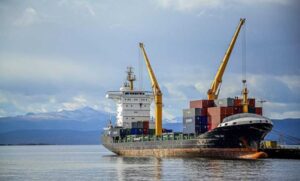
According to experts.news, a new heat wave is sweeping across the Balkans and a significant portion of the Danube basin. From July 31 to August 6, temperatures in several countries in the region will reach 35–40 degrees, which will exacerbate the drought and worsen conditions on the Danube, where water levels have already dropped to long-term lows and, in some places, record lows.
The highest temperatures are forecast for Serbia, Croatia, Montenegro, Albania, North Macedonia, and Hungary. In Belgrade, Novi Sad, Zagreb, Podgorica, Tirana, Skopje, and Budapest, temperatures are expected to reach 37–40 degrees. In Sarajevo, temperatures will reach 35–37 degrees.
In Bulgaria and Romania, the heat will initially be less intense, but by August 4–5, temperatures in Bucharest are expected to reach 36–37 degrees. In Moldova, temperatures will rise from 30 degrees on July 30 to 37 degrees on August 4–5. In the Odesa region and the Ukrainian part of the Danube Delta, temperatures are expected to range from 27–32 degrees, but nighttime temperatures in early August may reach 24 degrees.
The situation in the upper part of the basin also remains challenging. In Vienna, temperatures are forecast to reach up to 39 degrees on July 31, and up to 38–39 degrees on August 3–4. In Budapest, temperatures from July 31 through August 5 will mostly range from 38–40 degrees. Isolated thunderstorms in Austria may cause a temporary rise in water levels, but the prolonged heat wave will prevent the accumulated precipitation deficit from being quickly offset.
On the Danube, Sava, and Tisa rivers in Serbia, water levels are below the low navigational marks. In Croatia and Serbia, shallowing has already led to the formation of large sandbars, small vessels running aground, and old sunken ships resurfacing, posing an additional danger to navigation.
Due to insufficient depth, barges and tankers are utilizing only 30–40% of their carrying capacity in certain sections. In July, Serbia received only about 25% of its planned volume of imported fuel via the Danube. Production at Serbia’s largest hydroelectric power plant, “Džerdap-1,” has fallen to about one-third of its usual level.
In Romania, the inflow of water into the Danube has dropped to approximately 1,650 cubic meters per second, compared to an average July figure of about 4,750 cubic meters. Low water levels have led to the shutdown of both power units at the Cernavodă Nuclear Power Plant, which uses water from the Danube for cooling. In Hungary, restrictions have affected the Paks Nuclear Power Plant.
In the Bulgarian-Romanian section, navigation has been restricted near the islands of Belene, Vardim, and Batyn. Vessels are forced to wait for passage clearance and reduce their cargo loads. At the end of July, a passenger motor ship also ran aground on the Danube, despite the restrictions on draft that were in effect.
Analysis of the Impacts on the Ten Danube Countries
In Germany and Austria, low outflow from the upper reaches means a reduction in the volume of water flowing downstream. Short-term downpours may cause localized rises in water levels, but sustained rainfall throughout the upper and middle basins is necessary for a stable recovery.
For Slovakia and Hungary, the main risks are related to restrictions on barge loading, a decline in river tourism, disruptions in the supply of fuel and raw materials, and strain on energy infrastructure. In Budapest, the Danube’s water level fell below previous lows, and tourist cruises on certain routes were suspended.
Croatia and Serbia are already feeling the direct impact of low water levels on the transport of fuel, industrial raw materials, and agricultural cargo, as well as on port operations. Sandbars and sunken vessels that have risen closer to the surface pose an additional hazard.
For Bulgaria and Romania, low water levels mean reduced vessel draft, queues at narrow sections, suspended ferry crossings, rising grain transportation costs, and risks to the energy sector. Romania is a key link in the route between Ukrainian Danube ports and Constanța, so delays are spreading throughout the entire Lower Danube corridor.
Moldova has a short outlet to the Danube via the port of Giurgiulești. It is located on the river’s maritime section and has greater depth than many inland ports, making it less directly vulnerable to the shallowing of the middle Danube. However, Moldovan cargo depends on the stable operation of the lower reaches of the river, the Romanian canals, and access to the Black Sea. Delays and rising freight rates on this route could increase the cost of the country’s imports and exports.
For Ukraine, the lower Danube is particularly important due to the operations of the ports of Reni, Izmail, and Ust-Dunaysk. Critically low water levels are already limiting the normal loading of barges and delaying the fulfillment of contracts. As of July 20, the cost of transportation from Reni and Izmail to Constanta has risen to approximately $28 per metric ton, and some vessels are losing 30–60% of their cargo capacity.
The continued heat through August 6 will intensify evaporation and maintain pressure on the Danube’s water regime. Even with local rains, any improvement will most likely be temporary, as the water shortage is affecting the entire basin—from Germany and Austria to Romania, Moldova, and Ukraine.
For shippers, the most likely consequences will be a further reduction in barge loading capacity, the use of more vessels to transport the same volume, rising freight rates, delays in the delivery of fuel, grain, and industrial raw materials, as well as the partial rerouting of cargo to rail and road transport.
A significant improvement in the situation is possible only after a prolonged period of rainfall in the Alps, Germany, Austria, Slovakia, and other parts of the basin.
GERMANY, HEAT, low water levels in the Danube, TRANSPORTATION, UKRAINE

On June 29 and 30, Romania will temporarily restrict the movement of trucks weighing more than 7.5 metric tons on a number of roads due to a severe heat wave, according to Romania’s National Road Infrastructure Management Company (CNAIR).
The restrictions will be in effect on Monday and Tuesday from 12:00 p.m. to 8:00 p.m. on sections of national roads, expressways, and highways in 35 counties across the country, including Suceava, where border crossing points with Ukraine are located.
As a result, temporary restrictions on freight traffic may be imposed at the Ukrainian-Romanian border through the “Krasnoilsk–Vicovu de Sus” and “Porubne–Siret” border crossing points. According to preliminary information, the restrictions will apply to trucks, including those traveling without cargo.
The Romanian side explains this decision by the need to protect the road surface from damage under conditions of extremely high temperatures. During intense heat, heavy vehicle traffic can deform the asphalt, especially during the daytime hours when temperatures are at their highest.
The duration of the ban may be adjusted depending on weather conditions and decisions by Romanian authorities. Carriers planning to cross the border through the Chernivtsi region are advised to factor in possible delays in advance and monitor announcements from border and road authorities.

A number of countries in Southern and Western Europe have seen a sharp rise in temperatures to nearly 40 degrees, leading to widespread warnings, transportation disruptions, and strain on infrastructure and ecosystems, according to Reuters.
Spain, France, and Italy have been the hardest-hit countries due to the heat wave in Europe, where air temperatures are approaching 40 degrees. The extreme weather conditions have led to the issuance of elevated danger alerts, disruptions to transportation—particularly rail service—and increased strain on infrastructure and emergency services.
“The heat surge on June 21—the day of the summer solstice in the Northern Hemisphere and typically the start of the three hottest months of the year—has raised concerns about the early and prolonged onset of extreme conditions,” the report states.
In Spain, the AEMET weather service issued red and orange warnings, forecasting temperatures of 39–40 degrees across most of the Iberian Peninsula and Mallorca. The heat is expected to last at least until midweek.
In France, due to overheating of the infrastructure, the railway operator SNCF canceled 71 intercity trains. A total of 3,500 employees have been deployed for monitoring and emergency response, with an additional 2,000 staff members on standby.
“The spike in temperatures is caused by a mass of hot air moving northward from the Sahara, intensified by a strong anticyclonic system known as the ‘African anticyclone.’ Meteorologists note that this system creates a so-called ‘heat dome,’ which traps hot air over Western and Central Europe and allows temperatures to rise day after day,” the agency’s report states.
In Germany, where temperatures reached 38 degrees, thunderstorms and power outages were reported during mass events in Berlin.
Meanwhile, in Belgium, wildlife centers are reporting an overload of injured animals, mainly young birds, with about 150 having been brought in over the past few days.

Thermal and waterproofing materials in Ukraine since the beginning of 2025 have gone up in price by 15-20%, the volume of demand remains stable, Sweetondale sales directorate head Alexander Manuylo told the Interfax-Ukraine agency.
“In 2025 in the segment of heat and waterproofing materials there were several price increases – in general by 15-20% depending on the product category. This is for the first time in four years of war and is mainly due to rising prices for energy resources, equipment and raw materials imported from outside Ukraine,” he said.
As for demand, according to the company, it generally remains stable, and in some sales channels it is even growing. For example, despite the active hostilities on the territory of Ukraine, the direction of industrial logistics complexes is rapidly developing. Thermal modernization of the old housing stock continues. Of the negative factors, the expert noted a tangible lack of funding for international reconstruction programs, in particular USAID, in 2025.
“For our part, we continue to complete state infrastructure projects and support the construction of fortification facilities. Unfortunately, there is a new category of facilities that were built during the war, but suffered significant damage and, accordingly, require renovation and restoration,” Manuilo added.
The structure of clients in 2025 has also changed: the market of new residential high-rise construction is no better. Prospects for the next year in the company have always been assessed by the number of new pits, but they state that in the presence of a significant number of permits for new construction now there are very few new pits.
The market is feeling the positive impact of government rebuilding programs, but their scale and speed of implementation do not match the needs at hand. “Businesses and citizens are now largely taking the initiative, whereas government support could be a more effective catalyst for recovery. Government support in our segment is mainly focused on the rehabilitation and thermo-modernization of social and educational institutions,” says Manuilo.
Thermal insulation materials (mineral wool and extruded polystyrene foam), on which the energy efficiency and comfort of projects directly depend, remain the most popular items. No less relevant is waterproofing, as more and more attention is paid to the reliable protection of buildings, including underground shelters.
Sweetondale is expanding its product line. In particular, 2025 has already introduced a new product – bitumen-polymer primer, and soon it is planned to launch a line of mastics, which will allow to comprehensively cover the needs of customers in the field of waterproofing solutions.
According to Manuilo, the company leads the Ukrainian market in all key product categories (up to 50%) and is working to expand exports. “The main priority for us has always been and remains the Ukrainian consumer: we are primarily focused on providing the domestic market with quality materials. At the same time we are increasing export volumes. Our products are already represented in Moldova, Romania, Poland, the Baltic States and Scandinavia. They are highly appreciated for their quality and compliance with international standards. This confirms the competitiveness of our materials not only in Ukraine, but also abroad,” he said.
According to Opendatabot, the authorized capital of Zavod “Sweetondale” LTD (“Zavod ”Sweetondale” LTD) is UAH 13.5 million, for 2024 the company received revenue of UAH 1.9 billion, which is 16.4% higher than the results of 2023, net profit amounted to UAH 314.2 million, which is 6% lower than the results of 2023.
Sweetondale was founded in 2012 by Gary Alan Stern. It initially specialized in industrial equipment engineering and leasing. Negotiations to acquire the plants owned by Russia’s Technonikol began in 2015 and were finalized in February 2018. Today, the company includes three plants for the production of roofing and thermal insulation materials: a plant for the production of mineral insulation in Cherkassy, a plant for the production of polymer insulation and a plant for the production of bitumen-polymer roll materials in Kamenskoye.

Extreme heat can reduce the range of an electric car by 31%, according to a report by Recurrent Auto, a company specializing in testing batteries for electric cars.
Recurrent experts have analyzed the battery readings of 7.5 thousand cars and found that at an air temperature of 27 degrees Celsius, the range is reduced relative to the maximum by almost 2.8%, at 32 degrees – by 5%, and at 38 degrees the drop can reach 31%.
At the same time, the data on the dynamics of charge consumption in conditions of 38-degree heat are extremely limited and need to be clarified, the company said, adding that if necessary, they will adjust the indicator on the basis of subsequent measurements.
The use of air conditioning, in turn, reduces the range only to a small extent. At the same time, reducing the temperature in the cabin by 7 degrees will require less energy than increasing it by 10 degrees.



