
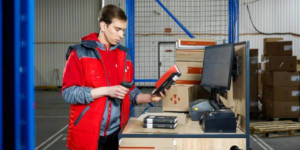
“Nova Poshta” has opened Nova Books—a specially designed book area in its branches featuring business literature for professional and personal development; the pilot program is currently operating at one of its Kyiv branches, the company’s press office reported.
According to the press release, books on economics and business are displayed in a separate showcase with a specially equipped self-service checkout counter. The Nova Books collection is based on business and economics literature selected based on recommendations from Nova Poshta’s Corporate University, as well as the company’s co-owners’ favorite books from their personal libraries.
“We are currently testing this format in Kyiv and are already seeing high demand: in just the first two days, customers purchased about 20 copies of business literature. Among the bestsellers are Donald Norman’s *The Design of Everyday Things* and James Clear’s *Atomic Habits: An Easy and Proven Way to Build Good Habits and Break Bad Ones” by James Clear,” noted Ivan Bilokonny, head of the new product development department at Nova Poshta.
You can purchase your favorite book from the display or online by scanning its barcode on a tablet and paying for the purchase. The purchase takes place without involving clerks or waiting in line. The book service Megogo Books is a partner in the pilot project and is responsible for providing the product selection and distribution.
“Since Megogo Books began operations, we’ve been collaborating with Nova Poshta to bridge the gap between readers and books through fulfillment and fast delivery. For us, Nova Books is a logical extension of this collaboration in a new format and an opportunity to move beyond the digital space,” said Kateryna Kotvitska, Content Director at Megogo Books.
It is reported that Nova Books will soon begin operations at two more locations in Kyiv and will open at 10 locations in the capital by the end of the year, with plans to expand to other regions thereafter. Thanks to Nova Poshta’s extensive network, the project creates a new opportunity for customers and publishers: readers gain access to high-quality books just a short walk from home, while publishers gain a new, convenient distribution channel.
As previously reported, as of July 13, 2026, the company’s network comprised 54,700 service points: 16,800 branches and 37,900 parcel lockers throughout Ukraine.
Nova Poshta’s core business remains the express delivery of documents, parcels, and palletized bulky cargo.

According to the Serbian business publication Parametar, construction of the first phase of a new plant to manufacture electric motors for drones is nearing completion in the village of Kotraža near Lučani. The equipment has already been delivered, some employees have been hired and are undergoing training, and production is expected to begin in early October.
In the first phase, the plant is expected to employ about 50 people; after the completion of all three phases, the workforce will grow to 60–70 employees. Earlier reports mentioned the possibility of expanding the workforce to 150 employees. The plant’s projected production capacity is up to 40,000 motors per month.
Businessman Milenko Kostić stated that the idea to establish the production facility came from Želko Mitrović. For the small town of Dragacheva, the project is significant not only from a technological standpoint: the plant is effectively being created as a new industrial employment hub in a rural area.

As of late September–early October, agricultural exports from Ukraine—amid Russia’s ongoing blockade of Black Sea ports—amount to up to 50% of the potential volume, Minister of Agrarian Policy and Food Taras Vysotsky told reporters on Friday.
“Without access to deep-water Black Sea ports, we can export about half of our produce—the portion that has been grown and is intended for export. When we talk about the consequences, this means we are unable to export approximately 30 million metric tons of agricultural products worth about $30 billion during the current marketing year,” he noted.
The minister clarified that in September, 2.4 million metric tons were exported—46% of what was supposed to be exported—including 1.4 million metric tons of grains (38%), 444,000 metric tons of oilseeds (83%), oil—311,000 metric tons, or 64%, and meal—280,000 metric tons, or 46% of the potential required exports.
“This 46% figure has, in fact, remained unchanged since September 20. In other words, we are achieving what we predicted: that 45–50% is the objective maximum given the current logistics channels,” Vysotsky concluded.
According to him, 41%—or 993,000 metric tons—was exported by rail, which is in line with forecasts; 54%—or 1.3 million metric tons—via the Danube; and 5%—or 120,000 metric tons—by road.
“In September, we saw an increase in both rail and Danube shipments compared to August,” the minister added.
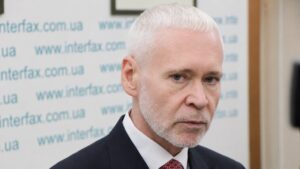
According to Interfax-Ukraine, Kharkiv Mayor Ihor Terekhov responded to a new op-ed by Valeriy Zaluzhny, former Commander-in-Chief of the Armed Forces of Ukraine and Ukraine’s Ambassador to the United Kingdom, stating that Ukraine’s ability to withstand the war should not be interpreted as consent to live in it, and called for a path to peace backed by guarantees from partners.
“For me, the logic of the ‘war party’ begins when war is perceived as Ukraine’s only possible future. I disagree with this,” Terekhov wrote on Telegram.
Terekhov noted that the desire for peace requires no justification. According to him, in a Gallup poll conducted in April 2026, 66% of Ukrainians surveyed supported ending the war as soon as possible through negotiations. This indicates a broad public demand for peace.
“Peace must be based on our defense capabilities and specific commitments from our partners. Guarantees must specify what military assistance Ukraine will receive and how partners will act in the event of a new attack. We must strive to secure these conditions by using military, economic, and diplomatic leverage,” Terekhov writes.
He noted that Russia started this war and bears responsibility for its continuation, which is why international pressure must be directed specifically at the aggressor.
“Our ability to endure the war should not be interpreted as consent to live in it. We strive for peace and prosperity. Our defenders—both men and women—also have the right to a peaceful life. Time with their families, recovery, plans for the future. Their courage obligates the state to provide them with everything they need and to use every realistic opportunity to bring the war to an end,” Terekhov concluded.
In his column on Channel 24, Zaluzhny specifically stated that there can be no “business logic” in resolving the war, and that in the absence of effective international law, any agreements with Russia would become “merely a prelude to the next war.”
In April 2026, the American public opinion institute Gallup conducted and published several important sociological studies. According to the survey, 66% of Ukrainians polled believe that the country needs to reach an agreement to end the war as soon as possible, while 24% advocate continuing hostilities until victory is achieved.
Source: https://t.me/ihor_terekhov/4706
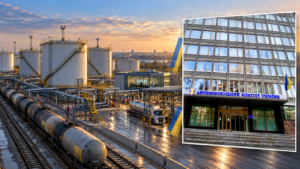
The Antimonopoly Committee of Ukraine (AMCU) has begun studying the state of competition in the markets for petroleum-product storage and related services, enkorr reported, citing a request from the committee to one of the market participants, a copy of which is in the publication’s possession.
“As part of the study, the AMCU is collecting data for 2023–2025 and the first half of 2026. In particular, operators must provide information on the volumes and cost of storing gasoline, diesel fuel and liquefied gas, storage capacity, the list of clients and related services,” enkorr noted.
The committee is also interested in the technical characteristics of oil depots: tank-farm capacity, the throughput capacity of railway and road loading racks, equipment for monitoring fuel quality and quantity, and the possibility of promptly repurposing tanks for different types of petroleum products.
A separate part of the study concerns the geographical boundaries of the market. The AMCU is requesting the distances over which fuel is transported from oil depots to clients’ filling stations, the geography of counterparties, the share of rail and water logistics, as well as a list of competing oil depots within a radius of 100 and 150 km.
“In addition, the committee will analyze pricing in the market. Operators must report storage tariffs and tariffs for related services, the practice of granting discounts to large clients, the share of the three largest customers in storage revenue, and their possible influence on tariff policy,” the publication reported.
The committee is also studying barriers to market entry and collecting information on damage to tank farms, railway infrastructure and loading systems, the cost of restoring them, and logistics problems.
Another section concerns minimum stocks of oil and petroleum products (MZNN). The AMCU is determining whether oil-depot operators plan to operate as minimum-stock operators or responsible custodians, as well as how the introduction of MZNN has affected their activities.
As part of the government-introduced experiment on underground fuel storage, the committee is also interested in whether companies have underground storage facilities and in their plans to build new capacity.
Source: https://enkorr.ua/uk/news/amku_dosldzhu_konkurencyu_na_rinku_zbergannya_palnogo/269381
ANTIMONOPOLY COMMITTEE, fuel market, PETROLEUM PRODUCTS, UKRAINE
The international forum “Rebuilding Ukraine: Security, Opportunities, Investment” will take place on October 22–23, 2026, at the ROMEXPO Exhibition Center in Bucharest, Romania.
The forum is organized by the New Strategy Center and the Romanian Chamber of Commerce and Industry. The event is expected to bring together representatives of government institutions from Ukraine, Romania, and other countries, as well as international financial organizations, businesses, investors, local authorities, and experts.
According to the preliminary program, the forum will last two days. The main topics of discussion will include infrastructure and transport connectivity, security and defense, financing mechanisms and business opportunities, energy, agriculture and sustainable development, the recovery of Ukrainian regions and cross-border cooperation, as well as human capital.
The forum is scheduled to open on the morning of October 22. George Scutaru, CEO of the New Strategy Center, and Mihai Daraban, President of the Romanian Chamber of Commerce and Industry, are scheduled to deliver opening remarks.
One of the first plenary discussions will be a panel titled “Business Bridges for Economic Recovery: The Strategic Role of Chambers of Commerce and Industry.” Among the confirmed participants are Gennadiy Chizhikov, President of the Ukrainian Chamber of Commerce and Industry; the heads of the chambers of commerce and industry of Romania, Poland, Italy, and Moldova; and Adrian Zuckerman, former U.S. Ambassador to Romania.
A separate segment of the program will be dedicated to the Romania-Ukraine-Moldova strategic transport and investment corridor. Representatives of the Ukrainian government, the Verkhovna Rada, UkraineInvest, and Romanian authorities are scheduled to participate in the discussion. At the same time, international mechanisms for financing reconstruction will be discussed with representatives from KfW, Poland’s BGK, and other financial institutions.
A significant portion of the forum will have a practical investment focus. Separate sessions are scheduled to present investment opportunities in the Kyiv, Zakarpattia, Ivano-Frankivsk, Vinnytsia, Chernivtsi, Odesa, and Kherson regions. The broader concept of the forum also includes the participation of the Mykolaiv region.
On the first day, discussions are also planned on the role of business associations in mobilizing capital for reconstruction, food security and Ukraine’s agricultural potential, the development of the Danube logistics hub, attracting private capital to reconstruction efforts, Black Sea security, unmanned systems, the restoration of housing and cities, Ukraine’s energy transition, and the return of human capital.
Among the announced participants in the finance panel are representatives from the European Investment Bank, the Japan Bank for International Cooperation, the Romanian Commercial Bank (BCR), Poland’s BGK, and Romania’s Investment and Development Bank.
The second day, October 23, will begin with a plenary discussion on ending Russian aggression against Ukraine, international pressure, negotiations, and security guarantees. The program also includes panels on Ukraine’s experience with unmanned systems, the reintegration of veterans, the restoration of the power grid, the role of
the Danube as a strategic transport corridor, and the development of connections between Poland, Ukraine, and Romania.
Separate discussions will address sanctions and post-war reparations, energy cooperation in the Black Sea region, the participation of Romanian companies in Ukraine’s reconstruction, joint production of dual-use goods, and the use of EU programs to develop cross-border cooperation.
According to the program, simultaneous interpretation into Ukrainian, English, and Romanian will be provided at the forum.
The organizers emphasize that the program published as of September is preliminary; therefore, the list of participants, panel titles, and their schedules are subject to change.
Advance registration is required to participate in the forum. The contact person on the Ukrainian side is Kateryna Dadiverina, tel. +40 721 616 747, e-mail: ecaterina.dadiverina@newstrategycenter.ro.
For questions regarding partnerships, sponsorship packages, and exhibition booths, please contact the New Strategy Center: Ana-Maria Shaer, tel. +40 753 103 310, email: ana.schaer@newstrategycenter.ro.
Detailed information and the latest forum program are available on the official website of Rebuilding Ukraine: Security, Opportunities, Investment.
The “Rebuilding Ukraine: Security, Opportunities, Investment” forum’s media partners are, as usual, Interfax-Ukraine and Open4Business.



