
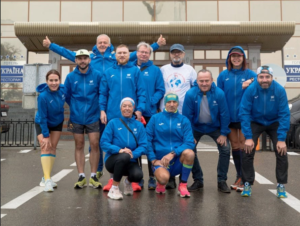
A team of Ukrainian and Slovak athletes set out from Kyiv to Košice as part of the Peace Run charity initiative, which aims to draw the attention of the European public to the ongoing war in Ukraine and support children affected by it.
The run began in Kyiv on September 24. According to the Slovak news agency TASR, citing one of the project’s organizers, Eduard Burash, the athletes will cover the approximately 1,000-kilometer route in a relay format. A total of 25 participants took the starting line in Kyiv, and Ukrainian and Slovak runners will take turns along the route.
Initially, the core of the project team consisted of five Ukrainian and five Slovak athletes. On their way to Slovakia, the participants will visit seven regional centers in Ukraine, including Uzhhorod.
Organizers expect the athletes to arrive in Košice on October 2. According to the official program for “Days of Ukraine 2026” in Košice, the Peace Run finish will be one of the event’s central sporting highlights.
The “Veterans’ Mile” holds a special place in the program; it will take place on October 3 in Košice City Park. Ukrainian war veterans will join the event, including servicemen who have suffered severe physical injuries, as well as participants with visual impairments. Representatives of the diplomatic corps are also expected to attend.
The final stage of the initiative will be the participation of Ukrainian athletes in the 103rd International Peace Marathon in Košice on October 4. The main marathon and the relay race will start at 9:00 a.m., and the half-marathon at 10:30 a.m.
The Košice Peace Marathon is considered one of the oldest marathons in Europe. The first race took place in 1924, and in 2026, the event will be held for the 103rd time.
The “Peace Run” is part of the 11th “Days of Ukraine” in Košice, which will take place October 1–4. The organizers have designated peace and an end to the war in Ukraine as the main theme of this year’s events. The project is being implemented by the FEMAN association in collaboration with partners from Ukraine and Slovakia, with financial support from the Slovak Ministry of Tourism and Sports.
As part of the Peace Run, a charity fundraiser is also being held to help children affected by the war.
Information about the project and the fundraiser: Peace Run Kyiv – Košice
Fozzy Group, one of Ukraine’s largest commercial and industrial groups, will lay off some employees from the holding company’s office divisions, the “Silpo” supermarket chain, and its logistics division starting November 1, 2026, due to mounting business losses resulting from Russian attacks.
As the group announced on LinkedIn, employees were informed of the organizational changes during internal meetings. Similar changes had previously taken place at the MAUDAU marketplace, as well as within the IT teams at TEMABIT Software Development and E-commerce & Ecosystem.
“Unfortunately, this means we will have to part ways with some of our colleagues from the holding company’s office teams, the Silpo chain, and the logistics division. Similar changes had already taken place at MAUDAU and within the IT teams at TEMABIT Software Development and E-commerce & Ecosystem. This is a necessary decision stemming from the fact that the war is increasingly affecting our work,” the Fozzy Group statement reads.
Between August 1 and September 25 alone, Russian attacks destroyed or damaged more than 20 of the group’s facilities, including distribution centers, supermarkets, and production facilities.
The company notes that the attacks resulted in the loss of part of its infrastructure and inventory, while ensuring the uninterrupted operation of the business is becoming more difficult and expensive. Fozzy Group is reassessing its priorities, suspending some projects and tasks, abandoning others, and seeking new solutions for the rest.
At the same time, the group continues to open stores, restore damaged facilities, and reorganize its logistics. To support these efforts, Fozzy Group is continuing to hire employees for supermarkets, warehouses, and production facilities throughout Ukraine.
“Our goal right now is to keep the business strong enough to serve our customers and have the resources to rebuild what the war continues to destroy,” the company emphasized.
Fozzy Group is one of Ukraine’s largest commercial and industrial groups and operates more than 825 retail outlets. It includes the Silpo, Fora, Fozzy, Thrash!, “Belaya Romashka,” and E-ZOO chains, as well as logistics, manufacturing, IT, and other assets.
The group’s key retail asset is Silpo-Food LLC. According to data from the YouControl system, the company’s revenue in 2025 amounted to approximately 106.8 billion UAH, up from roughly 93 billion UAH in 2024. At the same time, net financial results remained under pressure from high operating costs, logistics expenses, energy costs, and the consequences of the war.
Another major asset of the group is the “Fora” store chain, operated through Fora LLC. Its annual revenue already exceeds 30 billion UAH, making the company one of the largest operators in the Ukrainian grocery retail sector.
The combined scale of Fozzy Group’s business is significantly larger than the figures for individual legal entities, as the holding company unites dozens of companies in retail, manufacturing, logistics, the restaurant business, e-commerce, and IT. According to publicly available corporate data, the group has traditionally estimated its workforce at approximately 50,000 employees, making it one of Ukraine’s largest private employers.
Fozzy Group is owned by Ukrainian businessmen Vladimir Kostelman, Oleg Sotnikov, and Roman Chigir. The group was founded in 1997 and is now one of the largest players in the Ukrainian grocery retail sector.
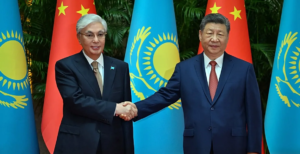
Astana and Beijing signed 50 commercial agreements totaling $8.2 billion during the “Kazakhstan–China” investment forum in Almaty, according to the press service of the President of Kazakhstan.
In particular, an agreement was signed on the construction of an electrolytic aluminum plant and an accompanying wind power plant in the Abai region (Eastern Kazakhstan), as well as on the construction of a particleboard plant in Semey (Semipalatinsk). The document was signed by the regional governor and a consortium of companies comprising Xinjiang Sanbao Industrial Group Co., Ltd. and Inner Mongolia Wanjiang Investment Co., Ltd.
An agreement on joint project development was signed between Samruk-Energo JSC, China Energy Overseas Investment Co., Ltd., and SANY Renewable Energy Co., Ltd.
In addition, a document outlining the basic terms for establishing a specialized investment fund—focused on financing promising projects in Kazakhstan—at the Astana International Financial Center was signed between JSC “NC ‘Kazakh Invest’” and Silk Road Finance Corporation.
An agreement on cooperation in the construction of wind power plants with a total capacity of 450 MW in the Akmola Region was concluded between the regional administration and Sungrow Renewable Development Co., Ltd.
A memorandum of understanding regarding the implementation of the project “Creation of a High-Tech Automobile Manufacturing Complex for the Production of Passenger and Special-Purpose Vehicles” was signed between the administration of the East Kazakhstan Region and the Kazakh-Chinese joint venture East Motors Corporation.
In addition, cooperation agreements were signed between the Turkestan Region and Turan Chemical Company LLC regarding the construction of a urea fertilizer plant.
An agreement on cooperation in organizing and supporting the issuance of dim sum bonds on the Hong Kong Stock Exchange (HKEX) was signed between the Mayor of Almaty and Guotai Junan Securities (Hong Kong) Limited.
An agreement was signed for the construction of a multifunctional complex featuring an international-brand hotel and a business center between the mayor of Almaty, Everest Development, and SunnyWorld Group.
An agreement was concluded on the preliminary terms for financing investment projects in priority economic sectors between the Development Bank of Kazakhstan and the Astana Branch of China Construction Bank Corporation.
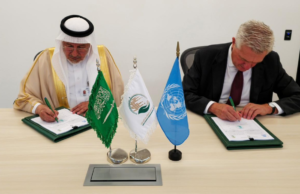
The King Salman Humanitarian Aid and Relief Centre (KSrelief) and the United Nations Development Programme (UNDP) have launched a 15-month programme worth $5 million to strengthen Ukraine’s civilian healthcare system, according to the UNDP website.
The programme provides for strengthening the capacity of four medical institutions in Kyiv, Odesa and Dnipropetrovsk regions, with a focus on priority needs identified jointly with health authorities. It concerns two institutions in Kyiv region and one each in Odesa and Dnipropetrovsk regions.
The support will cover maternal and newborn healthcare, intensive care for children, surgical and trauma care, diagnostics and emergency stabilization of patients. Assistance will include the procurement of medical equipment, its installation and commissioning, user training, warranty servicing and support for safe and long-term operation.
“KSrelief is pleased to sign this important Joint Executive Programme with our valued partner – UNDP – to strengthen the provision of civilian healthcare services in Ukraine. By working together, we can save and improve people’s lives by providing urgent support for the recovery and development of the civilian healthcare system in several regions of the country,” said Adviser at the Royal Court and Supervisor General of KSrelief Dr. Abdullah Al Rabeeah.
The programme will be implemented in consultation with national and regional partners and beneficiary medical institutions, while the scope of equipment and related support will be determined in accordance with confirmed needs, including its installation, staff training, maintenance and long-term operation.
It is expected that up to 900,000 people will be able to benefit indirectly from the programme.
The agreement was signed during the 81st session of the United Nations General Assembly within the framework of the cooperation agreement between KSrelief and UNDP.
HEALTHCARE, HOSPITALS, HUMANITARIAN AID, KSRELIEF, MEDICAL AID, SAUDI ARABIA, UKRAINE, UNDP, UNITED NATIONS
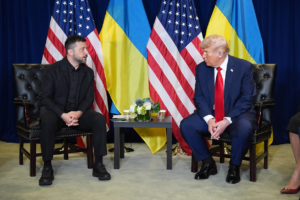
U.S. President Donald Trump said that he hopes an agreement between Ukrainian President Volodymyr Zelenskyy and Kremlin leader Vladimir Putin will be reached before the onset of the harsh winter.
“But you know what I want from Zelenskyy? I want him to make a deal. I want him to reach an agreement with Putin, and I want Putin to reach an agreement with him,” Trump said while speaking with journalists.
Asked by a journalist about Patriot missiles, Trump noted that he had spoken with Zelenskyy a lot, but did not give a specific answer to the question.
“I have spoken with him a lot; the process is moving forward, Putin is acting too, and one day — I hope in the not-too-distant future, perhaps even before the onset of the harsh winter — they will reach an agreement,” Trump emphasized.
As reported, Ukrainian President Volodymyr Zelenskyy earlier emphasized that during a meeting in New York on the sidelines of the UN General Assembly, U.S. President Donald Trump said that Ukraine would receive licenses to manufacture Patriot missiles.
“President Trump, during his last meeting with me, emphasized that ‘yes, I have made a final decision — Ukraine will receive licenses to manufacture Patriot missiles,’” the president said at the time.
Patriot, PATRIOT MISSILES, PEACE TALKS, PUTIN, TRUMP, UKRAINE, UN General Assembly, UNITED STATES, ZELENSKYY
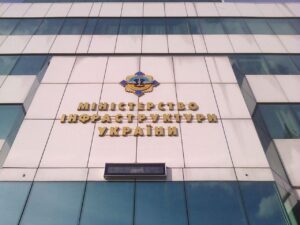
On Friday, September 25, Vinnytsia, Vyshneve, Sheptytskyi, Lebedyn, and Zaporizhzhia signed memorandums with the Ministry of Infrastructure regarding the construction of five more central kitchens, according to Minister of Education and Science Andriy Butenko.
“These projects were selected by the Ministry of Infrastructure with the support of the European Investment Bank on a competitive basis. According to preliminary estimates, the new central kitchens will be able to provide meals to approximately 181 educational institutions—schools and kindergartens, particularly in rural areas,” Butenko wrote on his Telegram channel on Friday.
He emphasized that the school meal reform primarily concerns children’s health and the development of their eating habits.
“It is important that every child, regardless of where they live, has access to a nutritious hot meal. For small and rural schools, where it is difficult to set up their own kitchen, central kitchens can also be an effective solution. At the same time, this model allows communities to ensure consistent meal quality across the entire network of educational institutions,” the minister emphasized.
He also visited the first central kitchen in Bucha. This model enables the centralized preparation of high-quality, balanced lunches, ensures uniform meal standards, and makes more efficient use of community resources.
“We are working with communities to ensure schools are ready to work with such facilities. After all, it is important not only to prepare a high-quality lunch but also to deliver it on time, store it properly, and serve it to the children. That is why the Ministry of Education and Science is primarily directing the subsidy toward modernizing school cafeterias that receive ready-made, chilled meals in schools that are part of the network of central kitchens. “I am glad that more and more communities are choosing this model,” the minister concluded.



