

The third meeting of the Joint Ukrainian-Croatian Commission on Economic Cooperation took place on June 9, 2026, in Zagreb, according to the Embassy of Ukraine in the Republic of Croatia.
The Ukrainian delegation, which included representatives from several ministries, was led by Ukraine’s Minister for Veterans Affairs, Nataliia Kalmykova. The Croatian side was represented by Croatia’s Minister of Economy, Ante Šušnjar.
Following the meeting, the parties signed a final protocol. A Memorandum of Understanding on physical activity and sports was also signed as part of the commission’s work.
During her visit, Kalmykova held working meetings with Croatian Minister of Economy Ante Šušnjar and Deputy Prime Minister and Minister for Croatian Veterans Tomo Medved, and paid tribute to the fallen defenders of Croatia in the 1991–1995 war.
The parties discussed the implementation of joint projects in the areas of veteran policy, energy, education and science, tourism and sports, as well as the preservation of cultural heritage in the face of external aggression.
For Ukraine, Croatia’s experience is of particular importance in the context of veteran policy, post-war recovery, and the reintegration of defenders into civilian life. Following the 1991–1995 war, Croatia established its own system of support for veterans, and this experience could be useful for Ukrainian government programs.
Ukrainian-Croatian economic cooperation also holds potential in the energy sector, infrastructure, tourism, humanitarian projects, and reconstruction.

Total drug sales at gas stations accounted for less than 0.1% of the retail market; experts surveyed by Interfax-Ukraine believe this segment has a negligible impact on the retail pharmaceutical market.
“As of today, 260 licenses have been issued, with more than a third of them in Kyiv and the surrounding region. This accounts for 1% of the total number of pharmacies on the market. These are more like pharmacy kiosks than pharmacies at gas stations,” said Iryna Horlova, CEO of the analytical and consulting firm Support in Market Development (SMD).
She noted that the law permits these retail outlets to sell only a specific list of limited over-the-counter medications, primarily pain relievers, nasal drops, and cold remedies.
“Since this accounts for 1% of the total number of pharmacies and potentially about 0.05% of the pharmaceutical market’s turnover, the opening of these pharmacies has had no impact and will have no impact on the country’s pharmaceutical market,” she said.
At the same time, Gorlova noted that “prices are regulated by law.”
“Last year, the National Price Catalog was introduced, which sets a price cap for each registered drug item; pharmacies are not allowed to sell it for more than that. Therefore, prices at gas station pharmacies cannot be higher than at regular pharmacies and will not affect price changes in any way,” she said.
At the same time, according to Gorlova, despite the fact that “this initiative brings Ukraine closer to other developed countries where the sale of medicines at gas stations is permitted, unfortunately, these initiatives will not help make medicines more accessible to rural regions, as was intended, but will increase their accessibility and convenience for drivers and their passengers.”
For his part, Dr. Serhiy Sur, a pharmaceutical scientist, also noted that “the authorization to sell medicines at gas stations has not yet had any impact on the market.”
“According to results from April 2026, medicines were sold at only 260 gas stations, and the total volume of sales amounted to just 354,000 UAH. The average turnover per location was 4,700 UAH per month. For comparison, sales of over-the-counter medicines in the retail market (across 18,000 pharmacies) totaled 5.167 billion UAH as of April 2026. Accordingly, the average turnover for this category of drugs per pharmacy was approximately 283,000 UAH per month. In other words, sales of over-the-counter drugs at gas stations as of April 2026 accounted for less than 0.007% of their sales in pharmacies,” he said.
According to Sura’s estimates, the sale of medicines at gas stations also did not affect pharmaceutical manufacturers’ product ranges due to insignificant sales volumes. “Drug manufacturers have no need to change their product ranges for this sales channel,” he said.
At the same time, he noted that there is currently no available analytical data on price differences for the same drugs at gas stations and in pharmacies, but the cost of drugs at gas stations, just as in pharmacies, must not exceed the maximum retail prices listed in the National Price Catalog.
“Theoretically, expanding the channel for selling medicines at gas stations could create additional opportunities for patients to access over-the-counter drugs, especially in certain situations—while traveling or outside standard pharmacy hours. At the same time, from a practical standpoint, one should not expect this channel to drive significant sales growth compared to volumes sold through the pharmacy network. Gas stations will remain a niche channel with a limited product range and a specific consumption model. Thus, this can only be seen as a selective addition to the existing sales structure, rather than a significant transformation of it,” he concluded.
Sur also noted that “there is no uniform approach to the sale of medicines at gas stations across EU countries”: in some countries, their sale is permitted only through pharmacies, while others allow sales outside of pharmacies, specifically at gas stations. However, this applies exclusively to a limited list of over-the-counter medications, typically intended for treating mild conditions that do not require complex diagnosis and pose a low risk to the patient’s health. Furthermore, such activities are accompanied by regulatory safeguards: the establishment of special lists, requirements for storage conditions, as well as personnel standards.
International experience, particularly in EU countries such as France and Austria, shows that the range of permitted over-the-counter medications at gas stations is quite limited—approximately 30–50 items. These are medications in small packages (2–4–6 tablets or capsules) and in standard but low dosages, for example, ibuprofen 200 mg.
GAS STATIONS, MEDICINES, over-the-counter drugs, PHARMACEUTICAL MARKET, PHARMACIES
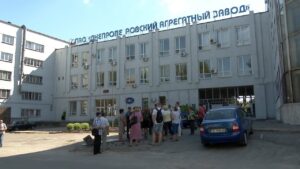
JSC “Dnipropetrovsk Aggregate Plant” (DAZ, Dnipro) plans to allocate its 2025 net profit to production development and does not plan to pay dividends.
This information is contained in the published draft resolutions of the company’s general meeting of shareholders, scheduled for July 1.
As reported, in 2025, DAZ increased its net profit by 15.3% compared to the previous year, reaching UAH 84.5 million.
The plant also did not pay dividends from the 2024 net profit of UAH 73.3 million, instead directing it toward development.
At the meeting, shareholders plan, in particular, to appoint Audit-Invest LLC as the auditor of the company’s financial statements for the 2021–2025 period.
DAZ is a company with many years of experience in manufacturing aviation equipment, as well as hydraulic equipment for mines and general-purpose products (fuel and other liquid pumps).
According to data from the National Securities and Stock Market Commission for the first quarter of 2026, Supervisory Board Chairman Yevhen Morozhenko owns nearly 37.95% of the company’s authorized capital, while Board member Andriy Yatsuba and shareholder Volodymyr Yatsuba each own nearly 19.185%.
Last year, the plant increased its net sales revenue by 77% to UAH 491.5 million. As of April 2026, the plant employed 338 people.
DIVIDENDS, DNIPROPETROVSK AGGREGATE PLANT, PRODUCTION, PROFIT, ДАЗ

In 2025, Ukraine nearly doubled its exports of organic walnuts compared to the previous year—from 2,600 to 4,900 tons— and their value more than doubled—from EUR7.9 million to EUR16.6 million, according to a study on organic berry and nut exports in 2024–2025, which was presented at the forum “Development of Ukraine’s Berry and Nut Export Sector” on June 10 in Kyiv.
“Demand is stable. Organic walnuts from Ukraine are exported to nine countries, including the Netherlands, Austria, Romania, France, Germany, and Italy,“ said Iryna Fedorchenko, a leading export specialist at the organic production certification body ”Organic Standard,” during the study’s presentation.
At the same time, she emphasized that Ukraine is not yet fully utilizing the potential for exporting value-added products, as organic walnuts are supplied to foreign markets primarily as raw materials.
“All organic walnuts are exported in their raw form. We have an open niche for exporting finished products,” she noted.
According to Fedorchenko, importing countries purchase Ukrainian raw materials and then process, refine, and repackage them at their own facilities.
The Netherlands was the largest importer of Ukrainian organic walnuts in 2025, purchasing 1,950 tons of product worth EUR6 million. The top three buyers also included Austria—986 tons worth EUR2.6 million—and Romania—724 tons worth EUR3.6 million. In addition, Ukrainian organic walnuts were supplied to France, Germany, Italy, Moldova, Poland, and the United Kingdom.
Fedorchenko also noted that Ukraine exports three types of organic nuts—walnuts, almonds, and hazelnuts. At the same time, walnuts account for the lion’s share of exports, with most of the organic walnuts shipped abroad coming from wild-growing orchards.
According to the study, in 2025 the total area of certified organic nut orchards in Ukraine was 469 hectares, compared to 556 hectares the previous year. Of this, 383 hectares were planted with organic walnuts (470 hectares in 2024), 84.9 hectares with hazelnuts, and 1 hectare with almonds. The number of organic nut producers decreased to 17 from 19 the previous year.
The study was conducted by the certification body “Organic Standard” in collaboration with the Office for Entrepreneurship and Export Development and the national project “Dія.Бізнес” with support from Switzerland as part of the Global Quality and Standards Program in Ukraine (GQSP Ukraine), implemented by the United Nations Industrial Development Organization (UNIDO).
The violations identified during the inspection of VUSO Insurance Company (Kyiv) are not systemic in nature, do not affect the insurer’s overall business practices, and the payment of the fine will in no way affect compliance with solvency requirements.
The company announced this on its website. It also noted that in determining the amount of the fine, the National Bank relied on available information regarding VUSO’s total annual turnover for 2025, amounting to UAH 5.794 billion, and the maximum fine limit established in accordance with the requirements of the relevant law.
“VUSO remains true to its tradition of strictly fulfilling its obligations and is using the recommendations provided by the Regulator to improve internal procedures, bringing them into line with best practices and regulatory requirements in the field of financial monitoring,” the insurer emphasizes.
As reported, the National Bank of Ukraine fined VUSO Insurance Company a total of UAH 40.71 million for violating anti-money laundering (AML/CFT) legislation.
The fine was imposed for violating AML/CFT requirements regarding the failure to fulfill the obligation to ensure the proper organization and conduct of initial financial monitoring.
As noted by the NBU, the violation led to the institution’s failure to properly fulfill its obligations, specifically to develop, implement, and update internal AML/CFT documents in accordance with legal requirements and the results of the national risk assessment; to conduct proper customer due diligence; comply with the prohibition on establishing business relationships with persons included in the list of individuals associated with terrorist activities or subject to international sanctions.
VUSO Insurance Company was founded in 2001. It is a member of the MTIBU and the UFS, a participant in the Direct Loss Settlement Agreement, and a member of the Nuclear Insurance Pool.
According to the NBU, the company ranked third in terms of premiums written among non-life insurers in Ukraine as of the end of 2025.
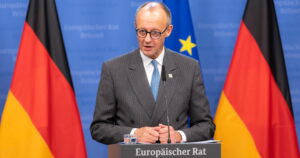
Peace in Russia’s war against Ukraine can only be achieved through negotiations involving Ukraine, Russia, Europe, and the United States, according to a government statement delivered by German Chancellor Friedrich Merz in the Bundestag on Thursday.
“Our goal for Ukraine remains a just and long-term peace that also takes our security interests into account. For this reason, we support Ukraine. That is the truth. We are doing this today and will continue to do so tomorrow, for as long as necessary,” Deutsche Welle quotes Merz as saying.
Merz stated that support for Ukraine includes a 90 billion euro loan approved by the EU and increased sanctions pressure on Russia; the German government supports efforts aimed at ending the war through negotiations.
“To counter Russia’s open willingness to escalate, we are strengthening NATO’s eastern flank. At the same time, we support efforts aimed at ending this aggressive war by Russia through negotiations. Lasting peace will only be achieved through negotiations involving Ukraine, Russia, the U.S., and Europe. There will be no other option,” the German chancellor noted.
“By waging a defensive war against Russia, Ukraine is also defending our freedom, as well as freedom and security throughout Europe,” Merz added. “After all, Ukraine is part of Europe. In the long term, it will also become part of the European Union,” he emphasized.
Assessing Ukraine’s path toward European integration, the chancellor noted that the country has made significant progress on the path of reforms.
“That is precisely why, a few days ago, I proposed granting Ukraine associate membership in the EU. This would mean Ukraine’s regular participation in EU Council meetings and meetings of the relevant ministerial councils. A Ukrainian commissioner, for now without a portfolio or voting rights, would become Kyiv’s representative in Brussels,” Merz once again explained the essence of his proposal.



