

A group of 30 Ukrainian children from the Kharkiv and Kherson regions has arrived in Azerbaijan for psychological and health rehabilitation and recreation, the Embassy of Ukraine in the Republic of Azerbaijan reported.
The group includes children living under constant Russian shelling, as well as children of active Ukrainian servicemen, prisoners of war, and wounded defenders of Ukraine.
The rehabilitation and recreation program has been organized in the city of Gabala, one of Azerbaijan’s main mountain resort centers.
At Heydar Aliyev International Airport, the children were welcomed by Ukraine’s Ambassador to Azerbaijan Yurii Husiev, head of the Azerbaijan-Ukraine Interparliamentary Relations Working Group and member of the Milli Majlis Alibala Maharramzade, and Deputy Chairman of the Board of the Social Services Agency under Azerbaijan’s Ministry of Labour and Social Protection of the Population Vugar Mammadov.
Since the beginning of the full-scale war, 692 Ukrainian children have already undergone recreation, health improvement and rehabilitation in Azerbaijan, the embassy reported.
Thus, taking into account the current group, Azerbaijan continues to implement humanitarian programs aimed at supporting Ukrainian children affected by the war.
“We highly appreciate this assistance, the strong strategic partnership and friendship that unite the Ukrainian and Azerbaijani peoples,” Husiev said.
The ambassador also thanked Azerbaijan for its support for Ukraine and assistance to children who, because of the war, are forced to live under conditions of constant danger and shelling.

Ukraine is proposing that the European Union increase the existing duty-free export quota for Ukrainian bioethanol—currently set at 125,000 metric tons per year—to account for the volume of bioethanol that Ukraine imports from the EU as part of automotive gasoline, Minister of Agrarian Policy and Food Taras Vysotsky told reporters.
“We have calculated that Ukraine currently imports about 10,000 metric tons of bioethanol per month as part of gasoline… This proposal applies to the period of martial law, as the current security situation prevents Ukraine from blending gasoline with bio-components, so we have to import it,” the minister explained.
He noted that the requirement for a mandatory bioethanol content of at least 7% in A-92 and A-95 automotive gasoline took effect in Ukraine on July 1 of this year, while the quota of 125,000 metric tons was set last year, when gasoline was imported without any bioethanol content.
Vysotsky noted that the quota can be flexible: if, for example, 5,000 metric tons of bioethanol are imported in a given month, then an additional 5,000 metric tons of export quota becomes available; if 15,000 metric tons are imported in a given month, then 15,000 metric tons.
According to him, this could amount to an additional 120,000 metric tons of bioethanol over the course of a year.
In the opinion of the Minister of Agrarian Policy, this proposal from Ukraine is very likely to be accepted and implemented by European partners.
Bioethanol, EU, EXPORTS, QUOTA, UKRAINE

Ukraine has been named the Guest of Honor at the 24th Pisa Book Festival, which takes place October 2–4 in Pisa, Italy.
“This year’s guest country is Ukraine, which is presenting a rich and diverse program covering literature, history, and art, organized under the patronage of the Ukrainian Embassy in Rome,” the festival states on its website.
In particular, the festival will feature writer Andriy Kurkov, as well as writers and translators Olena Kostyukovych, Yaryna Hrush, and Olena Ponomariova.
As part of the program dedicated to Ukraine, an exhibition of Ukrainian illustrators titled “Yellow and Blue” is on display at Palazzo Blu through January 10, 2027.
In total, this year’s festival features 90 booths from Italy’s leading independent publishers, as well as professional meetings with editors, translators, and distributors.
Over 100 events are scheduled as part of the festival, which will welcome more than 200 guests.
The festival was founded in 2003 to support independent Italian publishers.
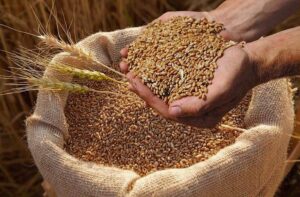
Global grain trade in the 2026/27 agricultural year (July–June) will total 505.8 million metric tons, down 3.5% from last year, according to a forecast by the FAO (Food and Agriculture Organization of the United Nations).
According to the organization’s monthly grain report, the new estimate is 3.5 million metric tons lower than the previous forecast made in September. “This reflects a downward revision of wheat and corn export forecasts, driven primarily by shipping difficulties through the Black Sea and insufficient capacity on alternative transport routes,” the report states. “The upward revision to the barley trade forecast only partially offsets the lost corn and wheat trade volumes.”
Forecasts for corn exports from the EU were lowered due to reduced supply from Ukraine resulting from logistical difficulties. At the same time, an increase in export supply from Australia has allowed for an upward revision of the forecast for barley trade, a significant portion of which will be shipped to China.
The improved forecast for wheat exports from Kazakhstan has not fully offset the decline in shipments from Russia and Ukraine.
According to the forecast, international rice trade will decline by 2.2% in calendar year 2026; however, it may increase by 1.7% in 2027, reaching 61.2 million metric tons. “In 2027, a recovery in import demand is projected in most regions; however, the availability of sufficient domestic stocks in East Asian countries suggests that the downward trend in their purchasing volumes may continue for the third consecutive year,” the document states.
According to the FAO forecast, the wheat harvest in 2026 will total 813.9 million metric tons, which is 3.3% less than last year, while the total grain output will be 2 billion 979 million metric tons (2.1% less).

The European Union’s promises regarding Ukraine’s accession through the standard procedure are not true, Albanian Prime Minister Edi Rama said in an interview with the German newspaper *Welt am Sonntag*.
“What they are promising her (Ukraine) is a lie,” Rama emphasized, adding that under the standard enlargement rules and with all existing criteria met, the country will definitely not be admitted into the bloc, and “everyone knows this.”
At the same time, the Albanian prime minister cautioned Brussels against making concessions in the process solely for geopolitical reasons. Instead, he proposed granting full membership only based on the results of specific tasks and achievements (a results-oriented process).
At the same time, the Albanian prime minister called for accelerating his country’s European integration. Albania applied for EU membership back in 2009 and has held candidate country status since 2014.

On Sunday, October 4, there will be no precipitation in Ukraine; however, the Ukrainian Hydrometeorological Center reports that fog is expected in some areas of the western, northern, and Vinnytsia regions at night and in the morning.
Winds will be variable, 3–8 m/s.
Nighttime temperatures will range from 1 to 6° above zero across Ukraine, except in the south, where ground frosts of 0–3° are expected; in the south of the country, temperatures will range from 4 to 9° above zero. Daytime temperatures will range from 14 to 19°, and in the eastern regions from 11 to 16° above zero.
In Kyiv, skies will be partly cloudy with no precipitation. Winds will be variable, 3–8 m/s. Nighttime temperatures will range from 4–6° above zero, and daytime temperatures from 16–18°.
According to the Boris Sreznevsky Central Geophysical Observatory, the highest daytime temperature on October 4 in Kyiv was recorded in 1888 at 28.0° above freezing, and the lowest nighttime temperature was 2.6° below freezing in 1910.
On Monday, October 5, there will be no precipitation in Ukraine, with fog in some areas of the western regions at night and in the morning.
The wind will be predominantly westerly, 5–10 m/s.
Temperatures will range from 4–9°C at night to 16–21°C during the day, reaching up to 24°C in the south of the country.
In Kyiv, no precipitation is expected, with winds predominantly from the west at 5–10 m/s. Nighttime temperatures will range from 7–9° above freezing, and daytime temperatures from 18–20°.



