
Oil prices are moderately lower on Tuesday morning after a sharp decline on Monday, triggered by expectations of interest rate hikes by central banks around the world.
The price of March futures for Brent on London’s ICE Futures Exchange stood at $84.85 a barrel by 7:09 a.m., down $0.05 (0.06%) from the close of the previous session. Those contracts fell $1.76 (2%) to $84.9 a barrel at the close of trading on Monday.
The price of WTI futures for March at electronic trades of the New York Mercantile Exchange (NYMEX) makes $77.54 per barrel by that time, which is $0.36 (0.46%) lower than the final value of the previous session. At the end of last session, the contract fell by $1.78 (2.2%) to $77.98 per barrel.
This week will be the first meetings of the world’s leading central banks – the U.S. Federal Reserve, European Central Bank and Bank of England. The Fed is expected to slow the pace of key rate hikes to 25 basis points from 50 bps in December, and the ECB and Bank of England will again increase borrowing costs by 50 bps.
“A hawkish attitude toward further rate hikes will cause weakness in the oil and oil products market,” StoneX analysts wrote in a letter to clients.
Traders are also trying to take a cautious approach ahead of Wednesday’s next OPEC+ ministerial meeting.
The OPEC+ committee is unlikely to signal any changes in production “given the continued certainty in the market, both on the demand and supply side,” ING strategists Warren Patterson and Ava Manty said.
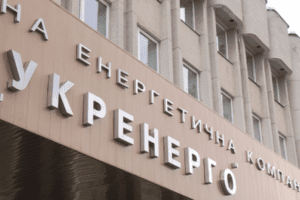
It is noteworthy that the situation in Ukraine has deteriorated in the last two years, according to the information supplied by the Ministry of Energy and Coal Industry of Ukraine (SOE).
Thus, Ukrenergo increases the daytime limits for the second day in a row, the nighttime limits are relatively sharply increased after the insignificant decrease on Monday.
According to DTEK’s report in the group’s Telegram Channel on Monday evening, the average time of no light in Kyiv throughout January 23-29 was 4 h. 50 min, 4 h. 51 min. and 4 h. 58 min, depending on one of the three groups. That is, 77-80% of days the residents of Kiev were with light.
DTEK noted that the blackout was uniform both among the groups and within each of them.
The information on the application of hourly schedules for tomorrow has already been made public by most network operators. In the Odessa region, emergency shutdowns will continue to be applied due to serious damage to the energy infrastructure as a result of the Russian attack on January 26. Prior to it, such blackouts were applied in the region only at night. As reported, DTEK forecasts that the repair work that would allow the region to return to stabaggering will continue at least until the end of January.

We coordinate all measures related to the strengthening of the Ukrainian Defense Forces with our NATO partners, Prime Minister Mateusz Morawiecki said on Monday.
According to the Polish state news agency PAP, the prime minister and the head of the Defense Ministry were asked at a press conference whether, following the example of the Polish government’s pressure on the international arena to hand over tanks to Ukraine, similar actions would be taken regarding F-16 aircraft and long-range weapons.
“All actions aimed at strengthening the Defense Forces of Ukraine, we agree with our partners in NATO, including the transfer of Patriot to Ukraine, as well as the organization of a strong tank force in the form of Leopard and modern tanks. All this was pressure from our side, but also agreements with the United States,” Moravetsky replied.
The Prime Minister noted that, as a few months ago, in the context of MiGs, any other Air Force will be implemented and possibly redeployed in coordination with NATO countries.
“We will act in full coordination,” he stressed.

Ukraine processed about 4.48 million tons of sunflower seeds in the four months of the 2022/2023 marketing year (MY, September-August), the lowest since 2015/2016 MY.
According to the APK-Inform agency’s website on Monday, oilseed processing was slowed by the crisis in the country’s energy sector, limits on electricity use and deliberate delays by the Russian side in inspecting vessels passing through the “grain corridor.”
According to the agency, a total of 10.4 million tons of sunflower may be processed in Ukraine in 2022/2023 MY, which is 10% less than the previous season, while the export of sunflower oil may decrease by 8% compared to the previous season and amount to 4.15 million tons, the lowest since 2015/2016 MY.
At the same time, a separate factor affecting oilseeds processing and sunflower oil exports in the current season was the growth of exports of sunflower seeds without processing – for September-December 2022, almost 1.2 million tons of them were exported from Ukraine, which was half of the analysts’ forecast for the entire MY.
“This figure is atypically high for the industry, it contributes to a significant increase in competition for raw materials, higher prices for them, even when the price of demand for sunflower oil decreases, and as a result – a more rapid reduction of sunflower supply in the market,” – the agency quotes its analyst Svetlana Kirichok.
She also stressed that one should not expect a substantial increase in processing, at least in February-March 2023, as the situation in the energy sector of Ukraine remains unchanged and the limits on electricity consumption are still in force. In addition, in March the “grain agreement” expires, which will require a new prolongation.
As reported, Ukraine from January 1-15, 2023 exported 93 thousand tons of sunflower seeds, which is 2.5 times less compared to the same period last year, while the export of sunflower oil halved to 148 thousand tons.

Main Department of State Service of Ukraine for Food Safety and Consumer Protection in Odessa region on January 19 detected import into Ukraine from Poland party of Egyptian peanuts with exceeding the content of toxic substance aflatoxin-B1.
As reported on the Facebook page of the regional department, this product can be sold in the Ivano-Frankivsk region, and market operators should withdraw these products from circulation and within no more than two working days and in writing to inform Gosprodpotrebluzhba.
“The Main Department of the State Consumer Service in the Odessa region received an information message from the rapid response system for food and feed from January 19, 2023 № 2022.3810-fup 3, regarding the detection of excessive amounts of B1, and G2 in peanuts in shells exported from Egypt (exporter: ASM for advice and export agricultural products, Egypt) through Poland (importer: Atlanta Poland S.A, Poland) to Ukraine, 13-G Vysochana Street, Horodenko town, Ivano-Frankivsk region, 78100,” – stated in the message of the service.
The report specifies that aflatoxin-B1 is a toxic substance for humans and animals, secreted by certain species of microscopic mold fungi. It causes malignant tumors and cirrhosis of the liver, as well as reduces immunity. Severe aflatoxin B1 poisoning can cause cerebral edema and acute liver failure.