

According to Fixygen, the cryptocurrency market began to recover last week and early this week following a weak start to the year: Bitcoin returned above $80,000 and rose to $81,600 on May 5, while Ethereum traded around $2,380 and Solana around $85–86. According to MarketWatch, Bitcoin reached its highest level since late January, and the CoinDesk Bitcoin Price Index rose for six consecutive days, gaining about 8% over that period.
Last week, Bitcoin mostly traded within the $75,700–$80,000 range, while Ethereum traded around $2,200–$2,380. The market reacted to improved risk appetite, inflows into Bitcoin ETFs, and expectations of greater regulatory clarity in the U.S. According to Saxo, ETF flows were mixed midweek but turned positive again by Friday, supporting the price recovery.
Momentum picked up earlier this week: Bitcoin broke through $80,000 for the first time since late January, and a number of crypto stocks also rose amid discussions of a compromise on the U.S. Clarity Act, which is intended to clarify the regulation of the digital asset and stablecoin markets. Investors.com notes that the bill boosted sentiment in the sector, while demand for a Bitcoin ETF remained one of the drivers of growth.
Nevertheless, the market does not yet appear to be unequivocally bullish. Barron’s points out that, despite Bitcoin’s return above $80,000 and a rise of approximately 17% over the month, it remains significantly below the all-time high reached in the fall of 2025. The publication also notes that geopolitical tensions and the risk of rising oil prices continue to weigh on risky assets.
The main short-term trend is the market’s attempt to consolidate above the psychological $80,000 level for Bitcoin. If buyers hold this level, the next target could be the $84,000–$86,000 range, where profit-taking is likely following a rapid recovery. With weak ETF inflows or a deterioration in the broader market environment, Bitcoin could return to the $76,000–$78,000 range.
Ethereum currently appears weaker than Bitcoin. Its growth is supported by the general market recovery, but ETH has fewer strong drivers of its own. For the picture to improve, Ethereum needs to consolidate above $2,400; otherwise, it may continue to move sideways in the $2,200–2,400 range.
Altcoins remain dependent on Bitcoin’s performance. Solana and other major tokens are recovering, but investors remain cautious: following the sharp market drop at the start of the year, capital is first returning to Bitcoin and only then to riskier assets. Therefore, a full-fledged “alt season” is only possible with sustained BTC growth and reduced volatility.
The base case for the near term is moderately positive: the market may continue its recovery if Bitcoin stays above $80,000, ETF inflows persist, and regulatory expectations in the U.S. remain favorable. The negative scenario involves a return to a downtrend amid intensifying geopolitical risks, rising U.S. yields, or disappointment regarding ETF inflows. In this case, the crypto market may once again enter a defensive phase, where Bitcoin will appear more stable than most altcoins.
For Fixygen.ua, the key takeaway is that the current rally looks more like a recovery rally following a sharp decline than the start of a confident new bull cycle. The market needs three confirmations: Bitcoin’s sustained consolidation above $80,000, stable inflows into ETFs, and a reduction in macroeconomic risks. Without these, the rally may remain a technical bounce within a broader volatile phase.
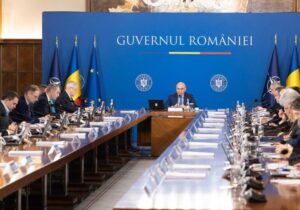
The Parliament of Romania has supported a vote of no confidence in the government of Prime Minister Ilie Bolojan, leading to the سقوط of the pro-European cabinet and opening a new phase of political uncertainty in one of the key countries on the eastern flank of the EU and NATO.
A total of 281 deputies voted in favor of the no-confidence motion, exceeding the required minimum of 233 votes. Only four parliamentarians voted against. This result became one of the largest no-confidence votes in the history of Romanian parliamentarism.
The political crisis escalated after representatives of the Social Democratic Party (PSD) withdrew from the government. Following this, the Social Democrats, together with right-wing and far-right forces, initiated the consideration of the no-confidence motion at a joint session of the Chamber of Deputies and the Senate. Immediately after the announcement of the voting results, Bolojan left the parliament building and returned to the government residence.
One of the causes of the crisis was disagreements over fiscal austerity measures. Bolojan’s cabinet pursued a course of deficit reduction, tax increases, and spending cuts, which provoked resistance from the Social Democrats. After PSD’s withdrawal from the coalition, the government effectively lost its stable majority.
Bolojan remains acting prime minister until a new government is formed; however, his powers will be limited. The President of Romania, Nicușor Dan, is expected to begin consultations with political parties to find a new cabinet formula. Possible scenarios include restoring a pro-European coalition in a revised composition, appointing a technocratic prime minister, or forming a new minority government.
The political situation is further complicated by the fact that the Romanian parliament remains highly fragmented. Following the parliamentary elections of December 1, 2024, no party secured a majority in either the Chamber of Deputies or the Senate.
In the Chamber of Deputies, the Social Democratic Party (PSD) became the largest force with 86 seats. It is followed by the right-wing nationalist Alliance for the Union of Romanians (AUR) with 63 seats, the National Liberal Party (PNL) with 49 seats, the liberal Save Romania Union (USR) with 40 seats, the far-right S.O.S. Romania with 28 seats, the Party of Young People (POT) with 24 seats, and the Democratic Alliance of Hungarians in Romania (UDMR) with 22 seats. An additional 19 seats are held by representatives of national minorities.
In the Senate, PSD secured 36 seats, AUR — 28, PNL — 22, USR — 19, S.O.S. Romania — 12, UDMR — 10, and POT — 7 seats.
Politically, the parliament is now условно divided into three blocs. The first consists of moderate pro-European parties: PSD, PNL, USR, UDMR, and representatives of national minorities. In theory, they could form a new majority, but they have significant disagreements over budget, taxation, and social policy. The second bloc is the nationalist and eurosceptic flank, primarily AUR, S.O.S. Romania, and POT. The third consists of situational groups and individual deputies, whose role increases in tight votes.
The crisis in Bucharest has not only domestic but also regional significance. Romania remains one of the most important countries for Ukraine’s logistics, exports via the Danube and the Black Sea, hosting NATO infrastructure, and maintaining security on Europe’s eastern flank. Any prolonged political uncertainty may complicate decision-making on budgetary, defense, and infrastructure issues.
Economic risks are also substantial. Political instability increases concerns about Romania’s sovereign ratings, access to EU funds, and the stability of the national currency. Bucharest must implement reforms and meet deficit reduction targets to maintain access to significant resources from European recovery funds.
According to the analytical center Experts Club, the fall of the Romanian government creates three main risks for the region: slower fiscal consolidation, increased volatility in financial markets, and weakened political predictability in matters of support for Ukraine.
“For Ukraine and the entire region, it is important that the political crisis in Romania does not turn into institutional paralysis. Romania is not a peripheral player, but one of the key hubs of Eastern European security, Danube logistics, and interaction with the EU. If a new government is formed quickly and maintains a pro-European course, the effect will be limited. However, if the crisis drags on, it may affect infrastructure projects, defense coordination, and the investment climate across the region,” said the founder of Experts Club, Maksym Urakin.
According to him, the factor of far-right forces that supported the no-confidence vote is of particular importance.
“The no-confidence vote itself does not mean a turn away from the EU or NATO. However, it shows that protest against fiscal austerity and social pressure can be used by forces advocating a more confrontational and less predictable foreign policy. For neighboring countries, this is a signal: economic fatigue of the population is becoming a security factor,” Urakin noted.
Experts Club believes that the baseline scenario remains an attempt by the president and moderate parties to restore a manageable pro-European configuration without the participation of the far right. However, even in this case, the new government will have to balance between EU requirements for deficit reduction, social discontent, and the need to maintain Romania’s active role in regional security.

Kazakhstan plans to completely stop purchasing electricity from Russia starting in 2027 thanks to the commissioning of its own power generation facilities, said the country’s Deputy Minister of Energy, Sungat Esimkhanov.
According to him, if the planned power facilities are commissioned in late 2026 or early 2027, Kazakhstan will be able to meet domestic demand without Russian supplies. “If we commission all of our planned power facilities by the end of this year or early next year, I think that in 2027 we will not purchase any electricity from Russia at all,” Esimkhanov said at a press conference.
In recent years, Kazakhstan has purchased electricity from Russia annually due to a shortage of its own capacity. According to the Ministry of Energy, the deficit is decreasing: in 2024 it stood at 2.1 billion kWh, in 2025—about 1.5 billion kWh, and in 2026 it is expected to be at the level of 1–1.2 billion kWh. The government expects to eliminate this deficit by 2027.
Earlier, Kazakhstan’s Minister of Energy Erlan Akkenzhenov stated that the country intends to fully meet the economy’s electricity needs by the end of the first quarter of 2027. To this end, Kazakhstan is implementing 81 energy projects with a total capacity of 15.3 GW and an investment volume of over 13 trillion tenge, or more than $25 billion.
Moving away from Russian supplies will be a significant milestone in Kazakhstan’s energy policy. For the country, this means reducing dependence on external electricity sources and transitioning to a more self-sufficient energy balance model. However, the plan’s success will depend on the timing of new facilities coming online, the condition of the grids, and the power system’s ability to handle peak loads.
The decision also has regional significance. Kazakhstan remains part of the Central Asian power grid and is connected to the Russian power grid, so reducing imports from Russia does not mean a complete technological disconnect. However, from an economic and political standpoint, the move to replace Russian supplies demonstrates Astana’s desire to strengthen its own energy security and reduce vulnerability to external disruptions.
For Russia, this means a gradual loss of a portion of its electricity export demand from Kazakhstan. For Central Asia, it is a signal to accelerate the modernization of power generation, the construction of new thermal power plants, the development of renewable energy, and the improvement of grid reliability, as power shortages remain one of the region’s main infrastructure challenges.

According to the Interfax-Ukraine Culture project, a star-studded screening of the cult comedy “Monty Python and the Holy Grail” in Ukrainian dubbing took place at the Zhovten Cinema in Kyiv, the press service reports.
“The film has taken on a new sound thanks to Ukrainian comedians who adapted the humor for modern audiences,” the organizers of the screening noted.
The film, which celebrated its 50th anniversary last year, will be released in Ukrainian theaters on April 30 at the initiative of comedian Vasyl Baidak in collaboration with distributor “Arthouse Traffic.”
“Monty Python and the Holy Grail” is the debut feature film by the British comedy troupe “Monty Python,” released in 1975 and considered one of the most influential comedies in film history. The film’s plot is an ironic take on the legends of King Arthur, who, along with the Knights of the Round Table, sets out in search of the Holy Grail, encountering a series of absurd and unpredictable situations.
The film was directed by Terry Gilliam and Terry Jones. At the time, well-known musicians, including Elton John, as well as members of Led Zeppelin, Pink Floyd, and Genesis, contributed to the project’s funding.
The Ukrainian dub was created with the participation of representatives of the contemporary comedy scene. Specifically, the characters were voiced by Vasyl Baidak, Oleg Svisch, Danylo Povar, Mark Kutsevalov, Roman Mishcheryakov, as well as comedians Dasha Kubik, Lana Chubakha, Natalia Garipova, and other project participants.
As noted, the adaptation aims to make classic British humor more accessible to Ukrainian audiences and make the film relevant for modern viewers.
The film “Monty Python and the Holy Grail” is considered a classic of absurd comedy and one of the key works of British cinema that has influenced the development of humor worldwide.
https://interfax.com.ua/news/culture/1165064.html

According to the Interfax-Ukraine Culture project, the 10th Italian Design Day took place in the capital, dedicated to the theme “Re-Design: Regenerating spaces, objects, ideas, and relationships,” regenerating spaces, objects, ideas, and relationships“), the Italian Embassy in Ukraine reported on its Facebook page.
”Design is a distinctive expression of Italian quality and an effective tool for meeting the growing demand of the Ukrainian market,” said Carlo Formosa, Italy’s Ambassador to Ukraine.
The event took place at Taryan Towers. It was attended by over 150 representatives of Ukrainian and Italian institutions, businesses, and creative industries.
Among the participants were Ukraine’s Minister of Economy, Environment, and Agriculture Oleksiy Sobolev and representatives of leading Ukrainian institutions.
The event focused primarily on issues of architecture, design, and post-war reconstruction. The Italian side was represented by “Design Ambassador” Luca Tripetti, who presented a vision for cooperation in the woodworking and furniture sectors in Ukraine. Designer Carlo Colombo also joined the event online.
As part of the event, the exhibition “Città in scena” was presented, dedicated to urban regeneration and sustainable development projects.
The embassy noted that the event took place against the backdrop of growing interest in “Made in Italy,” particularly in the fields of design and furniture.
Italian Design Day is an international initiative aimed at fostering cooperation in the fields of design, architecture, and the creative industries.
https://interfax.com.ua/news/culture/1165047.html

April frosts in Ukraine caused damage and blossom drop in apricots, peaches, sweet cherries, pears, and sour cherries, while having no critical impact on winter crops, according to the Ukrainian Hydrometeorological Center.
“A large number of intense frosts were unfavorable for the flowering of fruit crops and perennial plantings. Due to the prolonged drop in temperatures, stone fruits showed signs of blackening and flower drop,” meteorologists noted.
According to experts, Arctic air masses dominated in Ukraine throughout April, leading to cold weather. There was no sustained rise in average daily temperatures above 10°C by the end of the month, and the lag behind the long-term average was 1.5–2 weeks.
Agrometeorological conditions for the rooting and growth of winter crops remained quite favorable, as their frost resistance proved to be higher than the recorded temperatures. Frosts caused almost no damage to winter crops and early spring crops, which were in the mass emergence phase by the end of April. Only in isolated areas was slight yellowing of wheat and barley leaves observed due to the cold.
At the same time, frequent frosts caused the deeper soil layers to cool: at depths of 5 cm and 10 cm, the temperature in some places did not exceed 7–10°C. In regions with a precipitation deficit, the upper soil layers were assessed as slightly moist or dry, which complicated the sowing of late-season heat-loving crops.
The Hydrometeorological Center noted that, thanks to the predominantly moderate temperature regime in the spring, drought conditions developed gradually. This made it possible to maintain the content of productive moisture in the soil, especially in its deeper layers, at a sufficient and optimal level until the end of the month.



