

The Agrotrade agricultural holding has begun harvesting soybeans, sunflowers, and industrial hemp, according to a statement posted on its Facebook page.
“The campaign is underway simultaneously in several regions: soybeans in Kharkiv and Sumy regions, sunflowers in Kharkiv region, and industrial hemp in Chernihiv region. Currently, 9% of soybeans, 7% of sunflowers, and 54% of industrial hemp have been harvested,” the agricultural holding company said.
According to Alexander Ovsyannik, director of the agro-industrial department, industrial hemp has been harvested on almost half of the area, with yields within the norm.
“This is the third year of experimenting with this crop, and in the fall, we will decide whether to scale up this direction. As for soybeans and sunflowers, it is too early to draw conclusions: early soybeans were affected by drought, while late soybeans are still in good condition, and the situation with sunflowers depends on the region,” Ovsyannik said.
In the 2025 season, Agrotrade used 23 combine harvesters and about 60 trucks to quickly transport the harvest.
As reported, in 2025, Agrotrade allocated almost 13,000 hectares for soybeans, 11,000 hectares for sunflowers, and 333.5 hectares for industrial hemp.
The Agrotrade group of companies is a vertically integrated holding company with a full agro-industrial cycle (production, processing, storage, and trade in agricultural products). It cultivates more than 70,000 hectares of land in the Chernihiv, Sumy, Poltava, and Kharkiv regions. Its main crops are sunflower, corn, winter wheat, soybeans, and rapeseed. It has its own network of elevators with a one-time storage capacity of 570,000 tons.
The group also produces hybrid seeds of corn, sunflower, barley, and winter wheat. In 2014, a seed plant with a capacity of 20,000 tons of seeds per year was built on the basis of the Kolos seed farm (Kharkiv region). In 2018, Agrotrade launched its own brand, Agroseeds.
The founder of Agrotrade is Vsevolod Kozhemyako.
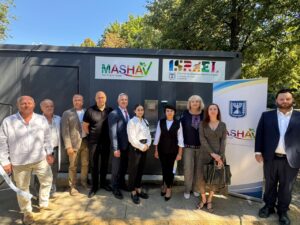
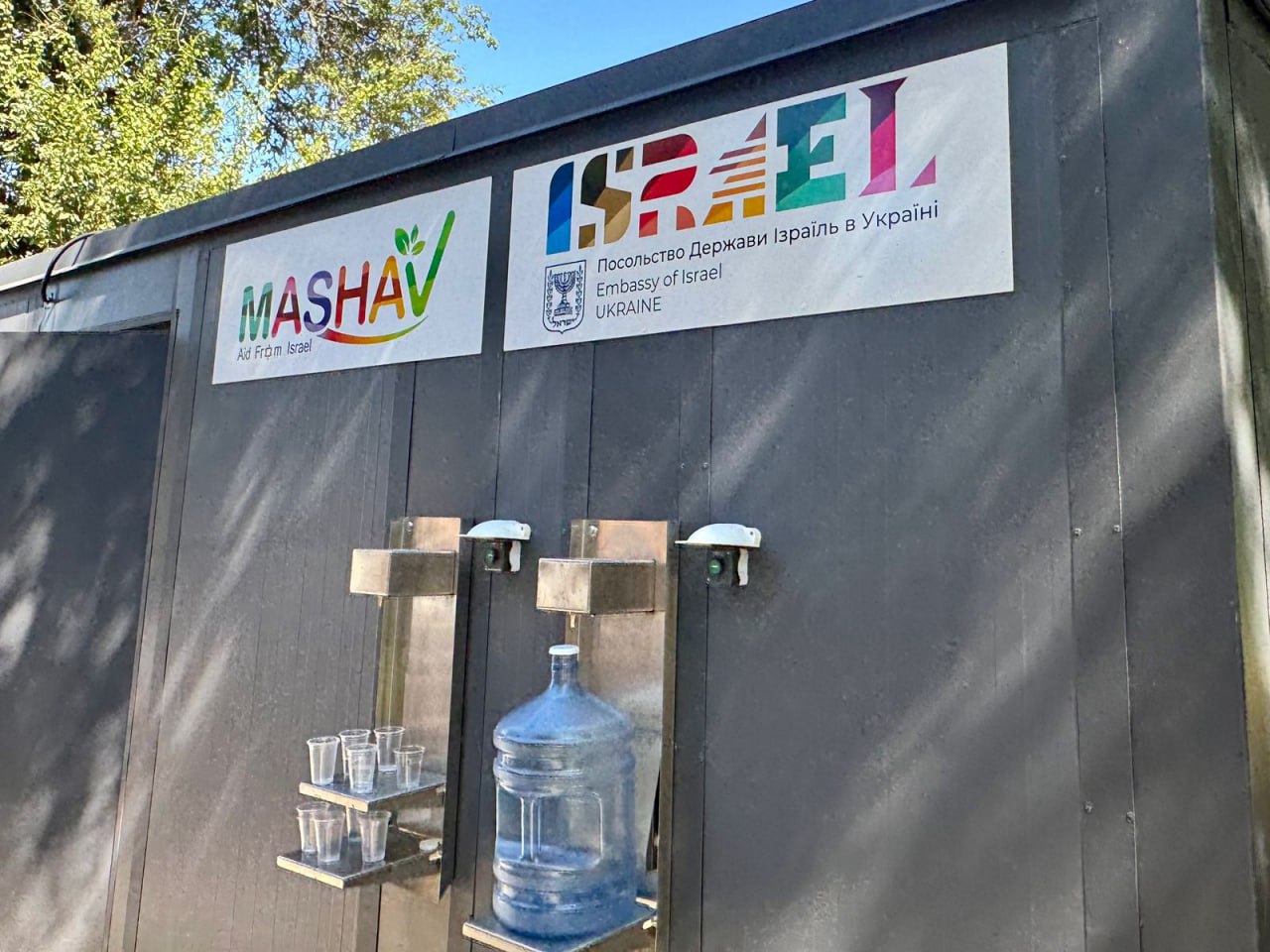
On September 3, during his visit to Uman, Michael Brodsky, Ambassador Extraordinary and Plenipotentiary of the State of Israel to Ukraine, visited the Central City Hospital, met with the director of the facility, Ivan Khoptyan, and donated a water purification system for the hospital’s needs.
The ceremony was attended by the mayor of Uman, Iryna Pletnyova.
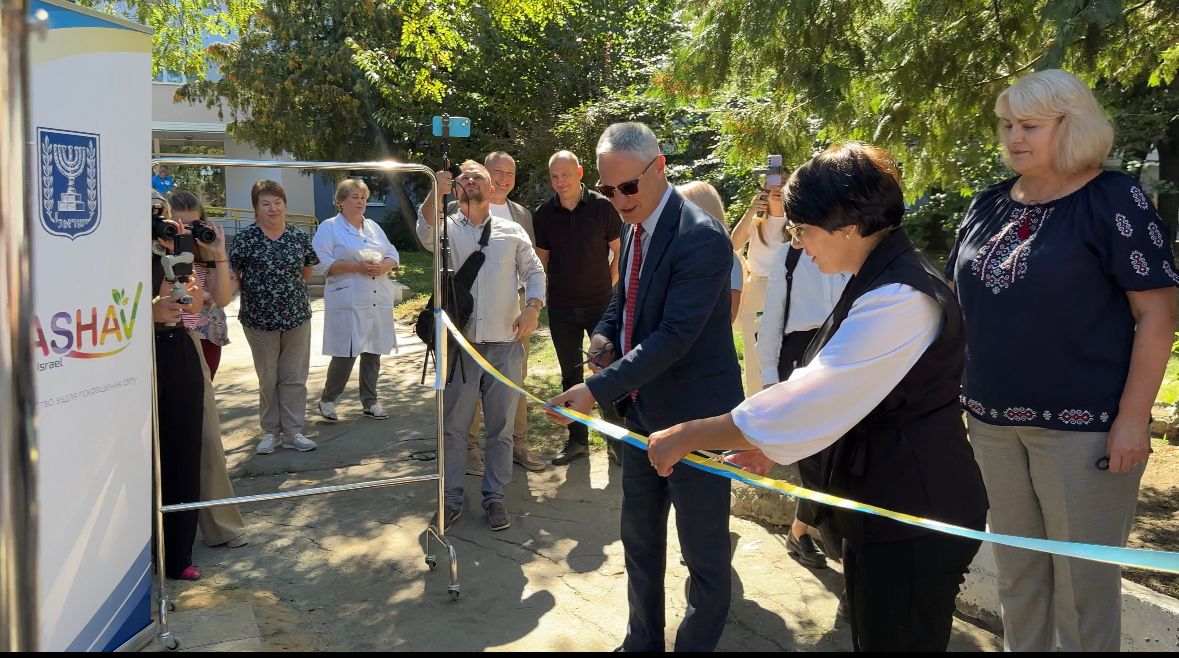
“Israel continues to provide assistance to Ukraine. Following a decision by Israeli Foreign Minister Gideon Saar, several water purification systems will be delivered to Ukraine in the near future. Today, such a system began operating in Uman. Thanks to this, patients at the local hospital and residents of nearby homes will be able to receive high-quality drinking water without interruption,” said Michael Brodsky.
Diplomatic relations between Ukraine and Israel were established on December 26, 1991. The Ukrainian Embassy in Tel Aviv was opened in April 1992. The Israeli Embassy in Kyiv began operating in September 1992.
AMBASSADOR, HOSPITAL, ISRAEL, UMAN, water purification system
The Supervisory Board of IC “Euroins Ukraine” on September 1, 2025 decided to terminate the activities of fifteen separate structural subdivisions, which have not been operating for a long time, the company reported in the information disclosure system of the National Commission on Securities and Stock Market (NCSSM).
In particular, we are talking about the sales center in Krasnoye settlement of Lviv regional directorate, a branch in Kharkiv, sales center in Kamenske of Dnipro regional directorate, sales centers № 4 and № 7 of Zaporizhzhya directorate, sales center in Skadovsk of Kherson regional directorate, a branch in Yuzhnoukrainsk of Mykolayiv region, Kherson regional directorate, sales center in Valki of Kharkiv regional directorate, sales center in Uman of Cherkassy regional directorate.
IC “Euroins Ukraine” is a universal non-life insurer, operating in the Ukrainian market since 1992. The company has 75 representative offices all over the country, has a license for insurance in 16 classes. It actively works in the segments of auto insurance, medical insurance, property, liability and cargo insurance for private and corporate clients.
IC “Euroins Ukraine” is a member of the Motor (Transport) Insurance Bureau of Ukraine, League of Insurance Organizations of Ukraine (LIOU) and EBA (European Business Association).
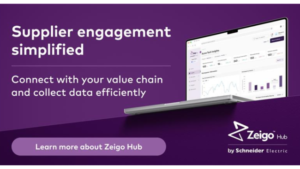
Schneider Electric launches Zeigo™ Hub, a scalable platform to accelerate the decarbonization of supply chains and achieve global net-zero ambitions
Schneider Electric, a global leader in digital transformation of energy management and automation, today announced the launch of Zeigo™ Hub by Schneider Electric, a powerful new digital platform designed to help organizations decarbonize their supply chains at scale. This innovative solution marks a significant step forward, enabling companies to achieve their Scope 3 emissions targets and move confidently and clearly toward net-zero emissions.
Global supply chains are increasingly under pressure from customers and regulators to report, disclose, and take action to reduce their emissions.
Zeigo Hub addresses this growing need for progress and transparency by offering a modular, action-oriented approach to sustainability. The platform enables organizations to engage suppliers of all sizes, track emissions across multiple tiers of suppliers, and achieve measurable results through training, tools, and expert support.
“A decarbonized supply chain is no longer just a ‘nice-to-have’—it’s a strategic necessity,” said Laura Eve, Vice President of SaaS Sustainability Solutions at Schneider Electric. “With Zeigo Hub, we are providing companies with the tools and analytics to help transform their supply chains into engines of sustainability.”
A new era of supplier engagement and innovation
Zeigo Hub is designed to engage suppliers at all stages of their sustainability journey, regardless of their size, maturity, or experience. The platform removes traditional barriers to participation with phased onboarding, a user-friendly interface, and built-in learning tools that allow suppliers to immediately begin calculating and managing their emissions.
Unlike static data collection tools, Zeigo Hub encourages two-way collaboration through personalized learning paths, decarbonization toolkits, and comparative analytics dashboards. This creates a dynamic and accessible environment where suppliers can make informed, measurable decisions and initiators (customers) can scale positive impact across their entire supply chain.
The platform’s powerful analytics engine provides real-time visualization of supplier engagement, emissions dynamics, and progress toward science-based targets.
The data is structured to support CDP, CSRD, and TCFD reporting, as well as internal sustainability reporting, ensuring transparency and compliance with global standards.
Each supplier invited to Zeigo Hub gets access to individual decarbonization roadmaps and verified solution providers, enabling real emissions reductions across the entire network. All participation costs are covered by the initiating company, removing financial barriers for suppliers and ensuring broad, inclusive engagement. As part of Schneider Electric, Zeigo Hub is an integral part of a global ecosystem of sustainability experts, advisory services, and decarbonization solutions, providing companies with deep support and trust that goes beyond traditional software.
Zeigo Hub leverages advanced agentic AI capabilities to accelerate decarbonization processes, improve data-driven decision-making, and scale impact across complex value chains. It is the first product launched as part of Schneider Electric’s AI-native ecosystem, unveiled on May 15, 2025, which combines the company’s leading expertise in sustainability with innovations in artificial intelligence. Thanks to agentic AI, the platform’s functionality improves and personalizes the user experience by simplifying data entry through web scraping and upload tools, tailoring invitations to participate, and providing additional oversight of the program on behalf of corporate sponsors.
Fostering global impact through collaboration
Schneider Electric is already a recognized leader in supply chain decarbonization, both through its collaboration with leading global brands and through its own award-winning internal initiative, the Zero Carbon Project.
Since 2021, the company has launched more than 20 global supply chain decarbonization programs, including the cross-industry initiatives Energize, Catalyze, and Materialize. Today, Schneider Electric collaborates with more than 40 brands that sponsor programs with over 2,700 registered suppliers.
Zeigo Hub will serve as the technological foundation and tool for collaborative action within supply chain decarbonization programs, making large-scale climate change more accessible than ever before. By facilitating collaboration between customers and suppliers, the platform helps companies foster a culture of continuous improvement and shared responsibility. This approach not only accelerates emissions reduction, but also increases supply chain resilience and strengthens long-term business value.
“Zeigo Hub is a bold step forward in the sustainable development of supply chains,” said Iv. “It’s about turning ambition into real action — empowering every supplier, every partner, and every organization to contribute to a zero-emission future.”
Zeigo Hub is now available to organizations worldwide. To learn more about how the platform can support your supply chain decarbonization transformation, visit https://www.zeigo.com/zeigo-hub.
About Schneider Electric
Schneider’s purpose is to create impact by empowering everyone to make the most of our energy and resources, enabling progress and sustainability for all. We call this Life Is On.
Our mission is to be the trusted partner in sustainability and efficiency.
We are a global leader in industrial technology, bringing global expertise in electrification, automation, and digitalization to smart industries, reliable infrastructure, future-ready data centers, intelligent buildings, and intuitive homes. Leveraging our deep industry expertise, we provide integrated, end-to-end industrial IoT solutions powered by artificial intelligence with connected products, automation, software, and services, creating digital twins to deliver profitable growth for our customers.
Our company’s main resource is our 150,000 employees and over a million partners working in more than 100 countries around the world to ensure proximity to our customers and stakeholders. We support diversity and inclusion in everything we do, guided by our meaningful goal of a sustainable future for all.
Discover the latest insights shaping sustainability, Energy 4.0, and next-generation automation at Schneider Electric Insights.

Schneider Electric, a leader in digital transformation in energy management and automation, has announced the launch of the third chapter of its online School of Sustainability, a free training program designed to provide partners with the tools to become leaders in sustainability.
This chapter is dedicated to teaching businesses how to decarbonize and leverage the benefits of sustainability through electrification and digitalization. According to research, companies that fail to adapt to climate risks could lose up to 7% of their annual profits by 2035, underscoring the urgency of corporate climate action. The third section directly addresses this challenge by offering practical insights to help organizations remain resilient and profitable in a rapidly changing world.
The School of Sustainability, first launched to an external audience in 2023, offers interactive courses aimed at improving companies’ sustainability performance. The program consists of three parts and responds to the growing need for accessible, applied learning on key sustainability topics. Sections 1 and 2, which are already available, cover the basics of sustainability and the steps for building and implementing a decarbonization strategy.
Section 3 focuses on how companies can implement decarbonization through energy efficiency improvements, carbon footprint reduction, and leveraging the strategic advantages of sustainable development.
It presents individual roadmaps for key industries, including:
This section introduces practical tools and solutions that make sustainable transformation real and profitable for both businesses and their customers. It is a starting point for improving the efficiency of companies and turning sustainable development into a competitive advantage.
“I am proud to launch the new section of our School of Sustainable Development — it is an important step that brings everything together into a single, coherent system. As part of our ongoing support for partners and customers on their path to sustainability, this section will provide them with the tools and knowledge to implement sustainable development principles in their organizations and for their customers,” said Soroush Heradmand, Head of Partner Sustainability at Schneider Electric.
“As the world becomes increasingly digital and electrified, our partner ecosystem is uniquely positioned to address today’s energy challenges,” added Frederic Godemelle, Executive Vice President of Energy Management at Schneider Electric. “Every business, regardless of size, plays an important role in the energy transition. We strive to help them turn sustainability into a competitive advantage by combining environmental and economic benefits for success in a rapidly changing world.”
About Schneider Electric
Schneider’s goal is to create impact by empowering everyone to make the most of our energy and resources, enabling progress and sustainability for all. We call this Life Is On.
Our mission is to be a trusted partner in sustainability and efficiency.
We are a global leader in industrial technology, bringing global expertise in electrification, automation, and digitalization to smart industries, reliable infrastructure, future-ready data centers, intelligent buildings, and intuitive homes. Leveraging our deep industry expertise, we provide integrated, end-to-end industrial IoT solutions powered by artificial intelligence with connected products, automation, software, and services, creating digital twins to deliver profitable growth for our customers.
Our company’s main resource is our 150,000 employees and over a million partners working in more than 100 countries around the world to ensure proximity to our customers and stakeholders. We support diversity and inclusion in everything we do, guided by our meaningful goal of a sustainable future for all.
Discover the latest insights shaping sustainability, Energy 4.0, and next-generation automation at Schneider Electric Insights.

The corn market is gradually shifting its focus to the new harvest, last year’s grain has almost lost its liquidity, and there are practically no real deals with it, At the same time, Europe is showing steady interest in
Ukrainian products, and demand from importers remains high, according to the analytical cooperative “Pusk,” created within the framework of the All-Ukrainian Agrarian Council (VAR).
“The new corn harvest is valued on the market in a wide range of $197-203 per ton. Some traders are already offering higher prices — $205-206 on a CPT-port basis with deliveries in October-November. Demand from importers is active, particularly from Spain, Portugal, and the Netherlands, with deliveries in November-December. The EU is facing serious yield problems. In France, the first threshing showed only 3-4 tons/ha. Other corn producers — Romania, Hungary, and Poland — are facing similar difficulties, forcing the EU to increase imports from the projected 18-19 million tons to 22-23 million tons, and Ukraine looks to be a key supplier here,” analysts noted.
According to their information, Ukrainian exporters have already sold about 4 million tons of the new harvest to importers with deliveries in November-December. However, there may be a shortage on the market due to weather conditions, which will further stimulate the growth of purchase prices.
“Traders may have to raise prices, but no significant growth is expected. One of the determining factors will be the progress of the harvesting campaign. Due to the delay in vegetation, the first significant batches of corn from the center and north will arrive only in the second half of October. We can predict indicative prices of $220 CPT port in October. However, during this period, American corn will actively enter the market. Its volume will significantly exceed demand, which will put serious pressure on prices in October-December. Therefore, in November-January, the market is likely to stabilize at $220-230 CPT port per ton, which is in line with seasonal patterns,” Pusk concluded.



