

In March 2026, Ukraine exported 12,430 metric tons of dairy products worth $35.38 million, which is 25.1% more in volume than in February and 44% more in revenue, according to the Association of Milk Producers (AMP), citing data from the State Statistics Service.
As noted by the industry association, exports by volume increased by only 1% compared to March 2025, while revenue decreased by 7%.
In total, in the first quarter of 2026, the country exported 30,560 tons of dairy products (-2%) worth $81.46 million (-9%) to foreign markets. In March, the key products were condensed milk and cream (25% of exports), cheese (17%), butter (15%), and casein (15%).
ABM analysts attribute the increase in shipments in March to the war in the Middle East and the logistical collapse in Iran, which had been a major competitor to Ukraine in the markets of Iraq, the Persian Gulf countries, and Central Asia. Due to disruptions in Iranian exports, buyers began returning to Ukrainian suppliers, whose product prices are currently nearly identical.
In March 2026, compared to February, Ukraine increased exports of condensed milk to 3,600 tons (+20%), whey to 1,710 tons (+24%), cheese to 1,320 tons (+14%), and ice cream to 1,370 tons (+96%). However, shipments of non-condensed milk fell to 2,010 tons (-10%). Revenue from condensed milk rose to $8.92 million, and from cheese to $6.15 million.
“Increased supply of raw materials and weak domestic demand are forcing processors to expand more actively into foreign markets. Despite quotas, the EU’s share of export revenue reached 36%. In particular, Germany has become a strategic market for casein and fresh cheeses under private label, while Poland, in addition to importing into Ukraine, is actively purchasing our butter and dry whey,” the association noted.
Against the backdrop of rising exports, imports are intensifying pressure on the domestic market. In January–March, Ukraine imported 16,950 tons of dairy products (+10%) worth $83.18 million, with cheese accounting for 63%. Experts warned that the surplus of European cheeses being redirected from China poses a threat to domestic cheese producers and could lead to a drop in milk purchase prices in Ukraine.
The foreign trade balance in the first quarter of 2026 remained negative at -$1.72 million.
To stabilize the situation, the industry association is insisting on the introduction of state protective measures against uncontrolled imports from the EU.

Initial registrations of new and used buses (including minibuses) in Ukraine in March 2026 rose by 21% compared to the same month in 2025—to 247 units, according to a report by Ukravtoprom on its Telegram channel.
Compared to February of this year, demand for buses increased by 44.4%.
At the same time, new vehicles accounted for 52% of this volume, compared to 34% last year.
In March, no Ukrainian manufacturer made it into the top three among new buses; the most frequently registered buses were Isuzu (29 units), Ford (23 units), and Citroën (15 units).
Among used buses, the most frequently registered were Mercedes-Benz (57 units), Volkswagen (10 units), and Van Hool (9 units).
In total, 647 buses were added to Ukraine’s bus fleet in the first quarter of this year (+6% compared to the same period in 2025). Of these, 319 were new (+10%) and 328 were used (+2.5%).
As reported with reference to data from “Ukravtoprom,” Ukraine’s bus fleet was expanded by 2,700 buses in 2025—21% more than in 2024—including 1,343 new buses (+4%) and 1,364 imported used buses (+44%).
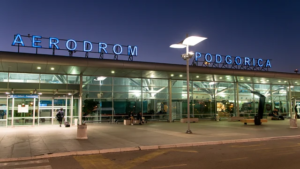
The Montenegrin government has approved a draft decision to grant a 30-year concession for Podgorica and Tivat airports to the highest-ranked bidder – the South Korean Incheon International Airport Corporation / Incheon Airport Consortium – according to the Telegram channel Serbian Economist. However, the final decision has not yet been taken: it must be approved by the Montenegrin Parliament.
Parliamentary approval is required because the value of Aerodromi Crne Gore’s assets is estimated at approximately EUR265 million, and in Montenegro, decisions regarding state property of such value fall within the remit of the legislature. Transport Minister Filip Radulović has separately emphasised that this is not a matter of sale or privatisation, but rather a management model under which the land, existing infrastructure and all newly constructed facilities remain the property of the state upon the expiry of the concession.
The financial model presented by the government amounts to a total of around EUR1 billion, but there is an important caveat here. This is not just direct budgetary revenue, but the cumulative financial effect of the deal: EUR100 million as a one-off payment upon signing the contract, around EUR600 million in variable concession fees amounting to 35% of the airports’ annual gross revenue over 30 years, and a further EUR300 million in mandatory investments in the modernisation and expansion of infrastructure.
According to the published parameters, by the end of 2029 the concessionaire must invest EUR132 million, including EUR54 million in Podgorica Airport and EUR78 million in Tivat Airport. The overall investment programme provides for the construction of new terminals, the modernisation of existing facilities, the expansion of the total area of airport infrastructure to approximately 40,000 square metres, and an increase in passenger throughput.

Ukraine’s construction market is showing mixed trends at the start of 2026: infrastructure and engineering construction remains the main driver, while the residential and part of the commercial segments continue to face pressure from rising costs, limited effective demand, and military risks. However, complete official statistics for January–March 2026 have not yet been published: according to the statistical agencies’ calendar, construction data for January–March is expected to be released in late April, so the current picture as of April 10 is based primarily on January–February results and related first-quarter indicators.
After a 12% increase in the volume of completed construction work in 2025—to UAH 248.1 billion—the market entered 2026 with a higher base, but growth rates began to level off as early as the first few months. In January, the volume of construction work grew by 3.3% year-over-year to UAH 11.254 billion, while building construction declined by 6.5%—including residential construction by 12% and non-residential construction by 4%—while civil engineering added 15.5%. Based on the results for January–February, the market already showed a 1.8% year-over-year decline to UAH 23.04 billion: the residential segment fell by 11.5%, the non-residential segment by 9.5%, while civil engineering structures, conversely, grew by 8.5%.
Rising construction costs remain a separate factor putting pressure on the market. According to the State Statistics Service, in February 2026, prices for construction and installation work rose by 7.2% compared to February of last year, and by 6.5% for the January-February period. In residential construction, price growth over two months was 6.1%, in non-residential construction—6.9%, and in civil engineering—6.4%. This means that even if certain growth areas remain stable, the profit margins of developers and contractors remain under pressure, especially in projects where sales prices or budget limits cannot keep pace with rising construction costs.
The residential segment, meanwhile, continues to present a mixed picture. On the one hand, the National Bank noted in its January inflation report that in the fourth quarter of 2025, the number of projects where construction began rose by 19% year-over-year, including a 77% increase in residential projects, and the number of buildings commissioned increased by 21%, including residential housing—by 40%. On the other hand, the NBU noted in its December Financial Stability Review that sales in unfinished projects remain sluggish, especially in the early stages of construction and in less secure regions, and housing prices in most regions are changing only slightly, indicating subdued demand.
Preferential mortgages remain a key support mechanism for the primary market. As of early April 2026, banks had issued 2,152 loans totaling 4.19 billion UAH under the “eOselya” program since the start of the year, and a total of 24,765 families have purchased housing since the program’s inception, for a total of 43.1 billion UAH. At the same time, in just one of the latest weekly reports, 101 out of 158 loans were for “first-sale” housing, including 48 loans for apartments in buildings under construction. This confirms that part of the demand for new housing in 2026 continues to be driven by state-subsidized mortgages.
According to Maksim Urakin, founder of the information and analytical center Experts Club, in January–March 2026, the Ukrainian construction market entered a phase of more complex but more mature growth. “It is no longer possible to speak of a single construction boom. Ukraine is effectively operating in three parallel markets: the first is reconstruction and engineering infrastructure, where demand remains stable; the second is the locally active residential segment in relatively safe regions; the third consists of frozen or very slow-moving projects in high-risk zones. The main trend at the start of 2026 is not simply volume growth, but a redistribution of capital toward infrastructure, logistics, industrial, and social real estate,” Urakin believes.
In his assessment, the market will depend on three factors in the coming months: continued funding for reconstruction, the sustainability of the “eOselya” program, and companies’ ability to maintain construction costs. “If state and international reconstruction programs maintain their pace, and mortgage instruments continue to support primary demand, the construction sector will be able to remain in positive territory in 2026. But without an expansion of long-term financing and a reduction in military risks, the housing market will grow in isolated pockets rather than across the board,” noted the founder of Experts Club.
Overall, the start of 2026 shows that Ukraine’s construction market remains vibrant and adaptable, though its growth is becoming increasingly segmented. Infrastructure, logistics, and restoration projects are performing the most steadily, while mass residential construction still depends on security, affordable mortgages, and developers’ ability to finance projects amid rising costs.
CONSTRUCTION MARKET, EXPERTS CLUB, HOUSING, INFRASTRUCTURE, URAKIN

According to Fixygen, the shareholders of Boryspil Building Materials Plant plan to hold a general shareholders’ meeting on April 30. The company operates in the building materials sector and specializes in the production of concrete products for construction. On its corporate website, the company also lists concrete and mortar, reinforced concrete products, floor slabs, piles, lintels, and other building structures among its main areas of focus.
Boryspil Building Materials Plant PJSC is registered in Boryspil, Kyiv Oblast. According to public records, the company was founded on January 26, 1995; its authorized capital is UAH 217,100, and its director is Igor Shalimov. Its primary business activity is the production of concrete products for construction.
According to beneficiary data, Vladimir Shalimov holds a 63% stake and Igor Shalimov holds a 35% stake, giving them direct controlling influence in the company.
According to Opendatabot, the company’s revenue in 2025 was 463.58 million UAH, net profit was 15.57 million UAH, and assets at year-end were 188.0 million UAH. In 2024, the company’s revenue was 553.21 million UAH, and net profit was 9.27 million UAH.

At a meeting in early April 2026, the shareholders of Forte Life Insurance Company (Kyiv) decided to allocate 14 million UAH for dividend payments.
As the company reported in the NSSMC’s disclosure system, the dividend per ordinary registered share will amount to 583.33 UAH. The dividend payment period is from April 21 to May 31, 2026.
According to NSSMC data, Oksana Kuleshina owns 99.8% of the insurer’s shares.
Forte Life Insurance Company (formerly Insurance Union of Life) was registered in 2005 and specializes in providing life insurance services.
According to the NBU, Forte Life collected insurance premiums totaling UAH 83.179 million in 2025 and paid out UAH 18.9 million in claims.



