
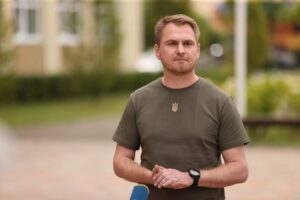
Prosecutor General Ruslan Kravchenko said that he does not support public discussion of family circumstances, but considers it necessary to respond when private stories are used as a tool for political manipulation. He said this in a comment to the Judicial and Legal Newspaper, explaining the information about possible Russian passports held by relatives and the issue of state secrets among members of his team.
According to Kravchenko, his parents divorced in 2020, since then his mother and sister have been living in Kyiv, and he last communicated with his father in 2022. He does not know whether his father received a Russian passport, as they are not in contact. The Prosecutor General emphasized that he is not responsible for the decisions of his relatives, either as a son or as an official.
He commented separately on the information about his deputies, noting that in wartime, society is particularly sensitive to any ties with the aggressor state, but the principle of personal responsibility remains, and the law cannot be replaced by public accusations.
In particular, regarding First Deputy Maria Vdovichenko, Kravchenko said that her autobiographies contained information about close relatives, including those living in temporarily occupied territories and in the Russian Federation. He also noted that this information was disclosed during the certification interviews, and before the appointment, a request was sent to the Security Service of Ukraine, which found no grounds for prohibiting the appointment.
Regarding Deputy Maksym Krym, Kravchenko explained that his wife lived in Crimea until 2015 and, according to him, could have been a victim of mass forced passportization after the occupation of the peninsula. The Prosecutor General emphasized that Ukraine does not recognize documents imposed by the occupying authorities, and no conflict of interest or influence of these circumstances on the official’s professional activities has been established.
Regarding Deputy Viktor Logachov, Kravchenko said that his family comes from Luhansk and lost a significant part of its assets in the temporarily occupied territory after 2014, and has been living in Kyiv since 2014. He added that there is no evidence of visits to the temporarily occupied territory or control over enterprises, and that raiding and re-registration in absentia are, in his words, typical practices of the occupation administrations.
Kravchenko also noted that Maria Vdovichenko, Maxim Krym, and Viktor Logachov have valid access to state secrets, granted after checks by the Security Service of Ukraine.
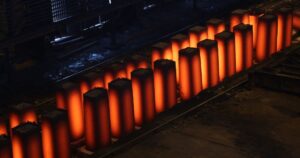
In 2025, the Kryvyi Rih Iron and Steel Works PJSC ArcelorMittal Kryvyi Rih (AMKR, Dnipropetrovsk region) was quite successful in selling metal products on the EU market, but now, due to CBAM and electricity shortages, it is reducing production and operating at a loss.
As AMKR Director of Government Relations Oleg Krykavsky noted during the event “How does the shelling of the power grid affect business operations?” organized by the Center for Economic Strategy (CES), the fact that the company is part of a large multinational corporation helps it to operate and stay afloat.
“We were helped by the fact that we received more than $1 billion in aid from a multinational corporation, which was used to keep the company running. Currently, the company is operating at an average of 50% of its capacity. We were quite successful in the EU market last year, partly thanks to the government’s actions, as a good agreement was reached with the European Union to extend duty-free trade for another three years. In 2025, we exported 1.2 million tons of metal products to the European market, down from 3 million tons. But because of the CETA, our costs are rising, which means we will have to close one workshop – the blooming shop,” said the top manager.
He added that AMKR is at a disadvantage compared to European producers under CETA, as it will have to pay $63-90/ton, depending on the type of product. Also, electricity tariffs are high, and electricity import contracts are very short.
“We had several cases where we did not meet the electricity consumption volumes, and our trader sold it on the market for UAH 0. Not only did we not receive what we bought, but we were also forced to reduce production, which resulted in direct losses. And, of course, we are in dialogue with the government on this issue,” the company explained.
Responding to a question about equipment arrivals, Krykavsky noted that the equipment works during alarms. But there are losses due to emergency situations, and they are painful. Under normal conditions, the enterprise consumes 400 MW*h, but due to restrictions, we now consume 230-250 MW*h, and there are limits of 70 MW*h.
“That is, the rest is peak hours, and you have to think about what to do with that. Usually, you think about importing, because you have to work somehow. Plus, you can’t fire people for five to seven hours without paying them. People get paid at work, so you have to work,” said the AMKR representative.
He added that there was a case at the enterprise when a coke battery was damaged due to a power outage caused by a network failure.
“We are investigating who is to blame for this. But one coke battery burned down. A coke battery is, in essence, a chemical process, which means it cannot be stopped. We have installed industrial generators for such cases, but even they need 16 hours or more to start up,” the manager explained.
With half of its capacity in operation, the company is trying to cover some capacities with others, while repairing something that is idle so that it can be started up at some point.
“We are thinking about our own generation, about cogeneration. There are limited resources and limited potential. It is very expensive. But we are working on it in parallel; we have our own CHP plants and technologies today that allow us to do this. But we are a large enterprise and require large capacities,” summarized the AMKR director for relations with state authorities.
ArcelorMittal Kryvyi Rih is the largest producer of rolled steel in Ukraine. It specializes in the production of long products, in particular, rebar and wire rod. The company has a full production cycle, with production capacities designed for an annual output of over 6 million tons of steel, more than 5 million tons of rolled products, and over 5.5 million tons of pig iron.
ArcelorMittal owns Ukraine’s largest mining and metallurgical complex, ArcelorMittal Kryvyi Rih, and a number of small companies, including ArcelorMittal Beryslav.

Nova Poshta, the leader in express delivery in Ukraine and part of the NOVA group, has entered into a partnership with UPS Store, the leader in the logistics market, to deliver documents or parcels weighing up to 30 kg from the US to Ukraine through more than 6,000 partner locations, the company said in a statement on Wednesday.
“We have taken the next step in developing our presence in the US market by launching deliveries to Ukraine in partnership with UPS,” said Vyacheslav Klimov, co-owner of the NOVA group of companies (Nova Poshta), in a press release.
He noted that Nova Poshta plans to speed up delivery times from the current 7+ days to 5+ days, expand the list of services to include scaled address delivery, and open franchise branches in major cities across the country.
It is noted that the cost of delivery from the US to Ukraine is expected to be $25 for documents and parcels up to 1 kg, $30 for parcels up to 2 kg, $50 for parcels up to 5 kg, $80 for parcels up to 10 kg, $150 for parcels up to 20 kg, and $200 for parcels up to 30 kg.
Insurance is included in the cost for parcels up to $150, while for shipments over $150, a minimum commission of 0.5% is provided. In case of force majeure, the company will refund the sender the estimated value of the shipment in full, according to the statement.
In 2025, Nova Poshta increased its revenue by 21% compared to 2024. The number of parcels and cargo delivered in 2025 increased by 7.4% – from 486 million to 522 million, including international shipments – by 52.6%, from 19 million to 29 million.
The main activity of Nova Poshta is the express delivery of documents, parcels, and palletized large-sized cargo. Its ultimate beneficial owners are Volodymyr Poperechnyuk and Vyacheslav Klimov.
As of early January 2026, the company’s network had more than 50,000 service points, including 15,900 branches and 34,200 post offices.
NOVA, NOVA POSHTA, UPS, UPS Store, USA

According to a study by Poster Pos, there is a steady trend of growing popularity of filter coffee in Ukraine against the backdrop of a gradual decline in demand for Americano.
According to the study, filter coffee sales have increased by 35% over four years. At the same time, after initial growth, the Americano segment is showing a decline: by 0.6% in 2024 and by 3.6% in 2025.
According to Poster, in 2025, the average cost of a cup of filter coffee was UAH 67, which is 62% more expensive than Americano (UAH 42). Despite the significant price difference, consumers are increasingly choosing filter coffee because they perceive it as a higher quality product.
“Customers are willing to pay more for filter coffee because they perceive it as a higher quality product with a better taste experience: different beans, a different brewing method, and a more intense flavor. It’s not just coffee, it’s a different experience in a cup,” said Vitaliy Kononikin, founder of the Seaters coffee shop chain, as quoted in the report.
Felix Bezruk, co-owner of Funt Coffee roasting, noted that filter coffee is transitioning from a niche product to an everyday format. Along with its taste qualities, the popularity of the drink is influenced by the speed of its delivery in establishments and the preferences of a new generation of consumers, for whom filter coffee is the basic black coffee.
The total consumption of Americano still significantly exceeds that of filter coffee: in 2025, 10.5 million cups were sold compared to 1.3 million. However, the ratio between the drinks has decreased from 11:1 in 2021 to 8:1 in 2025.
As part of the study, Poster Pos analyzed the aggregate sales of 650 coffee shops for the period 2021-2025, which sold both Americano and machine-brewed filter coffee.
Poster Pos is a Ukrainian restaurant automation company that develops accounting software for the HoReCa system, which is installed on tablets.
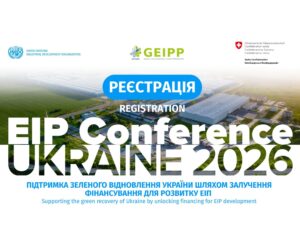
On February 27, a key event of the year for the industrial sector will take place – the annual Conference of Eco-Industrial Parks (EIP) of Ukraine.
The conference will be held as part of the GEIPP-II Ukraine project, which is being implemented by UNIDO with the support of the Swiss Government through SECO in partnership with the Ministry of Economy, Environment, and Agriculture of Ukraine.
The main theme of the conference is how to attract capital for the development of EIPs and make them the foundation of the post-war economy.
The event will also discuss the following issues:
– Raising funds for modernization: financial instruments and investment potential.
– ESG standards as a passport to EU markets.
– Economy and efficiency: real cases of park residents.
– State support and political incentives.
Date: February 27, 2026
Time: 08:30–19:30
Location: Kyiv (the exact location will be announced after registration confirmation)
Registration is open until February 24, 2026 (until 12:00): https://forms.gle/imbeRyNrRWYGkQsV8
Media accreditation: https://forms.gle/UncwuV222ZgGKYhNA
Interfax-Ukraine – information partner

According to Serbian Economist, the energy partnership between Belgrade and Baku is rapidly moving beyond symbolic diversification and beginning to transform into a separate supply chain capable of significantly influencing the balance of the Serbian gas market. Azerbaijan’s Deputy Minister of Energy Orkhan Zeynalov said that by the end of 2026 – early 2027, Azerbaijan could cover up to 20% of Serbia’s gas needs, which, according to him, directly strengthens energy security by reducing dependence on a single source.
The context is simple: Serbia has remained predominantly dependent on gas imports in recent years, and the issue of diversification has become part of a broader agenda, ranging from heating and electricity prices to negotiations with the EU on energy integration. Reuters previously estimated that Serbia receives about 80% of its gas from Russia, with alternative volumes currently serving as insurance and a bargaining chip.
The legal framework for the Azerbaijani route has already been established. The contract between SOCAR and Srbijagas, signed in November 2023, provides for the supply of up to 400 million cubic meters per year in 2024-2026, with the possibility of increasing volumes after 2027. At the same time, official statements by the governments of Serbia and Azerbaijan have recorded separate seasonal agreements for additional volumes during the winter period.
Actual deliveries from Azerbaijan began in 2024, but so far have remained small compared to the overall market. According to data cited by Azerbaijan’s State Statistics Committee, Serbia received about 72.6 million cubic meters of Azerbaijani gas between February and December 2024. For comparison, according to estimates by Azerbaijani and regional sources, in January-November 2025, supplies had already grown to 192 million cubic meters.
Why is Belgrade taking this more seriously than “just another contract”? Because gas is beginning to be linked to industrial projects. In mid-February 2026, the leaders of Serbia and Azerbaijan confirmed plans to build a 500 MW gas-fired power plant, which is seen as a joint project with an estimated commissioning date of 2029. Industry media estimate the investment at around €600 million. Such a plant is capable of creating stable demand for fuel and, accordingly, pushing forward discussions on long-term supply terms — which is why Baku’s statements separately mention the topic of gas prices for future generation.
The stated target of 15-20% seems realistic precisely as a “market share” rather than the maximum technical capacity of the route. Even with Serbia’s moderate consumption, this means the need to reach several hundred million cubic meters per year on a sustainable basis and to secure a commercial supply formula after 2026. At the same time, Baku is making it clear that it sees Serbia as a potential energy hub for the Western Balkans and is looking for additional areas of cooperation, including projects in the field of green energy and hydrogen.



