Agroholding Agrotrade exported over 333,000 tons of grains and oilseeds in 2025, according to the company’s press service on Facebook.
According to the report, 187,000 tons were produced in-house, while another 146,000 tons were supplied by third-party producers. The main export destinations remained Turkey, Egypt, Italy, and other countries in the Mediterranean region.
“The 2025 season has once again confirmed that flexibility and reputation are crucial in conditions of increased risk. Despite the difficult security situation, logistical constraints, and downtime, the Agrotrade Group’s export program was carried out without disruption throughout the year. Even when infrastructure comes to a standstill and risks for shipowners increase, our task is to fulfill our commitments. This is what allows us to maintain the trust of our international partners and continue our work,” said Andriy But, director of the agroholding’s foreign economic activity department.
Corn and wheat accounted for the bulk of exports. At the same time, there was a decline in soybean exports due to changes in the regulatory environment and the reorientation of part of the market toward domestic processing.
The agricultural holding also predicts that low export rates from Ukraine in the current season may lead to the formation of significant transitional stocks, which will affect the prices of the future harvest.
The Agrotrade Group of Companies is a vertically integrated holding company covering the entire agro-industrial cycle (production, processing, storage, and trade in agricultural products). It cultivates over 70,000 hectares of land. Its core crops are sunflower, corn, winter wheat, soybeans, and rapeseed. It has its own network of elevators with a one-time storage capacity of 570,000 tons.
The group also produces hybrid seeds of corn, sunflower, barley, and winter wheat. In 2014, a seed plant with a capacity of 20,000 tons of seeds per year was built on the basis of the Kolos seed farm (Kharkiv region).
The founder of Agrotrade is Vsevolod Kozhemyako.

Demand for “ready-to-eat” products in the Metro Cash & Carry chain of shopping centers has grown due to a shortage of staff among professional customers and limited time for food preparation among end consumers due to power outages, according to the chain’s CEO Olena Vdovychenko.
“For professional customers, the growth in demand for ready-made products is due to the fact that they have a severe shortage of staff, as many young people left after 18-24-year-olds were allowed to leave the country. Support for small and medium-sized businesses is very important because HoReCa (Hotel-Restaurant-Cafe/Catering – IF-U) is very difficult to work with,“ she said during ”EBA Global outlook: Success in Adversity,” organized by the European Business Association (EBA) in Kyiv on Tuesday.
According to her, for the end consumer, the choice in favor of semi-finished products is due to the reduction in time between power outages. At the same time, the “ultra-fresh” category (meat, fish, vegetables, fruit) grew by 20% in hryvnia terms compared to last year (12% in quantitative terms).
“Consumer sentiment has certainly changed over the past four years. Demand is quite restrained, limited to essential goods. Non-food products have declined significantly, and household chemicals are purchased at promotional prices in 80% of cases,” Vdovichenko noted.
She added that the chain is also seeing growth in demand for “psychological anchors”: salty and sweet snacks added 12% in hryvnia, coffee, despite rising prices, added 30%, and liqueurs added 40%.
The company currently works with three groups of customers: the hotel and restaurant business (22% growth), end consumers (19%), and traders (kiosks and small retail stores). According to Vdovichenko, the growth of the latter is insignificant due to the general contraction of the market in connection with the loss of territory and the expansion of large retailers.
As for the situation with electricity at Metro Cash & Carry itself, in order to ensure autonomy, eight shopping centers have established imported power supplies and are installing solar panels. The chain uses artificial intelligence as an auxiliary tool for pattern recognition and has introduced “fastline” scanners for customers to pay for their purchases independently in the app, which also helps to avoid queues and cope with staff shortages.
At the end of 2025, Metro Cash & Carry’s growth was 18% in monetary terms (UAH). For 2026, the company forecasts a figure of 20%, noting that the results for January and February of this year are in line with the plan.

In January of this year, ferrous metal scrap trading companies reduced their procurement of ferrous metal scrap by 18.5% to 97,100 tons from 149,000 tons.
According to data from the Ukrainian Association of Secondary Metals (UAVtormet), scrap collectors reduced their supplies of scrap to Ukrainian metallurgical plants by 26.7% compared to the same period last year, to 92.5 thousand tons from 126.2 thousand tons. At the same time, steel production during the same period decreased by 16.4% to 511 thousand tons from 611 thousand tons.
According to UAVtormet estimates, in the first month of the scrap export ban, more than 20-25% of companies in the industry partially suspended their operations, and another 12-15% completely stopped their activities. Experts predict that by April-May of this year, about 4-4.5 thousand workers in the scrap collection industry will lose their jobs.
As reported, according to data from the State Customs Service, Ukrainian scrap collection companies increased their exports of ferrous metal scrap by 45.3% in 2025 compared to the previous year, to 448,700 tons, and in monetary terms by 44.5%, to $131.9 million. In 2024, exports of these products increased by 60.7% in physical terms and by 73.2% in monetary terms.
Due to such a sharp increase in exports, the Cabinet of Ministers introduced a zero quota for exports of these products for 2026, whereas previously there was an export duty of EUR 180/ton, which, at the same time, was not paid when exporting to the EU, with which Ukraine has a free trade zone.
According to customs data, in January this year, Ukraine reduced exports of ferrous metal scrap by 40.7% compared to January last year, to 9.3 thousand tons, and compared to the December 2025 figure of 68.5 thousand tons, the decline was sevenfold. In monetary terms, scrap exports in January decreased by 38% compared to January 2025, to $2.73 million.
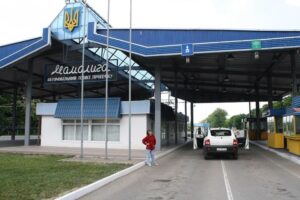
The State Border Service has announced that traffic will be restricted from 5:00 a.m. on February 18 at border crossing points located on the border with Moldova due to difficult weather conditions.
“Attention international carriers! Traffic through border crossing points located on the border with Moldova will be restricted,” the State Border Service said in a statement on its Telegram channel on Tuesday.
It is reported that the temporary restriction will be imposed on the M-15 Odessa-Reni (to Bucharest) public highway, km 11+920 – km 308+000, from 5:00 a.m. on February 18, 2026. The restriction applies to trucks and passenger vehicles (buses, minibuses).
The reason for the traffic restrictions is difficult weather conditions, which create an increased danger for all road users, as well as to ensure the timely elimination of the consequences of bad weather and prevent accidents.
In this regard, traffic to and from the checkpoints “Palanka-Mayaki-Udobnoe,” “Starokozachye,” “Serpnevoe,” “Maloyaroslavets,” “Lesnoye,” “Reni,” “Dolinskoe,” “Orlovka,” “Vinogradovka,” “Tabaki,” “Novye Trojany” for the specified category of vehicles will be suspended. This has been communicated to our Moldovan colleagues.

KAZGELATIN LLP intends to build a plant in Almaty region to produce gelatin with capacity of 10 thousand tons per year, the press service of the Ministry of Agriculture of Kazakhstan reported.
“The project provides for the construction of a plant in Alma-Ata region to produce food gelatin and products of deep processing of animal by-products – hides, bones and other collagen-containing raw materials,” – said in the message following the meeting of Deputy Minister of Agriculture Ermek Kenzhekhanuly with representatives of the company.
In addition to the main products, the plant will produce collagen components, fodder proteins and technical fats. Total investment in the project is estimated at 58 billion tenge ($117.9 million at current exchange rates).
“Currently, the domestic market’s needs for food gelatin are fully covered by imports, despite the availability of a sufficient raw material base in the country. Kazakhstan has significant volumes of animal by-products, which, if properly processed, can become a source of high value-added products. The launch of production will reduce import dependence, increase the level of processing of agricultural raw materials and strengthen food security,” the ministry said.
Special attention was paid to the creation of a network of procurement organizations in the regions to accept hides and bones of farm animals.
As reported, in January “daughter” of Turkish Iskefe Holding began to build a plant in Almaty for the production of food gelatin with a capacity of 7 thousand tons per year. The products of this enterprise will be used in food, pharmaceutical and cosmetic industries.
According to the Ministry of Agriculture of Kazakhstan, in the sphere of processing of leather raw materials there are 11 enterprises in the country, capable to process annually 3.3 million hides of cattle and 3.1 million hides of small horned cattle. However, the actual level of processing remains low: in 2024, only 5.9% of raw materials were sent for processing, 7.7% were exported, and 86.4% remained unclaimed.
Within the framework of a comprehensive plan for the development of processing of agricultural products for 2024-2028, it is envisaged to create more than 70 collection points for wool and about 200 collection points for hides to form a stable raw material base for processing enterprises, the department said.