

In Cyprus from January 1, 2026, changes affecting the processing of real estate transactions and taxation on the sale of assets came into force, according to the explanations to the reform.
The key simplification for new transactions is the complete abolition of stamp duty (Stamp Duty) for sale and purchase agreements signed from January 1, 2026. Previously the levy was calculated on the value of the transaction and required separate procedures, it is now zero-rated for new contracts.
Lifetime capital gains tax deductions (CGT) have also been revised, which may reduce the taxable base for real estate sales by individuals. In particular, the limits of the personal deduction, the exemption for agricultural land and the deduction for a principal residence (subject to fulfillment of conditions and proof of documentation) have been increased. These parameters apply to contracts entered into starting in 2026.
A separate block of the reform relates to transactions involving shares in real estate companies. The threshold at which the sale of shares/shares qualifies as a real estate transaction for CGT purposes has been lowered – this increases the tax due diligence requirements for purchases of corporate shells with properties on the balance sheet.
In addition, exemptions for real estate exchange and barter schemes in development (e.g., when land is transferred to a developer in exchange for finished objects) have been extended, and control over compliance with tax procedures has been strengthened: if the parties are in arrears, transfer of ownership rights may be blocked, and Tax Clearance checks have become tougher.
According to the Department of Land and Cadastre of Cyprus (DLS), in 2025, foreign buyers (excluding Cypriot citizens) registered 7,255 sale contracts (sale contracts), of which 4,809 – buyers from outside the EU; the number of transferred objects (transfers/sales) amounted to 4,195 (2,234 – buyers outside the EU).
The top nationalities that most often appear in the “top ten” are: Russians, British, Israelis, Greeks, Romanians, Chinese, Ukrainians, Germans, Americans and Lebanese (Australians and Bulgarians are also found in Nicosia).
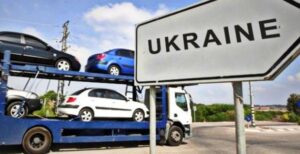
Overall, car imports grew by 17%
According to the Ministry of Internal Affairs, almost half a million cars were imported into Ukraine from abroad in 2025. This is 17% more than in 2024, but still a third less than before the start of the full-scale war. The average age of imported cars is 9 years. One in five imported vehicles was registered in Kyiv. And one in four cars that crossed the border was electric, which is even more than the number of imported diesel cars. Volkswagen retains its leading position, and the Tesla Model Y will remain the most popular car model.
444,860 vehicles were imported into Ukraine last year. This is 17% more than in 2024, but still a third less than in 2021.
Ukraine remains a market for used cars: more than 70% of imports last year were used cars. The average age of imported vehicles remained unchanged over the year at 9 years. By comparison, in 2021, the average age of newly imported cars was 11 years.
Against this backdrop, there were also some real automotive rarities: from a 1967 Honda Monkey moped to a classic 1971 Chevrolet Corvette. Even the electric segment has its “veterans”: the oldest electric car, the Peugeot iOn, is already 15 years old.
On the eve of the return of taxes on the import of electric cars, such cars were in high demand — every fourth car that crossed the border last year. Electric cars even surpassed diesel cars in popularity: 109,309 electric cars versus 94,014 diesel cars. However, gasoline cars still lead the way with 195,059 vehicles.
It is worth noting that of the 504 luxury cars subject to the luxury tax, half were also electric. Volkswagen was the most sought-after car brand, while the Tesla Model Y was the most popular imported car of the year.
However, it is worth noting that Volkswagen leads in 20 regions. The exceptions were the Odesa region, where BMW unexpectedly took the lead, Chernihiv and Donetsk regions, where Renault took the lead, and the Kherson region, where the Spark motorcycle brand became the leader.
If we look exclusively at electric cars, the picture is even clearer — Tesla became the No. 1 brand in 22 regions of the country, yielding only to Volkswagen in the Zakarpattia region and to the Chinese BYD in the Sumy region.
Almost one in five imported vehicles was registered in the capital: 80,425 cars. Lviv region ranks second with 51,730 cars. The top five also includes Kyiv region (28,179), Dnipropetrovsk region (26,311), and Rivne region (23,608).
https://opendatabot.ua/analytics/import-cars-2025



Ukraine will open ten export centers in European countries by the end of the current 2026, Ukrainian President Volodymyr Zelensky said.
“Today we are opening export centers. There will already be ten export centers in Europe in 2026. These are the Baltic countries, and the countries of Northern Europe. In 2026 there will be ten representative offices,” Zelensky said while communicating with teachers and students of the Kiev Aviation Institute on the occasion of the 120th anniversary of the birth of aircraft designer Oleh Antonov.

In January of this year, 2,873 battery electric vehicles (BEVs) were added to the Ukrainian vehicle fleet, according to Ukravtoprom’s Telegram channel.
The majority of registered electric vehicles were passenger cars – 2,740 units, of which 952 were new and 1,788 were used. Among the 133 commercial electric vehicles, 37 were new.
The most popular new electric vehicles in January 2025 were the BYD Leopard 3 (169 units), BYD Sea Lion 06 (97 units), Volkswagen ID.UNYX (96 units), Zeekr 001 (77 units), and BYD Song Plus (68 units).
Among used cars, the most frequently registered for the first time were Tesla Model 3 – 219 units; Nissan Leaf – 213 units; Tesla Model Y – 169 units; Renault Zoe – 79 units; KIA Niro – 79 units.
At the same time, compared to December last year, demand for electric cars fell 11.4 times.
As reported, according to Ukravtoprom, in December 2025, more than 32,800 electric vehicles (new and used) were added to the Ukrainian car fleet, which is 8.6 times more than a year earlier, including 32,134 passenger cars (8.8 times more) and 699 commercial vehicles (4.6 times more).
December was the last month for importing electric vehicles without paying VAT during customs clearance.
At the same time, experts from the Automotive Market Research Institute believe that January, despite a sharp drop in electric vehicle imports against the backdrop of December’s peak, did not give reason to talk about the disappearance of the segment—a significantly larger part of transactions takes place within the country.
“After the peak, the market entered a phase of normalization, which was further exacerbated by cold weather, unstable power supply, and the high cost of public charging. For sellers, this means a longer sales cycle, and for buyers, a wider choice and more room for bargaining. For businesses, it is a signal to focus not only on imports, but also on domestic circulation and comprehensive services that meet new customer expectations,” according to a statement on the analysts’ website.

Light snow is expected in most western, southern and eastern regions of Ukraine on Monday, February 9, in the rest of the territory without precipitation, forecasts Ukrhydrometcenter.
The roads are icy. The wind is predominantly northerly, 5-10 m/s.
Also on Monday the temperature is expected to drop: at night 13-18°, during the day 7-12° of frost; in the Carpathian region, south and south-east of the country at night 9-14° of frost, during the day 3-8° of frost. In Transcarpathia, it will be about 0° at night and 1-6° warm during the day.
In Kiev on February 9, there is no precipitation. The roads are icy. The wind is predominantly northerly, 5-10 m/s. The temperature will drop: 14-16° at night and 8-10° of frost during the day.
According to the Central Geophysical Observatory named after Boris Sreznevsky. Borys Sreznevsky, in Kiev for all the time of meteorological observations, the highest temperature on February 9 was recorded at 8.3° of heat in 1990, the lowest – at 32.2° of frost in 1929.
On Tuesday, February 10, Ukraine is mostly without precipitation, only in Transcarpathia and the Carpathians a little wet snow and rain, in some places icy. The roads are icy in some places.
The wind is predominantly southerly, 5-10 m/s.
The temperature at night 15-20°, in the northern regions in some places 22-24° frost, in the daytime 7-12° frost; in the west, south and south-east of the country at night 12-17° frost, in the afternoon 1-6° frost; in Transcarpathia at night about 0°, in the afternoon 1-6° warm.
In Kiev on February 10, no precipitation. The roads are icy in places. The wind is predominantly southerly, 5-10 m/s. The temperature is 18-20° at night and 8-10° of frost during the day.

Wheat flour exports from Ukraine in the 2025/2026 season may amount to 65,000 tons, which is 2.6% lower than in the previous marketing year (67,000 tons), according to the information and analytical agency APK-Inform.
Analysts noted that in the first seven months of the 2025-2026 marketing year (MY, July-June), shipments to foreign markets amounted to 37.5 thousand tons, which is 7% less than in July-January of the previous season. In particular, in January 2026, exports fell by 23% to 4.3 thousand tons.
The main consumers of Ukrainian flour remain Moldova with a share of 30%, Palestine with 20%, and the Czech Republic with 16%. At the same time, the volumes of purchases by key importers decreased: Moldova imported 11.4 thousand tons (-8%), Palestine — 7.3 thousand tons (-10%), and the Czech Republic — 5.9 thousand tons (-32%). At the same time, analysts recorded an increase in demand from Israel and Spain, which purchased 3 thousand tons and 2.7 thousand tons, respectively, during the specified period.
Analysts attribute the decline in export estimates to a reduction in domestic production. In July-January 2025/26 MY, Ukraine produced 510.5 thousand tons of flour, which is 10% less than in the previous season, according to APK-Inform.



