
IC “Express Insurance” in 2025 settled 2442 insurance events under compulsory insurance of civil liability for a total amount of UAH 102.9 million, which is 42% more than in 2024, according to its website.
It is noted that in the structure of payments during the year were represented both cases of compensation for damage to property, and compensation for harm caused to the health of victims under contracts MTPL.
The company informs that in this reporting period in 59% of cases the registration of the insured event was carried out with the participation of the police, another 41% – through the procedure of “europrotocol”.
Last year, the level of financial obligations under CMTPL insurance is illustrated by the maximum amounts paid out for individual insurance events. The largest payout with the participation of the police amounted to UAH 250 thousand, and in cases formalized by the procedure of “europrotocol” – 186.2 thousand UAH.
It is noted that at the end of 2025, payments under CMTPL insurance were formed in the conditions of growth of settlement volumes and application of various procedures for registration of insurance events.
TDV “Express Insurance” was founded in 2008 with the participation of the leader of the Ukrainian automobile market – “UkrAuto Group”. The company specializes in car insurance. It is represented in more than 60 points of sales throughout Ukraine and has more than 100 partner service stations, the network of which continues to actively expand.

The implementation of the project to develop the Dobra lithium deposit in the Kirovohrad region will provide jobs and budget revenues for the Ukrainian economy, but the maximum effect for the economy is possible if processing and final product manufacturing are localized in the country. This was reported by the Experts Club expert and analytical center, citing Vladimir Khaustov, scientific secretary of the Institute of Economics and Forecasting of the National Academy of Sciences of Ukraine.
Khaustov noted that when exporting raw materials or concentrate, the main added value will be generated outside Ukraine, while the production of batteries and other lithium-based products would significantly increase the project’s contribution to economic development.
At the same time, he pointed to the risks of market changes and technological transition to alternative solutions for energy storage devices. According to his estimates, the path from the start of development of the deposit to the release of the final product could take about 15 years, during which time other types of batteries, such as aluminum-ion or sodium batteries, or even other types of energy storage devices, could appear on the market.
As reported, the Cabinet of Ministers of Ukraine has selected the winner of the competition for the development of the Dobra lithium deposit under a production sharing agreement (PSA) — Dobra Lithium Holdings JV, LLC, whose shareholders are Techmet and The Rock Holdings. Prime Minister Yulia Svyrydenko said that the project involves attracting at least $179 million in investments, including $12 million for geological exploration and international audit of reserves and $167 million for the organization of extraction and enrichment upon confirmation of industrial reserves.
The PSA competition for the Dobre field was announced in September 2025. According to the State Service of Geology and Subsoil, the 17.07 sq km site is located in the Kirovograd region, and the winner will receive a special permit for a period of 50 years. In addition to lithium, the project covers a number of associated metals.
Sources cite the land ownership structure in the deposit area and environmental procedures, including the need for a new environmental impact assessment and public discussion, as additional challenges for the investor.

Shareholders of PJSC “Production Association ”Stalkanat” (Odessa) intend to summarize the results of work in 2025 and allocate UAH 89,724,447 thousand for the payment of dividends at the rate of UAH 0.43 per share from the share of profit for the past year.
According to the company’s report in the NSSMC’s information disclosure system, the annual shareholders’ meeting is scheduled for March 12 of this year.
There are nine items on the agenda, including, in particular, consideration of the company’s CEO’s report on financial and economic activities for 2025, determination of the main areas of activity in 2026, consideration of the supervisory board’s report for the past year, review of the auditor’s conclusions, approval of the results of financial and economic activities for 2025, and a decision on the distribution of the company’s profits. A decision on the payment of dividends and a decision on the preliminary approval of significant transactions are planned.
According to the draft decisions reviewed by Interfax-Ukraine, it is planned to approve the results of the company’s financial and economic activities for 2025 and approve the procedure for distributing profits: UAH 89,724,447.58 to be used to pay dividends at a rate of UAH 0.43 per share by direct payment to shareholders; the dividend payment date is September 12, 2026.
The remaining profit will be left as undistributed profit, with the amount of profit for 2025 not specified.
In addition, shareholders plan to pre-approve the company’s significant transactions with Raiffeisen Bank JSC. The maximum total value of pre-approved transactions may not exceed the equivalent of UAH 1.2 billion, and the term of such obligations may not exceed May 1, 2031.
It is planned to approve significant transactions, namely to agree to increase the amount of contracts for the purchase of metal products from UAH 1 billion to UAH 1.5 billion. At the same time, the conclusion of relevant contracts and additional agreements will be confirmed.
As reported, Stalkanat increased its net profit by 4.5 times in the first nine months of 2025 compared to the same period in 2024, from UAH 113.016 million to UAH 504.626 million. During this period, the company increased its net income by 26.5% to UAH 4 billion 33.007 million. Retained earnings at the end of September 2025 amounted to UAH 791.920 million.
In 2024, the company reduced its net profit by 34% compared to the previous year, from UAH 280.060 million to UAH 184.808 million. At the same time, it increased its net income by 33.3%, to UAH 4 billion 436.786 million.
The average number of employees in 2024 was 1,056 thousand people, and the average income per employee was UAH 34,632 thousand.
In 2023, Stalkanat reduced its net profit by 13.8% compared to 2022, from UAH 325.073 million to UAH 280.060 million, but increased its net income by 3.1% to UAH 3 billion 328.170 million.
Stalkanat is one of the largest manufacturers of steel ropes and reinforcement strands in Eastern Europe and a leader in the production of metal products in Ukraine.
According to the NDU for the fourth quarter of 2025, David Nemirovsky owns 50% of the shares, while Anton Mikhalenko (non-resident) and Maria Kondratyuk each own 24.9%.
The authorized capital of PJSC Stalkanat is UAH 17.736 million, with a share par value of UAH 0.17.
Possible merger of tower companies Ukraine Tower Company (UTC) and Ukrainian Network Solutions (UNS), which are associated with the largest mobile operators Kyivstar and Vodafone Ukraine, will lead to monopolization and structural imbalance in the telecom market, according to their smaller competitor Lifecell LLC (TM lifecell).
“Given the significant impact on the market and millions of consumers, the agreement should be reviewed openly and transparently, with the involvement of all market participants and the expert community,” the operator said in a press release on Monday, as reported by Interfax-Ukraine.
According to lifecell, such a merger could affect the pace of innovation and weaken the focus on subscriber needs.
The operator also stressed that the potential deal could threaten the security of national communications as a whole and limit investment in Ukraine.
“Excessive concentration of critical infrastructure in one hand may be perceived as a signal of increased risk, deterring investment in the telecommunications sector,” lifecell explained its position.
The company stressed that decisions regarding the possible merger of tower stations must be made with consideration for the long-term consequences for competition, the development of the telecom market, and the country’s security.
At the end of January, it was reported that UTC, the tower business of the telecommunications holding company VEON, which owns Ukraine’s largest mobile operator Kyivstar, is trying to get the Antimonopoly Committee of Ukraine (AMCU) to approve a merger with UNS , the tower asset of the country’s second-largest mobile operator, Vodafone Ukraine.
At that time, Forbes Ukraine explained that the merger of the tower companies VEON and Vodafone Ukraine could be linked to a desire to sell them to a third party on more favorable terms, with a price tag of $300 million.
According to Forbes Ukraine’s calculations, UNS’s revenue for the first nine months of 2025 reached UAH 528.8 million, with annual EBITDA of about $15 million and UTC of UAH 2.1 billion and $50-60 million, respectively.
At the same time, lifecell also has a tower asset: according to YouControl, its revenue for the first nine months of 2025 amounted to UAH 461.0 million, with a net profit of UAH 202.2 million.
According to data from the regulator NCEK, the top three leaders in terms of revenue from telecommunications services for the first nine months of 2025 in Ukraine were mobile operators Kyivstar with UAH 32.35 billion, Vodafone Ukraine (UAH 18.88 billion), and lifecell from the DVL group (UAH 11.58 billion).
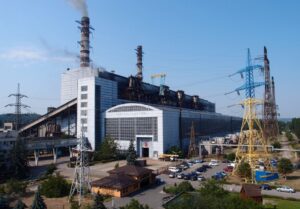
According to Fixygen, PJSC Centrenergo (EDRPOU code 22927045) will hold an extraordinary general meeting of shareholders in a remote format (poll) on February 9, 2026, according to a statement from the State Property Fund of Ukraine.
According to the documents, the agenda includes amendments to the company’s charter, as well as changes to the provisions on the supervisory board and the principles of forming the supervisory board. In addition, the shareholders plan to consider the termination of the powers of the chairman and members of the supervisory board and the election of a new composition, as well as the approval of the terms of civil law contracts with members of the supervisory board and the appointment of an authorized person to sign them.
As specified in the materials, voting by ballot will take place from January 30 (from 11:00 a.m.) to February 9 (until 6:00 p.m.), and the date for compiling the list of shareholders entitled to participate in the meeting is set for February 4, 2026.
Centrenergo is one of Ukraine’s largest generating companies, operating in the electricity and heat production and supply segment, operating three TPPs (Vuhlehirsk, Zmiiv, and Trypilska) and the Remenergo repair division. A 78.289% stake is managed by the state through the State Property Fund and is included in the list of large privatization objects.

The left-wing coalition Sumar has registered an initiative in the Spanish Congress aimed at legalizing the rental market, which provides for a ban on cash payments for rent and the transfer of payments to electronic, traceable channels, according to Spanish media reports.
According to the published details, payments are to be made by bank transfer or other electronic means, and financial institutions servicing such transactions will be required to automatically transfer information to the Spanish tax service (AEAT) to identify undeclared income and strengthen tenant protection by confirming payment with bank statements.
A separate element of the package is a 1% withholding from the rent amount, which the landlord will have to transfer to the AEAT on a monthly basis. The materials emphasize that this levy is also seen as a tool for forming a more accurate indicator of rental price dynamics across regions.
Sumar estimates the scale of tax losses from violations and evasion in the rental income segment at over €12.5 billion per year and proposes to strengthen the resources of the tax service, including the creation of specialized units to detect violations in the real estate market.
For banks, implementing this approach means an increase in the share of payments passing through accounts and, at the same time, an expansion of the role of compliance and data exchange with tax authorities. For the housing market, this could mean an acceleration of the “whitening” of rents and increased price transparency, but the parameters and timing will depend on the initiative passing through parliament.
In Spain, measures to tighten rules in the seasonal rental segment and prevent abuse are being discussed in parallel, with the government having previously announced the preparation of a corresponding package. For comparison, in Greece, a rule will be introduced on January 1, 2026, according to which rent must be paid through registered bank accounts, and cash payments will no longer be accepted.



