
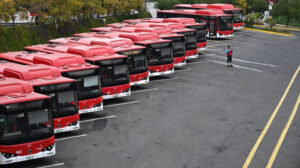
Initial registrations of new and used buses (including minibuses) in Ukraine in January 2026 decreased by 2%, or 4 units, compared to the first month of 2025, to 229 units, Ukravtoprom reported on its Telegram channel.
According to the association, new vehicles accounted for 48% of this volume (last year it was 64%).
“In terms of the number of new buses sold (109 units), this was the worst January figure in the last 10 years,” the report states.
At the same time, Ukravtoprom emphasizes that the January replenishment of the fleet with used buses (120 units) was a record since 2014.
Domestic vehicles were the most common among new buses registered in January, with ZAZ leading the way with 25 units, which ranked third in January 2025 with 27 vehicles.
In second place were Ataman buses from the Cherkasy Bus factory, which were the leader in January last year, with 20 units (36 units last year), and Bogdan buses rose to third place (17 units). Etalon buses from the Chernihiv Automobile Plant, which ranked second last year with 34 vehicles, did not make it into the top three.
Among used vehicles, as in January 2025, Mercedes-Benz buses were the most frequently registered – 45 units (25 units last year). They are followed by VDL – 13 units (15 units) and MAN – 9 units.
According to data from Ukravtoprom, Ukraine’s vehicle fleet in 2025 was replenished with 2,700 buses, which is 21% more than in 2024, including 1,343 new buses (+4%) and 1,364 imported used buses (+44%).
Ukraine’s third-largest mobile operator, Lifecell LLC (TM lifecell), has signed a strategic agreement with Swedish telecommunications equipment manufacturer Ericsson to upgrade its network core to improve 5G readiness, the company said in a statement on Monday.
“The modernization of the core will allow lifecell to increase network performance and stability, optimize resource utilization, and most importantly, significantly reduce the time it takes to bring new services to market,” the operator said.
Lifecell explained that as part of the project, the company is transitioning to a cloud-native network core architecture based on Ericsson solutions, specifically data transmission and Internet access services (Packet Core) and subscriber data management systems (User Data Management).
It is expected that the network core will be upgraded in accordance with 5G principles, which will subsequently create the technical basis for improving service quality.
Lifecell specified that the transition to a cloud-native core will also reduce the risk of communication interruptions and downtime for subscribers.
In addition, the operator is simultaneously modernizing its subscriber data management system based on Ericsson’s Cloud Native Unified Data Management (UDM) solution, which ensures secure management of subscriber data.
As reported, lifecell LLC increased its revenue from telecommunications services by 18.9% to UAH 11.58 billion in the first nine months of 2025. According to data from the National Commission for the Regulation of Electronic Communications and Postal Services (NCCEC), lifecell increased its capital investments by 41.7% to UAH 2.97 billion in the first nine months of 2025.
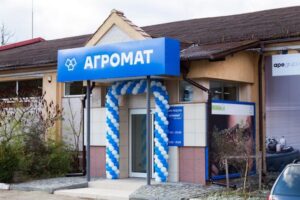
The national chain of tile and sanitary ware stores Agromat LLC (Kyiv) is opening its fifth store in Lviv in the VAM shopping center at 100 Ivana Vyhovskoho Street, according to the company’s press service.
Its total area is over 800 square meters, with 680 square meters of retail space. The store is already operating in test mode, with the official opening scheduled for February 13-16.
Agromat CEO Stepan Slynchuk, quoted in the press release, noted that visitors will have access to professional support from the moment the store opens: from selecting everything they need for their idea and budget to free 3D visualization of the project.
“We are scaling this quality standard to each new facility (…) To this end, the team is constantly improving its expertise at the Agromat Academy,” he said.
Agromat manufactures and sells ceramic tiles and sanitary ware. The company was registered in 1993. Agromat brings together the professional community through the Club of Architects and Designers (CAD), implements innovations within Agromat.tech, and provides customers with access to the world’s best brands in 33 stores in 21 cities of Ukraine and on agromat.ua.
According to Youcontrol, the co-owners of the company with shares of 28.65% each are Serhiy Voitenko, Oksana Reva, and Anatoliy Tadai, with another 10.05% belonging to Olga Bashota and 4% to Nadiya Rushelyuk.

The decline in the tobacco market in Ukraine accelerated to 16.5% in the fourth quarter of 2025 from 15.0% in the third quarter, according to the annual report of Philip Morris International (PMI). According to the report, the Ukrainian market lost 10.6% in real terms over the year as a whole, while the European market as a whole lost 3.5%.
This decline was caused by a 5% drop in cigarette sales, while sales of heated tobacco products (HTU) continued to grow.
In the European region, a significant drop in sales in the fourth quarter of last year was also recorded in Poland (15.4%) and, to a lesser extent, in France (9.4%), but this was partially offset by sales growth in Bulgaria (8.3%), Germany (1.7%), and Serbia (6.4%).
Overall, Philip Morris managed to increase its global sales by 1.4% last year, thanks to a 12.8% increase in sales of smokeless products, including an 11.0% increase in HTU sales, while cigarette sales fell by 1.5%.
As a result, the company’s net revenue grew by 7.3% to $40.6 billion, including smokeless products, which grew by 15% to $16.9 billion.
The report notes that in 2025, Ukraine accounted for about 2% of total cigarette and HTU shipments, as well as about 1% of total net revenue.
“In Ukraine, it is impossible to predict when and to what extent we will be able to fully normalize our operations, as well as to what extent our personnel, facilities, inventories, and other assets will remain intact,” the document also states.
As of December 31, 2025, PMI’s total assets in Ukraine amounted to approximately $0.7 billion, excluding intercompany balances.
As reported, in 2024, Philip Morris Ukraine opened a new factory in the Lviv region, investing $30 million in its launch. The company’s Kharkiv factory has been suspended since February 24, 2022.
Philip Morris Ukraine (PMU) has been operating in the Ukrainian market since 1994. On January 30, 2026, the company reported a Russian missile strike that damaged part of the company’s Kharkiv factory.
According to data from YouControl, in the first nine months of 2025, Philip Morris Ukraine’s revenue decreased by 13.3% to UAH 14.23 billion.
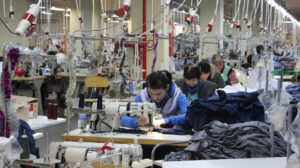
Mukachevo Knitting Factory Mriya PJSC (Mukachevo, Zakarpattia region) plans to hold an extraordinary general meeting of shareholders on February 12, 2026, in the form of a survey (remotely), according to the issuer’s announcement in the SMIDA information disclosure system.
The date for compiling the list of shareholders eligible to participate is set for February 9, 2026. Voting will end (the depositary institution will stop accepting ballots) at 6:00 p.m. on February 12.
The agenda includes issues related to significant transactions involving the alienation of the company’s real estate and movable property, the termination of the powers of the current members of the supervisory board and the election of new members, as well as the approval of the terms of agreements with members of the supervisory board.
Mukachevo Knitting Factory “Mriya” PJSC (EGRPOU 00307253) is registered in Mukachevo, legal address – 13 Tomas Masaryk Street; director – Tatyana Roshchina. The main activity is the production of underwear (KVED 14.14). According to OpenDataBot, the company’s revenue in 2024 amounted to UAH 20.047 million, its net financial result was minus UAH 7.284 million, and its assets amounted to UAH 20.641 million.
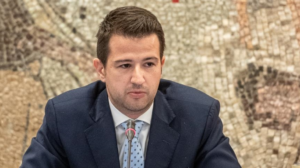
According to Serbian Economist, President of Montenegro Jakov Milatovic has sent to the President of Parliament Andrija Mandic a proposal to amend the Constitution to enshrine the general rule on non-working Sundays and days of public and other holidays for employees of the country.
According to the initiative, it is proposed to supplement Article 64 of the Constitution with the provision that employees in Montenegro do not work on Sundays and public holidays provided by law, while the possibility of establishing exceptions by law for certain activities is allowed, when it is necessary to protect the public interest.
In the justification, Milatović pointed out that the Constitutional Court on January 28, 2026 struck down as unconstitutional Article 35a of the Law on Internal Trade, which restricted the work of trade on Sundays and holidays, citing the violation of freedom of enterprise and the principle of equality.
Milatović also emphasized the importance of the trade sector for the country’s economy, noting that it employs almost 20% of workers and generates about 14% of GDP, according to data cited in the document, and workers’ rights should have a predictable legal basis.
https://t.me/relocationrs/2241



