Business news from Ukraine

Business news from Ukraine

Two new sugar factories to be built in Uzbekistan

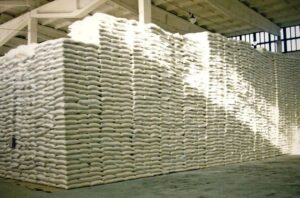
In March, Egypt’s largest company, Nile Sugar, will launch a project in the Jizzakh region to grow sugar beets, process them, and produce sugar products. This was announced by Laziz Kudratov, Minister of Investment, Industry, and Trade of Uzbekistan, in an interview with the Uzbekistan 24 TV channel.

According to him, the project envisages the production of up to 200,000 tons of sugar per year. The total investment is estimated at $450 million and will be implemented in the form of foreign direct investment.

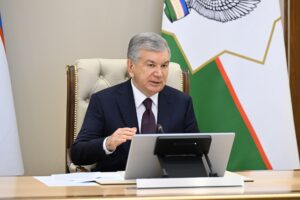
Minister of Agriculture Ibrohim Abdurakhmonov specified that the President had instructed to speed up the implementation of the project.

“Instructions have been given to take the project under separate control and start its implementation as soon as possible. All the necessary documents have been drawn up, land plots have been allocated, and investments are ready,” he said.

In 2024, the Ministry of Agriculture reported that 50,000 hectares of land had been selected in the Ghalaral and Farish districts of the region for growing sugar beets and 170 hectares for the construction of a sugar factory.

On January 23 this year, Laziz Kudratov met with Nile Sugar CEO Emad Farid. Following the negotiations, the parties signed a final protocol confirming their readiness to continue coordinated work on the preparation and implementation of joint projects. The document provides for the clarification of project parameters, financing conditions, and the agreement of further steps to expand practical cooperation.

It is expected that the implementation of the agreements reached will allow moving to the practical stage of cooperation with Nile Sugar, ensure the phased launch of joint projects, and attract modern agro-industrial and processing technologies with further localization of production in Uzbekistan.

More details

,

Ukraine could increase agricultural exports to $100 bln by investing in processing

Ukraine could increase its annual agricultural exports from $24.2 billion to over $100 billion by shifting from exporting raw materials to increasing the production of deeply processed products, which would require $85 billion in investments, said Leonid Kozachenko, president of the Ukrainian Agrarian Confederation (UAC).

“We have the best opportunities among other countries, as almost 30% of the world’s black soil is concentrated in Ukraine. However, it is surprising that a country like the Netherlands, with 4.5 times less land, produces food and derivative products worth about $108 billion. They use less than 20% of their own raw materials, import 80%, but rank 2nd or 3rd in the world, while we, with our raw materials, are only in the third ten,“ he said at the conference ”Profitable Agribusiness 2026.”

According to the expert, the total capitalization losses of the agricultural sector from the Russian Federation’s military aggression are currently estimated at more than $120 billion, while direct losses amount to $11.5 billion. In particular, almost 4.7-5 million hectares of land remain mined or contaminated with heavy metals. Livestock losses amount to 5 million chickens, 350,000 pigs, and 150,000 cows. In addition, more than 7,000 units of agricultural equipment and hundreds of logistics facilities have been lost.

Kozachenko expressed confidence that if the genetic potential of plants and animals is realized by at least 90%, Ukraine will be able to reach production levels of 150 million tons of grain and oilseeds, 25 million tons of milk, and up to 10 million tons of meat.

To realize this potential, according to the UAC president, Ukraine needs to attract $85 billion in investments over the next 10 years. These funds should be directed towards the development of the food, pharmaceutical and perfume industries ($37 billion), livestock farming ($18 billion), crop production ($8 billion), irrigation restoration ($7 billion) and bioenergy development ($5.5 billion). Another $10 billion should be allocated to logistics, horticulture, and greenhouse farming.

To stimulate the development of the agricultural sector, the UAC proposes introducing land and network connection incentives for deep processing plants, introducing a 25% subsidy for equipment, and creating a specialized mortgage banking institution. It is also proposed to involve international companies in the certification of products according to European standards directly in Ukraine.

“We have found financial resources of over $50 billion that were ready to be given to us to create the first mortgage bank in Ukraine. We have everything we need to launch this mechanism, so let’s work together to convince officials to start using it. We really need to cross the $100 billion gross output threshold, and this should be our strategic priority for the next decade,” Kozachenko emphasized.

The UAC president also announced joint proposals from a number of agricultural associations to accelerate the privatization of state-owned enterprises that can be involved in processing chains and to stimulate the development of industrial parks with special fiscal conditions. In particular, agricultural associations propose introducing subsidies of 10% for enterprises that use domestically produced deep-processed raw materials in their production and providing state guarantees to foreign creditors for the purchase of technological equipment.

An important aspect remains the digitization of the industry, in particular the creation of digital platforms for entering global markets, following the example of the Ukrainian resource Allbiz, which specializes in e-commerce and structuring offers in the B2B sector, as well as the introduction of European licensing practices through accredited offices of international certification companies, the UAC president concluded.

, ,

AmCham Ukraine to hold Valentine’s Day donor day

This Valentine’s Day, make a gesture that truly matters – donate blood. On Friday, February 13, from 9:30 AM to 1:00 PM, AmCham Ukraine, together with our member company Sayenko Kharenko, invites you to join our St. Valentine’s Blood Donation Day. Venue details will be provided to registered participants one day in advance. The location has an underground shelter.

In the fourth year of Russia’s full-scale war against Ukraine, the need for blood remains critically high. Your donation can help hospitals and emergency services save lives every day. Just 15 minutes of your time can make a real difference – and help save up to three lives.

The event is open to everyone, so feel free to bring your friends, colleagues, and loved ones. Choose a convenient time slot and register in advance via DonorUA.

Follow all the rules and recommendations to prepare for donating blood.

Please take your passport and identification code with you. Citizens of other countries can also be donors if they have a residence permit in Ukraine and an identity document.

We look forward to seeing you on February 13.

,

$5 bln project to convert coal into polymers will be implemented in Uzbekistan

On February 2, the President of Uzbekistan was briefed on the current state and development plans for the coal and uranium industries. They discussed increasing coal production, strengthening competition in the industry, and the efficient use of existing reserves.

As noted, 10 million tons of coal are planned to be mined in the fall-winter season of 2025-2026, which is 1.3 million tons more than last season. As of today, 9 million tons of coal have been mined, an increase of 590,000 tons. It was emphasized that in the next season, it is necessary to bring production volumes to 11 million tons.

To achieve this, it is important to accelerate the development of deposits located in the Tashkent and southern regions, expand selective mining, and attract additional excavators and equipment on an outsourcing basis. By expanding the participation of private entrepreneurs, it is planned to extract an additional 2.5 million tons of coal in 2026.

Particular attention was paid to the project to develop the Nishbosh coal deposit in Angren. As part of the investment project, estimated to cost nearly $500 million, with reserves of 233 million tons, it is planned to start production in 2026 and ensure the production of 1 million tons of coal. In the future, the annual productivity of the deposit is expected to reach 10 million tons. The project will create 880 permanent jobs.

The presentation also discussed a project to produce new types of industrial products based on deep coal processing. At the initiative of the joint-stock company Uzkimyosanoat, it is planned to organize the production of polymer products based on chemical coal processing. The $5 billion project involves the creation of facilities for processing 8-9 million tons of coal and producing 1.18 million tons of polymer products per year.

Last year, 7,000 tons of uranium were mined in Uzbekistan, and the discovered reserves reached 139,000 tons.

This year, it is planned to start developing the Arnasay, Western Kyzylkok, Southern Zhongeldy, and Eastern Agron deposits. In connection with the expected increase in production volumes, the need to increase processing capacities has been emphasized.

Measures have been identified to ensure a stable supply of sulfuric acid for uranium processing and the technical sulfur required for its production.

The president has instructed the responsible persons to ensure the timely and high-quality implementation of planned projects in the coal and uranium industries, increase production volumes, and improve economic efficiency.

Source

, , ,

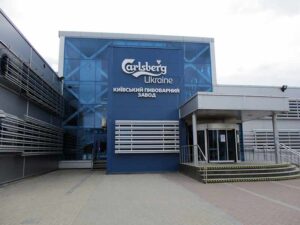
Carlsberg Ukraine brewery has installed its own 3 MW generators to operate during power outages

Carlsberg Ukraine’s Kyiv plant has installed 1.5 MW diesel generator and cogeneration units (DGU, CGU) to ensure a stable power supply and plans to install a 500 kW solar power plant and a 5 MW power storage facility with a capacity of 10 MWh by the end of the year, according to Roman Sapiga, head of the plant’s automation and electrical engineering group.

“Our enterprise must operate without interruption, so the uninterrupted operation of our power generation facilities is extremely important to us. We chose a 1.5 MW diesel generator and a 1.5 MW gas generator… They work together in an ‘island’ mode and are connected to each other,” he said at the EnergoTech-2026 conference, which took place recently in Kyiv.

Sapiga noted that generation is controlled by a special program, which is constantly being improved.

“Sitting at our workstations, we can see almost all elements of the generation system and can start them up. It is necessary to manage them correctly. Every time we encountered a problem, a new automatic solution appeared,” shared the representative of Carlsberg Ukraine.

According to him, the company also imports electricity, and the management program allows it to track consumption so as not to exceed the limits at which the consumer is not disconnected according to hourly schedules (for this, it must import 60% of its consumption – EP).

“There is a program that tracks the price of electricity for the next day and decides whether to start the CHP and at what time, comparing the market price of electricity with the cost of its production from gas. It worked very well in the summer and early autumn, but with mass blackouts, it doesn’t work,” Sapiga noted.

The Carlsberg Ukraine plant in Kyiv plans to diversify its electricity sources by 2026.

“We are planning a 500 kW solar power plant. We want an energy storage facility (ESF) with a capacity of 5 MW and 10 MWh. We are a large producer. 3 MW of CHP and DG do not even cover half of our consumption,” Sapiga said in a comment to ENERGOREFORM.

As he noted, they plan to look for an investor with whom they can conclude direct contracts for electricity before building the solar power plant.

In addition, Sapiga emphasized that the main reason for developing their own energy supply is not the price of electricity, but the instability of the grid, since under such conditions the plant cannot operate normally.

He named some of the main challenges for 2025 as almost 60 hours of operation on its own generation in the event of a complete grid shutdown, constant software changes, and a reduction in the duration of the transition of generating units to “island” mode from 1.5 hours to 15 minutes.

“My advice is to diversify generation and have a management system that takes into account all available sources, as well as choosing reliable contractors with a good track record. This is especially important for enterprises and businesses,” Sapiga concluded.

Carlsberg Ukraine is part of the Carlsberg Group, one of the world’s leading brewery groups with a large portfolio of beer and other beverage brands. Carlsberg Ukraine includes factories in Zaporizhia, Kyiv, and Lviv. Carlsberg’s portfolio in Ukraine includes beer, alcoholic and non-alcoholic beverages of such brands as Lvivske, Robert Doms, Baltika, Carlsberg, Tuborg, Kronenbourg 1664, Arsenal, Kvas Taras, Somersby, and others.

According to data from Opendatabot, Carlsberg Ukraine increased its revenue by 15.5% to UAH 12.488 billion in 2024, its net profit by 19.4% to UAH 2.18 billion, debt obligations by 34.9% to UAH 5.11 billion, and assets by 33.1% to UAH 13.84 billion. The company currently employs 1,310 people.

, , , ,

Netherlands has increased its energy assistance to Ukraine to €100 mln

The Netherlands has increased its total financial assistance to Ukraine through the Energy Support Fund to EUR100 million, allocating additional funds to strengthen energy resilience and support critical infrastructure, according to First Deputy Prime Minister and Minister of Energy of Ukraine Denys Shmyhal.

“The Netherlands has increased its total assistance provided through the Ukraine Energy Support Fund to EUR 100 million. The Netherlands will allocate an additional EUR 35 million,” according to a statement posted on social media.

The purpose of the additional funding is to ensure a stable power supply to critical infrastructure facilities after Russian attacks, in particular by installing solar power plants on the roofs of buildings as part of the “Ray of Hope” initiative.

, ,