

Passenger traffic across Ukraine’s western border fell by 9.3%—to 685,000—during the week of August 29 through September 4, coinciding with the start of the new school year, according to daily statistics from the State Border Guard Service monitored by the Interfax-Ukraine news agency.
According to the data, the number of outbound border crossings this week decreased to 344,000 from 364,000 the previous week, while the number of inbound crossings fell to 341,000 from 391,000.
The number of vehicles passing through border checkpoints also decreased to 137,000 from 145,000, while the number of vehicles carrying humanitarian cargo fell to 416 from 433.
The highest outbound traffic was recorded on Saturday (56,000 per day), and the highest inbound traffic on Sunday (68,000), while the lowest outbound traffic was on Tuesday (42,000), and the lowest inbound traffic was on Tuesday and Thursday (39,000 each).
According to the State Border Guard Service, as of 12:00 p.m. on Sunday, the largest number of passenger cars waiting to cross the border with Poland were at the “Ustyluh” border crossing point—50. Shorter lines were observed at the “Ugryniv” checkpoint—20 vehicles—and the “Krakivets” checkpoint—10 vehicles, where 4 buses had also accumulated.
At the border with Slovakia, the line at the “Maly Berezny” checkpoint consisted of 20 cars, and at the “Uzhhorod” checkpoint—30.
The largest number of passenger cars was waiting to exit at the border with Hungary: at the “Luzhanka” border crossing – 40, at the “Tisa” border crossing – 25, at “Kosyno” – 20, and at the “Dzvinkove” and “Vilok” border crossings – 10 each.
At the border with Romania, 15 cars had accumulated at the “Porubne” checkpoint, while there were no lines at the border with Moldova.
Last year, passenger traffic across the border during this week fell by 10%, but was slightly higher—692,000; however, outbound traffic significantly exceeded inbound traffic—by 32,000 compared to 3,000 this year.
The following week last year, passenger traffic fell by another 12.4%, and then remained at around 600,000 for two weeks.
As reported, starting May 10, 2022, the outflow of refugees from Ukraine—which began with the start of the war—was replaced by an inflow that lasted until September 23, 2022, totaling 409,000 people. However, starting in late September—possibly influenced by news of mobilization in Russia and “pseudo-referendums” in the occupied territories, followed by massive shelling of energy infrastructure—the number of people leaving exceeded the number of those entering. In total, from the end of September 2022 until the first anniversary of the full-scale war, this figure reached 223,000 people.
In the second year of the full-scale war, the number of border crossings out of Ukraine, according to the State Border Guard Service, exceeded the number of crossings into the country by 25,000; in the third year, by 187,000; in the fourth year, by 221,000; and by 44,000 since the start of the fifth year—31,000 of which have occurred since the beginning of summer.
In its July inflation report, the National Bank maintained its estimate of 0.3 million people migrating from Ukraine last year due to the deterioration of the security situation at the end of the year and the easing of exit rules for young people, but noted that this figure would be less than 0.5 million in 2024. The NBU continues to forecast a net outflow of 0.2 million in 2026, while net returns, according to its forecast, will begin in 2027 and amount to about 0.1 million people, increasing to 0.5 million people in 2028.
According to UNHCR data, the number of Ukrainian refugees in Europe as of June 30, 2026, stood at 5.159 million, and globally at 5.687 million, compared to 5.213 million and 5.687 million, respectively, as of April 30.
In Ukraine itself, according to the latest UN data for July 2026, there were 3.80 million internally displaced persons (IDPs), compared to 3.70 million in January of this year and 3.34 million in July 2025.
BORDER, MIGRATION, PASSENGER TRAFFIC, State Border Guard Service of Ukraine, UKRAINE

State-owned Oschadbank has put up for auction on the “Prozorro.Sales” platform a claim against ESU LLC, which owns 92.79% of the shares in JSC “Ukrtelecom,” with a starting price of 2.65 billion hryvnia, the bank announced on Friday.
The claim arose under a securities purchase agreement dated April 25, 2013, under which Oschadbank acquired 2 million bonds of ESU LLC with a total par value of 2 billion UAH.
The auction is scheduled for October 6 at 12:55 p.m., and the submission of bids will close on October 5 at 8:00 p.m. Bidding will follow the English-style ascending-bid model.
The starting price of the lot is 2.65 billion UAH excluding VAT; the minimum bid increment is 1%, or 26.45 million UAH; and the security deposit is 5%, or 132.27 million UAH.
Banks and other financial institutions that are legally authorized to provide funds and bank metals on credit are eligible to participate in the auction.
If the English-style auction does not take place, Oschadbank may subsequently offer the claim rights in a Dutch-style auction with a reduced starting price.
As previously reported, in November 2022, Oschadbank had already put the claim against “ESU” up for sale via OpenMarket (the State Enterprise “SETAM” of the Ministry of Justice) with a starting price of 1.82 billion UAH; however, the auction did not take place due to a lack of eligible bidders.
Following a tender announced in the fall of 2010, the State Property Fund of Ukraine sold 92.79% of Ukrtelecom’s shares in early 2011 to the Ukrainian subsidiary of the Austrian company EPIC—ESU LLC—for 10.58 billion hryvnias. The SCM Group, owned by Ukrainian businessman Rinat Akhmetov, acquired ESU in 2013.
In 2024, the Kyiv Commercial Court opened bankruptcy proceedings against ESU LLC.

The DMNTR media group, together with general partner A Development, held a roundtable discussion titled “Building the Future: Development in Wartime” at the press center of the Interfax-Ukraine news agency, during which representatives of the development and architectural sectors discussed the personnel shortage, rising construction costs, new safety requirements, problems with permitting procedures and approaches to Ukraine’s post-war reconstruction. One of the central topics of the event was the announcement of the urban festival SEPTEMBER FEST 2026, which will take place in Kyiv on September 18.
The discussion was attended by A Development founder and CEO Oleksii Baranov, CREDO Development CEO Vitalii Borul, architect and founder of A. Pashenko architects Andrii Pashenko, and A Development chief project architect Yuliia Poliukhovych. The meeting was moderated by lawyer and Kyiv City Council deputy of the VII–VIII convocations Vlad Mykhailenko.
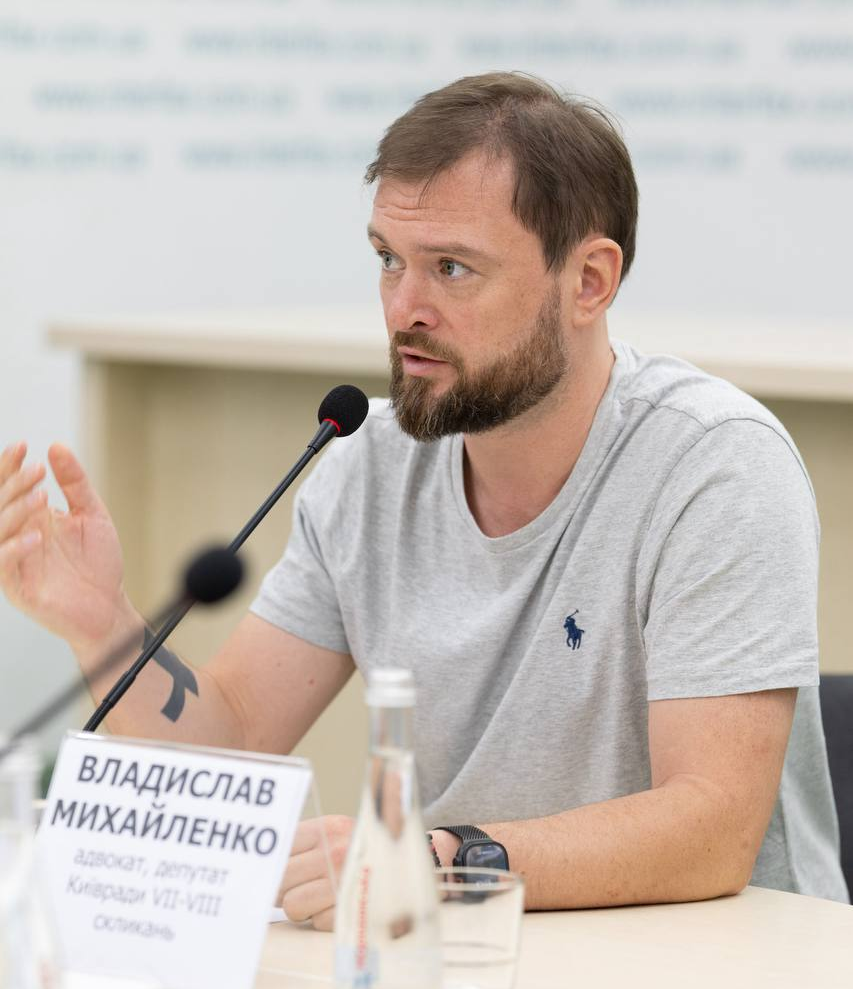
The participants identified the shortage of specialists in construction and architecture as one of the most acute issues. According to Baranov, the personnel shortage became particularly noticeable in the spring of 2026.
“There is a very serious shortage of construction workers. We all felt this problem in the spring of this year. As a company owner, I am looking for people to complete the construction of projects,” the founder of A Development said.
Yuliia Poliukhovych noted that a similar situation had developed among architects: teams are shrinking, while the complexity of the work is increasing because of the need to constantly adapt projects to new construction standards, primarily safety requirements.
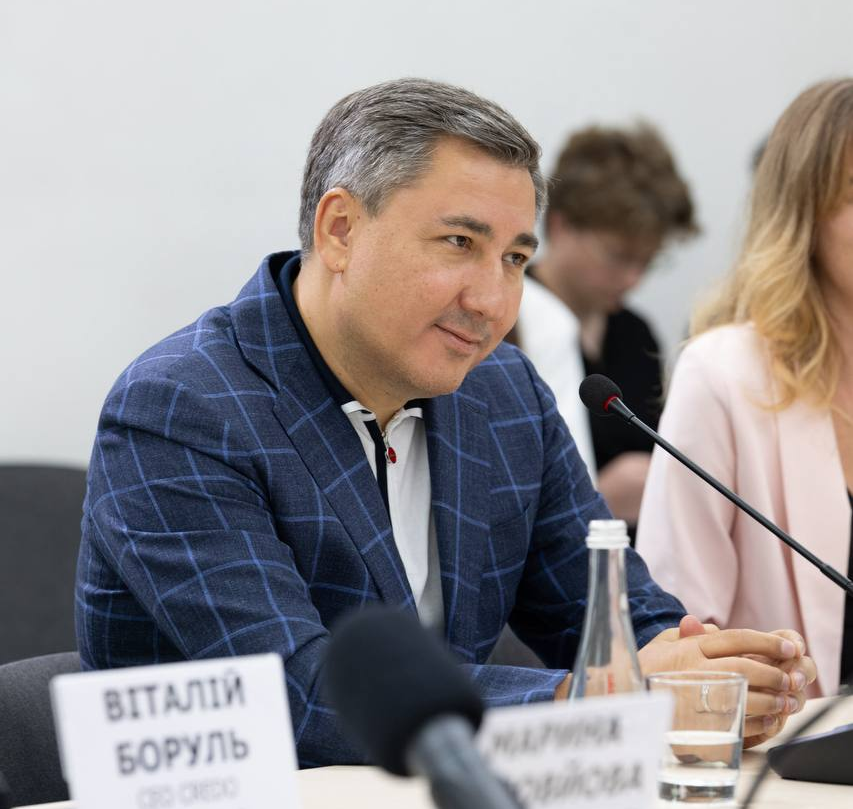
“While three or four architects previously worked on a project, now it may be just one,” she noted.
Another challenge has been the significant increase in the cost of construction work. According to Baranov’s estimate, whereas before the full-scale war the cost of work was approximately equal to the cost of materials, in some cases labor now costs two to three times more than the materials themselves. Housing sales are additionally affected by Russian attacks on cities, while war-risk insurance remains expensive for developers.
CREDO Development CEO Vitalii Borul drew attention to the substantial increase in costs caused by new safety requirements. According to him, modern underground shelters with evacuation exits significantly increase the cost of residential projects. He believes that the state should consider mechanisms to compensate developers for part of these expenses, as this concerns the systemic provision of public safety.
The speed of regulatory procedures was a separate topic. Participants noted that delays in adopting secondary legislation and urban-planning decisions can block project implementation for years, even after changes have been made to the primary legislation.

Baranov emphasized that a transparent mechanism for working in Kyiv’s historic center is particularly important.
“It is necessary to create an approach that makes the process transparent and fast while ensuring that what is built will remain relevant years from now,” he said.
Architect Andrii Pashenko separately addressed the future of Ukraine’s reconstruction. In his opinion, a significant part of the social infrastructure after the war will be built using prefab technologies and reusable designs, which will accelerate construction and standardize its quality.
A. Pashenko architects has already developed standardized solutions for kindergartens, schools and administrative service centers under the European Investment Bank’s Ukraine Recovery Programme.
“The revival of Ukraine is not only about projects in the central part of Kyiv. It also concerns Kharkiv, Chernihiv and places where reconstruction will be in demand,” Pashenko emphasized.
The roundtable participants agreed that the war has already changed the very logic of development: safety, building autonomy, energy efficiency, the accessibility of shelters and the quality of public spaces are becoming basic components of a project rather than additional options. At the same time, the industry needs to address personnel and financing issues and simplify the procedures for interaction between businesses, the state and local communities.
The professional discussion will continue at SEPTEMBER FEST 2026, which the DMNTR media group will hold on September 18 at A-STATION in Kyiv, near the Arsenalna metro station. A Development is the general partner of the event.
According to the organizers, the festival is expected to bring together more than 150 speakers and over 5,000 guests. The main topics will include urban development, architecture and development during the war, reconstruction and the revitalization of territories, personnel shortages, the digitalization of construction, BIM technologies, energy independence, the investment attractiveness of regions, design and the quality of the urban environment.
The announced participants in the professional program include Ukrainian developers, investors, architects and government representatives, as well as international experts, including Zaha Hadid Architects design director Christos Passas, British industrial designer Ross Lovegrove and German designer Konstantin Grcic.
The festival will be held in an open-air format with several parallel thematic venues, exhibition zones, professional networking and an evening program.
Registration for SEPTEMBER FEST is available on the event’s official website:
Organizer — DMNTR media group. General partner — A Development.
Interfax-Ukraine and Open4Business are the official media partners of SEPTEMBER FEST 2026.
About 11–12 million people living in the territory controlled by Ukraine may be below the poverty line if the World Bank’s latest estimate of the share of the poor population is applied to current demographic estimates.
According to data from the Experts Club information and analytical center and the World Bank’s spring study, *Monitoring Living Conditions in Ukraine*, the poverty rate in Ukraine in 2025 was estimated at 41.6% of the population, compared with 37% in 2024. This figure has effectively doubled compared with 2021.
Olha Holubovska, president of the All-Ukrainian Association of Infectious Disease Specialists, noted during a roundtable discussion at the Interfax-Ukraine agency that this is no longer merely a decline in living standards, but a population living below the established poverty line and increasingly unable to finance medical treatment independently.
To convert this indicator into absolute figures, it is necessary to take into account that there is no exact current population figure for Ukraine because of the war and the absence of a census. According to an estimate by the Ptoukha Institute for Demography and Life Quality Studies of the National Academy of Sciences of Ukraine, approximately 27–29 million people lived in government-controlled territory in the summer of 2026.
If the poverty rate of 41.6% is conditionally applied to this range, the result is between 11.2 million and 12.1 million people.
This figure is an estimate rather than the official number of poor people as of September 2026, since the World Bank indicator relates to 2025, while the population estimate relates to 2026. Nevertheless, it demonstrates the real scale of the problem.
The World Bank calculates the indicator based on the actual subsistence minimum published by the Ministry of Social Policy and household survey data. At the same time, the bank notes not only an increase in poverty but also growing inequality: the Gini coefficient rose from 0.44 in 2024 to 0.50 in 2025. The real earned income of the poorest 20% of households fell by more than 30%, while it increased among the wealthiest groups.
At the same time, the financial resilience of families continues to deteriorate. At the end of 2025, about 17% of households were already borrowing money to cover basic expenses, approximately the same proportion were unable to pay utility bills on time, and the share of families forced to sell property to finance everyday needs increased.
Families with children, pensioners, internally displaced persons and residents of frontline territories remain particularly vulnerable.
Ukrainian MP Lesia Zaburanna noted during the roundtable discussion that the consequences of rising poverty are already visible not only in frontline regions but also in Kyiv, where residents are reducing spending on food, medical treatment and providing for their children.
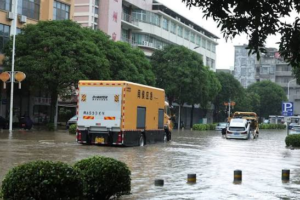
The Consulate General of Ukraine in Shanghai has warned Ukrainian citizens of large-scale flooding in Fujian Province in southeastern China, caused by heavy downpours resulting from Typhoon Saudel.
According to the diplomatic mission, intense rainfall has led to flooding in the region. Ukrainians staying in Fujian Province are advised to continuously monitor announcements from local authorities and weather forecasts and to avoid flooded areas, riverbanks and mountainous terrain.
The Consulate also urges people not to attempt to cross flooded roads and to comply with the instructions of local authorities if an evacuation is announced.
In China, the number for calling the police is 110, emergency medical services — 120, and the fire and rescue service — 119.
Ukrainian citizens who find themselves in an emergency due to the natural disaster are asked to contact the hotline of the Consulate General of Ukraine in Shanghai at +86 138 1631 8830.
Fujian is located on the coast of the Taiwan Strait and is regularly affected by tropical cyclones and typhoons, which can cause heavy rainfall, flooding and landslides during the summer-autumn season.
Original source: Consulate General of Ukraine in Shanghai

Nova-Kos LLC (Kyiv), jointly with BGV Group Management of Hennadiy Butkevych, co-owner of the ATB corporation, plans to implement a wastewater treatment facilities project in Kalush (Ivano-Frankivsk region), the Agency for Restoration of Ukraine reported.
“The private company Nova-Kos LLC will finance and carry out the design, construction and subsequent operation of the complex. A draft cooperation agreement in the field of centralized wastewater disposal has been approved by a decision of the city council session,” the Agency’s website states.
It is noted that Kalush is one of the Agency’s six pilot projects in the field of wastewater disposal. The project provides for the implementation of a modular solution that will reduce construction time and costs, as well as ensure flexible scaling of capacity in accordance with the community’s needs.
As the Ivano-Frankivsk publication Vikna reported, according to the project presentation, its cost will amount to UAH 513 million. The project implementation period is about two years.
According to the Agency for Restoration, the agreement between the company and the city provides for the establishment of an economically justified tariff with an investment component.
“Yes, we have indeed begun the practical phase of investing in one of the most complex and ‘non-obvious’ sectors — urban infrastructure. Kalush is a pilot project, based on the results of which we plan to implement a series of similar projects across the country,” BGV Group Management board member Oleksii Tymofieiev noted on Facebook.
BGV Group Management is an investment company developing businesses and projects in the mining, processing, energy efficiency, retail and development sectors.
BGV GROUP MANAGEMENT, WASTEWATER TREATMENT FACILITIES, КАЛУШ, НОВА-КОС



