
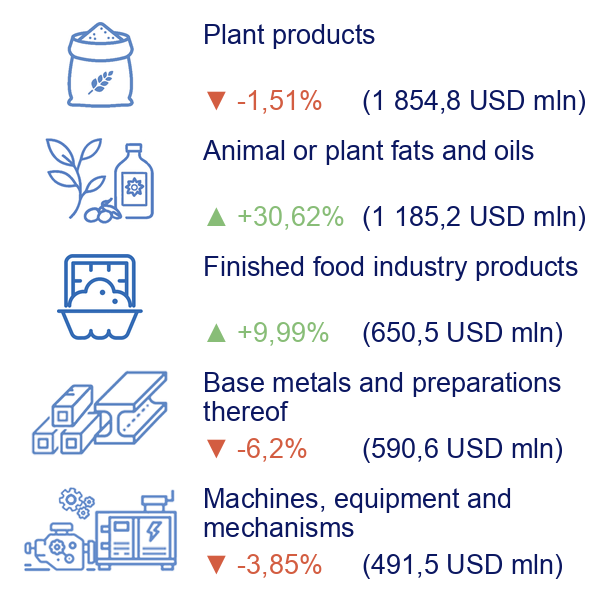
Dynamics of export of goods in january-february 2026 by the most important items in relation to the same period of 2025, %
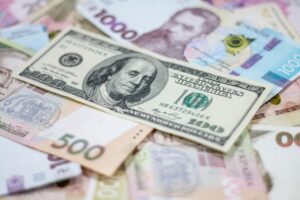
The National Bank of Ukraine (NBU) increased its interventions in the interbank market last week by $56.8 million, or 4.5%, to $1 billion 329.0 million, according to statistics on the regulator’s website.
According to the National Bank, during the first four days of last week, the average daily negative balance of currency purchases and sales by legal entities rose to $210.3 million from $195.0 million during the same period a week earlier, totaling $841.2 million.
In the retail foreign exchange market, the average daily net deficit nearly doubled: from Monday through Thursday, it stood at $46.6 million, compared to $24.6 million during the same period the previous week. Retail purchases of non-cash foreign currency exceeded sales every day.
The official hryvnia-to-dollar exchange rate at the beginning of last week was 44.5505 UAH/$1, and by the end of the week it had weakened to 44.7273 UAH/$1.
A similar trend was observed in the cash market, where the hryvnia’s exchange rate against the dollar weakened by 7–8 kopecks over the past week: the buying rate fell to 44.48 UAH/$1, while the selling rate fell to nearly 44.88 UAH/$1.
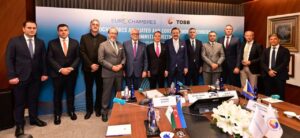
Gennadiy Chizhikov, President of the Ukrainian Chamber of Commerce and Industry, called on European chambers of commerce and industry, companies, and investors to become more actively involved in Ukraine’s economic recovery even before the war ends. This was discussed during a meeting of EUROCHAMBRES’ affiliated and associate members, which took place on September 1–2, 2026, in Istanbul, with the participation of representatives from European business communities.
The meeting was hosted by the Union of Chambers and Commodity Exchanges of Turkey (TOBB). Participants included EUROCHAMBRES President Vladimir Dlouhy, EUROCHAMBRES Vice President and TOBB President Rifat Hisarcıklıoğlu, Turkish Deputy Minister of Foreign Affairs for EU Affairs Mehmet Kemal Bozay, EUROCHAMBRES Director General Ben Batters, as well as the heads of chambers of commerce from Ukraine, Serbia, Georgia, Montenegro, Bosnia and Herzegovina, and other countries.
Key topics of discussion included future EU enlargement, economic relations with candidate countries, the impact of the war in Ukraine on European security, trade, and transport links, as well as the growing role of the Black Sea region in trade, energy, and the supply of critical raw materials.
Participants paid special attention to the development of transport and economic corridors between the EU and Central Asia via Turkey and the South Caucasus. Meeting participants also discussed updating the mechanisms for interaction among EUROCHAMBRES members and strengthening practical cooperation between chambers of commerce.
“For Ukrainian business, European integration is a strategic and irreversible course. EUROCHAMBRES plays a special role as a bridge between Ukrainian and European business, as well as a practical tool for promoting Ukraine’s economic integration into the EU,” Chizhikov noted.
According to him, Ukraine’s progress toward EU membership must be accompanied by a parallel convergence of Ukrainian and European business, the formation of new supply chains, the expansion of trade, and the attraction of European capital to reconstruction projects.
The president of the Ukrainian Chamber of Commerce and Industry emphasized that the country’s economic recovery cannot be postponed until the war ends. Ukrainian enterprises continue to operate amid attacks on production facilities, logistics centers, and commercial infrastructure, so practical support from European partners is needed right now.
“I spoke frankly: how is business holding up in these difficult times, when attacks on business facilities, logistics centers, and retail spaces are not stopping but, on the contrary, are intensifying? It’s not easy to say this out loud in front of colleagues from other countries, but it’s important that they hear it not from the news, but from us directly,” Chizhikov said.
Ukraine is an affiliated member of EUROCHAMBRES. According to the organization’s latest data, EUROCHAMBRES brings together, through its members, a network of approximately 1,700 regional and local chambers of commerce and industry, representing more than 20 million businesses in Europe. More than 93% of the companies represented by this network are small and medium-sized businesses, and together they provide over 120 million jobs. EUROCHAMBRES was founded in 1958 and represents the interests of the business community before EU institutions.
The Ukrainian Chamber of Commerce and Industry is a non-governmental, non-profit, self-governing organization. The Ukrainian Chamber of Commerce and Industry system includes the central chamber and 25 regional chambers of commerce and industry and brings together approximately 8,000 enterprises and entrepreneurs. The Chamber promotes export development and the search for international partners; conducts expert reviews and assessments; issues certificates of origin for goods; and certifies force majeure circumstances. According to the Ukrainian Chamber of Commerce and Industry, it has 70 representatives in 56 countries, has concluded 174 international cooperation agreements, and coordinates 45 bilateral business councils.

According to Fixygen, tokenization is becoming one of the fastest-growing segments of digital finance.
According to estimates compiled by Franklin Templeton, the value of real assets held directly on the blockchain exceeded $25 billion in early 2026, having roughly tripled in just one year and increased approximately fivefold since 2023.
The main sectors include government bonds, private credit, funds, and real estate.
Franklin Templeton itself is developing BENJI—a tokenized money market fund. As of the end of April, its portfolio had reached approximately $1.98 billion in assets.
On August 3, BlackRock additionally launched two new tokenized money market products.
The range of long-term forecasts is vast: various studies predict the market will grow to between $4 trillion and $16 trillion by 2030.
The essence of this trend lies not so much in the creation of “new cryptocurrencies” as in the transfer of conventional stocks, bonds, funds, and other financial instruments to the blockchain.

A meeting involving representatives from Ukraine, the U.S., and Europe is set to take place in the near future, Ukrainian President Volodymyr Zelenskyy said following a meeting with Steve Witkoff and Jared Kushner, representatives of U.S. President Donald Trump.
“We agreed that Ukraine, Europe, and the U.S. will meet in the near future. I don’t know where the meeting will take place. Perhaps in Ukraine again,” Zelenskyy said at a press conference in Kyiv.
The president noted that the American delegation’s visit worked for Kyiv “like a Patriot” and emphasized Ukraine’s need for it.
According to him, during the meeting, the parties discussed the challenges facing Ukraine on the eve of winter and a possible winter aid package.

GLP-1 agonists, which are widely used to treat obesity and type 2 diabetes, may be associated with a slight increased risk of hereditary hair loss in men, according to the Experts Club information and analysis center, citing the results of a new study by researchers at NYU Langone Health, published online on September 3, 2026, in the Journal of Investigative Dermatology. (NYU Langone Health).
The researchers studied androgenetic alopecia, the most common type of male baldness, in which hair loss predominantly affects the frontal and upper parts of the scalp. The analysis showed that in men with a genetic predisposition, increased activity of the GLP-1 receptor signaling pathway was associated with an approximately 7% additional risk of this type of hair loss. (NYU Langone Health)
The same class includes drugs based on semaglutide and tirzepatide, known, in particular, under the brand names Ozempic, Wegovy and Zepbound. However, the authors emphasize that the study did not involve observing patients who were actually taking these medications. The scientists used Mendelian randomization, a method in which genetic variants serve as a kind of natural proxy for an effect on a particular biological mechanism.
The study identified 22 genetic variants that increase the expression of the GLP1R gene and, accordingly, the activity of the GLP-1 receptor. These data were compared with genetic information on male baldness. Large databases were used for the analysis, including eQTLGen, with data from 31,684 people, and Complex Traits Genetics, with data from 205,327 people.
The association persisted after accounting for a number of other factors that can influence hair loss, including blood pressure, insulin resistance and testosterone levels. The authors consider the findings evidence of a possible causal role of the GLP1R pathway itself, but warn that they cannot automatically be equated with the effect of a specific medication.
“Our study shows for the first time a genetic link between GLP-1 activity and an increased risk of male baldness in androgenetic alopecia,” noted the study’s senior author, Lynn Petukhova of NYU Grossman School of Medicine. According to her, genetic assessment could potentially help identify patients most predisposed to this side effect in the future.
The mechanism of the possible effect remains unclear. The researchers suggest both a direct effect on hair follicles and an indirect effect through metabolic changes. In addition, hair loss in some patients has previously been linked to rapid weight loss, inadequate nutrient intake and temporary telogen effluvium.
The new study is consistent with the findings of a number of previous studies. A meta-analysis of nine interventional studies involving 4,114 users of GLP-1 drugs, published in May 2026, found a statistically significant increase in the risk of hair loss compared with placebo. The overall incidence of hair loss among patients receiving these drugs was approximately 3.9%. At the same time, the authors of the meta-analysis noted the need for further research because of the relatively small number of available clinical studies.
Another systematic review from 2026 also concluded that reports of hair loss during GLP-1 therapy require closer investigation, since possible causes may include both the effects of the drugs and rapid weight loss, dietary changes and deficiencies in certain micronutrients.
The authors of the new study emphasize that the identified effect is modest and that its clinical significance has not yet been definitively established. The findings are not grounds for independently discontinuing prescribed GLP-1 therapy. Patients experiencing noticeable hair loss should discuss the situation with their treating physician.



