
Foreign exchange interventions by the National Bank of Ukraine (NBU) on the interbank market in August remained close to July’s level, increasing by $24.7 million, or 0.5 percent, to $4.82 billion, according to data from the regulator’s website.
At the same time, the official hryvnia-to-dollar exchange rate strengthened by 0.3%, or 14 kopecks, in August, reaching 44.5505 UAH/$1 at the end of the month.
The volume of the National Bank’s interventions in the interbank market last week increased by 6.5%, or $77.9 million, compared to the previous week, reaching $1.27 billion.
According to the NBU, net interventions in August rose by 78.6%, or $2.12 billion, year-over-year.
From January through August, the regulator sold nearly $33.0 billion in foreign currency, which is 39.0%, or $9.25 billion, more than during the same period last year.
Over the 28 days of August, the average daily negative balance of legal entities’ currency purchase and sale transactions increased to $169.5 million from $151.8 million in July.
In the retail foreign exchange market, this figure rose from $19.4 million in July to $25.9 million in August.

More than 11,600 preschool institutions will be open in Ukraine starting September 1, including 1,100 operating in a hybrid format and 1,200 offering remote instruction, according to the Ministry of Education and Science.
“As of September 1, 11,622 preschool education institutions will be operating in Ukraine: 9,301 in-person, 1,111 in a hybrid format, and 1,210 remotely. This year, 712,987 children will begin their education at these institutions. All preschools operating in-person or in a hybrid format have access to shelters,” the ministry’s statement reads.
At the same time, it is noted that there has been significant progress in providing shelters for preschools.
For example, while 56.1% of preschools had shelters in 2022, 83% now have shelters either on their premises or within 100 meters.
The ministry reported that in 2026, for the first time, a state subsidy totaling 1 billion hryvnia is allocated for the construction of shelters in preschool education institutions, of which over 972 million hryvnia has been allocated to 18 projects in nine regions.
“In accordance with the Law ‘On the Use of the English Language in Ukraine’ and the Law ‘On Preschool Education,’ starting September 1, 2026, the study of English in older preschool groups (for children aged 5–6) will become a mandatory component of the educational process in all preschool institutions,” the Ministry of Education noted.
The ministry noted that learning English in preschool is primarily a gentle introduction to the language through play, rather than “lessons” in the traditional sense.
Specifically, for children aged 5–6, the optimal class duration is 20–25 minutes, with a change in activities every 5–7 minutes—this helps maintain the children’s attention and interest.
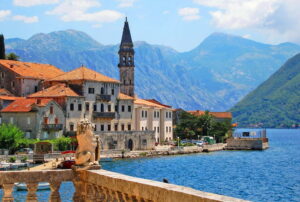
According to “Serbian Economist”, in the first half of 2026, Serbia became the largest source of foreign capital directed toward real estate purchases in Montenegro, according to data from the Central Bank of Montenegro (CBCG).
From January through June, foreign investors invested 237.77 million euros in Montenegrin real estate, which is 3.89% more than during the same period last year. Overall, gross foreign direct investment inflows into the country totaled 457.37 million euros, meaning real estate accounted for about 52% of all FDI inflows.
Serbia took the lead with 55.75 million euros, or 23.45% of all foreign investment in Montenegrin real estate.
Germany took second place with 22.9 million euros, and the United States came in third with 20.84 million euros. Switzerland contributed 18.5 million euros toward real estate purchases, and Turkey contributed 16.34 million euros.
Against this backdrop, the continuing decline in the role of Russian capital is particularly noticeable. In the first half of the year, only 5.37 million euros came from Russia for the purchase of Montenegrin real estate, placing it in tenth place. Poland and Belgium, among others, now rank higher than Russia in the list.
This trend began to take shape as early as last year. In the first quarter of 2025, Russia fell out of the top five largest markets for real estate buyers in Montenegro for the first time and ranked sixth. For 2025 as a whole, the volume of Russian investment across all sectors of Montenegro’s economy fell to 33.98 million euros, of which approximately 17.8 million euros went to real estate. By comparison, in the years 2020–2024, Russian capital was traditionally among the country’s largest sources of foreign investment.
However, it is not entirely accurate to refer directly to “Serbian citizens” or “Russians who purchased real estate” based on these figures. The CBCG methodology considers the country from which the payment originated, which may not correspond to the citizenship of the ultimate buyer or beneficiary. For example, a Russian citizen may pay for a property from an account in Serbia, the UAE, or another country. Therefore, the data primarily reflects a shift in the geography of financial flows in the real estate market.
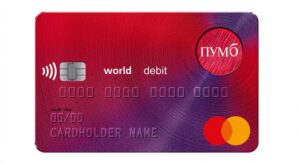
First Ukrainian International Bank (FUIB) has signed its first loan agreement with the National Development Institution (NUR) for EUR 2.9 million to finance Ukrainian entrepreneurs and companies, the bank announced on Monday.
The agreement was signed on August 28 by PUMB Deputy Chairman of the Board Artur Zagorodnikov and NUR Chairman of the Board Andriy Hapon.
“The signing of the first loan agreement with the NDR is an important practical outcome of the partnership we launched under state-sponsored preferential programs back in February 2020 and successfully continued several months ago by attracting funds from foreign investors,” Zagorodnikov said.
Under the terms of the agreement, NUR will provide PUMB with financial resources, which the bank will direct toward lending to individual entrepreneurs and micro, small, and medium-sized private enterprises operating and investing in Ukraine.
The funds may be used for investment projects, the modernization and development of production, the purchase of equipment, and the replenishment of working capital.
According to the National Bank, as of July 1, 2026, PUMB, with total assets of 248.63 billion UAH, ranked fifth among Ukraine’s 59 banks. The bank’s loan portfolio grew by 17.6% in the first half of the year, reaching 115.4 billion UAH.
BUSINESS, FUIB, INVESTMENT, LOAN, НУР

In January–June 2026, Ukrainian insurance companies increased commission payments to insurance intermediaries under mandatory auto liability insurance (OSCPV) policies by 58.6% compared to the same period in 2025—to 2.589 billion UAH, and for comprehensive auto insurance (CASCO) by 26.2%, to 2.330 billion UAH.
According to the website of the National Bank of Ukraine (NBU), commissions paid to intermediaries for “Green Card” insurance decreased by 20.9%, to 642.751 million UAH, while those for property insurance increased by 4.8%, to 516.8 million UAH, while commissions for voluntary medical insurance (VMI) rose by 18.1%, to 423.9 million UAH; commissions for assistance services increased by 36.4%, to 324.5 million UAH; and commissions for financial risk insurance rose by 4.3%, to 368.3 million UAH.
In addition, according to the regulator, expenses for marketing and advertising activities related to MTPL insurance products rose by 4% in the first half of 2026, to 14.5 million UAH; for the “Green Card,” they rose by 1.4%, to 2.3 million UAH; and for comprehensive auto insurance (CASCO)—by 16.8%, to 15.7 million UAH.
At the same time, expenses for maintaining and operating the insurer’s office under MTPL contracts increased significantly—by 61.7%, to 81.8 million UAH; for CASCO—by 11.6%, to 64 million UAH; “Green Card” insurance—decreased by 11.1%, to 12.7 million UAH; property insurance—increased by 36.6%, to 12.6 million UAH; and voluntary medical insurance (VMI)—by 3.1%, to 16.06 million UAH.
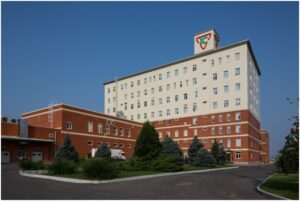
Bringing pharmaceutical production into compliance with European requirements demands significant investments from Ukrainian pharmaceutical manufacturers, which could lead to higher production costs, according to Anatoliy Reder, CEO of the pharmaceutical company “Interchem.”
“We are operating within the paradigm that our country is currently moving toward—alignment with European requirements. We must understand that compliance with European standards, EU directives, and the principles and approaches currently in effect in Europe will require significant additional investments from us—in production, regulatory processes, research, and so on. In other words, this involves enormous additional costs in order to meet, within a relatively short period of time, the requirements that are currently the norm in the European Union. With a gradual transition to these requirements, it must be acknowledged that production costs will rise significantly,” he said in an interview with the “Interfax-Ukraine” news agency.
As Reder noted, compliance with European standards—particularly those incorporated into Ukraine’s law on medicinal products—will automatically require additional investments, which will inevitably lead to price increases.
“We need to speak openly about this. You can’t make pills out of thin air. If additional controls are needed, additional costs will be incurred. Today, we monitor every batch of manufactured products throughout their entire shelf life—something that wasn’t required before—and this involves hundreds and thousands of manufactured batches and, consequently, enormous costs. The additional control points in production required of us by European Union legislation—this means additional equipment, additional laboratory staff, and additional production processes—represent objectively large-scale investments. These costs will inevitably lead to price increases,” he stated.



