
According to the “Serbian Economist,” as of September 1, 2026, Serbia’s long-term government bonds denominated in dinars have become available to international investors through the Euroclear Bank system, which is expected to simplify global funds’ access to the Serbian debt securities market and increase its liquidity.
The Serbian Ministry of Finance announced this on August 31. At the same time, the National Bank of Serbia announced that Euroclear Bank has become a participant in its RTGS payment system and in the securities settlement system of the Central Registry, Depository, and Clearing House of Serbia.
In the first phase, transactions involving five long-term issues of Serbian government bonds denominated in dinars, which are already in circulation, can be conducted through Euroclear. In the future, the system will also be available for certain new issues of government securities.
International investors can now hold and settle Serbian dinar-denominated bonds through their existing Euroclear accounts, without having to set up a separate infrastructure directly in the Serbian market.
For large investment funds, this significantly reduces operational barriers. Banks, pension and investment funds, insurance companies, and asset management firms that already operate through Euroclear will find it easier to include Serbian dinar-denominated securities in their portfolios.
Serbian Finance Minister Sinisa Mali called the connection to Euroclear an important step toward transitioning from a domestic to an internationally integrated government securities market.
The project to integrate the Serbian market with the international settlement infrastructure has been underway since 2019, with the participation of the Ministry of Finance, the National Bank of Serbia, the Central Securities Register, and international partners.
The country’s credit rating has served as an additional factor in attracting international capital. Back in October 2024, S&P Global Ratings upgraded Serbia’s sovereign rating to investment grade BBB- with a stable outlook for the first time. In July 2026, Fitch maintained Serbia’s rating at BB+ with a positive outlook.
The issuance of dinar-denominated infrastructure bonds through Euroclear also has longer-term significance for Serbia. Expanding the pool of foreign buyers could increase trading volume in the secondary market and help establish a more liquid yield curve in dinars.
Euroclear Bank is one of the largest international clearing and depository institutions, enabling institutional investors to hold and settle securities from various countries through a single infrastructure.
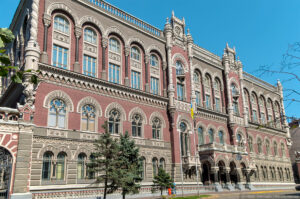
As of July 1, 2026, Ukrainians’ debt to microfinance organizations reached 32.32 billion UAH, an increase of 4.7 billion UAH, or 17%, since the beginning of the year, according to data from the National Bank of Ukraine analyzed by OpenDataBot.
In the first half of the year, Ukrainians entered into 4.196 million loan agreements with MFOs totaling 37.5 billion UAH. At the same time, the number of microloans issued remained virtually unchanged compared to last year—approximately 700,000 agreements were signed each month.
The main change was an increase in the amount borrowers are taking out from MFIs. In the second quarter, the average microloan amount reached 9,170 UAH, compared to about 6,290 UAH a year earlier. Thus, over the course of the year, the average loan amount increased by approximately 46%.
The current trend differs significantly from that seen in the first months of the full-scale war. By the end of 2022, total microloan debt had fallen to approximately 8 billion UAH, but it began to rise again in 2023. The current figure is already more than four times higher than the level at the end of 2022.
The rise in debt is primarily due not to an increase in the number of loans, but to a rise in the average amount per contract. This may indicate both an increase in the population’s need for short-term financing and a general nominal rise in prices and incomes.
At the same time, microloans remain one of the most expensive forms of consumer financing. To assess the actual cost of a loan, consumers should focus not only on the advertised daily rate but also on the real annual percentage rate and the total amount of payments specified in the loan agreement.
The National Bank regulates and supervises financial companies within the non-bank financial services market and publishes their quarterly supervisory statistics.
The primary source of data is the National Bank of Ukraine. This OpenDataBot analysis was published on September 1, 2026.
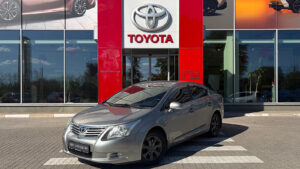
Sales of new passenger cars in August of this year fell by 27% compared to the same month in 2025—to nearly 5,000 units, which is also 14% less than the figure for July of this year, Ukravtoprom reported on its Telegram channel.
According to the association, the most popular brand remains Japan’s Toyota, which increased sales by 9% compared to August of last year—to 1,092 units.
Skoda holds second place with 600 units (+47%), while Renault took third with 361 units (-32%).
The top ten also included BYD—229 units (-69%), which ranked second last year amid rising demand for electric vehicles; Hyundai—261 units (-34%); Volkswagen—260 units (-51%); Mazda—187 units (+7%); BMW—186 units (-45%); Suzuki—156 units (-32%); and Mitsubishi—122 units (-2%).
The best-selling vehicle of the month was the Toyota RAV-4 crossover (in August 2025, it was the Renault Duster).
According to “Ukravtoprom,” a total of over 43,700 new passenger cars were sold in the country from January through August, which is 5% less than last year.
As previously reported, according to “Ukravtoprom,” the new passenger car market grew by 17% in 2025 compared to 2024, reaching 81,300 units.
auto market, CAR, SALES, TOYOTA, UKRAINE
Продажи новых легковых автомобилей в августе этого года сократились на 27% по сравнению с тем же месяцем 2025 года – почти до 5 тыс. шт., что также на 14% меньше показателя июля текущего года, сообщил «Укравтопром» в Telegram-канале.
По данным ассоциации, самой популярной маркой остается японская Toyota, которая на 9% увеличила продажи по сравнению с августом прошлого года – до 1092 шт.
Второе место занимает Skoda – 600 шт. (+47%), третье – Renault – 361 шт. (-32%).
В десятку самых популярных также вошли BYD – 229 шт. (-69%), которая в прошлом году занимала второе место в рейтинге на волне роста спроса на электромобили; Hyundai – 261 шт. (-34%); Volkswagen – 260 шт. (-51%); Mazda – 187 шт. (+7%); BMW – 186 шт. (-45%); Suzuki – 156 шт. (-32%) и Mitsubishi – 122 шт. (-2%).
Бестселлером месяца стал кроссовер Toyota RAV-4 (в августе 2025 года – Renault Duster).
По данным «Укравтопрома», всего в январе-августе в стране было продано более 43,7 тыс. новых легковых автомобилей, что на 5% меньше, чем в прошлом году.
Как сообщалось, по данным «Укравтопрома», в 2025 году рынок новых легковых автомобилей вырос на 17% по сравнению с 2024 годом – до 81,3 тыс. шт.
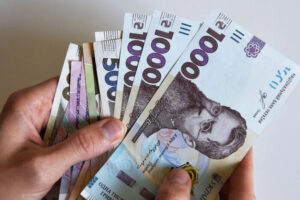
According to Experts.news, the average microloan amount in Ukraine rose to 9,170 UAH in the second quarter of 2026, which is nearly 1.5 times higher than the figure for the same period last year, according to an analysis by the Experts Club think tank based on data from OpenDataBot.
In the second quarter of 2025, the average size of such a loan was approximately 6,290 UAH. Thus, over the course of a year, the average microloan amount increased by about 2,900 UAH, or 46%.
At the same time, Ukrainians did not turn to microfinance organizations significantly more often. On average, about 700,000 microloans are issued per month, and the total number of contracts for January–June 2026 amounted to 4.196 million.
The total amount of microloans issued in the first half of the year reached 37.5 billion UAH.
At the same time, the population’s accumulated debt to MFOs is growing. As of July 1, it stood at 32.32 billion UAH—4.7 billion UAH, or 17%, more than at the beginning of the year.
Original source: OpenDataBot—MFO market research for the first half of 2026
The massive attacks on Ukraine’s energy infrastructure have shown that the stable operation of businesses and communities increasingly depends on their ability to secure backup power sources. This issue became particularly pressing last winter during prolonged blackouts. The problem is especially acute for educational institutions, as every hour of instruction not lost due to power outages contributes to the development of the country’s human capital and the preparation of the generation that will rebuild Ukraine.
To ensure the educational process is not interrupted, IDS Ukraine and its production units—the Morshyn “Oscar” Mineral Water Plant and the Myrhorod Mineral Water Plant—are implementing a comprehensive project in collaboration with the local governments of Morshyn and Myrhorod to provide backup power for the communities’ educational infrastructure.
The project will last two years. As a pilot initiative, it began in Myrhorod, where in 2025, IDS Ukraine, together with the Myrhorod Mineral Water Plant, helped provide backup power to nine schools and kindergartens*. This year, backup power was installed in four educational institutions—two lyceums and two gymnasiums**. As a result, Myrhorod has become one of the first cities in Ukraine where all educational institutions have an alternative energy source. A total of 5,519 children from the community attend these schools. Total investment in the project amounted to 6.1 million UAH over the course of two years.
This year, the project expanded to include the Morshyn community. Three educational institutions in the city, attended by 534 students, have already been equipped with backup power sources. The institutions received 3 hybrid inverters and 37 rechargeable batteries. During the first phase of the project, the company’s investment totaled 3.1 million UAH.
Thus, the total investment by IDS Ukraine and its manufacturing divisions in the project to ensure energy independence for schools and kindergartens in Myrhorod and Morshyn amounts to 9.2 million hryvnias.
“Today, Ukrainian schools are shaping a generation of people on whom the future recovery, development, and competitiveness of our country will depend. That is why it is extremely important today to ensure that children have the opportunity to continue their education regardless of external circumstances. For IDS Ukraine, supporting education is not just a social initiative, but a contribution to Ukraine’s future. When we help schools remain resilient in the face of challenges, we are effectively investing in the generation on which the country’s development will depend in the coming decades,” said Marko Tkachuk, CEO of IDS Ukraine.
To implement the project in both cities, we were able to follow a well-established process in which local councils identified a priority list of educational institutions in need of energy-saving solutions, and specialists brought in by the companies conducted an audit to select the optimal solutions. IDS Ukraine, the Myrhorod Mineral Water Plant, and the Morshyn “Oskar” Mineral Water Plant financed the purchase, delivery, installation, and configuration of hybrid inverters and battery units.
IDS Ukraine takes a comprehensive approach to addressing energy independence for both community infrastructure and its own production facilities. In 2025, a solar power plant was commissioned at the Myrhorod Mineral Water Plant; the next phase is the pilot launch of the company’s own solar power generation at the “Oscar” plant in Morshyn. At the same time, the company is developing a comprehensive energy strategy with a planning horizon through 2031.
IDS Ukraine is a Ukrainian group of companies founded in 1996. The group owns the “Morshynska,” “Mirgorodska,” “Alaska,” and “Aqua Life” brands.
IDS Ukraine is the market leader in bottled water and has a significant influence on the formation and development of the industry. The total amount of capital investments, including those in production, over the past 5 years has reached 2.3 billion UAH. IDS Ukraine is the largest payer of taxes and fees in the industry. Tax contributions for 2025 total 1.3 billion UAH, which is 12.7% more than in 2024. The company employs over 3,000 people and plays a significant role as the primary employer for small cities such as Myrhorod and Morshyn.



