
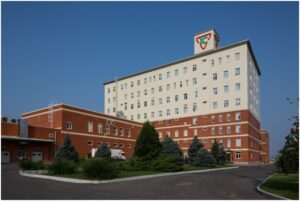
Bringing pharmaceutical production into compliance with European requirements demands significant investments from Ukrainian pharmaceutical manufacturers, which could lead to higher production costs, according to Anatoliy Reder, CEO of the pharmaceutical company “Interchem.”
“We are operating within the paradigm that our country is currently moving toward—alignment with European requirements. We must understand that compliance with European standards, EU directives, and the principles and approaches currently in effect in Europe will require significant additional investments from us—in production, regulatory processes, research, and so on. In other words, this involves enormous additional costs in order to meet, within a relatively short period of time, the requirements that are currently the norm in the European Union. With a gradual transition to these requirements, it must be acknowledged that production costs will rise significantly,” he said in an interview with the “Interfax-Ukraine” news agency.
As Reder noted, compliance with European standards—particularly those incorporated into Ukraine’s law on medicinal products—will automatically require additional investments, which will inevitably lead to price increases.
“We need to speak openly about this. You can’t make pills out of thin air. If additional controls are needed, additional costs will be incurred. Today, we monitor every batch of manufactured products throughout their entire shelf life—something that wasn’t required before—and this involves hundreds and thousands of manufactured batches and, consequently, enormous costs. The additional control points in production required of us by European Union legislation—this means additional equipment, additional laboratory staff, and additional production processes—represent objectively large-scale investments. These costs will inevitably lead to price increases,” he stated.
According to Fixygen, buybacks—a strategy long used by public companies to support their stock prices—are becoming one of the main tools of the cryptocurrency market.
In 2026, crypto projects have already allocated approximately $640 million to buy back their own tokens—a historic high, according to the Financial Times.
By comparison, this figure stood at about $545 million for all of 2025, and in 2024, it was just $366,000.
Nearly 90% of current buybacks are accounted for by Hyperliquid and pump.fun.
Hyperliquid allocates virtually all of the platform’s revenue toward purchasing HYPE. Against the backdrop of this policy, the token’s value has risen by approximately 70%.
The economic logic is similar to a stock buyback: a company or protocol uses its cash flow to reduce the number of tokens in free circulation and increase the economic value of the remaining ones.
However, there is a fundamental difference between a token and a stock. A stock represents an ownership stake in a company, whereas a token holder’s rights may be significantly weaker or may not confer any legal right to profits at all.
Therefore, a buyback alone does not guarantee growth. Some projects continued to lose value even after launching buyback programs.
Nevertheless, the emergence of a $640 million buyback market indicates that the cryptocurrency industry is gradually adopting tools from traditional corporate finance.

On August 31, the Zaporizhzhia municipal enterprise “Zaporizhzhiaelektrotrans” announced a tender for accident insurance covering the life, health, and ability to work of drivers, operators, and passenger check-in attendants—including ticket inspectors for road and urban electric transportation.
According to the Prozorro electronic government procurement system, the estimated cost of the services is 98,900 UAH.
The deadline for submitting bids is September 8.
Representatives of Ukrainian water and wastewater utilities are exploring opportunities for automation, digitalization, and improving the energy resilience of their infrastructure using Schneider Electric solutions.
In August, a specialized Schneider Electric conference dedicated to technologies for water supply and wastewater treatment companies was held in Kyiv. The municipal utility “Chornomorskvodokanal” in the Odesa region, among others, reported its participation in the event.
The main topics of discussion included the automation of production processes, the digitalization of water supply systems, improving energy efficiency, and ensuring a reliable power supply for critical infrastructure.
For Ukrainian water utilities, the energy component is of fundamental importance, as pumping stations, wastewater treatment plants, water treatment systems, and sewer facilities are directly dependent on a stable power supply.
At the same time, the modernization of the sector is taking place amid limited financial resources available to utility companies.
Schneider Electric’s portfolio for the water supply sector includes automation, dispatch, and power management systems; controllers; SCADA; electric motor control systems; digital analytics; and specialized EcoStruxure solutions.
Specifically, the company offers EcoStruxure Water Advisor, EcoStruxure Asset Advisor, EcoStruxure Automation Expert, EcoStruxure Power Monitoring Expert, and SCADAPack telemetry systems.
These technologies enable the integration of data from pumping stations, wastewater treatment plants, electrical equipment, and networks into a single monitoring system.
According to Schneider Electric, the digital transformation of water utilities helps address several key industry challenges: water loss, high energy costs, aging infrastructure, unplanned equipment shutdowns, and the need to detect failures more quickly.
In the Ukrainian context, this is compounded by the need to improve energy resilience. A modern water utility must, in fact, have both automated process control and the ability to continue operations in the event of an external power outage.
This requires a comprehensive architecture: backup power sources, automatic load switching, control of electric motors and pumps, energy consumption monitoring, SCADA, and remote control systems.
It is precisely this combination of automation and energy management that is gradually becoming one of the key areas of modernization for Ukraine’s municipal infrastructure.
It is noteworthy that “Chornomorskvodokanal” itself hosted representatives of the international SPARC program in August, who conducted an audit of the energy equipment previously provided to the company. This indicates that the modernization of public utility infrastructure is increasingly combining international technical assistance with the implementation of modern management and control systems.
Schneider Electric has been operating in Ukraine since 1994 and provides solutions for the energy sector, industry, buildings, data centers, and critical infrastructure.
Automation, ENERGY, Schneider Electric, UKRAINE, water utility
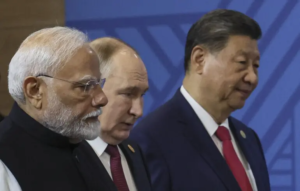
Indian Prime Minister Narendra Modi, during a meeting with Russian President Vladimir Putin in Bishkek on August 31, stated the need to move toward ending hostilities and finding a sustainable peaceful solution.
“Every day of war sets humanity back. We must work to end hostilities,” Modi said during the open part of the bilateral talks. He was referring to the ongoing Russia-Ukraine war. The Indian prime minister has consistently advocated ending it through negotiations and diplomacy. At his previous meeting with Putin at the SCO summit in Tianjin in September 2025, Modi also called for accelerating the end of the conflict and finding a long-term peaceful solution.
Modi and Putin met in Bishkek, the capital of Kyrgyzstan, on the sidelines of the 26th summit of the Shanghai Cooperation Organisation (SCO). The formal meeting of the SCO Council of Heads of State is scheduled for September 1, while on August 31 the leaders are holding bilateral meetings and participating in other summit events.
The SCO was established on June 15, 2001, in Shanghai by Kazakhstan, China, Kyrgyzstan, Russia, Tajikistan and Uzbekistan on the basis of the so-called “Shanghai Five.” India and Pakistan became full members in 2017, Iran in 2023, and Belarus in 2024.
The SCO currently includes 10 states: Belarus, India, Iran, Kazakhstan, China, Kyrgyzstan, Pakistan, Russia, Tajikistan and Uzbekistan. Their combined population exceeds 3.4 billion people, and the organisation’s countries account for about a quarter of global GDP. Afghanistan and Mongolia are observers, while another 15 countries have dialogue partner status, including Azerbaijan, Armenia, Egypt, Turkey, Saudi Arabia and the UAE.
The SCO deals with regional security issues, while the organisation itself officially stresses that it is not a military alliance. Its permanent secretariat is located in Beijing, and the Regional Anti-Terrorist Structure is based in Tashkent.
The summit in Bishkek is taking place in the year of the 25th anniversary of the SCO. The Indian government had previously said that Modi intended to use the forum to promote three New Delhi priorities — security, transport and economic connectivity, and new opportunities for cooperation.
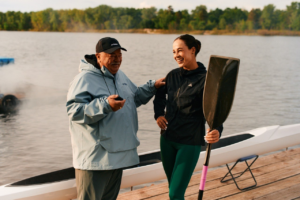
Ukrainian canoeist Liudmyla Luzan has won the “Athlete of the Year” nomination as part of the 30th anniversary season of the nationwide “Person of the Year 2025” programme.
Liudmyla Luzan is an Honoured Master of Sport of Ukraine, a three-time Olympic medallist, a multiple world and European canoeing champion, and one of the most decorated Ukrainian athletes of the modern era.
She was born on 27 January 1997 in Ivano-Frankivsk. She began her sporting career in artistic gymnastics, to which she devoted ten years and earned the title of Master of Sport of Ukraine. It was gymnastics that instilled in her the discipline, endurance and diligence that later became the foundation of her success in canoeing.
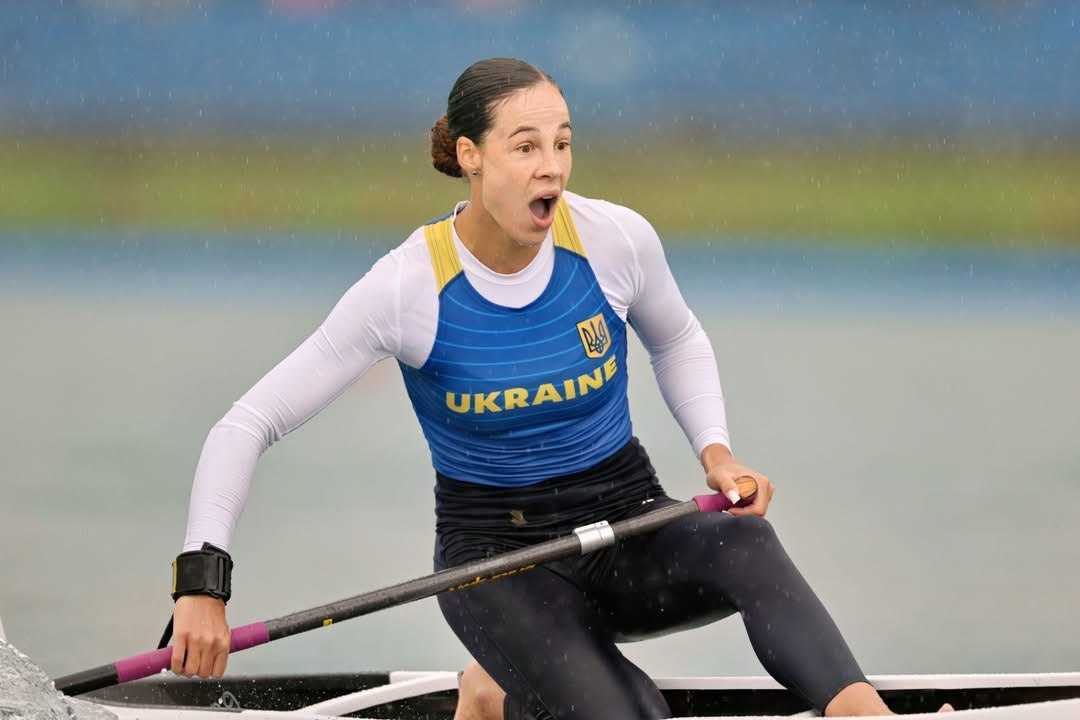
After switching to canoeing, Liudmyla’s first coach was Serhii Batomunkoiev, who recognised the athlete’s considerable potential. She later continued training under Mykola Matsapura, an Honoured Coach of Ukraine. Liudmyla represents Poltava Region and the city of Horishni Plavni.
One of the major milestones in her sporting career was the Tokyo Olympic Games, where Luzan won a silver medal in the women’s canoe double 500 metres and a bronze medal in the women’s canoe single 200 metres. At the 2024 Olympic Games in Paris, she won another Olympic medal, confirming her status as one of the world’s leading canoeists.
Liudmyla Luzan remains one of the leaders of Ukraine’s national team and competes successfully in both individual and team events.
For her outstanding sporting achievements and contribution to the development of Ukrainian sport, she has received state honours. Luzan is a full bearer of the Order of Princess Olga and has also been awarded the Order of Merit.
Since the beginning of the full-scale war, the athlete has continued to represent Ukraine at the world’s largest international competitions. Her performances and victories make it possible to raise the Ukrainian flag regularly at the world’s leading sporting arenas.
In addition to her professional career, Liudmyla promotes canoeing, motivates young people to participate in sport, takes part in social and charitable initiatives, and supports the development of Ukrainian sport.
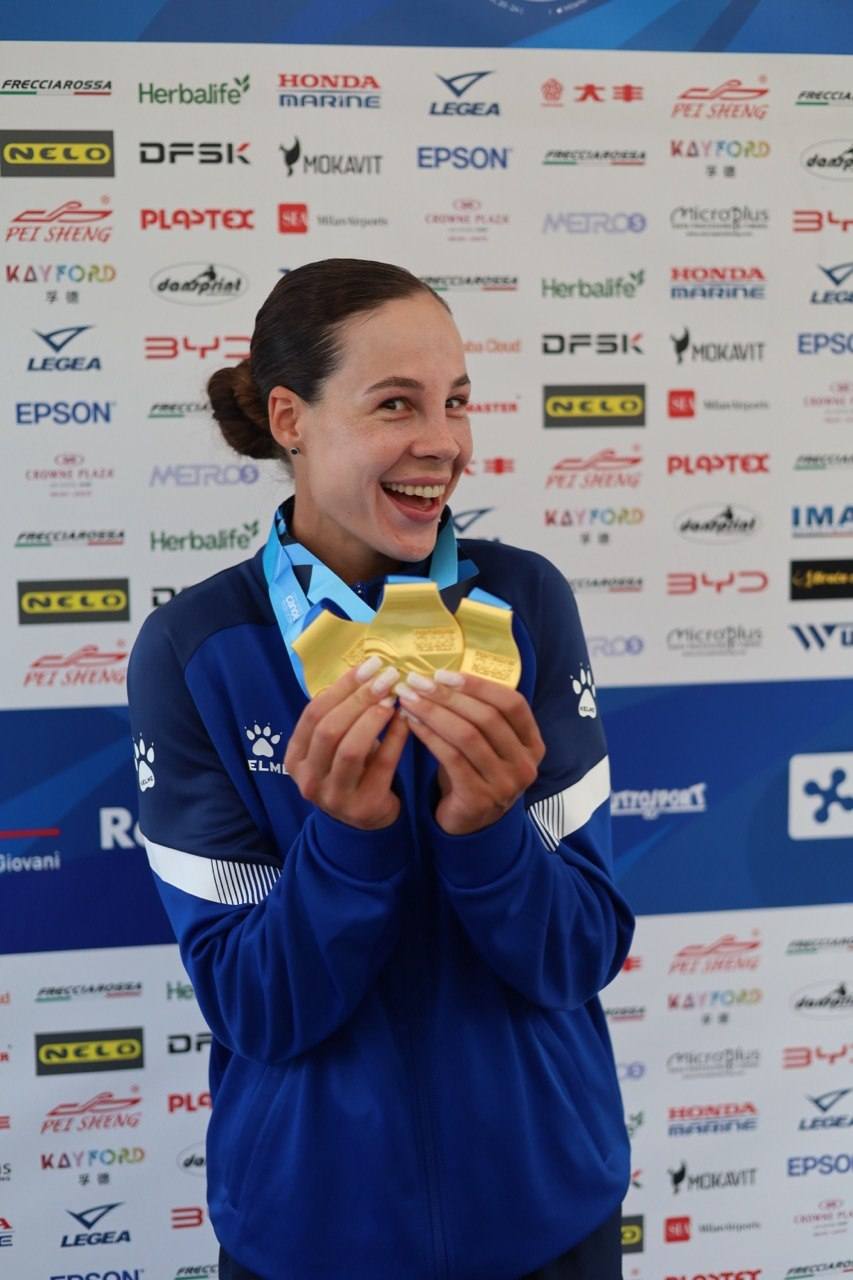
Luzan is currently preparing for her third Olympic Games. She names winning Olympic gold for Ukraine as her main sporting goal.
The awarding of the “Athlete of the Year” title to Liudmyla Luzan took place as part of the 30th anniversary season of the “Person of the Year” programme, which annually honours Ukrainians for their professional achievements, civic stance and contribution to the development of the state.
I would like to draw attention to one detail before publication: there is a discrepancy in the source text you provided — in the introduction, Luzan is described as a four-time world champion, while later she is described as an eight-time world champion. Therefore, in this version, I deliberately wrote “multiple world champion” so as not to perpetuate a potentially incorrect figure. If you wish, I can separately verify the current number of her titles following the 2025 season and provide the exact figure.
Open4Business is an information partner of the nationwide “Person of the Year 2025” programme.



