
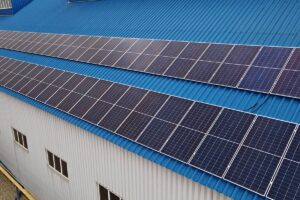
In the summer of 2026, Nibulon Joint Venture LLC installed ground-mounted solar power plants (SPPs) at its Bessarabsk, Zolotonosha, and Denykhiv branches, the company’s press service reported.
As a result, five grain elevator complexes are now equipped with solar power plants, accounting for over 20% of the company’s total capacity. Depending on the elevator’s operating mode, each SPP covers between 25% and 50% of its electricity needs, the statement noted.
The solar power plants at the three branches have a total capacity of up to 350 kW each and are equipped with 546–566 double-sided solar panels with a capacity of up to 620 W. The plants can operate either from the external power grid or in conjunction with diesel generators in the event of a power outage.
The company noted that the development of its own solar power generation is part of its decarbonization strategy. By 2030, Nibulon plans to equip 30% of its grain elevator complexes with solar power plants.
Installing solar power plants reduces the need to purchase electricity on the market and allows surplus electricity to be fed into regional power grids. Additionally, operating solar power plants alongside diesel generators reduces diesel fuel consumption during scheduled or emergency power outages.
Before the war, Nibulon Joint Venture LLC cultivated 82,000 hectares of land across 12 regions of Ukraine and exported agricultural products to more than 70 countries worldwide. In 2021, the grain trader exported 5.64 million metric tons of agricultural products—the highest volume in its history. After the war began, the company was forced to relocate its headquarters from Mykolaiv to Kyiv. Currently, “Nibulon” cultivates 52,000 hectares of land across four clusters. In addition to 23 grain elevator complexes, Nibulon has its own trucking and rail capabilities, as well as a fleet built at its own shipyard. Even during wartime, this fleet continues to provide river transportation services.
The company is also actively developing its own humanitarian demining unit to restore safety on leased lands and assist Ukraine’s agricultural sector. It is a certified mine action operator.

Nova Post in the Czech Republic, part of the Nova Group, processed nearly 150,000 shipments from January through June 2026 and expanded its network to 45 service locations in 27 cities across the country, according to a company statement released on Thursday.
According to the Nova Post press release in the Czech Republic, the company paid 6.9 million Czech korunas in taxes, and its network now includes 29 branches of various formats and 16 parcel pickup points (PUDO).
It is noted that in the first six months of 2026, the company opened six new branches and two new PUDOs in the Czech Republic.
Nova Post noted that since June, users in the Czech Republic have had access to services such as one-hour door-to-door pickup, seven-day-a-week delivery, transportation of oversized and non-standard cargo, next-day delivery (IF-U) nationwide, and digital services for managing deliveries via smartphone.
The company noted that thanks to its partnership with the AlzaBox and OX Point networks of automated parcel lockers, users can send and receive packages through a network of over 3,500 parcel lockers nationwide.
“In a short time, we have built not only our own network in the Czech Republic but also one of Nova Post’s key operational centers in Europe. It is from here that we handle the sorting, customs clearance, and processing of international shipments,” said Andriy Artemenko, CEO of Nova Post in the Czech Republic, as quoted in the press release.
According to him, the next stage of development will involve installing 300 of its own parcel lockers in the Czech Republic’s largest cities by the end of the year, as well as opening another 20 branches and dozens of PUDO locations.
Among other things, Nova Post in the Czech Republic plans to strengthen its cooperation with Czech e-commerce companies, “so that even more online stores choose Nova Post as their logistics partner for deliveries within the Czech Republic, Europe, and worldwide,” Artemenko emphasized.
As reported in May, Nova Post has launched its own courier delivery service in the Czech Republic, which is already available in Prague and the Plzeň, South Moravian, Moravian-Silesian, and Karlovy Vary regions
Co-owner of the express delivery leader “Nova Poshta” Vyacheslav Klimov noted during the “Dialogues with NV” event dedicated to European integration that Nova Post Europe, part of the NOVA Group, plans to double its network of branches in Europe by 2026 and keep its strategic focus on ensuring the fastest possible delivery speeds.
CZECH REPUBLIC, DELIVERY, LOGISTICS, Nova Post, parcel locker
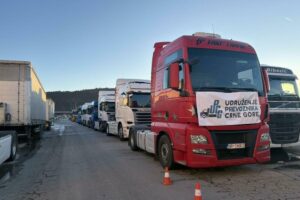
According to The Serbian Economist, Serbian truckers, together with their colleagues from Montenegro, Bosnia and Herzegovina, and North Macedonia have announced their intention to begin blocking freight border crossings into the European Union starting September 14, 2026, if a solution to the issue of professional drivers’ stay in the Schengen Area has not been found by that time.
This was reported by the Serbian association of international carriers, “Međunarodni transport.” According to the association, drivers from the Western Balkan countries continue to be detained, deported, and turned back at the borders for exceeding the permitted length of stay in the Schengen Area. The association claims that several dozen Serbian drivers are turned back at the borders every day, and there have been more than 50 such cases in the past week alone.
Before the blockade begins, the carriers intend to make one more attempt to reach an agreement with European authorities. On August 31, from 12:00 p.m. to 2:00 p.m., a peaceful protest will take place in Belgrade in front of the EU delegation at 40/V Vladimira Popovića Street. Similar protests are planned in front of the EU delegations in Montenegro, Bosnia and Herzegovina, and North Macedonia.
In addition, another meeting between representatives of the transport companies and the European Commission is scheduled for September 1. If it does not lead to a concrete decision, starting September 14, transport companies from the four countries intend to begin protests at border crossings.
The cause of the conflict is the 90/180 rule in effect in the Schengen Area, under which a third-country national may stay in the Schengen Area for no more than 90 days within any 180-day period. This is sufficient for the average tourist, but international carriers argue that professional drivers are physically unable to make regular trips to the EU under such a restriction.
The rule itself existed previously, but with the introduction of the Electronic Entry/Exit System (EES), enforcement has become significantly stricter. The system automatically records the entries and exits of third-country nationals and, as of April 10, 2026, is fully operational at the external borders of the Schengen Area, with the exception of Ireland and Cyprus. The possibility of “losing” some days between passport stamps has effectively disappeared.
At the same time, the European Commission officially acknowledges the existence of the problem. The EU Visa Policy Strategy, adopted on January 29, 2026, states that a number of mobile professions, particularly truck drivers serving European businesses, may need to stay in several Schengen countries for more than 90 days within a 180-day period.
The European Commission has stated that it will seek a solution, including the possibility of introducing special EU-wide rules regarding extended short-term stays. However, a specific mechanism has not yet been approved.
For Serbia, this issue is particularly acute due to the significant dependence of its exports on road transport to the EU. Carriers warn that some drivers are already refusing to make trips to EU countries.
This will be the second major regional protest by carriers in 2026. Starting on January 26, drivers from Serbia, Montenegro, Bosnia and Herzegovina, and North Macedonia simultaneously blocked freight terminals at the borders with the EU. In Serbia, the protest lasted five days and was called off on January 30 after the European Commission included the issue of professional drivers in its new visa strategy.
The economic impact of the previous blockade was significant. According to estimates by the Serbian Chamber of Commerce and Industry, the restrictions affected about 93% of exports from the four Western Balkan countries, and potential business losses were estimated at up to 92 million euros per day.
For Ukraine, a potential blockade is also significant, although its impact will be considerably less than for Serbia and other Western Balkan countries. The main truck traffic between Ukraine and the EU passes directly through Poland, Slovakia, Hungary, and Romania, so a blockade of the Serbian borders will not halt Ukrainian-European trade.
However, the issue could directly affect Ukrainian trucks traveling to Serbia, Bosnia and Herzegovina, Montenegro, North Macedonia, Albania, and Greece, as well as carriers that use Serbia as a transit country. If the protest follows the January scenario and the Batrovci freight terminal on the border with Croatia, the Horgos terminal on the border with Hungary, the border crossings with Romania, and the Gradina terminal on the border with Bulgaria are blocked, Ukrainian carriers will find themselves in the same lines as other international trucks.
The most vulnerable routes may be those from Ukraine through Hungary or Romania to Serbia and onward to Montenegro, Bosnia, and North Macedonia, as well as transit toward the Adriatic and the southern Balkans. Rerouting cargo through Romania and Bulgaria or other border crossings is not always possible and entails additional mileage, fuel costs, and longer delivery times.
This is a particularly sensitive issue for Ukrainian logistics due to the economy’s heavy reliance on land transport corridors. According to the European Commission, in July 2026, the “Solidarity Lanes”—established after the start of the full-scale war—accounted for approximately 90% of Ukraine’s imports and 95% of its non-agricultural exports, although only a portion of these shipments is related to the Balkan route. Therefore, a strike in the Western Balkans alone is not capable of paralyzing Ukrainian foreign trade, but for companies that work specifically with the Balkans, it could significantly increase logistics costs.
A separate issue concerns Ukrainian professional drivers themselves. Ukraine has a special agreement with the EU on road transport, which has been extended until March 31, 2027. It liberalizes bilateral and transit freight transport and allows Ukrainian carriers to operate within the EU without some of the former licensing restrictions.
However, this agreement primarily regulates carriers’ access to the market, not the length of stay of a specific driver in the Schengen Area. Therefore, a Ukrainian driver entering the Schengen Area as a third-country national on a short-term stay and who does not hold a long-term visa, residence permit, or other relevant status must generally also comply with the 90-day limit within a 180-day period. The European Commission notes that holders of long-term visas and residence permits are not subject to this restriction.
https://t.me/relocationrs/3545

According to Serbian Economist, the authorities of the Serbian city of Niš have taken another step toward the construction of a new state-owned data center worth 50 million euros: the city council approved the transfer of a 37,400-square-meter plot of land near Niška Banja to the Republic of Serbia.
According to the city council’s decision, the undeveloped plot, covering 3.74 hectares, is to be transferred to the state free of charge. The final decision must be approved by the Niš City Assembly. The plot is located near the IMI industrial complex in the direction of Niška Bana.
The preliminary cost of the project is estimated at approximately 50 million euros. The exact technical specifications of the future data center have not yet been officially published, but earlier reports mentioned a capacity of several dozen megawatts and the facility’s use not only for storing government data but also as part of a broader digital infrastructure for southern Serbia.
One of the most interesting features of the project previously cited was the possibility of using the heat generated by the server equipment for Niš’s district heating system. Officials spoke of the potential to provide heat to up to 8,000 apartments.
The project is of strategic importance to Niš. The city is the main economic and transportation hub of southern Serbia, located on the routes to North Macedonia and Bulgaria, and already has a university, a Science and Technology Park, and a significant electronics and IT industry cluster.
Locating the national data center in Niš will also allow for the geographic distribution of the country’s critically important digital infrastructure. Currently, its main national hub is the data center in Kragujevac.
In April 2026, new 8 MW modules were commissioned at the Kragujevac National Data Center, bringing the complex’s total power capacity to 14 MW. A new supercomputer based on NVIDIA graphics processing units was also launched there.
https://t.me/relocationrs/3546

The EU economy today faces challenges such as rising energy prices, fragmentation of the single market, complex administrative rules, and competition that is not always fair, said European Commission (EC) President Ursula von der Leyen.
“For a long time, the European economic model was based on several self-evident truths: cheap imported energy, open global trade, ever-wider access to the Chinese market, strategic protection from the U.S., and the West’s technological edge. These truths have disappeared,” the EC President stated while delivering a speech on Thursday in Paris at the annual “2026 Meeting of French Entrepreneurs” conference.
Von der Leyen sees the solution to these pressing problems as restoring entrepreneurs’ freedom to invest in the short term and, in the long term, making innovation, productivity, and scaling up the sustainable drivers of European economic growth.
The European Commission President outlined her prescriptions for healing the European economy.
The first priority is to simplify regulations and restore a level playing field. The goal is to reduce the administrative burden by 25% for all businesses and by 35% for small and medium-sized enterprises by 2029.
“However,” von der Leyen continued, “the demand for simplicity must be combined with the demand for fairness regarding foreign competition. This is particularly relevant to our relations with China. China is our major economic partner, and our position is clear and unwavering: to reduce risks, but not to sever ties. However, being a partner does not mean putting up with constant imbalances.”
She identified the financing of EU member states’ economies as the second priority. In her view, far too many projects remain stalled because the initial investment step is too risky, demand is too uncertain, or capital is too expensive. Of course, the EC President noted, these efforts cannot be financed solely through national budgets.
“But Europe has savings. Unfortunately, these savings are ‘idle.’ 10 trillion euros in household savings continue to sit in bank deposits, and a significant portion of European savings is invested outside our continent. Europe must now channel these funds to support its own businesses,” von der Leyen said.
Among other measures to strengthen the EU economy, she highlighted the comprehensive development and consolidation of the EU single market, reducing energy costs, the adoption of artificial intelligence as a “powerful driver of productivity,” and expanding free trade with international partners.

PJSC “Euroshpon-Smyga” (Smyga, Rivne Oblast), a leading Ukrainian manufacturer of sawn veneer, saw its net profit decline by 29.2% in January–June 2026 compared to the same period in 2025, down to 109.4 million UAH.
According to the company’s financial statements published on its website, its net revenue for this period increased by 18.4% to 630.3 million UAH.
The company reported UAH 168.9 million in gross profit (down 3.6%) amid a 31.8% decline in operating profit to UAH 132.2 million.
Retained earnings as of the end of the reporting period stood at UAH 1.23 billion.
According to the report, in the second quarter of this year, “Euroshpon-Smiga’s” net profit fell by 41.7% compared to April–June 2025—to 54.2 million UAH—while net sales revenue rose by nearly 15%—to 311.7 million UAH.
As of early July of this year, the company employed 430 people.
According to its own information, the trade and industrial company “Euroshpon-Smiga” is the leading manufacturer of planed veneer in Ukraine. It produces lumber, planed veneer, and finger-jointed veneer from various wood species. Its products comply with international standards and are FSC-certified.
Last year, the company exported 81.6% of its total sales, amounting to 901.1 million UAH; importing countries included Poland, Lithuania, Spain, Slovakia, Belgium, and the United States.
In 2025, its net profit increased by 14.7%—to 258.8 million UAH—compared to 2024, as net revenue rose by 15.6%—to 1 billion 105 million UAH. This year, shareholders approved dividend payments twice—totaling 50 million UAH.



