
The State Tax Service of Ukraine (STS) has reminded taxpayers of the possibility of exemption from value-added tax (VAT) liabilities in the event of the destruction or loss of goods due to force majeure during a state of war or a state of emergency.
The agency’s website states that, pursuant to paragraph 32¹ of Subsection 2 of Section XX of the Tax Code of Ukraine (TCU), goods purchased by a taxpayer for use in taxable transactions but lost as a result of force majeure are not considered to have been used in non-taxable transactions or outside of business activities. In such cases, the taxpayer is not required to accrue VAT liabilities under paragraph 198.5 of Article 198 of the Tax Code.
At the same time, the service emphasized that this provision may be invoked only if there is proper documentary evidence. To this end, the taxpayer must have source documents confirming the destruction or loss of the goods, as well as a certificate of force majeure issued by the Ukrainian Chamber of Commerce and Industry (UCCI) or an authorized regional chamber of commerce and industry within seven days of the date of application. The existence of such a certificate is a mandatory condition for applying the exemption.
In addition, the State Tax Service noted that VAT amounts included in the tax credit upon the purchase of property that was subsequently destroyed are not included in the calculation of the budget refund. They are carried forward to the tax credit for the next reporting period until they are fully offset.
Sources: https://tax.gov.ua/media-tsentr/novini/1038742.html
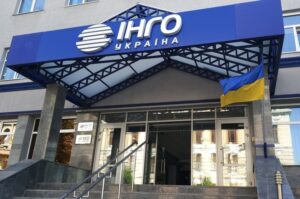
INGO Insurance Company (Kyiv) collected 2.934 billion UAH in gross insurance premiums for the January–June 2026 period, which is 22.9% higher than the result for the same period in 2025.
According to the company’s website, growth in the insurance business was driven by several lines of business. Gross premiums from health insurance increased by 35.3% to 664.1 million UAH, and from comprehensive auto insurance (CASCO) by 33.2% to 589.7 million UAH. In accident insurance, premiums rose by 32.2% to 102.1 million UAH. The company recorded the highest growth rates in traditional property insurance: gross premiums increased 2.4-fold to 537.3 million UAH.
The company reports that in the first half of 2026, it actually paid out 2.510 billion UAH in insurance claims to clients, which is 46.4% more than in the same period last year.
The largest volumes of accrued insurance payouts were in health and auto insurance. Under its health insurance programs, “INGO” accrued payouts totaling 386.5 million UAH for the organization and payment of medical services, examinations, and medications. Accrued payments under compulsory motor third-party liability insurance (OSCPV) totaled 328.4 million UAH, under comprehensive auto insurance (CASCO) – 272.3 million UAH, and under property insurance – 151.7 million UAH.
“We view the results of the first half of the year positively, although the volume of insurance claims grew faster than premiums. This trend is explained by several factors: portfolio expansion, an increase in the number of claims, and rising costs of medical services, auto repairs, and property restoration. It is essential for us that the company maintains its ability to service a larger portfolio and fully meet its obligations. At the same time, the business structure remains sufficiently diversified, without excessive dependence on any single type of insurance,” said Andriy Semchenko, Chairman of the Board of ING Insurance.
INGO Insurance Company was founded in 1994; the company ranks among the top three insurers in the country in terms of assets and premiums and holds licenses to provide insurance in 18 classes.
The company has the status of a significant insurer, is a member of Ukrainian and international professional associations, and operates through a network of 25 branches, five offices, and nine service centers in various regions of Ukraine.

Distribution system operators (DSOs) at DTEK Networks reconstructed seven transformer stations and 17 substations between January and June 2026, and built 13 new transformer stations in Kyiv, Kyiv, Dnipropetrovsk, and Odesa regions.
“This is 1.5 times more than during the same period last year,” the operating holding company reported on Thursday.
Energy companies continue to upgrade infrastructure and prepare the grids for peak loads, particularly during the fall and winter months.
DTEK Networks noted that the scope of the investment program is approved annually by the state regulator, the NEURC, for all operators. At the same time, the holding’s distribution system operators repaired nearly 2,000 km of overhead lines and 4,600 km of underground cables in the first half of 2026, and restored nearly 3,000 power facilities.
In addition, to reduce the risk of accidents and ensure a reliable power supply for households, specialists cleared 5,000 km of overhead line corridors of trees and shrubs.
“In total, we plan to invest over 6.7 billion UAH in network upgrades in 2026. This will allow us to build a safety margin for the upcoming heating season,” said Alina Bondarenko, CEO of DTEK Networks.
The company added that the development and modernization of infrastructure also create the necessary technical capabilities for connecting new customers.
“DTEK Networks” operates in the electricity distribution and power grid operation sectors in Kyiv, Kyiv, Dnipropetrovsk, Donetsk, and Odesa regions. The DTEK Group’s distribution system operators serve 5.1 million households and 150,000 businesses.
The Estonian Ministry of Foreign Affairs announced the allocation of EUR340,000 to help Ukrainians living near the front lines cope with damage to energy infrastructure caused by Russia’s ongoing attacks.
As the Ministry of Foreign Affairs emphasized, Estonia’s aid will help families heat their homes and prepare their livestock for winter, improve the thermal insulation of shelters for internally displaced persons, and purchase mobile emergency response centers for Ukrainian rescue workers. The aid will be delivered through the Ministry of Foreign Affairs’ long-standing humanitarian partners: the non-governmental organization Mondo, the Estonian Refugee Council, and the Estonian Rescue Association.
“Putin still hopes that attacks, cold, and darkness will break the Ukrainians’ resistance. We will not let that happen. As a result of Russia’s ongoing aggression, Ukrainians are facing yet another harsh wartime winter. With the onset of cold weather, people across the country will have to contend with power and heating outages and worry about how to keep their homes warm,” emphasized Foreign Minister Margus Tsahkna.
“The situation is particularly difficult near the front lines, where the need for assistance is greatest due to the fighting. As Estonians, we know very well what a cold winter means. That is why we are directing our aid first and foremost to where it is needed most—to families trying to cope in their own homes, to people forced to flee their homes because of the war, and to rescue workers who come to the aid of others even in the most difficult circumstances,” added Tsahkna.
Estonia is providing the non-governmental organization Mondo with 160,000 euros to help shelters for internally displaced persons near the front lines in the Sumy, Dnipropetrovsk, and Kharkiv regions prepare for winter. Thirteen shelters will be supplied with heating equipment and materials, and two of them will also undergo repairs and improvements to their thermal insulation. Thanks to Estonia’s support, approximately 860 internally displaced persons—primarily the elderly, people with disabilities, women, and children—will have warm housing this winter.
The Estonian Refugee Council will receive EUR160,000 to support families living near the front lines in the Kharkiv, Dnipropetrovsk, and Zaporizhzhia regions. The funding will help families heat their homes and cover the costs of maintaining livestock throughout the winter, as livestock farming is an important source of livelihood for many. The project is co-financed by the European Commission’s Directorate-General for Civil Protection and Humanitarian Aid (DG ECHO).
The Estonian Rescue Association will receive EUR 20,000 to purchase equipment for two mobile emergency aid stations for rescuers from the State Emergency Service of Ukraine (SES). The mobile emergency aid stations will provide people in crisis zones with a place where they can warm up, access electricity, and, if necessary, receive psychological support.

The online taxi-hailing service Uklon will launch in five new cities—Fergana, Margilan, Kokand, Namangan, and Andijan—starting August 5, the company’s press office told *Gazeta*.
The launch will take place in stages: the first stage will involve onboarding drivers, after which the service will become available for booking rides and delivery services, the company clarified.
“Expanding into the Fergana Valley is an important step in our regional development in Uzbekistan. Several major cities are located close to one another here, and there is constant mobility between them,” said Eduard Kovtun, General Manager of Uklon Uzbekistan.
Drivers will be able to sign up for the platform independently via the Uklon Driver app. A reduced commission rate will apply to them through the end of the year.
Users will have access to the “Light” and “Comfort” classes in Kokand and Namangan, and in Andijan, Fergana, and Margilan—to “Light,” “Comfort,” and “Quick Search.” They will also be able to contact Uklon’s 24/7 support service.
For reference: Uklon is a Ukrainian IT product and service company. Since April 2025, 97% of the company’s corporate rights have been owned by Kyivstar, Ukraine’s largest electronic communications operator. Uklon has been operating in Uzbekistan since June 2023. According to the company, in 2025, users of the service in Tashkent took over 15 million rides.

According to Experts.news, the U.S. Department of Agriculture has sharply raised its forecast for Ukraine’s ending stocks of wheat and feed grain for the 2026/27 season—to a total of nearly 12 million metric tons.
In the USDA’s July forecast, ending stocks for these two groups were estimated at approximately 6.26 million metric tons, while in the August WASDE report, the figure rose to 11.93 million metric tons. Thus, in just one month, the estimate increased by 5.67 million metric tons, or approximately 91%.
The most significant revision was made to the corn outlook.
The USDA raised its forecast for corn ending stocks from 2.06 million to 4.86 million metric tons—more than a 2.3-fold increase. This represents an increase of 2.8 million metric tons.
The reason is almost entirely due to changes in two indicators: the corn harvest forecast was increased by 1.8 million metric tons—to 31.8 million metric tons—while exports were simultaneously reduced by 1 million metric tons—to 22 million metric tons. The USDA left domestic corn consumption unchanged at 7.2 million metric tons.
As for wheat, ending stocks were increased even more in percentage terms—from 2.53 million to 4.8 million metric tons, or by approximately 90%.
For the entire feed grain group, the stock forecast was raised from 3.73 million to 7.13 million metric tons.
The USDA attributes the deterioration in export prospects to logistical disruptions resulting from the escalation of the conflict in the Azov and Black Seas.
An even more dire scenario was previously presented by the Kyiv office of the USDA’s Foreign Agricultural Service (FAS). It expects that, if maritime logistics problems persist, Ukraine’s carryover stocks of all grain crops could approach 25 million metric tons.
According to FAS/Kyiv, the total storage capacity for grains and oilseeds in Ukraine exceeds 74 million metric tons, but certified grain warehouses provide approximately 23 million metric tons of capacity. Ukrainian authorities have also acknowledged the need for an additional 10–12 million metric tons of temporary storage capacity in the event of prolonged disruption to exports via the Black Sea.
This issue has direct economic implications for farmers. Given a large harvest and limited exports, domestic supply is increasing, which could put pressure on domestic purchase prices while simultaneously driving up costs for storage and alternative logistics.
As of August 13, the situation with the ports remains challenging: Russian attacks continue to target Ukrainian port infrastructure, particularly along the Danube corridor.
Thus, the main risk for the Ukrainian grain market in the 2026/27 season is no longer just the size of the harvest. If restrictions on maritime exports remain in place, Ukraine may face the need to store millions of metric tons of additional grain domestically.



