
Business news from Ukraine

Business news from Ukraine

TOP 10 Global Buyers of Ukrainian Wheat — Analysis by Experts Club

Over the first eight months of the 2025/26 marketing year, Ukraine exported 9.03 million tons of wheat, with Egypt (2.36 million tons) and Algeria (1.6 million tons) becoming the largest buyers. Indonesia ranked third with 1.4 million tons, the Ukrainian Grain Association (UGA) reported.

Among the top ten buyers of Ukrainian wheat, the UGA also names Yemen with 758 thousand tons, Vietnam with 531 thousand tons, Lebanon with 322 thousand tons, Spain with 304 thousand tons, Tunisia with 284 thousand tons, Italy with 197 thousand tons, and Thailand with 177 thousand tons. This supply structure shows that the main export destinations for Ukrainian wheat remain the countries of the Mediterranean, the Middle East, and Southeast Asia.

As of early March, customs statistics had already recorded exports of about 9.1 million tons of wheat and 22.3 million tons of grains and legumes in total since the start of the season. This is 25% less than on the same date of the previous marketing year. For comparison, in the 2024/25 MY, Ukraine exported 15.7 million tons of wheat and 40.6 million tons of grains and legumes overall.

At the same time, the Ukrainian government stated in November that it did not plan to restrict wheat exports during the current season. According to Deputy Minister of Economy Taras Vysotskyi, the 2025 wheat harvest will amount to about 23 million tons, while exports in the 2025/26 MY may reach approximately 17 million tons. This means that, based on the results of the first eight months, Ukraine has already shipped more than half of the expected seasonal volume.

The growing role of Egypt and Algeria became noticeable as early as the first half of the season. According to Elevatorist, citing APK-Inform analysts, from July to November Egypt increased its purchases of Ukrainian wheat to 2 million tons compared with 664 thousand tons a year earlier, while Algeria increased them to 932 thousand tons compared with 526 thousand tons. Indonesia, during the same period, on the contrary, slightly reduced its imports of Ukrainian wheat to 1.41 million tons.

In the opinion of the Experts Club analytical center, the change in export geography appears to be structural. Back in the summer, the Ukrainian authorities directly pointed out that after the EU restrictions on imports of Ukrainian wheat, part of the volume would have to be redirected to the markets of North Africa, the Middle East, and Southeast Asia. At the beginning of January, exports of Ukrainian wheat were already clearly concentrated in the MENA direction: during the first eight days of the month, shipments were focused primarily on Algeria, Egypt, and Yemen, while EU activity was minimal.

For Ukraine, this means that the markets of Egypt, Algeria, Indonesia, and other Global South countries are becoming key for monetizing the harvest and generating foreign currency revenues for the agricultural sector. At the same time, such a model increases dependence on stable maritime logistics through the Black Sea corridor, competitiveness against Russian and Romanian grain, and solvent demand in importing countries of the Mediterranean and Asia.

, ,

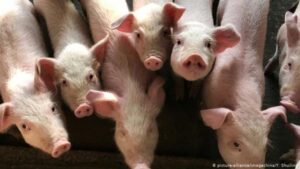
Global dynamics of pig farming: challenges, crises, and transformations in the 1990s and 2020s

Over the past three decades, pig farming has remained one of the most important components of global agricultural production. It has played a key role in providing the population with animal protein, shaping export flows in Asia and Europe, while remaining vulnerable to global epidemiological risks. Experts Club analysts have studied changes in the global pig population between 1990 and 2023.

“Pig farming is an industry where economics is closely intertwined with biological risks. It is extremely profitable in stable conditions, but it instantly suffers from any disruptions in the veterinary or logistics chain,” said Maxim Urakin, PhD in Economics and founder of the Experts Club information and analytical center.

In the early 1990s, the total number of pigs in the world grew steadily, especially in China, which became the largest producer and consumer of pork. Mass industrial production, urbanization, and high demand for meat in the Asia-Pacific region stimulated capacity expansion. By the mid-2010s, the industry was at its peak: in some years, the number of pigs in the world exceeded one billion. This dynamic reflected the successful commercialization of the industry in China, Vietnam, Brazil, the United States, Germany, and Spain.

However, after 2018, the global pig industry faced one of the most significant challenges in recent decades — the African swine fever (ASF) pandemic. The epizootic, which began in China, spread to dozens of countries and led to a massive reduction in livestock numbers. In China alone, it is estimated that more than 100 million pigs were destroyed. This caused a meat shortage in the global market, price increases, a crisis in feed chains, and a reorientation of international trade.

“After the ASF outbreak, China began to actively reform the structure of pig farming, moving from small farms to large biosecure complexes. This also affected the global market, as demand for safe and controlled meat rose sharply,” Urakin explained.

Europe, in turn, found itself under pressure from environmental legislation and growing animal welfare requirements. In the Netherlands, Denmark, and Germany, the industry declined not only due to disease but also due to political decisions to reduce methane and nitrate emissions. In North America, the situation remained stable, although it was affected by tariff wars, especially in US-China relations.

Today, the global pig industry has partially recovered but remains in a phase of restructuring. China is gradually restoring its livestock population, but on new principles — with strict control of biosecurity, genetics, and investment in innovation. At the same time, more and more countries are investing in alternative proteins — cultured meat and plant-based pork substitutes — which poses long-term risks to the traditional industry.

“The future of pig farming is a symbiosis of biotechnology, sustainable management, and veterinary reliability. Those who cannot adapt will lose the market,” concluded Maxim Urakin.

A detailed analysis of the situation on the pork market and a visualization of global trends can be found in a special video review on the Experts Club YouTube channel.

, , , ,



